Content Menu
● Activated Carbon for Hydrogen Sulfide (H₂S) Removal in Industrial Applications
● What Is Hydrogen Sulfide and Why It Matters for Plants
● Health and Safety Risks of Hydrogen Sulfide
● Overview of Hydrogen Sulfide Removal Methods
>> Main Technical Options
● Why Activated Carbon Is a Workhorse for H₂S Control
>> Physical Adsorption
>> Chemisorption and Surface Reactions
● Impregnated Activated Carbon – When You Need Higher H₂S Capacity
>> Common Impregnants and Reactions
>> Impregnation Process Basics
● Key Factors That Control H₂S Adsorption Performance
>> Operating Parameters to Watch
● Coconut Shell vs. Coal‑Based Activated Carbon for H₂S
>> Structural and Performance Differences
● Practical Design Steps for an H₂S Activated Carbon System
>> Step‑by‑Step Approach
● Real‑World Industrial Use Cases (Expert Perspective)
>> Biogas and Landfill Gas Upgrading
>> Wastewater and Pump Station Odor Control
>> Refinery and Chemical Off‑Gas Treatment
● How Guangdong Tongke Supports Custom H₂S Solutions
● Buyer Checklist – Selecting the Right H₂S Activated Carbon
>> Technical Criteria
>> Supplier and Service Criteria
● Call to Action – Talk to an H₂S Adsorption Specialist
● FAQ – Hydrogen Sulfide Removal with Activated Carbon
● References
Activated Carbon for Hydrogen Sulfide (H₂S) Removal in Industrial Applications
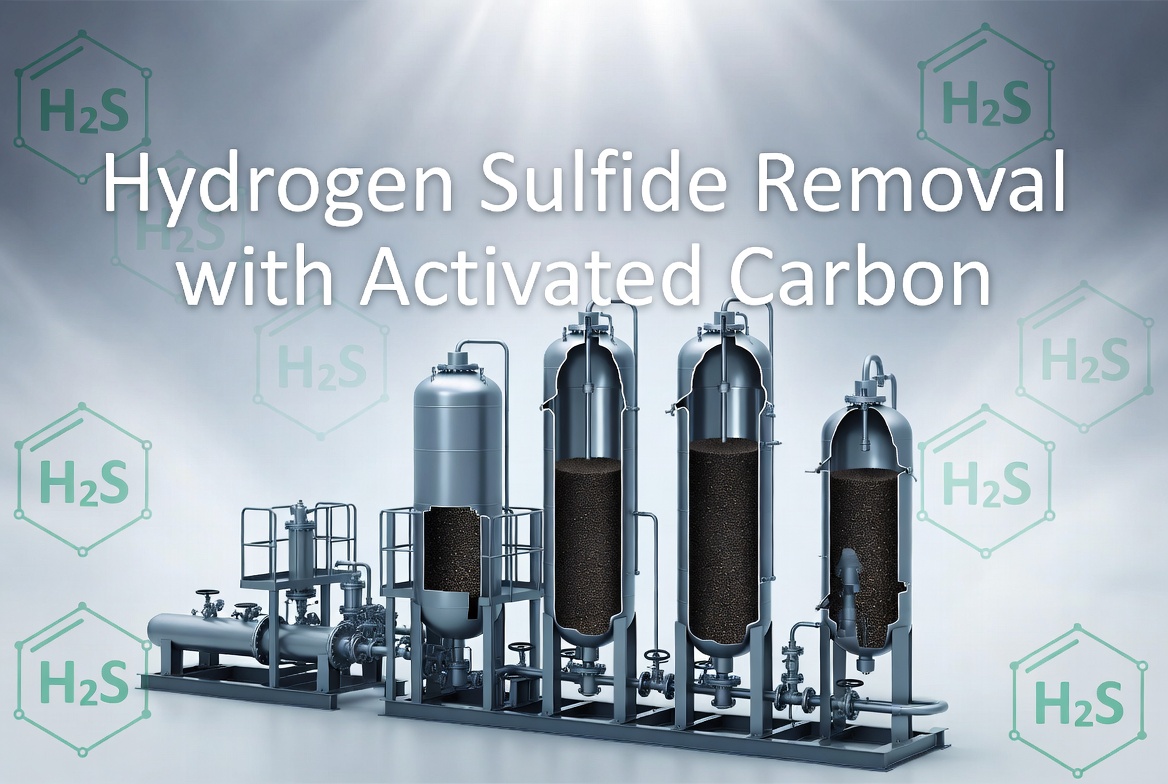
Hydrogen sulfide is a small molecule, but in real industrial environments it behaves like a big-risk contaminant that can shut down operations, corrode assets, and endanger workers if not controlled properly. From my experience working with plant engineers and EHS managers, the most reliable and scalable way to control H₂S in many gas and liquid streams is properly selected and engineered activated carbon – especially high‑quality coconut shell activated carbon and tailored impregnated grades. [fieldreport.caes.uga]
What Is Hydrogen Sulfide and Why It Matters for Plants
Hydrogen sulfide (H₂S) is a colorless, flammable gas with a very characteristic rotten‑egg odor that most operators recognize immediately. It is naturally present in crude oil, natural gas, geothermal and volcanic emissions, and forms in anaerobic environments such as wastewater, sludge digestion, and certain fermentation or chemical processes. [fwrj]
In industrial settings, you will typically encounter H₂S in: [generalcarbon]
- Biogas and landfill gas
- Natural gas and refinery off‑gas
- Wastewater treatment plants and pump stations
- Pulp and paper mills
- Food processing effluents and rendering plants
Even at low concentrations, H₂S impacts worker safety, equipment life, and environmental compliance, so most facilities treat it as a priority pollutant, not an optional optimization. [heycarbons]
Health and Safety Risks of Hydrogen Sulfide
From a risk‑management perspective, H₂S is dangerous because toxicity rises quickly with concentration while odor awareness drops due to olfactory fatigue. [fieldreport.caes.uga]
Typical exposure effects include: [heycarbons]
- 0.00011–0.00033 ppm – Detectable by smell
- 10–20 ppm – Eye irritation and discomfort
- 50–100 ppm – Respiratory irritation and potential lung damage
- 100–150 ppm – Olfactory fatigue; workers may no longer smell the gas
- >700 ppm – Rapid loss of consciousness and possible death within minutes
Chronic exposure at lower levels is associated with headaches, fatigue, and neurological symptoms, so relying only on "smell monitoring" is both unsafe and non‑compliant with modern safety practice. That is why process engineers increasingly combine gas detection, ventilation, and engineered H₂S removal systems based on adsorption or chemical treatment. [generalcarbon]
Overview of Hydrogen Sulfide Removal Methods
No single technology is perfect for every plant. In real projects, engineers often combine multiple methods to achieve performance, reliability, and lifecycle cost targets. [fwrj]
Main Technical Options
- Activated carbon adsorption – Uses a large internal surface area and tailored pore structure to capture H₂S by physical adsorption and surface reactions. [pmc.ncbi.nlm.nih]
- Molecular sieve adsorption – Relies on crystalline aluminosilicates with specific pore sizes; often used in natural‑gas sweetening at high pressure. [generalcarbon]
- Iron oxide and metal oxide media – React chemically with H₂S to form metal sulfides; often used for lower concentrations or specific gas streams. [pmc.ncbi.nlm.nih]
- Alkaline scrubbing (alkali washing) – Absorbs H₂S into caustic solutions such as NaOH or KOH; high efficiency but higher operating cost and liquid‑phase chemical handling. [heycarbons]
- Oxidation / aeration / ozonation – Uses air, chlorine, ozone, or other oxidants, particularly for water and wastewater. [fieldreport.caes.uga]
In practice, activated carbon remains the preferred solution whenever plants need a compact, modular, low‑maintenance system that can run continuously with predictable media replacement cycles. [pmc.ncbi.nlm.nih]
Why Activated Carbon Is a Workhorse for H₂S Control
From a process‑engineering perspective, activated carbon is attractive because it combines physical adsorption, chemisorption, and sometimes catalytic oxidation in a single medium. [pmc.ncbi.nlm.nih]
Physical Adsorption
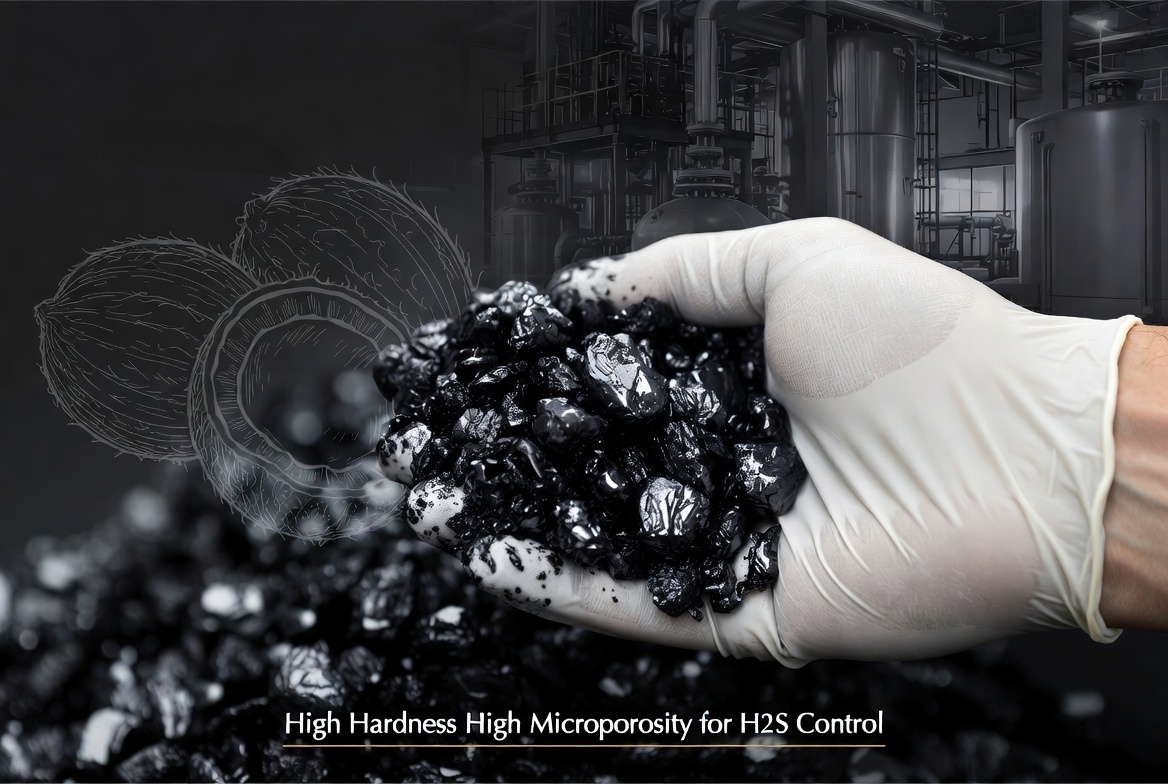
Activated carbon has a huge internal surface area (often 800–1200 m²/g) and a network of micro‑ and mesopores that can trap gas‑phase molecules. In the case of H₂S, high‑micropore carbons – especially coconut shell activated carbon – provide strong adsorption at relatively low concentrations, which is common in vent gas, biogas polishing, and odor control. [zhulincarbon]
Chemisorption and Surface Reactions
In the presence of oxygen and moisture, H₂S reacts on the carbon surface, forming elemental sulfur and water: \(2 H_{2}S + O_{2} \rightarrow 2 S + 2 H_{2}O\). Some carbons, particularly impregnated grades, catalyze further oxidation to sulfuric acid via \(2 H_{2}S + 3 O_{2} \rightarrow 2 H_{2}SO_{4}\). [heycarbons]
These mechanisms are important because they free up active sites and increase overall H₂S capacity, allowing longer bed life before breakthrough. [pmc.ncbi.nlm.nih]
Impregnated Activated Carbon – When You Need Higher H₂S Capacity
For demanding gas streams or higher H₂S loads, impregnated activated carbon significantly enhances removal performance. Impregnants raise surface alkalinity, create new reactive sites, or catalyze oxidation pathways. [heycarbons]
Common Impregnants and Reactions
- KOH‑impregnated carbon – Increases surface pH; H₂S reacts to form potassium sulfide (K₂S) and water, and K₂S can further oxidize to K₂SO₄. [pmc.ncbi.nlm.nih]
- NaOH‑impregnated carbon – Similar mechanism, forming Na₂S and then sulfate. [heycarbons]
- KI‑impregnated carbon – Potassium iodide acts as a catalyst, accelerating oxidation of H₂S to elemental sulfur. [pmc.ncbi.nlm.nih]
- Metal‑oxide impregnated carbon (CuO, Fe₂O₃, etc.) – Reacts with H₂S to form stable metal sulfides, such as CuO + H₂S → CuS + H₂O. [heycarbons]
Impregnation Process Basics
Typical industrial impregnation follows three core steps: [pmc.ncbi.nlm.nih]
1. Soaking selected activated carbon in an aqueous solution containing the impregnant.
2. Drying and sometimes heat‑treating the carbon to ensure uniform distribution.
3. Adjusting impregnation level (often 1–15% by weight) according to the target H₂S concentration and operating conditions.
For project owners, the implication is simple: selecting the right impregnation chemistry and loading can double or even triple H₂S capacity compared to non‑impregnated grades in the same footprint. [heycarbons]
Key Factors That Control H₂S Adsorption Performance
Real‑world H₂S performance is not just about choosing "activated carbon" generically – operating conditions matter as much as media selection. [pmc.ncbi.nlm.nih]
Operating Parameters to Watch
- Humidity – For many impregnated carbons, moderate humidity (often around 40–60% RH) supports H₂S dissolution and reaction on the surface; excessively dry gases may reduce reaction rates. [heycarbons]
- Temperature – Lower to moderate temperatures generally favor adsorption; high temperatures reduce H₂S loading and may cause premature breakthrough. [pmc.ncbi.nlm.nih]
- Contact time (EBCT) – Longer empty bed contact time increases removal efficiency; undersized vessels or high flow spikes often show early H₂S breakthrough. [fwrj]
- Inlet H₂S concentration – Higher H₂S requires more aggressive impregnation, thicker beds, or staged vessels to maintain outlet targets. [heycarbons]
- Co‑contaminants – VOCs, moisture peaks, siloxanes or organic sulfur compounds can compete for adsorption sites or change bed chemistry. [generalcarbon]
This is why lab testing or pilot runs are strongly recommended before finalizing a large‑scale H₂S system design, especially when gas composition or humidity may vary seasonally. [generalcarbon]
Coconut Shell vs. Coal‑Based Activated Carbon for H₂S
As a manufacturer focused on coconut shell activated carbon, we see recurring questions from global buyers comparing coconut‑based and coal‑based media for H₂S service. [zhulincarbon]
Structural and Performance Differences
| Aspect | Coconut shell activated carbon | Coal‑based activated carbon |
| Raw material | Renewable coconut shells (zhulincarbon) | Fossil coal feedstocks (zhulincarbon) |
| Pore structure | Highly microporous, ideal for low‑molecule gases like H₂S (heycarbons) | Balanced micro/mesopores, good for mixed contaminants (heycarbons) |
| Typical strength | High hardness and abrasion resistance (zhulincarbon) | Good mechanical strength, varies by grade (zhulincarbon) |
| Applications | Biogas, landfill gas polishing, odor control, sensitive processes (heycarbons) | Mixed VOC and H₂S streams, refinery and chemical off‑gas (heycarbons) |
| Regeneration | High strength supports multiple regeneration cycles (zhulincarbon) | Regeneration possible; economics depend on plant design (zhulincarbon) |
Because of its microporous structure and mechanical strength, coconut shell activated carbon is widely chosen for compact H₂S adsorbers where long bed life, low dust, and stable performance are mandatory. [zhulincarbon]

Practical Design Steps for an H₂S Activated Carbon System
From an engineering and procurement standpoint, the most successful H₂S projects follow a simple but disciplined workflow. [fwrj]
Step‑by‑Step Approach
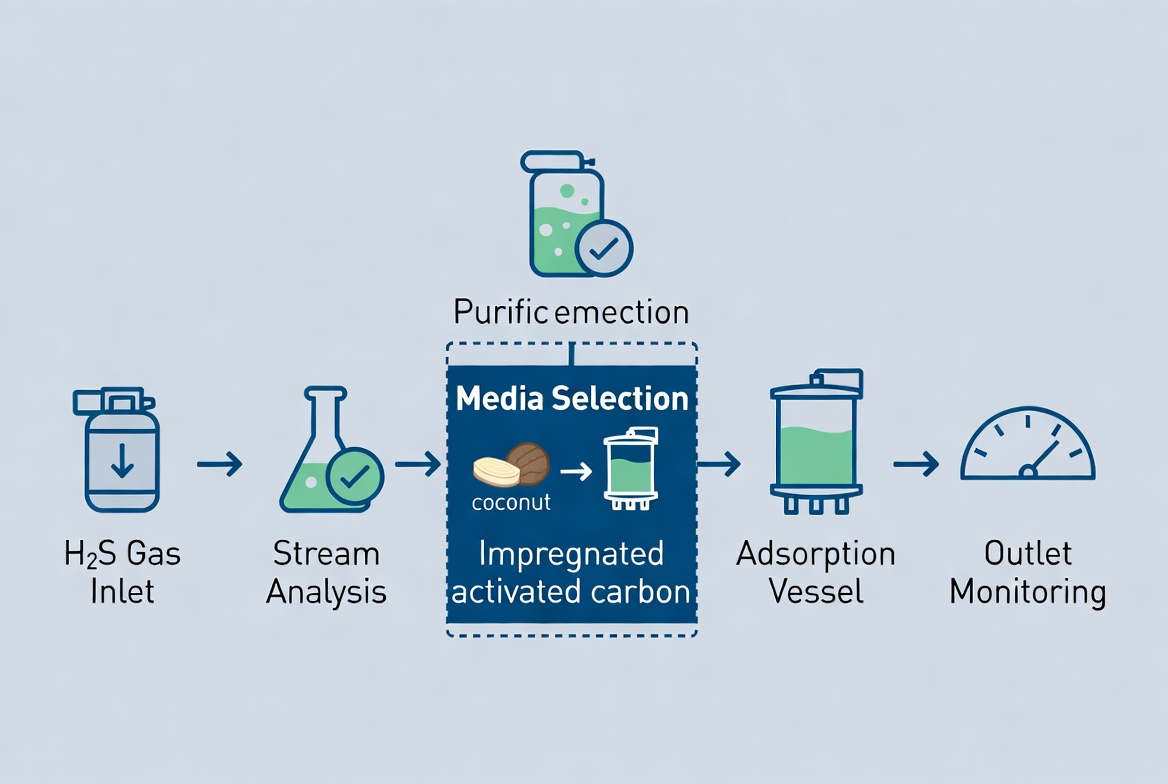
1. Characterize your gas or liquid stream
- Measure H₂S concentration, temperature, pressure, humidity, and flow rate. [fieldreport.caes.uga]
2. Define outlet targets and constraints
- Set maximum allowed H₂S at outlet (odor threshold, corrosion limit, or regulatory limit) and acceptable pressure drop and footprint. [fieldreport.caes.uga]
3. Select activated carbon type
- Choose between coconut shell, coal‑based, or other specialty carbons; decide whether standard or impregnated grades are needed. [pmc.ncbi.nlm.nih]
4. Size the adsorption vessel
- Calculate bed volume and empty bed contact time to meet performance targets; design for peak flow and realistic safety margins. [generalcarbon]
5. Plan monitoring and change‑out
- Implement outlet H₂S monitoring, define breakthrough criteria, and set replacement or regeneration schedules. [fwrj]
6. Validate with pilot or lab testing
- For critical or variable streams, run small‑scale tests to confirm capacity and optimize media selection. [heycarbons]
Working with an experienced carbon supplier dramatically shortens this process because you can use existing design experience, standard vessel configurations, and tested media combinations instead of starting from scratch. [generalcarbon]
Real‑World Industrial Use Cases (Expert Perspective)
Based on typical projects across oil & gas, wastewater, and food industries, three patterns appear repeatedly when H₂S control is handled successfully. [fwrj]
Biogas and Landfill Gas Upgrading
Biogas streams from anaerobic digesters and landfills often contain several hundred to several thousand ppm of H₂S. Operators use impregnated coconut shell activated carbon upstream of engines, turbines, or boilers to protect equipment from corrosion and meet emissions limits. When media is sized correctly, plants typically see stable performance across seasons and predictable change‑out intervals tied to engine maintenance. [fwrj]
Wastewater and Pump Station Odor Control
In wastewater collection systems, H₂S accumulates in wet wells, manholes, and headworks, causing strong odor complaints and corrosion of concrete and metal structures. Compact carbon filters filled with granular activated carbon or impregnated media are widely installed on vent lines and building exhausts as a low‑maintenance, passive solution. [fieldreport.caes.uga]
Refinery and Chemical Off‑Gas Treatment
Refineries and chemical plants often face mixed gas streams with H₂S plus organic sulfur compounds and VOCs. Here, engineered systems may combine pre‑treatment, coal‑based activated carbon, and impregnated layers to manage both H₂S and co‑contaminants in a single line. [generalcarbon]
These cases underline one key point: matching media type and impregnation to the specific process stream is more important than any single "best" carbon grade. [generalcarbon]
How Guangdong Tongke Supports Custom H₂S Solutions
As a dedicated manufacturer and exporter of coconut shell activated carbon and other specialty carbons, Guangdong Tongke Activated Carbon Co., Ltd. focuses on tailored solutions for industrial H₂S control. Our product portfolio covers granular activated carbon, columnar pellets, and powdered grades designed for gas‑phase and liquid‑phase applications. [zhulincarbon]
Working with global clients, we typically help in three areas:
- Application‑specific media selection (coconut shell, coal‑based, impregnated or blends). [zhulincarbon]
- Bed design support, including recommended contact times and vessel configurations. [generalcarbon]
- Lifecycle planning – from initial filling to media change‑out and regeneration options. [zhulincarbon]
If you share your H₂S concentration, flow rate, and operating conditions, our technical team can quickly recommend one or two optimized carbon grades, along with estimated bed life and replacement schedules. [pmc.ncbi.nlm.nih]
Buyer Checklist – Selecting the Right H₂S Activated Carbon
For procurement teams and engineers finalizing specifications, this practical checklist helps filter suppliers and grades more effectively. [generalcarbon]
Technical Criteria
- Target gas or liquid composition and H₂S range
- Required outlet H₂S and odor or corrosion limits
- Preferred carbon base (coconut shell vs. coal‑based)
- Need for impregnation (KOH, NaOH, KI, metal oxides)
- Recommended empty bed contact time and pressure drop
Supplier and Service Criteria
- Proven industrial reference projects in similar applications
- Availability of technical support and pilot testing
- Consistency of raw materials and quality certifications
- Options for custom sizing, packaging, and shipping schedules
When these points are clarified, plants typically achieve faster commissioning, fewer unplanned change‑outs, and better long‑term cost per kilogram of H₂S removed. [generalcarbon]
Call to Action – Talk to an H₂S Adsorption Specialist
If you are planning a new H₂S control project or troubleshooting an existing system, now is the best time to validate your activated carbon choice and bed design before the next odor event or unplanned shutdown. Share your process data with Guangdong Tongke Activated Carbon Co., Ltd., and our engineering team will help you select the most suitable coconut shell or specialty activated carbon grade, estimate bed life, and design a robust, cost‑effective H₂S removal solution tailored to your plant. [zhulincarbon]
FAQ – Hydrogen Sulfide Removal with Activated Carbon
Q1: How do I know if activated carbon is suitable for my H₂S problem?
If your application involves gas‑phase H₂S in biogas, vent gas, off‑gas, or odor control – especially at low to medium concentrations – activated carbon is usually one of the most efficient and compact options. A quick stream analysis and consultation with a carbon specialist can confirm suitability. [heycarbons]
Q2: How long does H₂S activated carbon typically last?
Bed life depends on inlet H₂S, humidity, temperature, and bed design, but well‑designed systems often operate for several months to more than a year before change‑out. Regular outlet monitoring helps define safe replacement intervals. [generalcarbon]
Q3: Can impregnated activated carbon handle other contaminants as well?
Many impregnated carbons also adsorb organic vapors and some other sulfur species, but performance varies by formulation. For streams with significant VOC or mixed contaminants, your supplier can recommend blended or layered beds. [pmc.ncbi.nlm.nih]
Q4: Is activated carbon for H₂S removal regenerable?
Some grades, particularly robust coconut shell and selected coal‑based carbons, can be thermally regenerated under controlled conditions, while others are designed for single‑use due to impregnant chemistry. Regeneration feasibility is usually evaluated case‑by‑case based on economics and local infrastructure. [zhulincarbon]
Q5: What information should I prepare before contacting a supplier?
You should provide H₂S concentration range, flow rate, temperature, humidity, pressure, gas or liquid composition, target outlet H₂S, and available installation space. With this data, a supplier like Guangdong Tongke can propose a tailored media grade and system layout much more quickly. [zhulincarbon]
References
1. Zhulin Carbon. "Activated Carbon for Hydrogen Sulfide Removal." [Link] [heycarbons]
2. CAES, University of Georgia. "Removal of Hydrogen Sulfide and Sulfate from Household Water." 2026. [Link] [fieldreport.caes.uga]
3. General Carbon. "The General Carbon Guide to Hydrogen Sulfide (H₂S) Removal." 2025. [Link] [generalcarbon]
4. Heycarbons. "How to Choose Impregnated Activated Carbon for H₂S Removal." 2024. [Link] [heycarbons]
5. PMC (NIH). "Removal of Hydrogen Sulfide from a Biogas Mimic by Activated Carbon." 2019. [Link] [pmc.ncbi.nlm.nih]
6. FWRJ. "Innovative Hydrogen Sulfide Treatment Methods." [PDF] [fwrj]
7. Zhulin Carbon. "Coconut Shell Granular Activated Carbon." [Link] [zhulincarbon]
8. Zhulin Carbon. "Activated Carbon Applications Overview." [Link] [zhulincarbon]


