Content Menu
● What Is Decolorizing Carbon and Why It Matters
● How Decolorizing Activated Carbon Works
● Wood‑Based Activated Carbon for Food Decolorization
● Key Industrial Applications of Decolorizing Activated Carbon
>> 1. Sugar and Sucrose Decolorization
>> 2. Citric Acid Purification
>> 3. Glycerin Refining
>> 4. Starch Syrup and High‑Fructose Syrup
>> 5. Plant Extract and Natural Pigment Decolorization
● Comparing Decolorizing Activated Carbon Types
● Practical Process Steps: How Engineers Apply Decolorizing Carbon
● Buyer's Checklist: Selecting the Right Supplier and Grade
● Expert Insights: Trends in Decolorization and Wood‑Based Activated Carbon
● Why Work With a Specialized Chinese Manufacturer
● Call to Action: Discuss Your Decolorization Challenge
● Frequently Asked Questions (FAQ)
● References
What Is Decolorizing Carbon and Why It Matters
Decolorizing carbon is a specially processed activated carbon with very fine particle size and a high internal surface area designed to remove color bodies from liquid solutions. In practice, it selectively adsorbs large chromophore molecules, off‑odors, and certain trace impurities without damaging the core quality of the product being treated. [carbotecnia]
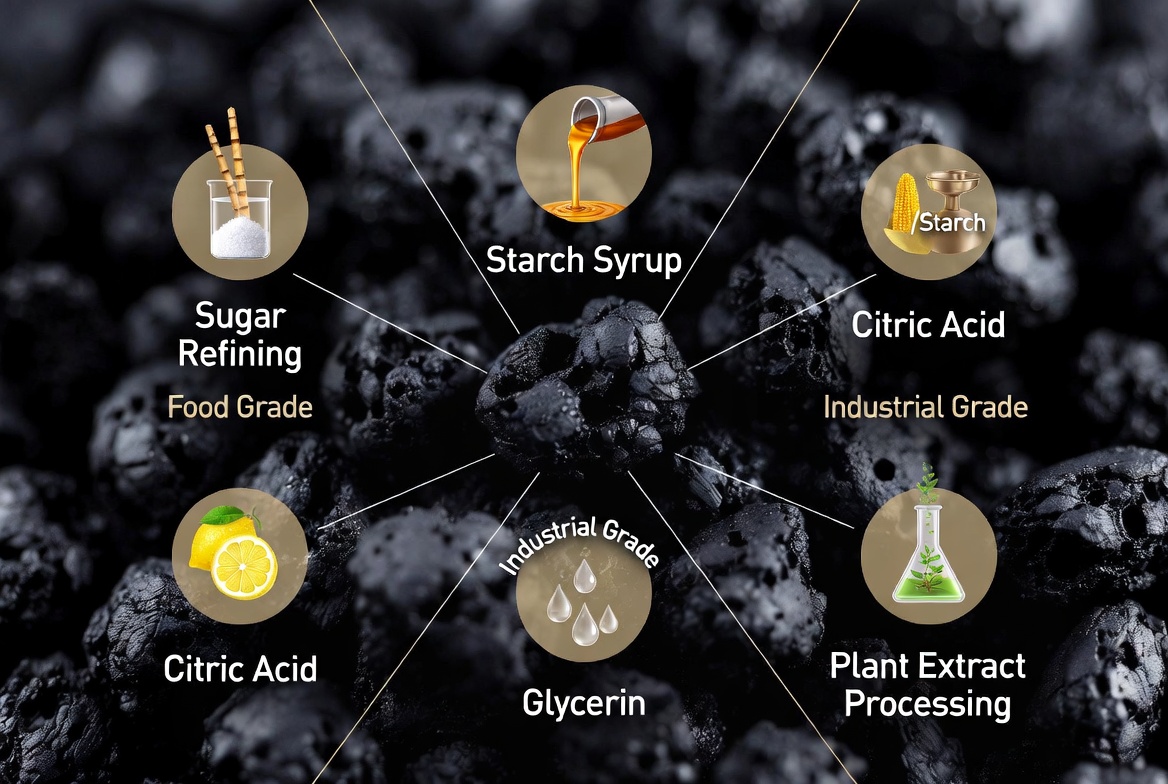
For manufacturers in sugar, citric acid, glycerin, starch syrup, plant extracts and broader food and pharmaceutical processing, using the right decolorizing carbon is critical to achieve stable product color, meet international purity standards, and reduce downstream filtration and refining costs. [qizhongcarbon]
How Decolorizing Activated Carbon Works
Decolorizing activated carbon operates through a combination of porous structure and surface chemistry. Its micro‑, meso‑ and macropores provide pathways that capture color bodies and organic impurities from process liquids. [pmc.ncbi.nlm.nih]
- Micropores trap small organic molecules and certain trace contaminants
- Mesopores and macropores capture larger pigment and colloid structures present in sugar liquors, plant extracts, and oils
- Surface functional groups can be tailored to improve affinity for specific molecules (for example, polar pigments in citric acid or HMF in sugar) [carbotecnia]
During operation, colorants and impurities migrate from the bulk liquid to the carbon surface, where they are held by Van der Waals forces, hydrophobic interactions, and, in some cases, chemisorption. This is why both particle size and pore distribution are critical when selecting a decolorizing carbon grade for a specific application. [dec]
Wood‑Based Activated Carbon for Food Decolorization
Wood activated carbon is widely used in food and beverage decolorization because its macroporous and mesoporous structure is especially effective for larger molecular weight pigments. Compared with purely coal‑based carbons, wood‑based carbons often provide faster adsorption kinetics and better handling of viscous or high‑color feed streams such as syrup and plant extracts. [zhulincarbon]
In sugar and starch syrup decolorization, wood‑based powdered activated carbon can simultaneously remove color bodies, residual proteins, gums, and heavy metals, improving both appearance and process stability. For many producers, this delivers a noticeable reduction in downstream ion‑exchange load and overall operating cost per ton of finished product. [spinchem]
Key Industrial Applications of Decolorizing Activated Carbon
1. Sugar and Sucrose Decolorization
In sugar refining, decolorizing activated carbon is used after primary clarification to achieve bright, stable color grades. Two typical production routes for monosaccharide solution are: [pubmed.ncbi.nlm.nih]
- Enzymatic hydrolysis
- Hydrochloric acid hydrolysis
Acid hydrolysis tends to generate more yellow pigments and HMF (5‑hydroxymethylfurfural), which negatively affect color and long‑term stability. High‑quality activated carbon for sugar decolorization not only removes visible color but also adsorbs HMF and iron, which are key factors behind off‑tones and oxidation issues in finished sugar. [qizhongcarbon]
For sucrose, specialized low‑ash, low‑sulfur bituminous‑based carbons can be further enhanced by adding magnesium oxide (MgO), giving a highly efficient and stable grade suitable for large‑scale sugar plants targeting premium white sugar and pharmaceutical sugar specifications. [tingyuancarbon]
2. Citric Acid Purification
Citric acid solutions contain red and yellow pigments as well as gums and proteins originating from fermentation or raw materials. Decolorizing activated carbon is applied to: [pmc.ncbi.nlm.nih]
- Remove red and yellow color bodies
- Reduce gums and suspended organics
- Improve filterability and crystallization behavior
This leads to a more consistent crystal color, lower turbidity, and better performance in downstream food and beverage formulations where citric acid is used as an acidulant. [pubmed.ncbi.nlm.nih]
3. Glycerin Refining
Crude glycerin from biodiesel production often contains residual fats, soaps, and macromolecular pigments. By integrating a decolorization stage with powdered activated carbon, processors can significantly reduce color, odor, and instability caused by these impurities. [tingyuancarbon]
In this application, carbons with a well‑developed mesoporous structure are preferred to handle the larger pigment molecules and remaining oil fractions, while still maintaining manageable filtration times. [zhulincarbon]
4. Starch Syrup and High‑Fructose Syrup
Dark initial syrup color makes starch syrup decolorization essential for applications in confectionery, beverages, and bakery products. Wood‑based activated carbon, with its abundant macropores and mesopores, adsorbs both color bodies and trace heavy metals that can catalyze further darkening during storage or heat treatment. [qizhongcarbon]
Producers benefit from:
- Brighter, more stable syrup color
- Reduced need for chemical bleaching agents
- Improved flavor neutrality and shelf life
5. Plant Extract and Natural Pigment Decolorization
Natural pigments and botanical extracts from roots, stems, leaves, flowers, and fruits can contain unwanted color fractions, off‑flavors, and process‑induced by‑products. Decolorizing activated carbon powder is commonly used to: [spinchem]
- Remove excess pigments while preserving desired active components
- Reduce turbidity and colloidal instability
- Improve sensory profile for nutraceutical and cosmetic applications
Careful pilot testing is essential here to balance color reduction with retention of target actives such as polyphenols or specific bio‑compounds. [spinchem]

Comparing Decolorizing Activated Carbon Types
Below is a simplified view of how common decolorizing carbon types differ in typical food and industrial applications. [dec]
| Carbon type | Main raw material | Typical form | Best suited for | Key advantages |
| Wood activated carbon | Wood, fruit shells | Powder, granule | Syrup, plant extracts, beverages | Strong macroporosity, fast adsorption (pubmed.ncbi.nlm.nih) |
| Coal‑based activated carbon | Bituminous/sub‑bituminous coal | Powder, granular | Sugar refining, chemical intermediates | High mechanical strength, low ash designs possible (pubmed.ncbi.nlm.nih) |
| MgO‑modified sugar carbon | Coal‑based carbon plus MgO | Powder | High‑purity sucrose and sugar derivatives | Enhanced color removal and stability (pubmed.ncbi.nlm.nih) |
| Specialty carbons for oils | Various (often vegetable‑based) | Powder | Edible oil and fat decolorization | Tailored pore structure and surface chemistry for oils (hongsencarbon) |
Practical Process Steps: How Engineers Apply Decolorizing Carbon
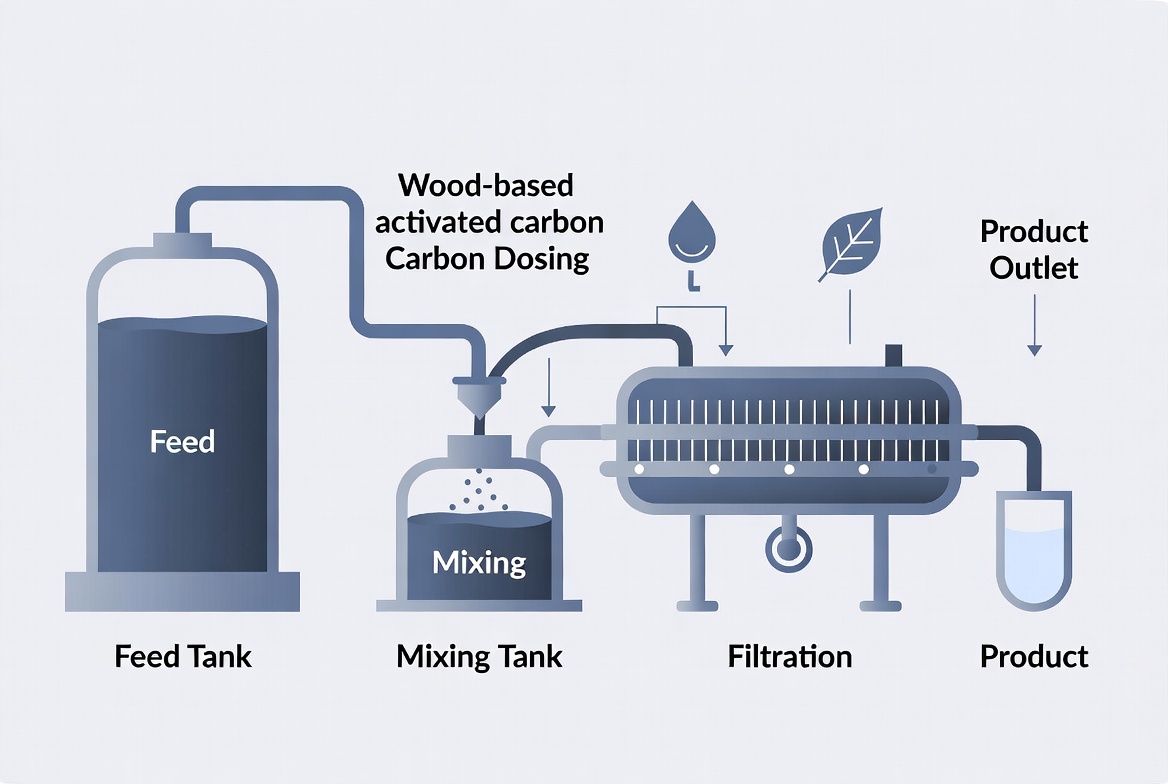
In real plants, process engineers evaluate activated carbon for decolorization on both performance and operability. While each factory has its own SOP, a typical batch treatment sequence looks like this: [carbotecnia]
1. Define target color and quality
- Set color units, turbidity, and impurity limits based on your customer specs and applicable standards. [tingyuancarbon]
2. Select candidate carbon grade
- Choose wood‑based, coal‑based, or blended carbons based on feed composition, viscosity, and existing filtration set‑up. [zhulincarbon]
3. Run lab or pilot tests
- Dose activated carbon at different levels (for example, 0.1–1.0% w/w), measure color reduction, COD, and filtration time. [spinchem]
4. Optimize contact time and mixing
- Ensure sufficient agitation and residence time for the carbon to fully interact with the liquid, typically from several minutes up to 1 hour depending on the system. [carbotecnia]
5. Filter and polish
- Remove the spent carbon using filter presses, candle filters, or membrane systems; follow with polishing filtration if necessary. [tingyuancarbon]
6. Validate performance over time
- Monitor color, key impurities, and filter pressure drop to determine when to adjust dosage or switch batches. [spinchem]
For continuous systems, similar principles apply, but dosing and residence time are controlled via feed pumps, static mixers, and continuous filters. [carbotecnia]
Buyer's Checklist: Selecting the Right Supplier and Grade
From conversations with process engineers and procurement teams, the following factors consistently determine supplier selection for decolorizing activated carbon: [blog.thomasnet]
- Application match: Proven performance in your specific process (sugar, citric acid, glycerin, starch syrup, botanical extracts, etc.). [pubmed.ncbi.nlm.nih]
- Regulatory fit: Food‑grade, pharmaceutical‑grade or technical‑grade compliance, with certificates and traceability. [pmc.ncbi.nlm.nih]
- Consistent pore structure: Stable adsorption performance from batch to batch, backed by technical data sheets and QC reports. [dec]
- Filtration behavior: Carbon grade that decolorizes efficiently without creating excessive filter cake resistance. [tingyuancarbon]
- Technical support: Ability to support lab testing, dosage optimization, and troubleshooting during scale‑up. [altitudemarketing]
For global buyers, stable export capabilities, logistic support, and responsive documentation are equally important, especially when qualifying a new supplier from China or other manufacturing hubs. [marketveep]

Expert Insights: Trends in Decolorization and Wood‑Based Activated Carbon
Recent technical literature and field practice point to several notable trends in decolorization technology:
- Growing use of bio‑based and wood‑derived activated carbons to support sustainability targets in food, beverage, and biopharma processing. [pmc.ncbi.nlm.nih]
- Finer control of surface chemistry to optimize adsorption of specific impurities such as HMF in sugar, phenolic compounds in plant extracts, or trace organic contaminants in water treatment. [dec]
- Integration of decolorization with broader purification steps such as ion exchange, membrane filtration, and advanced oxidation, to maximize overall process efficiency. [pmc.ncbi.nlm.nih]
For manufacturers, this means a shift from generic carbon grades to application‑engineered solutions that balance performance, cost, and regulatory requirements in each target market. [marketveep]
Why Work With a Specialized Chinese Manufacturer
Partnering with a dedicated activated carbon producer that focuses on wood‑based and other decolorization grades offers several advantages to global industrial users. Manufacturers located in major Chinese chemical and materials clusters can: [blog.thomasnet]
- Provide a wide portfolio covering wood activated carbon, coal‑based and specialty modified carbons for food, beverage, pharma, and chemical applications
- Customize pore structure and particle size distribution to match existing equipment and process recipes
- Support international projects with application engineering, pilot testing support, and documentation for regulatory audits
For buyers in water treatment, air and gas purification, food and beverage, chemical processing, and pharmaceuticals, this combination of product range and technical expertise simplifies supplier management while improving process outcomes. [marketveep]
Call to Action: Discuss Your Decolorization Challenge
If you are planning a new line, troubleshooting unstable product color, or benchmarking current carbon consumption, it is the right time to review your activated carbon for decolorization strategy. Sharing a recent analysis of your feed quality, target specifications, and current operating conditions will allow a specialized manufacturer to recommend optimized wood‑based or blended carbon grades, estimated dosages, and trial protocols tailored to your plant. [spinchem]
Frequently Asked Questions (FAQ)
1. What is the difference between decolorizing carbon and standard activated carbon?
Decolorizing carbon is produced with a finer particle size and a pore structure optimized for color bodies and organic impurities, whereas general‑purpose activated carbon may target broader contaminant removal in water or air. [pubmed.ncbi.nlm.nih]
2. Is wood activated carbon safe for food and beverage applications?
Yes, when produced under food‑grade conditions and supplied with appropriate certifications, wood activated carbon is widely used in sugar, syrups, beverages, and other food processes worldwide. [qizhongcarbon]
3. How do I determine the right dosage of activated carbon for decolorization?
The optimal dosage depends on feed color, impurity profile, and target specifications, so most plants run lab or pilot tests at multiple dosages to find the best balance between color reduction, filtration time, and cost. [carbotecnia]
4. Can activated carbon remove both color and odor in one step?
In many cases, yes; the same carbon that adsorbs pigments can also reduce certain odor‑causing compounds, though some processes still add a separate deodorization or polishing stage for sensitive products. [pmc.ncbi.nlm.nih]
5. What are typical signs that I should change my current carbon grade?
Indicators include rising color in the finished product, increasing carbon consumption to achieve the same result, slower filtration, or difficulties meeting updated regulatory or customer specifications. [qizhongcarbon]
References
1. Zhulin Carbon. "Activated carbon for decolorization." (original application page and product use cases) [1]
2. Carbotecnia. "Decolorization with Activated Carbon." (principles and applications of decolorization) [2]
3. PubMed Central. "A Review of Bio‑Based Activated Carbon Properties Produced…" (bio‑based and wood‑based carbon in water and process applications) [3]
4. Qizhong Carbon. "Activated Carbon For Decolorizing Edible Oil." (food and edible oil decolorization practices and selection guidance) [4]
5. Tingyuan Carbon. "Application Of Activated Carbon In Edible Oil Decolorization." (process steps and dosage considerations) [5]
6. SpinChem. "Industrial Decolorization: Activated Carbon & Ion Exchange." (industrial decolorization mechanisms and process design) [6]
7. Altitude Marketing. "SEO Strategies for Chemical Industry Marketing." (SEO and content structure guidance for technical products) [7]
8. Zhulin Carbon. "Wood Activated Carbon." (features and applications of wood‑based carbons) [8]
9. DEC Group. "Activated Carbon | Mineral | Wood | Vegetal Based." (overview of activated carbon types and uses) [9]
10. MarketVeep & Thomasnet industrial content resources (best practices for industrial content and UX) [10]


