Content Menu
● Understanding What Activated Carbon Really Is
● Is Activated Carbon a Chemical, a Material, or Both?
● How Activated Carbon Is Made (And Why That Matters)
>> Carbonization Stage
>> Activation Stage
● How Activated Carbon Works: Adsorption and Surface Chemistry
● Industrial Applications of Activated Carbon
>> Water and Wastewater Treatment
>> Air and Gas Purification
>> Food and Beverage Processing
>> Chemical and Pharmaceutical Industries
>> Environmental Protection and Metal Recovery
● Forms and Types of Activated Carbon
● Safety, Handling, and Regulatory Aspects
● Conclusion
● FAQ About Activated Carbon
>> 1. Is activated carbon the same as activated charcoal?
>> 2. Is activated carbon a chemical or a filter media?
>> 3. What chemicals does activated carbon remove from water?
>> 4. Can activated carbon be regenerated and reused?
>> 5. Is activated carbon environmentally friendly?
● Citations:
Activated carbon is one of the most widely used purification materials in the world, but many people still wonder whether activated carbon should be considered a chemical or simply a filter media. In strict scientific terms, activated carbon is not a single, pure chemical compound with a defined molecular formula like sodium chloride or benzene. Instead, it is a highly engineered porous carbon material with complex structure and surface chemistry. In practical industrial use, however, activated carbon is treated and managed very much like a chemical product because it interacts with a wide range of chemicals and plays a crucial role in purification, separation, and environmental protection.
As a professional manufacturer and exporter of activated carbon in China, supplying customized activated carbon solutions for global industrial applications such as water treatment, air and gas purification, food and beverage, chemical processing, and pharmaceuticals, we often need to explain clearly what activated carbon actually is. Understanding whether activated carbon is a chemical, a material, or something in between helps engineers and buyers design better systems, choose the right product grades, and evaluate performance more accurately.
Understanding What Activated Carbon Really Is
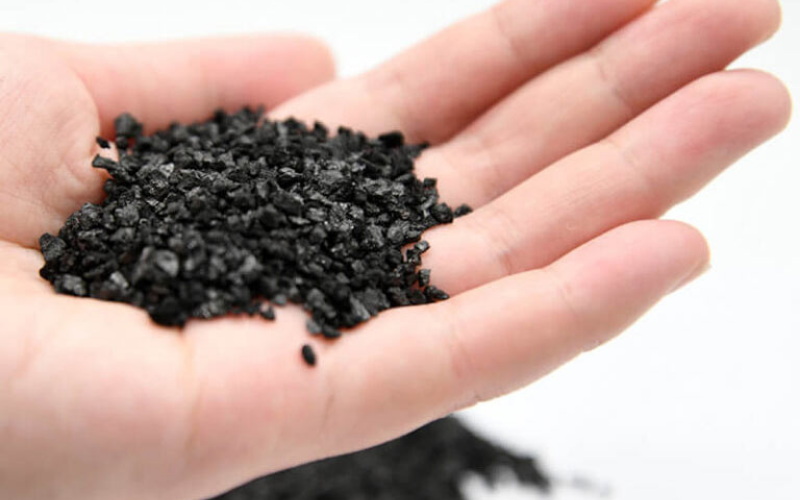
Activated carbon, sometimes called activated charcoal, is a carbonaceous solid material that has been processed to develop an extremely high internal surface area and a highly porous structure. It is typically produced from carbon‑rich raw materials such as coal, coconut shells, wood, or other biomass by carbonization and activation. During production, volatile components are driven off and the remaining carbon skeleton is “activated” to open up a huge network of pores of different sizes.
From a structural point of view, activated carbon consists mainly of disordered stacks of graphene‑like layers. These layers are not perfectly ordered like graphite; instead, they form a complex, amorphous structure full of micropores, mesopores, and macropores. Because of this, a single gram of activated carbon can have an internal surface area of hundreds or even thousands of square meters. This enormous surface area is the key to the adsorption capacity of activated carbon.
Chemically, activated carbon is mostly elemental carbon (often above 85–90%), with small amounts of other elements such as oxygen, hydrogen, nitrogen, and inorganic ash. On the surface of activated carbon, different functional groups may be present, including acidic and basic sites, phenolic groups, carboxylic groups, lactones, and others. These surface functional groups are responsible for many of the chemical interactions between activated carbon and the molecules it adsorbs.
Because activated carbon does not have a fixed molecular structure and composition like a pure compound, it is more accurate to describe it as a family of materials rather than a single chemical. Each grade of activated carbon can differ in raw material, pore size distribution, particle size, surface chemistry, and application performance. In this sense, asking “is activated carbon a chemical?” is similar to asking whether steel or glass is a chemical. They are all materials with chemical properties and compositions, widely used as industrial products.
Is Activated Carbon a Chemical, a Material, or Both?
To answer this question in a practical way, we need to look at activated carbon from three angles: scientific definition, industrial classification, and real‑world use.
From a strict scientific standpoint, a pure chemical is usually defined as a substance with a specific composition and structure. Activated carbon clearly does not fit this narrow definition. It is not a single molecule but a complex, partially ordered carbon network. Its exact composition changes depending on the raw material, activation method, and post‑treatments. For example, coconut shell activated carbon and coal‑based activated carbon can have very different pore structures and surface chemistries, even if both are called “activated carbon”.
From an industrial and regulatory point of view, activated carbon is definitely treated as a chemical product. It has CAS numbers, safety data sheets, specifications, and performance standards. Environmental agencies and international regulations list activated carbon as an adsorbent used in water treatment, air pollution control, and various purification processes. In purchasing and design documents, engineers often specify activated carbon grades by iodine number, methylene blue value, CTC activity, hardness, moisture, and ash content, just like they would specify purity and assay for a chemical reagent.
From an application point of view, activated carbon behaves like an advanced chemical treatment tool. It adsorbs and sometimes reacts with a wide range of substances, including organic pollutants, gases, odors, colors, and unwanted by‑products. It may not be dosed in the same way as acids or coagulants, but it plays an equally critical role in process performance and product quality.
Therefore, the most realistic answer is that activated carbon is a highly engineered carbon material which functions as a chemical adsorbent. It is not a single pure compound, but it is used in industry exactly as a key chemical treatment medium.
How Activated Carbon Is Made (And Why That Matters)
Understanding how activated carbon is produced helps explain its chemical and physical behavior. Although there are many specific technologies, the production of activated carbon generally follows two major stages: carbonization and activation.
Carbonization Stage
In the first step, a carbon‑rich raw material is heated in an inert atmosphere at high temperature to remove volatile organic components and concentrate the carbon content. This step is called carbonization or pyrolysis. Materials such as coal, coconut shells, wood, and other agricultural residues can be used. After carbonization, the material becomes a char, which is mostly carbon but still has limited porosity and relatively low surface area.
The properties of the char depend heavily on the raw material. Coconut shell char, for example, tends to produce activated carbon with a higher proportion of micropores, making it ideal for gas‑phase adsorption and removal of small organic molecules. Coal‑based char can offer a more balanced distribution of pore sizes, suitable for both liquid and gas treatment applications.
Activation Stage
The char is then activated to develop the pore structure. There are two main activation methods: physical activation and chemical activation.
In physical activation, the char is exposed to oxidizing gases such as steam or carbon dioxide at elevated temperatures. These gases slowly attack the carbon matrix, burn out disordered regions, and open up or enlarge pores. By controlling temperature, residence time, and gas composition, manufacturers can tailor the pore size distribution and surface area of the final activated carbon.
In chemical activation, the raw material (usually a biomass such as wood or nut shells) is impregnated with chemical agents like phosphoric acid or zinc chloride before carbonization. During heating, these chemicals promote charring and create a highly porous structure at lower temperatures than physical activation. After activation, the chemical agent is usually washed out, leaving behind an activated carbon with a specific pore structure.
Both physical and chemical activation methods strongly influence:
- Total surface area
- Micropore, mesopore, and macropore distribution
- Surface functional groups
- Mechanical strength and hardness
- Ash content and impurity profile
For end users, these parameters define how activated carbon will perform in water treatment, air purification, food and beverage decolorization, and many other processes.
How Activated Carbon Works: Adsorption and Surface Chemistry
The key mechanism behind activated carbon's performance is adsorption. Adsorption is the process by which molecules from a fluid (liquid or gas) adhere to the surface of a solid. This is different from absorption, where molecules penetrate into the bulk of a material.
Activated carbon primarily relies on physical adsorption. The enormous internal surface area and the presence of micropores create a large number of sites where molecules can be attracted and held by weak intermolecular forces such as van der Waals forces and London dispersion forces. Non‑polar and weakly polar organic molecules are especially well adsorbed by many types of activated carbon.
At the same time, surface chemistry plays a major role in determining which molecules are most strongly adsorbed. Acidic or basic surface functional groups can create electrostatic interactions or change local polarity. This means that by modifying the surface chemistry of activated carbon—for example, by oxidation, reduction, or impregnation with specific chemicals—manufacturers can enhance its affinity for certain contaminants.
In addition to simple adsorption, activated carbon can participate in or support chemical reactions. Impregnated activated carbons, for example, are loaded with special reagents such as alkali metals, metal oxides, or sulfur compounds. These reagents react with target gases such as hydrogen sulfide, sulfur dioxide, or mercury while the activated carbon provides the physical structure and surface. In catalytic applications, activated carbon often serves as a support for metals like palladium, platinum, or nickel, enabling hydrogenation and other chemical reactions.
Because of these mechanisms, activated carbon can be considered a hybrid between a physical filter media and a chemically active treatment material.
Industrial Applications of Activated Carbon
Activated carbon is used in almost every major industrial sector. Many engineers and procurement specialists encounter it first in water treatment or air purification, but its real reach is much wider.
Water and Wastewater Treatment
In drinking water treatment, granular activated carbon (GAC) filters are used to remove natural organic matter, taste and odor compounds, and a wide range of synthetic organic chemicals. Activated carbon also helps control disinfection by‑products by removing organic precursors before chlorination or other disinfection steps. Municipal plants employ fixed‑bed filters, contactors, or powdered activated carbon (PAC) dosing systems.
In industrial wastewater, activated carbon adsorbs residual organics, dyes, and many process chemicals that must be removed before discharge or reuse. Activated carbon is especially valuable for polishing effluents where conventional biological treatment is not enough to meet stringent environmental standards.
Air and Gas Purification
Activated carbon is extensively used in gas‑phase applications. In industrial exhaust treatment, activated carbon beds capture volatile organic compounds (VOCs), odors, and hazardous air pollutants from process vents and solvent‑based operations. In indoor air purification and HVAC systems, activated carbon filters help remove odors, fumes, and certain gaseous pollutants to improve air quality.
In personal protection, activated carbon is the core adsorbent in respirator cartridges and gas mask filters. It captures toxic gases and vapors to protect workers in chemical, pharmaceutical, and laboratory environments.
Food and Beverage Processing
In the food and beverage industry, activated carbon is frequently used to decolorize and purify liquids. Sugar syrups, juices, wine, beer, and edible oils can all be treated with activated carbon to remove color bodies, off‑flavors, and trace contaminants. High‑purity food‑grade activated carbons are carefully manufactured and washed to meet strict regulations on leachable impurities and contaminants.
Chemical and Pharmaceutical Industries
Chemical and pharmaceutical processes use activated carbon at multiple stages, especially during purification of intermediates and final active ingredients. Activated carbon can remove colored degradation products, residual catalysts, organic by‑products, and unwanted trace impurities. In the pharmaceutical sector, special high‑purity grades are used to ensure that no harmful substances are introduced to drug products.
Additionally, activated carbon is an important support material in many catalytic systems, providing high surface area and good dispersion of catalytic metals. In such cases, the combination of metal and activated carbon defines the behavior of the catalyst.
Environmental Protection and Metal Recovery
Activated carbon is widely applied in environmental protection projects. It is used for treating contaminated groundwater, soil vapor extraction streams, and industrial waste gases. In flue gas treatment, certain activated carbon products capture mercury and organic pollutants from combustion emissions.
In hydrometallurgy and precious metal recovery, activated carbon is used to adsorb gold and other metals from leach solutions. Its selectivity and high loading capacity make it essential in modern mining processes. Again, in these cases activated carbon serves as a sophisticated chemical separation medium.
Forms and Types of Activated Carbon
Activated carbon is available in different physical forms, each adapted to specific process conditions.
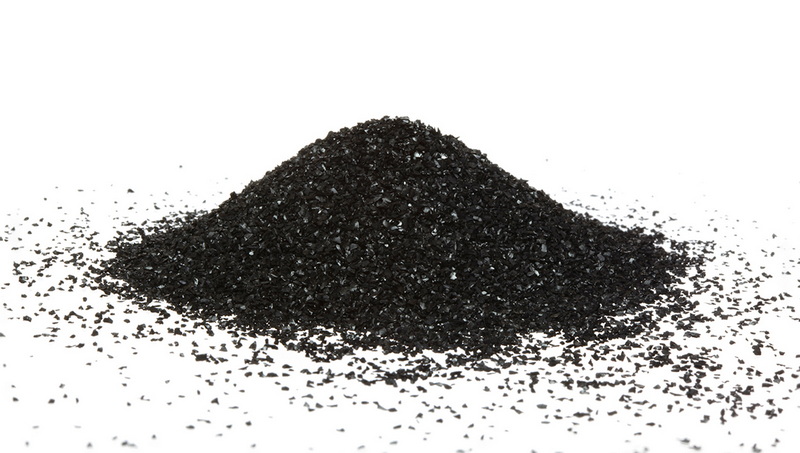
Granular activated carbon (GAC) is supplied as irregular granules or shaped particles. It is typically used in fixed‑bed adsorbers, pressure filters, and gravity filters for water and air treatment. The particle size distribution of GAC affects pressure drop, contact time, and adsorption kinetics.
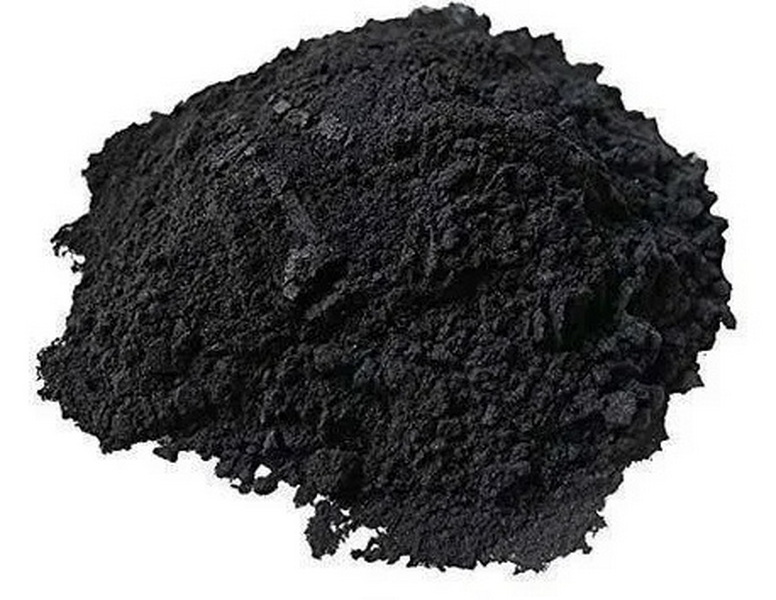
Powdered activated carbon (PAC) consists of fine particles with high external surface area. PAC is usually dosed directly into liquid streams or mixing tanks, allowing rapid contact and adsorption. After treatment, PAC is removed by sedimentation or filtration. It is commonly used in seasonal taste and odor control in drinking water plants or for batch purification in industrial processes.
Pelletized or extruded activated carbon is produced as cylindrical pellets of uniform size. These pellets offer low dust, high mechanical strength, and predictable pressure drop, which is ideal for gas‑phase adsorbers and solvent recovery systems.
Beyond physical form, activated carbon products are also differentiated by raw material (coconut shell, coal, wood, peat, etc.), activation method, surface functionalization, and impregnation. For example, coconut shell‑based activated carbon is often preferred for organic vapor adsorption due to its rich micropore structure, while wood‑based activated carbon can be favored for decolorization in liquid‑phase applications.
Impregnated activated carbons contain additional chemicals such as alkaline compounds, phosphates, or metals. These products are designed to target specific contaminants like acidic gases, ammonia, or mercury. They clearly show how activated carbon combines the roles of physical adsorbent and chemical treatment agent.
Safety, Handling, and Regulatory Aspects
Although activated carbon is used to treat many hazardous substances, it is itself relatively safe when handled properly. It is considered non‑toxic for typical industrial and consumer uses, and many grades are approved for contact with drinking water, food, and pharmaceuticals.
However, there are some important safety aspects to keep in mind:
- Dust: Fine activated carbon particles can be irritating if inhaled. Proper dust control, ventilation, and personal protective equipment are recommended.
- Combustibility: Activated carbon, especially in powder form, is combustible and can pose a dust explosion risk under certain conditions. Handling and storage should follow standard guidelines for combustible dusts.
- Oxygen depletion: In confined spaces with large amounts of fresh activated carbon, adsorption of oxygen from the air may create a low‑oxygen environment. Confined space entry procedures and monitoring are necessary.
Regulations in many countries define performance and purity standards for activated carbon used in drinking water, food processing, pharmaceutical production, and environmental protection. These standards cover parameters such as extractable metals, pH, leachable organics, and contamination by harmful substances. Industrial users should select activated carbon grades that meet all relevant certifications for their application.
From a regulatory perspective, activated carbon is clearly treated as a chemical product with defined safety and quality requirements. Even though its internal structure is complex and variable, it is an essential part of modern environmental and process chemistry.
Conclusion
So, is activated carbon a chemical? The most accurate answer is that activated carbon is not a single pure chemical compound but a family of highly engineered carbon materials designed and used as powerful chemical adsorbents. Its unique structure—a vast network of pores combined with tailored surface functional groups—allows activated carbon to interact with an enormous range of chemical species in water, air, gases, and process streams.
In water treatment, air and gas purification, food and beverage processing, chemical manufacturing, pharmaceutical production, environmental remediation, and metal recovery, activated carbon works as a critical treatment medium. Engineers specify it with detailed performance parameters, regulators treat it as a controlled substance, and end users depend on it as a core part of their chemical and environmental management strategies.
For designers, buyers, and operators, the practical takeaway is clear: rather than thinking of activated carbon as just a simple filter media, it is better to view it as a customizable adsorption technology. By choosing the right type of activated carbon—adjusting base material, pore structure, surface chemistry, and physical form—industrial users can solve complex purification challenges, improve product quality, and meet increasingly strict environmental standards.
Contact us to get more information!
FAQ About Activated Carbon
1. Is activated carbon the same as activated charcoal?
Yes. In most technical and commercial contexts, “activated carbon” and “activated charcoal” mean the same thing. Both refer to a specially processed porous carbon material with very high surface area and adsorption capacity. The term “activated carbon” is more common in industrial and environmental fields, while “activated charcoal” is often used in consumer products and medical applications. However, the underlying material and working principles are essentially identical.
2. Is activated carbon a chemical or a filter media?
Activated carbon can be described as both a filter media and a chemically active material. It is supplied as solid particles—granules, pellets, or powder—that are used in filters and adsorbers. At the same time, activated carbon interacts with chemicals in fluids through adsorption and sometimes through surface reactions. It is registered, tested, and specified like a chemical product, even though it is not a single defined compound.
3. What chemicals does activated carbon remove from water?
Activated carbon removes a broad spectrum of organic chemicals from water, including taste and odor compounds, natural organic matter, pesticides, industrial solvents, and many by‑products of disinfection and industrial processing. Some inorganic substances, such as certain oxidized metals or residual disinfectants, can also be reduced with appropriate grades of activated carbon. The exact removal performance depends on the type of activated carbon, the molecule size, concentration, pH, temperature, and contact time.
4. Can activated carbon be regenerated and reused?
Yes. Many granular activated carbon systems are designed to allow regeneration and reuse. Thermal reactivation in specialized furnaces drives off adsorbed contaminants and restores a large portion of the adsorption capacity of activated carbon. This significantly reduces operating costs and minimizes waste generation. In some applications, chemical or steam regeneration methods are used, but the feasibility depends on the type of contaminants and the process design.
5. Is activated carbon environmentally friendly?
Activated carbon is a key tool for environmental protection. It helps remove pollutants from drinking water, wastewater, industrial gases, and contaminated soil and groundwater. While energy and raw materials are required to produce and regenerate activated carbon, its use often leads directly to cleaner discharges, reduced emissions, and better protection of public health. When combined with proper regeneration and disposal strategies, activated carbon is an environmentally effective and responsible solution for many industries.
Citations:
1. https://en.wikipedia.org/wiki/Activated_carbon
2. https://generalcarbon.com/facts-about-activated-carbon/activated-carbon-faq/
3. https://www.chemviron.eu/what-is-activated-carbon/
4. https://tdb.epa.gov/tdb/treatmentprocess?treatmentProcessId=2074826383
5. https://www.calgoncarbon.com/app/uploads/Basics-of-Activated-Carbon-Calgon-Carbon-Chemical-Engineering-Magazine.pdf
6. https://www.karbonous.com/applications/
7. https://www.calgoncarbon.com/activated-carbon/
8. https://pubchem.ncbi.nlm.nih.gov/compound/Activated-Charcoal
9. https://donau-carbon-us.com/Products-Solutions/Aktivkohle/Anwendungen
10. https://generalcarbon.com/activated-carbon-from-general-carbon/
11. https://rajahfiltertechnics.com/uncategorized/the-science-behind-activated-carbon-how-it-works-and-why-its-effective/
12. https://www.kuraray.eu/products-solutions/product-ranges/activated-carbon
13. https://www.sciencedirect.com/topics/agricultural-and-biological-sciences/activated-carbon
14. https://www.ams.usda.gov/sites/default/files/media/Activated%20Charcoal%20Processing%20TR.pdf
15. https://puragen.com/uk/insights/what-is-activated-carbon-used-for/


