Content Menu
● What do we mean by "industrial" vs "commercial" activated carbon?
>> Industrial activated carbon: high‑spec, high‑risk applications
>> Commercial activated carbon: general‑purpose and consumer‑facing
● How activated carbon works (and why that matters for both grades)
● Technical comparison: industrial vs commercial activated carbon
>> Core technical parameters
>> Why this matters in operations
● Application‑level differences across key industries
>> Water and wastewater treatment
>> Air and gas purification
>> Food, beverage, and pharmaceuticals
● Coal activated carbon in industrial vs commercial contexts
● How to choose: a practical 5‑step decision framework
● Expert insights from an industrial supplier's perspective
● Where to use industrial vs commercial activated carbon
● Call to action: choosing the right coal activated carbon partner
● FAQs
● References
Industrial buyers and engineers often use "industrial activated carbon" and "commercial activated carbon" as if they mean the same thing – but in practice they point to different performance levels, quality controls, and end-use expectations. As a manufacturer of coal activated carbon serving both heavy industry and broader commercial markets, Guangdong Tongke Activated Carbon Co., Ltd. sees these differences every day in real projects across water, air, food, and chemical processing lines. [sodimate-inc]
> From my experience working with plant engineers and procurement teams worldwide, the key is not just "which carbon", but "which grade, for which risk profile, under which standard".
What do we mean by "industrial" vs "commercial" activated carbon?
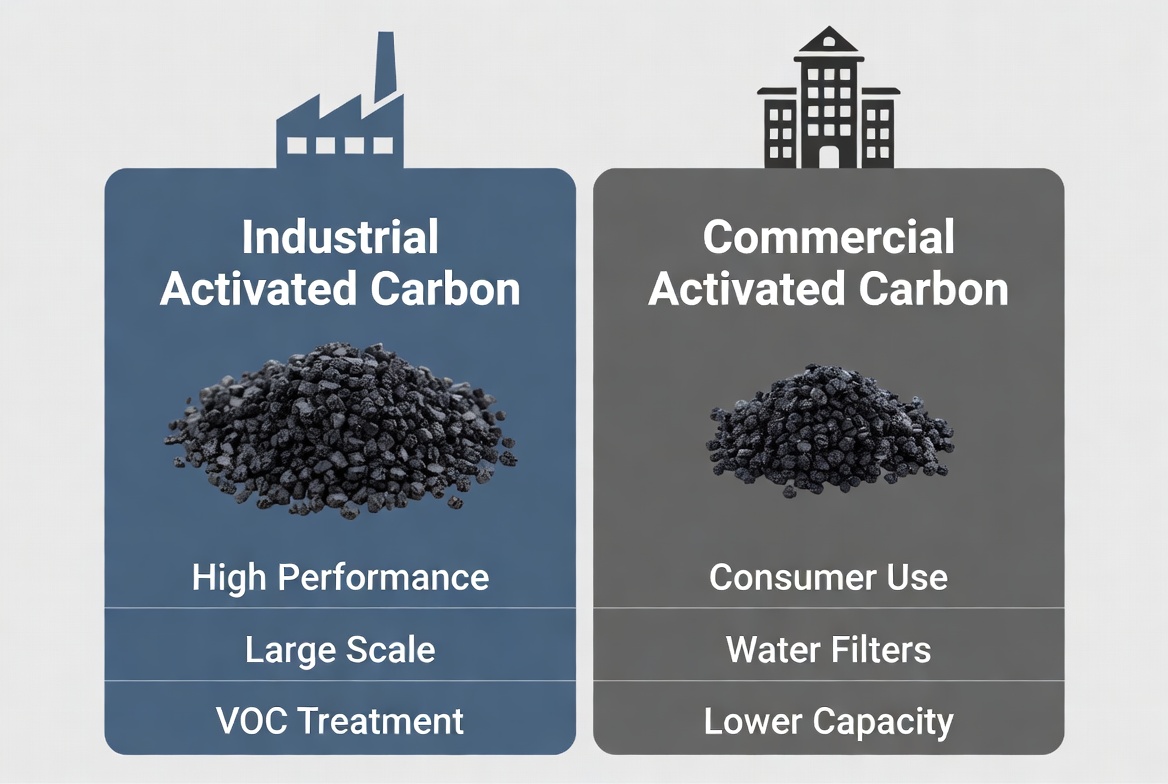
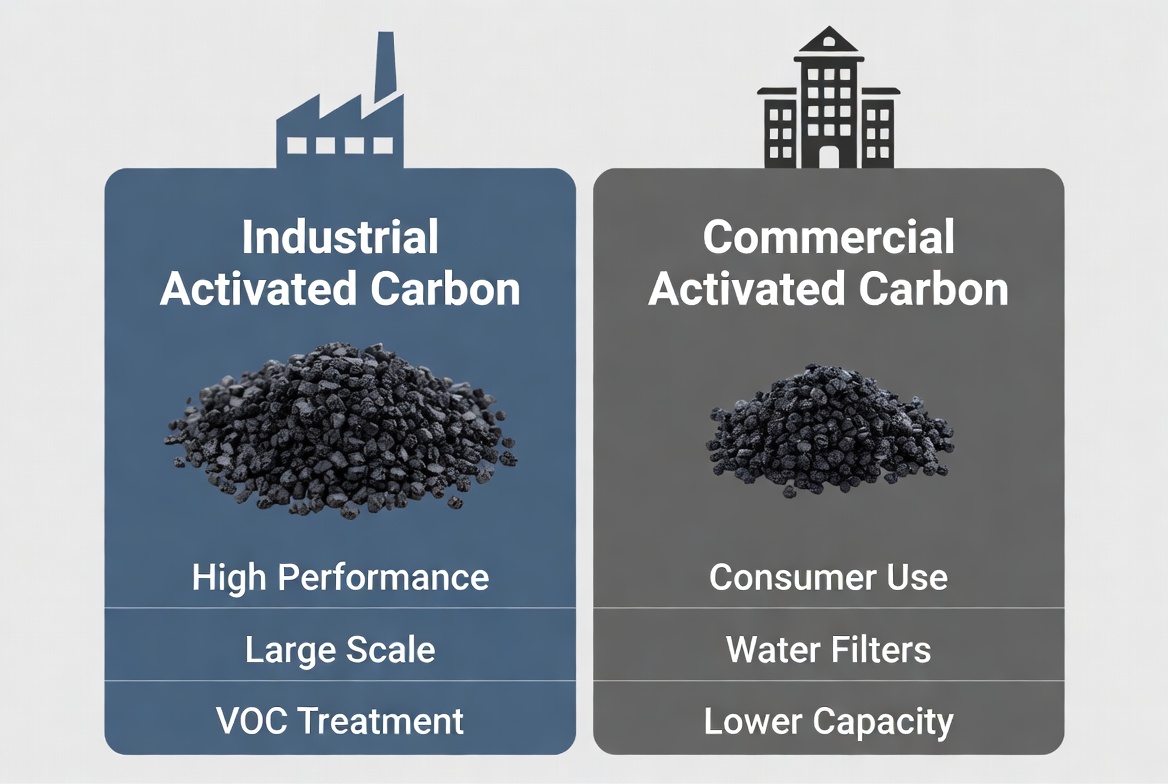
Industrial activated carbon: high‑spec, high‑risk applications
In global practice, industrial activated carbon refers to materials engineered and documented for regulated, mission‑critical or high‑risk processes. These include: [elchemy]
- Municipal and industrial water treatment
- Flue gas and VOC control in chemical and power plants
- Food & beverage decolorization and purification
- Pharmaceutical and API purification steps
- Solvent recovery and precious metals extraction [en.wikipedia]
Industrial grades are typically characterized by:
- Strict quality specifications (iodine number, CTC activity, hardness, ash, moisture, particle size distribution). [sodimate-inc]
- Detailed test reports per batch, often aligned with national or industry standards.
- Traceable production from defined raw materials such as coal, wood, or coconut shell. [en.wikipedia]
- Support for validation, audits, and long‑term supply contracts.
Commercial activated carbon: general‑purpose and consumer‑facing
Commercial activated carbon is more of a market label than a technical term. It typically covers products used in: [generalcarbon]
- Household water filters and jugs
- Air purifiers, odor control filters, refrigerator filters
- Aquarium and pond filtration
- Generic cartridge filters sold through retail or online channels [generalcarbon]
Compared with industrial grades, commercial products often:
- Focus on cost and convenience rather than maximum performance.
- Provide limited technical data (e.g., only basic adsorption claims).
- Are optimized for small‑scale or intermittent use instead of continuous 24/7 operation. [elchemy]
Key point: chemically, both are forms of activated carbon, but the expectations for documentation, consistency, and regulatory readiness are much higher on the industrial side. [elchemy]
How activated carbon works (and why that matters for both grades)
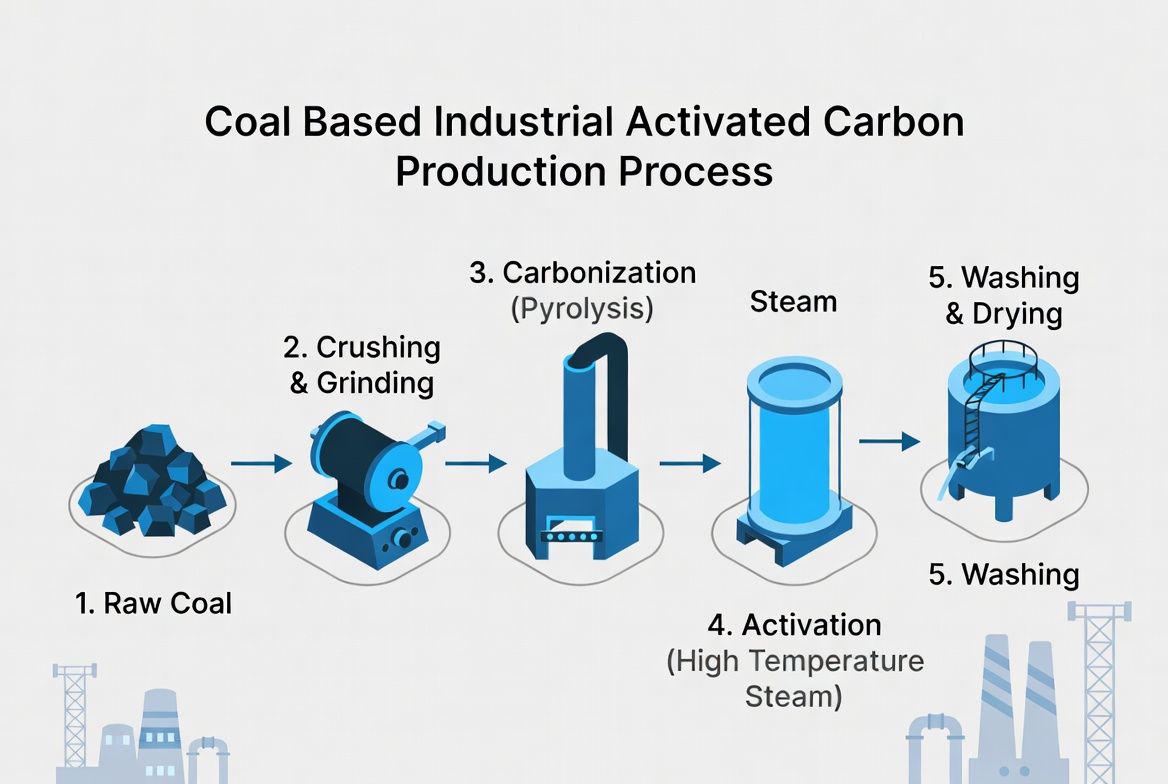
Regardless of label, activated carbon works through adsorption, not absorption. During activation, coal or other carbonaceous raw materials are processed to create a vast network of micro‑ and mesopores, which massively increases internal surface area. Contaminant molecules in water or gas streams adhere to this internal surface, forming a thin film. [ionexchangeglobal]
For both industrial and commercial grades:
- The base chemistry is similar: carbon with extremely high surface area.
- The pore size distribution (micro, meso, macro) determines which molecules are captured most effectively. [ionexchangeglobal]
- Process controls, activation conditions, and post‑treatments fine‑tune the product for different uses.
From an operator's standpoint, the real difference is how well those properties are controlled, documented, and kept stable from batch to batch.
Technical comparison: industrial vs commercial activated carbon
Core technical parameters
Below is a simplified view of how a typical coal‑based industrial activated carbon from a specialized manufacturer like Guangdong Tongke Activated Carbon Co., Ltd. compares with a generic commercial product used in consumer filters. [tkcarbon.en.made-in-china]
| Dimension | Industrial activated carbon | Commercial activated carbon |
| Typical raw material | Coal, coconut, wood with documented origin (sodimate-inc) | Mixed or lowest‑cost sources, often not specified (elchemy) |
| Activation & control | Tight process control and reproducible pore structure (ionexchangeglobal) | Standard control adequate for consumer performance (elchemy) |
| Surface area / activity | High iodine/CTC numbers for demanding loads (ionexchangeglobal) | Moderate activity for light/medium loads (sodimate-inc) |
| Mechanical strength | High hardness, low attrition for packed beds (sodimate-inc) | Adequate for cartridges, less critical (sodimate-inc) |
| Particle size distribution | Precisely controlled for pressure drop and kinetics (sodimate-inc) | Broad distribution is common (sodimate-inc) |
| Documentation & testing | Full COA, performance curves, often third‑party tests (sodimate-inc) | Limited consumer‑level data sheets (elchemy) |
| Regulatory suitability | Designed for specific standards (e.g., potable water) (sodimate-inc) | Often marketed, not qualified, for regulated plants (elchemy) |
| Typical usage pattern | 24/7 continuous systems, long campaigns | Intermittent household or small commercial use |
Why this matters in operations
For engineering teams, these differences show up as:
- More predictable breakthrough curves and service life in industrial beds.
- Lower risk of fines, pressure drop spikes, and channeling.
- Easier compliance when audited, because documentation and traceability are in place. [sodimate-inc]
Using a purely commercial grade in a high‑risk industrial system can lead to unstable performance and higher total cost of ownership, even if the unit price looks attractive.
Application‑level differences across key industries
Water and wastewater treatment
In industrial and municipal water plants, activated carbon is often used for:
- Removal of organic micropollutants and pesticides
- Chlorine/chloramine reduction and taste‑odor control
- Polishing after biological treatment [en.wikipedia]
Here, industrial activated carbon is selected based on:
- Guaranteed minimum iodine number or methylene blue value.
- Proven performance in pilot tests and reference projects.
- Compatibility with backwashing and regeneration schemes. [ionexchangeglobal]
In contrast, commercial carbon in household filters focuses on:
- Compact cartridges.
- Short‑term taste and odor improvement.
- Convenience replacement cycles for consumers. [generalcarbon]
Air and gas purification
Industrial air and gas applications include:
- VOC removal in chemical plants and paint booths
- Flue gas polishing, including SO₂, NOx, and heavy metals
- Solvent recovery and carbon capture pilots [digital.csic]
For these, industrial grades may be:
- Impregnated with chemicals to enhance capture of specific gases like H₂S or ammonia. [generalcarbon]
- Designed with specific particle sizes to balance contact time and pressure drop.
- Validated under realistic process conditions, including temperature and humidity. [digital.csic]
Commercial air purification media, by contrast, is optimized for:
- Office buildings, retail spaces, and homes.
- Odor control and general VOC reduction rather than strict compliance limits. [generalcarbon]
Food, beverage, and pharmaceuticals
In food and beverage processing, activated carbon is used for decolorization (e.g., sugar, syrups), off‑flavor removal, and purification of ingredients. In pharmaceuticals, it can be integrated into API manufacturing or purification steps where purity is critical. [sodimate-inc]
In these domains, industrial‑grade, often coal‑ or wood‑based activated carbons must meet:
- Specific purity and extractables limits.
- Consistent adsorption of target molecules without impacting desired components.
- Traceability for audits and product recalls.
Generic commercial carbons rarely provide the depth of validation and documentation needed here.
Coal activated carbon in industrial vs commercial contexts
Coal‑based activated carbon remains one of the most widely used industrial solutions because of its high density, strong mechanical properties, and flexible pore structure. For a manufacturer like Guangdong Tongke Activated Carbon Co., Ltd., this allows tailored products for: [en.wikipedia]
- Large fixed beds in water treatment plants.
- Flue gas and VOC adsorption units.
- High‑load adsorption in chemical and petrochemical plants. [tkcarbon.en.made-in-china]
In commercial markets, coal activated carbon may still be used in:
- Domestic or small commercial water purifiers.
- HVAC filters for offices.
- Odor control cartridges. [sodimate-inc]
However, the industrial grades typically undergo stricter selection and testing, even when the raw material is the same.
How to choose: a practical 5‑step decision framework
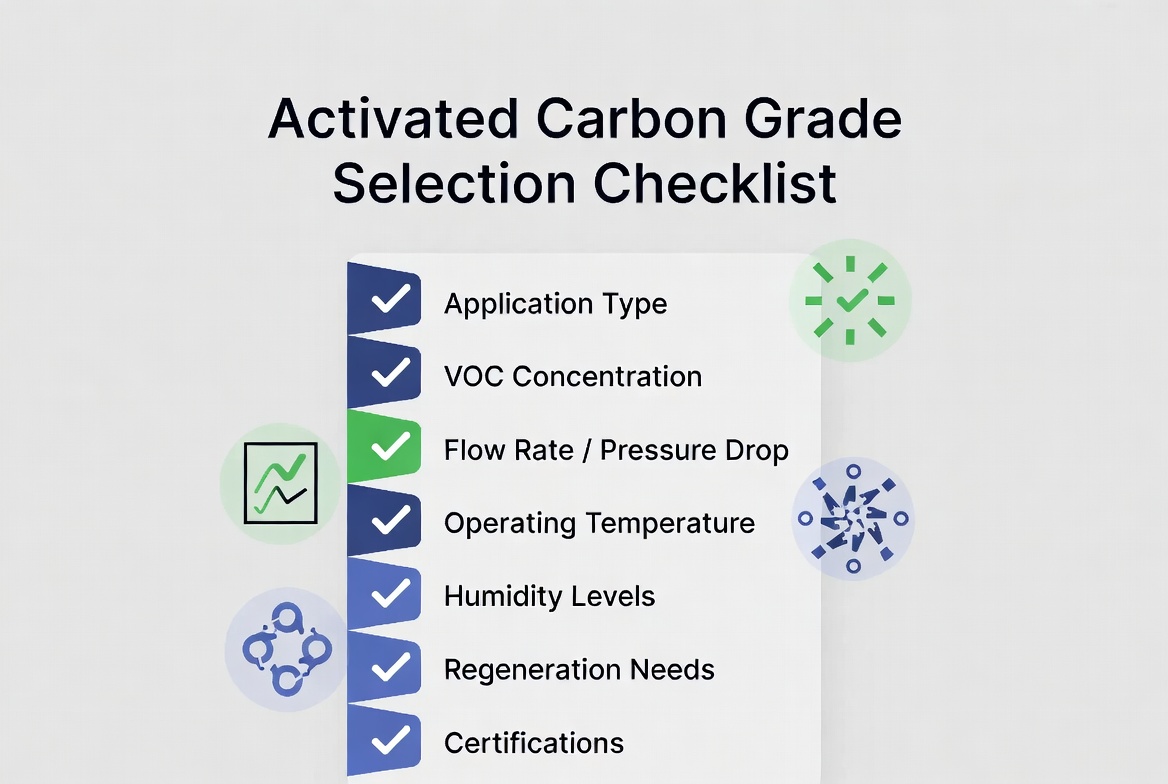
From a buyer or engineer's perspective, the decision is less about the label "industrial" or "commercial" and more about fitness for purpose. Based on project experience, a practical approach is:
1. Define the risk level and regulation
- Is the process tied to potable water, food, pharma, emissions, or worker exposure limits?
- If yes, industrial‑grade, documented carbon is almost always required. [elchemy]
2. Quantify load and operating conditions
- Contaminant type and concentration, flow rate, temperature, pH, and expected runtime.
- Share these with your carbon supplier to guide grade selection. [ionexchangeglobal]
3. Specify measurable performance targets
- Breakthrough time, removal efficiency, and pressure drop ranges.
- Ask for typical iodine, CTC, and hardness values, plus performance curves. [ionexchangeglobal]
4. Check documentation and consistency
- Require certificates of analysis, batch traceability, and—if needed—third‑party testing.
- Verify that raw materials and process routes are stable, not opportunistic. [tkcarbon.en.made-in-china]
5. Pilot before full‑scale adoption
- Run lab or pilot tests to de‑risk scaling.
- Use the data to optimize bed depth, contact time, and replacement cycles. [digital.csic]
Expert insights from an industrial supplier's perspective
From the perspective of a specialized manufacturer serving both domestic China and export markets, three expert observations stand out:
- Terminology hides complexity
Many buyers use "activated carbon" generically, but for mission‑critical plants, only fully specified industrial grades with clear COAs and performance data are acceptable. [elchemy]
- Total lifecycle cost beats unit price
Slightly higher‑priced industrial carbons often deliver longer bed life, more stable operation, and lower unplanned downtime, especially in high‑load water and flue gas streams. [digital.csic]
- Customization creates real value
Tailoring particle size, activity, impregnation, and packaging to the actual system often yields higher adsorption efficiency and more predictable replacement cycles than off‑the‑shelf commercial media. [ionexchangeglobal]
Guangdong Tongke Activated Carbon Co., Ltd. leverages multi‑plant capacity and R&D to provide such custom coal activated carbon solutions across water, air, food, chemical, and pharmaceutical applications. [tkcarbon.en.made-in-china]
Where to use industrial vs commercial activated carbon
To make this more concrete, here's how a typical decision might look:
- Use industrial activated carbon when:
- You operate a municipal or industrial water treatment system.
- You must meet emissions or occupational exposure limits.
- You work in food, beverage, or pharma production lines.
- System uptime and regulatory compliance are business‑critical.
- Use commercial activated carbon when:
- You manage small office or retail air purification.
- You replace cartridges in household or light commercial filters.
- The process is non‑critical and lightly regulated.
Whenever you move from "comfort and convenience" to "compliance and continuity", you move from commercial to industrial expectations.
Call to action: choosing the right coal activated carbon partner
If you are responsible for water, air, gas, or process purification in an industrial environment, the safest approach is to treat activated carbon as an engineered component—not a commodity. Work with a specialist manufacturer that can: [en.wikipedia]
- Understand your process conditions and risk profile.
- Recommend appropriate coal‑based industrial grades.
- Provide repeatable quality, documentation, and technical support across the life of your system. [tkcarbon.en.made-in-china]
Guangdong Tongke Activated Carbon Co., Ltd. offers tailored coal activated carbon solutions for global industrial customers; if you share your process data and performance targets, the team can recommend the most suitable industrial grade and support pilot testing for your plant. [sodimate-inc]
FAQs
1. Is industrial activated carbon chemically different from commercial activated carbon?
Chemically, both are forms of activated carbon with high surface area, but industrial grades are produced and controlled under stricter specifications, documentation, and performance requirements than typical commercial products. [elchemy]
2. Can I use commercial activated carbon in an industrial water treatment plant?
In theory you can, but in practice this is risky because commercial products rarely provide the consistent performance, traceability, and regulatory alignment needed for industrial or municipal water systems. [en.wikipedia]
3. Why is coal activated carbon popular for industrial applications?
Coal‑based activated carbon offers high density, robust mechanical strength, and a versatile pore size distribution, making it well suited to fixed beds in water, air, and gas purification systems. [sodimate-inc]
4. How do I know if I need an impregnated industrial activated carbon?
If you are targeting specific gases like hydrogen sulfide, ammonia, or certain VOCs in air or flue gas, impregnated industrial carbons can deliver significantly higher removal efficiency than non‑impregnated commercial media. [generalcarbon]
5. What information should I send to my activated carbon supplier before selecting a grade?
You should provide contaminant types and concentrations, flow rate, temperature, pH (for liquids), operating schedule, and regulatory or performance targets so that the supplier can recommend an industrial grade optimized for your process. [ionexchangeglobal]
References
- Ion Exchange Global. "Types of Activated Carbon Used in Industrial Purification." 2026. [ionexchangeglobal]
- Sodimate Inc. "Activated Carbon: Types, Applications, Advantages." 2023. [sodimate-inc]
- Guangdong Tongke Activated Carbon Co., Ltd. Company profile on Made‑in‑China. [tkcarbon.en.made-in-china]
- Elchemy. "Activated Carbon or Activated Charcoal? A Guide for US Water and Air Treatment." 2026. [elchemy]
- General Carbon. "Understanding Activated Carbon for Air Purification." 2026. [generalcarbon]
- Plaza, M. G. et al. "Post‑combustion CO₂ capture with a commercial activated carbon." CSIC Digital Repository. [digital.csic]
- Wikipedia. "Activated carbon." [en.wikipedia]


