Content Menu
● What Is Activated Carbon
● Core Working Principle: Adsorption
>> Physical adsorption in activated carbon
>> Catalytic and chemical effects
● Flow Path Inside an Activated Carbon Water Filter
>> Contact time and bed depth
>> Mass transfer zone
● GAC vs Carbon Block Filters
>> Granular activated carbon (GAC) filters
>> Activated carbon block filters
● What Contaminants Activated Carbon Removes From Water
>> Commonly removed contaminants
>> What activated carbon does not remove well
● Design Factors That Control Performance
>> Carbon quality and pore structure
>> Flow rate, contact time, and temperature
● Maintenance, Replacement, and Reactivation
>> Breakthrough and replacement intervals
>> Reactivation and disposal
● Typical Applications of Activated Carbon Water Filters
● Conclusion
● FAQ About Activated Carbon Water Filters
>> 1) How long does an activated carbon water filter last?
>> 2) Do activated carbon water filters remove all contaminants?
>> 3) Is activated carbon safe for drinking water applications?
>> 4) What is the difference between powdered and granular activated carbon in water treatment?
>> 5) How can I optimize an industrial activated carbon water filtration system?
● Citations:
Activated carbon water filters work by passing water through a porous bed of activated carbon where unwanted chemicals are captured on the carbon surface through adsorption and catalytic reactions. In household and industrial systems, an activated carbon water filter is one of the most widely used and cost‑effective technologies for improving taste, odor, and chemical quality of water.[1][2][3][4]
What Is Activated Carbon
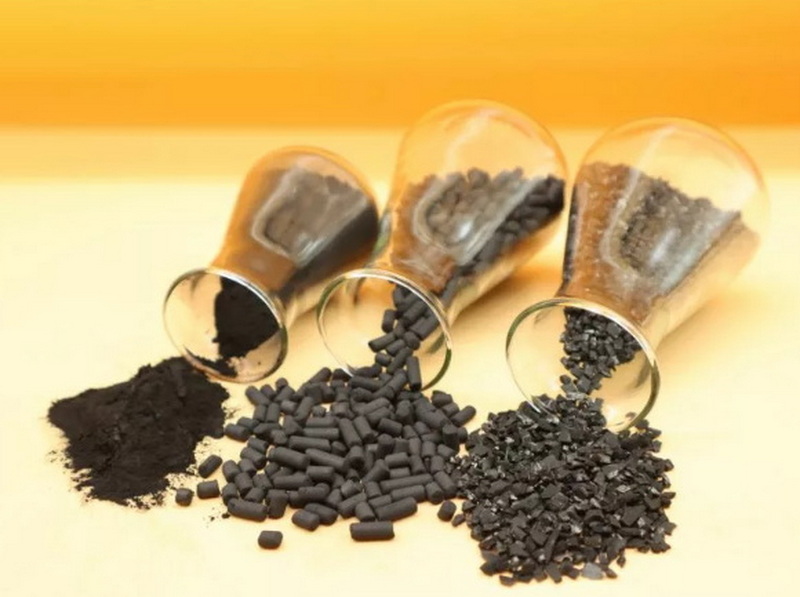
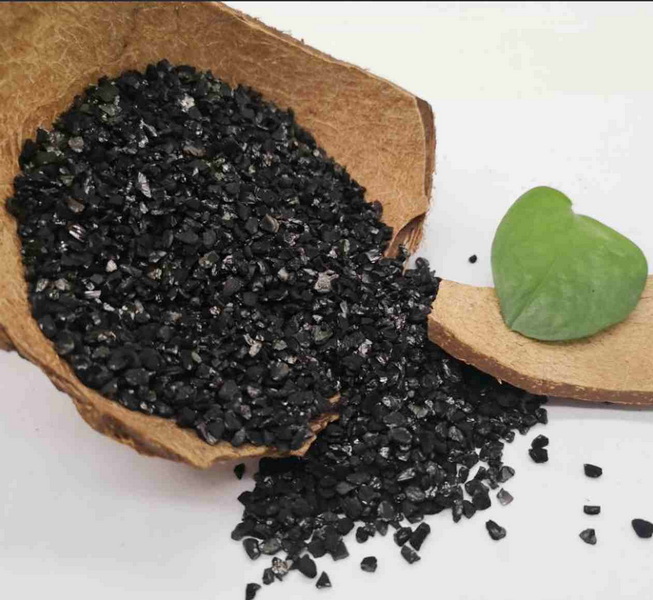
Activated carbon is a highly porous form of carbon with an enormous internal surface area created by thermal or chemical activation of raw materials such as coal, wood, or coconut shell. During activation, steam or carbon dioxide opens a network of micro‑, meso‑, and macropores in the carbon structure, enabling activated carbon to adsorb large amounts of contaminants from water.[2][5][6]
Because of this pore network, one gram of activated carbon can present hundreds of square meters of internal surface area where pollutants can attach. This unique structure makes activated carbon a versatile adsorbent for water treatment, wastewater polishing, and point‑of‑use drinking water filtration.[5][4][7]
- Activated carbon can be produced in powdered (PAC), granular (GAC), and carbon block forms for water filters.[8][2]
- Different raw materials and activation conditions change pore size distribution and adsorption performance of activated carbon.[2][5]
Core Working Principle: Adsorption
Water treatment with activated carbon is fundamentally an adsorption process, not simple straining like a sieve. As water flows through an activated carbon water filter, dissolved molecules are attracted to and held on the carbon surface by physical and chemical forces.[4][7][2]
Physical adsorption in activated carbon
The main mechanism in an activated carbon water filter is physical adsorption caused by van der Waals and hydrophobic interactions between contaminants and the carbon surface. Non‑polar or weakly polar organic molecules are especially attracted to the hydrophobic surface of activated carbon and accumulate in its pores as water passes by.[9][3][7]
- Activated carbon preferentially adsorbs chlorine by‑products, VOCs, pesticides, herbicides, and many taste‑ and odor‑causing compounds.[4][2]
- The large internal surface of activated carbon allows multi‑layer adsorption where molecules stack within the pores.[7][5]
Catalytic and chemical effects
Beyond physical adsorption, activated carbon can also promote catalytic reduction and surface reactions. For example, activated carbon can catalytically reduce free chlorine to chloride ions while itself remaining essentially unchanged.[10][11][2]
- Functional groups on the surface of activated carbon can react with certain oxidants and some organic molecules, improving removal efficiency.[5][7]
- Surface chemistry of activated carbon can be modified (impregnated) to target specific contaminants such as sulfur compounds or certain metals.[6][7]
Flow Path Inside an Activated Carbon Water Filter
In a typical activated carbon water filter, contaminated water enters, passes through a bed or block of activated carbon, and leaves with reduced levels of targeted contaminants. The design of this flow path directly affects how efficiently the activated carbon is used.[2][4]
Contact time and bed depth
The effectiveness of an activated carbon water filter strongly depends on the contact time between water and activated carbon surface. Longer contact time allows more molecules to diffuse into pores and adsorb, so deeper beds and controlled flow rates are critical for industrial activated carbon filters.[12][4][2]
- Bed depth and flow rate are often expressed as empty bed contact time (EBCT) when sizing activated carbon water filters.[10][4]
- Slower flow and higher bed depth generally increase removal of organics and chlorine by an activated carbon filter.[13][12]
Mass transfer zone
Inside an activated carbon water filter, adsorption occurs in a moving “mass transfer zone” (MTZ). At the influent end of the bed, activated carbon is saturated, while the downstream portion is still fresh until the MTZ moves through the bed and breakthrough occurs.[7][4][10]
- Once the MTZ reaches the outlet, contaminants begin to appear in the effluent, signaling that the activated carbon must be replaced or reactivated.[7][10]
- Proper design keeps the MTZ away from the outlet during the planned service life of the activated carbon water filter.[4][10]
GAC vs Carbon Block Filters
Two of the most common formats for activated carbon water filters are granular activated carbon (GAC) and activated carbon block (CB). Both rely on the same activated carbon adsorption principles, but their structure and performance differ.[12][8]
Granular activated carbon (GAC) filters
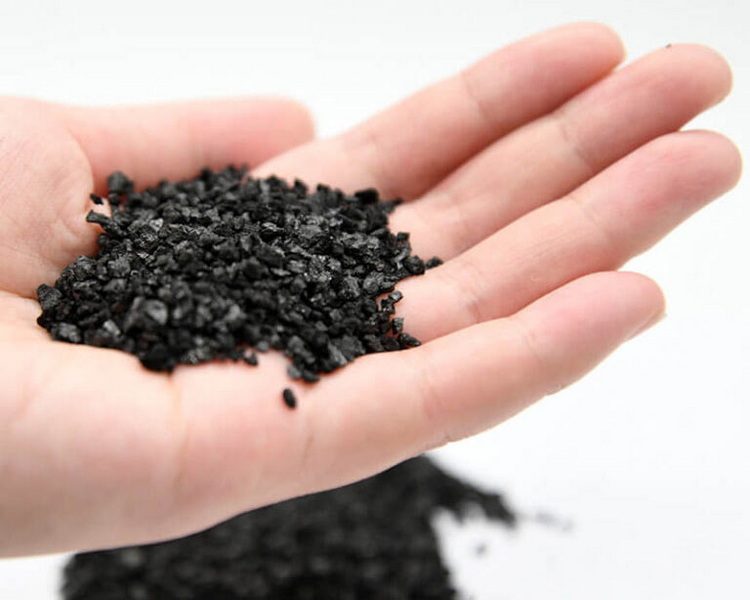
GAC filters use relatively loose granules of activated carbon contained in a vessel or cartridge through which water flows. The open structure gives GAC filters relatively low pressure drop and higher flow rates.[13][12]
- GAC activated carbon water filters are often used in whole‑house, point‑of‑entry, and municipal systems where flow must be high.[12][13]
- Because the bed is looser, GAC may allow some channeling and has lower fine‑particle filtration capability than a compact carbon block.[8][12]
Activated carbon block filters
Carbon block filters are made by compressing fine activated carbon powder with binders into a dense cylindrical block with controlled pore structure. The tight packing forces water to take a longer path and increases contact time with the activated carbon surface.[8][13][12]
- Carbon block activated carbon water filters typically remove a broader range of contaminants and finer particles than GAC, but at the cost of higher pressure drop and lower flow rate.[13][12]
- Because of their compact structure, carbon block filters are common in under‑sink, countertop, refrigerator and pitcher activated carbon systems.[1][8]
What Contaminants Activated Carbon Removes From Water
Activated carbon water filters are excellent for removing many dissolved chemicals, but not all contaminants. Their performance depends on the type of activated carbon, pore structure, water chemistry, and system design.[2][4][7]
Commonly removed contaminants
Activated carbon is especially effective for removing organic compounds and chlorine‑related substances that affect taste, odor, and safety.[4][2]
- Chlorine and many chlorination by‑products that cause taste and odor issues.[10][2]
- Many volatile organic compounds (VOCs), pesticides, herbicides, and industrial organics.[7][2]
- Some disinfection by‑products and synthetic chemicals that are hydrophobic and fit into the pores of activated carbon.[3][2]
What activated carbon does not remove well
Standard activated carbon water filters are not universal purifiers and are weak for certain contaminants.[10][4]
- Activated carbon alone does not reliably remove most dissolved inorganic salts, hardness minerals, nitrates, or heavy metals unless specially treated.[4][10]
- Activated carbon filters are not primary disinfectants and generally do not guarantee removal of bacteria, viruses, or cysts without additional treatment stages.[10][4]
Design Factors That Control Performance
Several design and operating factors determine how well an activated carbon water filter will work in real applications. Properly optimizing these factors is critical in industrial and municipal systems using activated carbon.[4][10]
Carbon quality and pore structure
Different activated carbon products have different surface areas, pore size distributions, and surface chemistries. Microporous activated carbon is particularly effective for small molecules, while mesopores help adsorb larger organics.[5][2]
- Higher surface area activated carbon generally provides greater adsorption capacity for organics, all else equal.[5][2]
- Production conditions such as activation temperature and time strongly affect the adsorption capacity of activated carbon.[5][7]
Flow rate, contact time, and temperature
Hydraulic conditions in the activated carbon water filter play a major role in removal efficiency. Lower flow rates and longer contact times allow more thorough adsorption onto activated carbon.[12][4]
- EBCT, typically measured in minutes, is used to define required contact time in activated carbon filter design.[10][4]
- Temperature affects adsorption: many organics adsorb better on activated carbon at lower temperatures, while higher temperatures can reduce capacity.[5][4]
Maintenance, Replacement, and Reactivation
An activated carbon water filter has a finite adsorption capacity and eventually becomes saturated. If not maintained, exhausted activated carbon can allow breakthrough of contaminants and may even release previously adsorbed compounds.[7][4][10]
Breakthrough and replacement intervals
Breakthrough occurs when the outlet concentration of a contaminant starts to rise, indicating the activated carbon is no longer effectively adsorbing it. In point‑of‑use systems, this is usually managed by time‑ or volume‑based cartridge replacement recommendations.[1][2][7][10]
- Municipal and industrial systems using granular activated carbon often monitor contaminant levels to determine when to change or regenerate the activated carbon.[7][10]
- Ignoring replacement intervals can allow chlorine, VOCs, and other chemicals to pass through the activated carbon water filter at unsafe levels.[4][10]
Reactivation and disposal
Spent activated carbon from large filters can often be thermally reactivated by specialized facilities, restoring much of its adsorption capacity. Where reactivation is not used, spent activated carbon must be disposed of according to regulations reflecting the types of contaminants it holds.[6][7][10]
- Reactivation reduces waste and life‑cycle cost of industrial activated carbon water treatment systems.[6][7]
- When activated carbon has adsorbed hazardous organics, it must be managed as a potentially hazardous waste.[7][10]
Typical Applications of Activated Carbon Water Filters
Because activated carbon is flexible and effective for many organics, activated carbon water filters appear in a wide range of markets. From household kitchen systems to complex industrial plants, activated carbon plays a central role in water purification.[4][7]
- Household pitchers, under‑sink units, faucet filters, and refrigerator cartridges often rely on activated carbon blocks to improve taste and odor.[1][8]
- Industrial and municipal plants use large GAC beds of activated carbon for polishing drinking water, treating wastewater, and removing industrial organics before discharge or reuse.[7][4]
For a Chinese manufacturer supplying activated carbon worldwide, these applications represent multiple opportunities to provide customized activated carbon grades for different water filter designs and regulations.[3]
Conclusion
An activated carbon water filter works by passing water through a highly porous, high‑surface‑area activated carbon medium that adsorbs a wide range of organic chemicals, chlorine, and taste‑ and odor‑causing compounds. Correct selection of activated carbon type, filter configuration (GAC or carbon block), contact time, and maintenance schedule is essential to ensure that activated carbon water filters deliver reliable performance for household, commercial, and industrial users.[2][12][10][4]
FAQ About Activated Carbon Water Filters
1) How long does an activated carbon water filter last?
The service life of an activated carbon water filter depends on water quality, flow rate, and cartridge size, but many point‑of‑use cartridges are rated for a few hundred to several thousand liters or a few months of use. Industrial GAC beds using activated carbon can operate for many months or years before breakthrough, as long as design EBCT and loading limits are respected.[1][2][10][7]
2) Do activated carbon water filters remove all contaminants?
No, activated carbon water filters do not remove all contaminants; they are primarily effective for organic chemicals, chlorine, and many taste‑ and odor‑causing substances. Activated carbon filters are not designed to remove hardness minerals, most dissolved salts, or to provide complete disinfection without additional treatment stages.[2][10][4]
3) Is activated carbon safe for drinking water applications?
High‑quality activated carbon with appropriate certification is considered safe and is widely used in drinking water treatment worldwide. Activated carbon water filters are frequently included in systems certified to standards such as NSF/ANSI for chlorine, taste, odor, and specific chemical reductions.[6][1][10][4]
4) What is the difference between powdered and granular activated carbon in water treatment?
Powdered activated carbon (PAC) consists of fine particles added directly into water, then removed by sedimentation or filtration, while granular activated carbon (GAC) is used as a fixed bed in columns or filters. PAC can provide rapid adsorption in batch or emergency treatment, whereas GAC is better suited for continuous activated carbon water filter operation.[2][4][7]
5) How can I optimize an industrial activated carbon water filtration system?
To optimize an industrial activated carbon water filtration system, engineers should choose appropriate activated carbon grades, ensure sufficient bed depth and EBCT, and control flow rates for adequate contact time. Regular monitoring of influent and effluent quality, along with timely media replacement or reactivation of activated carbon, is essential to maintain consistent performance.[10][4][7]
Citations:
[1](https://www.freshwatersystems.com/blogs/blog/activated-carbon-filters-101)
[2](https://www.cleantechwater.co.in/blog/need-know-activated-carbon-filter-works/)
[3](https://www.rbhltd.com/market-news/activated-carbon-for-water-filtration-how-does-it-work/)
[4](https://cropaia.com/blog/activated-carbon-in-water-treatment/)
[5](https://pmc.ncbi.nlm.nih.gov/articles/PMC9037662/)
[6](https://en.wikipedia.org/wiki/Activated_carbon)
[7](https://www.racoman.com/blog/activated-carbon-wastewater-treatment-explained)
[8](https://rajahfiltertechnics.com/water-filtration/granular-activated-carbon-vs-activated-carbon-block-water-filters/)
[9](https://carbonblocktech.com/the-science-behind-activated-carbon-water-filters/)
[10](https://fieldreport.caes.uga.edu/wp-content/uploads/2025/08/B-1542_4.pdf)
[11](https://www.sentryair.com/activated-carbon-adsorption.htm)
[12](https://support.boshart.com/granular-activated-carbon-gac-vs.-activated-carbon-block-cb-water-filters)
[13](https://tradewindswater.com/blogs/news/carbon-block-water-filters-vs-granulated-active-carbon-water-filters-which-is-better)
[14](https://www.youtube.com/watch?v=WGnktQm_ttE)
[15](https://www.health.state.mn.us/communities/environment/hazardous/topics/gac.html)


