Content Menu
● What Brita Filters Are Made Of
● What Granular Activated Carbon Is
● How Brita Uses Granular Activated Carbon
● What Brita Granular Activated Carbon Filters Remove
● Granular Activated Carbon in Other Water Filters
● Granular Activated Carbon vs Carbon Block in Household Filters
● Industrial‑Grade Granular Activated Carbon vs Brita Media
● Conclusion
● FAQs About Brita and Granular Activated Carbon
>> 1. Does a Brita filter use granular activated carbon?
>> 2. What contaminants can Brita granular activated carbon remove?
>> 3. How is Brita granular activated carbon different from industrial GAC?
>> 4. Is a carbon block filter better than Brita granular activated carbon?
>> 5. How often should Brita granular activated carbon filters be replaced?
● Citations:
Brita pitcher filters do use activated carbon granules, so Brita is one of the most common consumer applications of granular activated carbon in household water treatment. However, not every Brita filter is a simple granular activated carbon bed, because some models combine granular activated carbon with ion exchange resin or proprietary carbon-based media.[1][2][3][4]
What Brita Filters Are Made Of
Most Brita pitchers and dispensers use coconut-based activated carbon plus ion exchange resin as the core filter media. In the standard and original designs, the activated carbon is in the form of small granules, which function as granular activated carbon inside a compact plastic housing.[2][3][1]
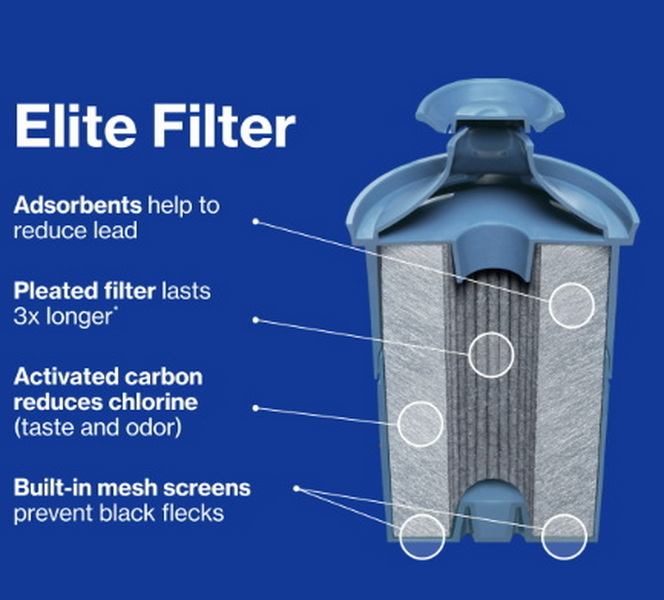
By contrast, some Brita bottle cartridges and premium “Elite” filters use a more compact carbon core or pleated carbon media rather than a loose granular activated carbon bed. These variations still rely on activated carbon, but the structure and contact time differ from conventional granular activated carbon cartridges used in larger point‑of‑use systems.[5][4]
What Granular Activated Carbon Is
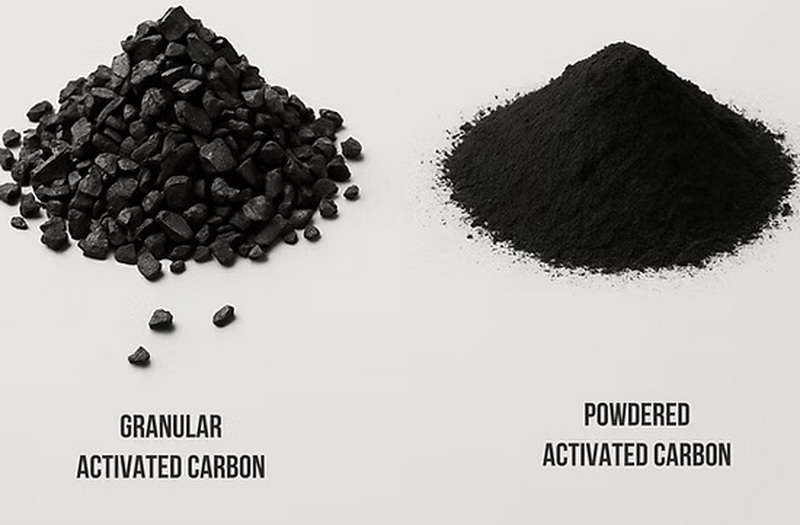
Granular activated carbon is a porous carbon adsorbent supplied as discrete granules that allow water to pass through a packed bed while contaminants are adsorbed onto the internal surface area. Typical granular activated carbon granules are made from coal, coconut shell, or other carbon‑rich raw materials and are sized so that they do not wash out of the filter housing while still providing good flow.[6][7][8]
In many drinking water filters, the granular activated carbon bed is arranged so water enters one end of the cartridge, travels through the full length of the carbon bed, and exits from the other end, which maximizes contact time and reduces channeling. This structure is widely used in under‑sink cartridges, point‑of‑entry filters, and reverse osmosis pre‑ or post‑filters, where granular activated carbon helps control chlorine, taste, odor, and a range of organic contaminants.[7][6]
How Brita Uses Granular Activated Carbon
Brita's original and standard pitcher filters use activated carbon granules that act “like a sponge” to reduce chlorine taste and odor, as well as certain heavy metals such as mercury. These granules are essentially granular activated carbon media, packaged in a compact pitcher filter format rather than in a full‑size granular activated carbon cartridge.[3][9][1][2]
In addition to granular activated carbon, Brita incorporates ion exchange resin beads in its pitcher filters to reduce copper, zinc, and cadmium, which complements the adsorption performance of the granular activated carbon. This combination is optimized primarily for taste and aesthetic improvements, not for broad‑spectrum contaminant removal expected from large industrial granular activated carbon systems.[10][11][5][1][3]
What Brita Granular Activated Carbon Filters Remove
Brita pitcher filters with granular activated carbon are certified to reduce chlorine taste and odor and several metals under NSF/ANSI standards. For example, standard Brita filters are certified under NSF/ANSI 42 for aesthetic effects and under NSF/ANSI 53 for reducing specific metals such as copper, cadmium, and mercury.[11][12][3]
Because of the limited size and contact time, Brita's granular activated carbon filters are not designed to remove all types of contaminants such as many pesticides, pharmaceutical residues, or microorganisms. Independent reviews note that while granular activated carbon can reduce many organic chemicals under suitable conditions, small pitcher‑style granular activated carbon filters have performance limits compared with larger carbon block or multi‑stage systems.[13][14][9][10][5]
Granular Activated Carbon in Other Water Filters
Beyond Brita, granular activated carbon is widely used in inline cartridges, under‑sink filters, and reverse osmosis pre‑ or post‑filters to improve taste and remove residual chlorine and organic compounds. Many of these cartridges use coconut shell granular activated carbon in a cylindrical housing, often with expansion pads to minimize channeling and ensure all water passes through the granular activated carbon bed.[8][6][7]
These granular activated carbon products are commonly tested to NSF/ANSI 42 for chlorine reduction and sometimes to NSF/ANSI 53 or 58 when integrated in systems that address additional contaminants. Compared with small pitcher filters, full‑size granular activated carbon cartridges offer higher bed volumes and longer contact times, which can improve contaminant removal when correctly sized.[14][12][6]
Granular Activated Carbon vs Carbon Block in Household Filters
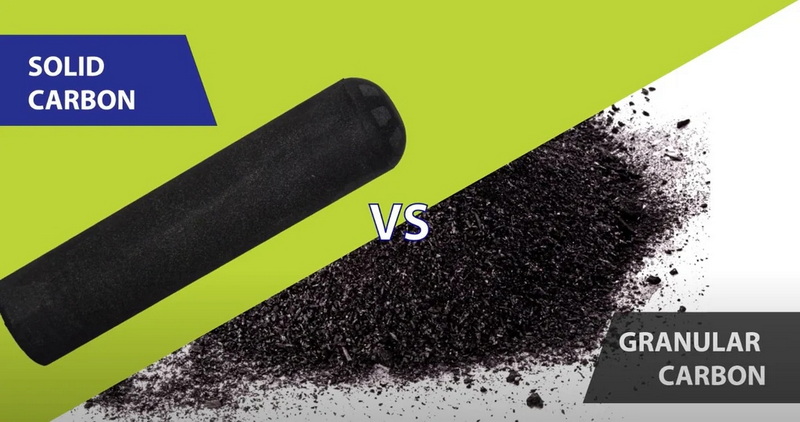
Traditional granular activated carbon filters use a loose bed of granules, whereas carbon block filters compress powdered or fine granular activated carbon into a solid block. Carbon block designs generally provide more uniform flow paths and longer contact times, which can enhance removal of chlorine, volatile organic compounds, and some other contaminants compared with a small granular activated carbon bed.[15][10][14]
Some Brita products and many competing brands now use carbon block or advanced carbon core technologies instead of, or in addition to, simple granular activated carbon beds. These designs still rely on activated carbon as the main adsorbent but differ in geometry and performance, which is why product literature often distinguishes between granular activated carbon and carbon block filters.[4][5][15][14]
Industrial‑Grade Granular Activated Carbon vs Brita Media
Industrial and municipal water treatment systems typically use granular activated carbon in large fixed beds, filters, or contactors with carefully controlled bed depth and empty bed contact time. In these systems, granular activated carbon can be selected and sized to remove taste and odor compounds, synthetic organic chemicals, and other targeted contaminants from high flow rates and large volumes of water.[13][6][7]
By comparison, a Brita pitcher contains a relatively small mass of granular activated carbon, and water passes through it quickly, so its primary role is to improve taste and reduce a limited set of contaminants rather than provide comprehensive treatment. For industrial users, granular activated carbon supplied in bulk or as dedicated cartridges is more appropriate, and filters like Brita are viewed mainly as consumer end‑use products for point‑of‑use polishing.[9][10][11][6][7][14]
Conclusion
Brita pitcher and dispenser filters do contain activated carbon granules, so they are genuine granular activated carbon systems in a compact consumer format. However, the performance and capacity of Brita's granular activated carbon beds are constrained by size and flow conditions, so they are best regarded as taste‑and‑odor improvement devices with limited contaminant reduction compared with full‑scale granular activated carbon or carbon block systems. For industrial, municipal, or high‑demand applications, dedicated granular activated carbon filters and customized granular activated carbon grades are required to meet stringent water quality and process requirements.[2][3][14][10][13][11][1][6][7][9]
FAQs About Brita and Granular Activated Carbon
1. Does a Brita filter use granular activated carbon?
Yes, Brita's standard and original pitcher filters use activated carbon granules combined with ion exchange resin, so they function as small granular activated carbon filters for household water. These granular activated carbon granules reduce chlorine taste and odor and help improve overall drinking water aesthetics.[3][1][2][9]
2. What contaminants can Brita granular activated carbon remove?
Brita granular activated carbon filters are certified to reduce chlorine taste and odor and certain metals such as copper, cadmium, and mercury, depending on the model. They are not certified for broad removal of pesticides, pharmaceutical residues, or microorganisms, so they should not be treated as complete purification systems.[5][10][13][11][3]
3. How is Brita granular activated carbon different from industrial GAC?
Industrial granular activated carbon systems use much larger beds with engineered bed depth and contact time to remove a wide range of organic compounds and other contaminants from high volumes of water. Brita granular activated carbon filters are compact, single‑use cartridges designed mainly for taste and odor improvement at the point of use.[10][13][11][6][7][9]
4. Is a carbon block filter better than Brita granular activated carbon?
Carbon block filters compress activated carbon into a dense block, often providing longer contact time and higher contaminant reduction for chlorine, VOCs, and some other substances compared with small granular activated carbon beds. Many premium pitchers and under‑sink systems now use carbon block or advanced carbon cores instead of simple pitcher‑style granular activated carbon designs.[15][4][14][5][10]
5. How often should Brita granular activated carbon filters be replaced?
Brita recommends replacing standard and original granular activated carbon pitcher filters approximately every 40 gallons or about two months for typical household use, while some premium filters have longer claimed lifetimes. Replacement intervals can vary depending on local water quality and usage, so users should follow manufacturer guidance and monitor taste changes as an indicator.[1][3][10][9]
Citations:
[1](https://www.brita.com/why-brita/better-water/how-do-brita-filters-work/)
[2](https://www.brita.ca/why-brita/health/how-do-brita-filters-work)
[3](https://www.brita.com/products/original-replacement-filters/)
[4](https://waterfilterguru.com/brita-elite-water-filter-pitcher-review/)
[5](https://etrlabs.com/what-do-brita-pitchers-filter-out-of-water/)
[6](https://www.freshwatersystems.com/products/3m-gac-pre-post-filter-for-3mro401-and-3mro501-ro-drinking-water-systems)
[7](https://www.ronaqua.com/collections/replacement-water-filters/products/granular-activated-carbon-water-filter-cartridge-by-ronaqua)
[8](https://www.homedepot.com/p/Express-Water-1-Pack-Granular-Activated-Carbon-Water-Filter-Replacement-5-Micron-Under-Sink-Reverse-Osmosis-System-FLTGAC0501/308149319)
[9](https://www.watersmartsystems.com/blog/2023/6/29/how-effective-are-brita-filters)
[10](https://www.epicwaterfilters.com/blogs/quick-drips/what-does-brita-filter-out)
[11](https://mytapscore.com/blogs/tips-for-taps/what-do-brita-pitchers-filter-out)
[12](https://info.nsf.org/certified/dwtu/)
[13](https://waterfilterguru.com/what-does-brita-filter-out/)
[14](https://waterfilterguru.com/best-activated-carbon-water-filter/)
[15](https://www.accio.com/plp/brita_water_filter_pitchers)
[16](http://www.designlife-cycle.com/brita-filters)
[17](https://mytapscore.com/blogs/tips-for-taps/what-do-brita-pitchers-filter-out?srsltid=AfmBOoprvi76bFQPvgU8JbAPnIFLOIaLYQiOCUR9V4FokfXsfGt5OuVJ)
[18](https://www.reddit.com/r/WaterTreatment/comments/ps2e6r/brita_filter_charcoal/)
[19](https://www.brita.com)
[20](https://www.reddit.com/r/WaterTreatment/comments/159xeo2/what_would_a_brita_filter_miss/)


