Content Menu
● What Is Activated Carbon?
● Is Activated Carbon Electrically Conductive?
● Why Is Activated Carbon Only Moderately Conductive?
>> Amorphous Carbon Structure
>> High Porosity and Contact Resistance
>> Surface Functional Groups and Impurities
>> Feedstock and Activation Process
● Conductive Activated Carbon in Supercapacitors and Electrodes
● Does Conductivity Affect Water and Air Treatment Performance?
● How Does Activated Carbon Compare to Graphite and Other Carbons?
● Practical Safety: Is Conductive Activated Carbon Dangerous?
● How Manufacturers Tailor Activated Carbon Conductivity
● Best‑Fit Applications for Conductive Activated Carbon
>> Supercapacitors and Hybrid Capacitors
>> Capacitive Deionization and Electro‑Adsorption
>> Electrochemical Filters and Reactors
>> Conventional Water and Air Purification
● Conclusion
● FAQ
>> 1. Is activated carbon a conductor or an insulator?
>> 2. Why is activated carbon less conductive than graphite?
>> 3. Can activated carbon be used as an electrode material?
>> 4. Does the conductivity of activated carbon affect water treatment performance?
>> 5. How can manufacturers increase the conductivity of activated carbon?
Activated carbon is electrically conductive, but its conductivity is limited and strongly depends on its structure, raw materials, and processing conditions. In practical terms, activated carbon behaves more like a semiconductive carbon material than a metal conductor, which is why it is widely used in supercapacitors and various electrochemical devices.
What Is Activated Carbon?
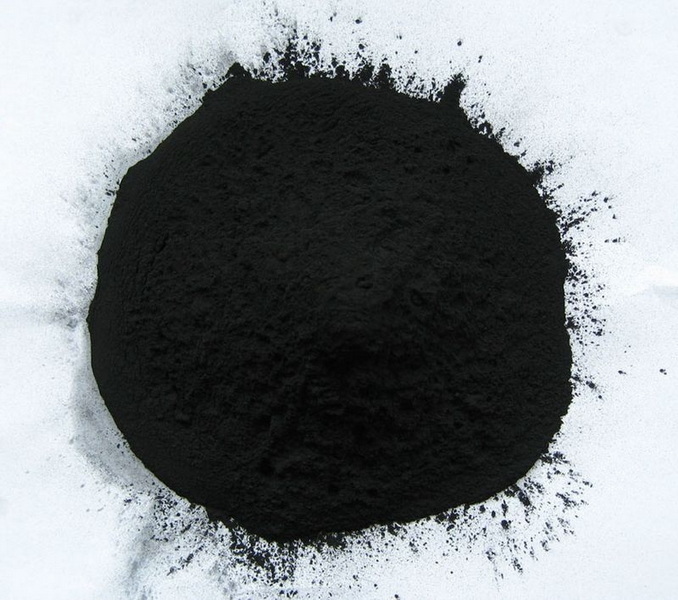
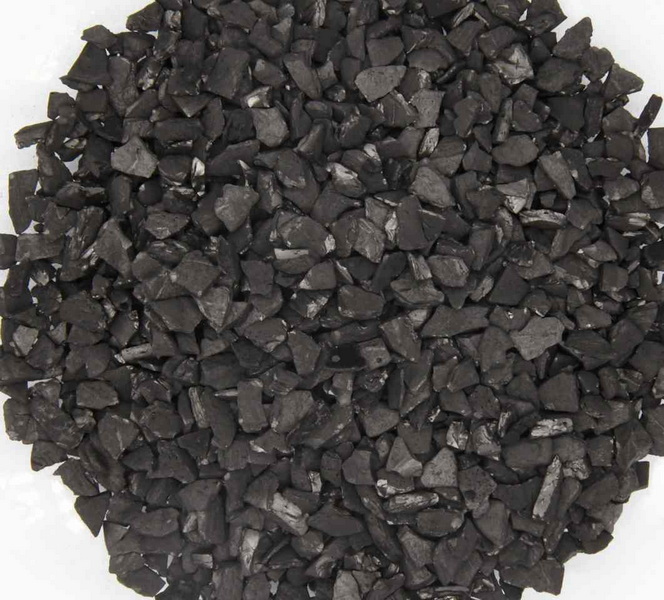
Activated carbon is a highly porous carbon material produced from coal, coconut shell, wood, or other carbonaceous feedstocks through carbonization and activation. During activation, a network of micro‑ and mesopores is formed, giving activated carbon an enormous internal surface area for adsorption.
Because of this porous structure, activated carbon can adsorb organic compounds, chlorine, odors, and many dissolved or gaseous pollutants, making it essential in water treatment, air and gas purification, food and beverage processing, and pharmaceutical applications. In industrial practice, activated carbon is supplied as powder, granular, pellet, and fiber forms, each type tailored for specific adsorption and flow conditions in filters, columns, and reactors.
Activated carbon is also chemically stable under a wide range of pH and temperature conditions, which allows it to be used in demanding industrial processes. At the same time, its surface chemistry can be modified to enhance affinity for specific contaminants or to introduce catalytic properties.
Is Activated Carbon Electrically Conductive?
Activated carbon is electrically conductive, but its conductivity is significantly lower than that of graphite, metals, or graphitized carbon fibers. The amorphous and defect‑rich structure of typical activated carbon disrupts long‑range electron pathways, so electrons cannot move as freely as in crystalline graphite.
Measurements of compressed activated carbon and activated carbon composites place most activated carbons in the range characteristic of semiconductors rather than insulators or good metallic conductors. In pellets, blocks, and compacted beds, activated carbon can conduct electricity well enough for use in electrodes or resistance heating, but loose granular or powdered activated carbon has higher resistance because of poor particle‑to‑particle contact.
In many practical designs, the intrinsic conductivity of activated carbon is enhanced by mixing it with other conductive carbon materials, using compression, or applying special heat treatments. This combination gives engineers better control over the electrical properties of activated carbon components.
Why Is Activated Carbon Only Moderately Conductive?
The electrical behavior of activated carbon is governed by several key factors: structure, surface chemistry, porosity, and graphitization degree.
Amorphous Carbon Structure
Activated carbon has a largely amorphous or turbostratic structure with disordered microcrystalline regions. This disordered arrangement interrupts the continuous electron pathways seen in graphite and reduces electron mobility. Instead of large ordered graphene sheets, activated carbon consists of small, misaligned graphitic domains separated by defects and voids.
Because of this, electrons encounter frequent scattering and energy barriers as they move through the activated carbon framework. The result is lower overall conductivity and a response that resembles semiconducting materials rather than good metallic conductors.
High Porosity and Contact Resistance
The micro‑ and mesoporous architecture of activated carbon creates a discontinuous solid pathway and many interfaces between particles. These pores are excellent for adsorption but reduce the effective cross‑section for electron transport.
In bulk form, granular or powdered activated carbon exhibits relatively high electrical resistance because the current must pass through many grain boundaries and particle contacts. When activated carbon is compacted into pellets, blocks, or electrodes, contact between particles improves and conductivity increases, but it still does not reach the level of dense graphite.
Surface Functional Groups and Impurities
Activated carbon typically carries many oxygen‑containing functional groups and other heteroatoms on its surface. These groups are beneficial for adsorption and wettability, but they can scatter charge carriers and reduce the mobility of electrons.
Impurities introduced during raw material selection, activation, or handling can also influence conductivity. While some dopants may enhance electronic properties, others increase disorder and resistivity. This is why “electrode‑grade” activated carbon often undergoes additional purification or treatment compared with standard adsorption‑grade materials.
Feedstock and Activation Process
The raw material and activation method have a major impact on the final conductivity of activated carbon. Different biomass or fossil feedstocks produce carbon skeletons with varying degrees of aromaticity and graphitization.
Physical activation (for example, with steam or CO₂) and chemical activation (for example, with KOH) create different pore structures and defect patterns. Subsequent high‑temperature treatment can increase graphitization and reduce resistivity. By adjusting these variables, manufacturers tune both the adsorption profile and the electrical properties of the activated carbon.
Because of these combined effects, commercial activated carbon is usually classified as a low‑to‑moderate conductivity material that behaves like a semiconductor. It is conductive enough for use in many electrochemical systems but not comparable to metals or highly graphitized carbon.
Conductive Activated Carbon in Supercapacitors and Electrodes
Although standard activated carbon is only moderately conductive, engineered activated carbon materials can reach much higher electrical conductivity, which is critical for modern energy storage technologies.
In electrochemical double‑layer capacitors (EDLCs), activated carbon serves as both the adsorbent for ions and the conductive matrix for electron transport. The huge internal surface area allows ions from the electrolyte to form an electric double layer on the pore walls, while the carbon framework conducts electrons to and from the current collectors.
Researchers and manufacturers design activated carbon for supercapacitors with several goals in mind:
- High specific surface area and a pore size distribution that matches the electrolyte ions.
- Sufficient conductivity to minimize internal resistance and improve power density.
- Good mechanical integrity and stability over many charge–discharge cycles.
Activated carbon powders for electrodes are usually mixed with conductive additives, such as carbon black or graphite, and with polymer binders. This composite structure improves overall conductivity while maintaining the porosity and surface area of the activated carbon.
In some advanced designs, activated carbon is combined with graphene‑like structures or carbon nanotubes to create more continuous electron pathways. These hybrid electrodes offer higher conductivity and faster charge–discharge behavior without sacrificing the adsorption advantages of activated carbon.
Does Conductivity Affect Water and Air Treatment Performance?
In most traditional adsorption applications—such as drinking water purification, wastewater treatment, gas‑phase VOC removal, and odor control—the conductivity of activated carbon is not a primary performance parameter. What matters more is the specific surface area, pore size distribution, particle size, hardness, and surface chemistry of the activated carbon.
For these applications, the key benefits of activated carbon are:
- Strong adsorption of organic compounds and many micropollutants.
- Effective removal of taste‑ and odor‑causing substances.
- Compatibility with a wide range of operating conditions and process designs.
However, conductivity becomes important when activated carbon is used in electrically enhanced or electrochemical treatment processes. Examples include:
- Electro‑adsorption or capacitive deionization systems that use activated carbon electrodes to remove ions under an applied voltage.
- Electrochemical reactors in which activated carbon simultaneously adsorbs pollutants and participates in redox reactions.
- Regeneration of activated carbon by electrical resistance heating, where the resistivity of the carbon determines how it heats under current.
In these systems, higher activated carbon conductivity improves current distribution and energy efficiency. Engineers must choose grades of activated carbon with appropriate electrical properties for these specific applications.
How Does Activated Carbon Compare to Graphite and Other Carbons?
To understand the conductivity of activated carbon, it is useful to compare it with other carbon materials:
- Graphite has a highly ordered layered structure with delocalized electrons that move easily across graphene sheets, making it an excellent electrical and thermal conductor.
- Carbon fiber, especially highly graphitized types, also exhibits high conductivity along the fiber axis, although usually lower than that of bulk graphite.
- Activated carbon has a disordered, porous structure with many defects and functional groups, which reduces conductivity but provides extremely high surface area.
- Diamond has a tetrahedral sp³ carbon network and behaves as an electrical insulator.
In other words, activated carbon sacrifices long‑range structural order and high conductivity in exchange for porosity and surface functionality. This trade‑off is exactly what makes activated carbon so valuable for filtration, purification, and many catalytic applications, while still allowing it to play a role as a conductive component in suitable designs.
Practical Safety: Is Conductive Activated Carbon Dangerous?
Even though activated carbon is conductive, it is not used as a structural electrical conductor, and under normal conditions it does not pose the same kind of shock hazard as exposed metallic wiring. However, its conductivity and physical form do have some safety implications.
Very fine activated carbon powders can accumulate electrostatic charge, especially in dry environments. Like many combustible dusts, activated carbon dust can pose an explosion risk if dispersed in air at sufficient concentration and ignited by a spark or hot surface. Industrial systems handle this risk by controlling dust, providing ventilation, and using proper grounding and bonding.
In systems where activated carbon is used near energized components, designers must consider the possibility of the carbon forming unintended conductive bridges. This is especially relevant when activated carbon is used in packed beds inside electrically active reactors or near electrodes. Proper insulation, spacing, and mechanical design prevent short circuits and hot spots.
When activated carbon is regenerated by electrical resistance heating, its conductivity and temperature dependence must be understood to ensure stable operation. As the carbon heats, its electrical properties may change, influencing current flow and local temperature distribution. Process designers manage these effects through control systems, careful reactor design, and monitoring.
How Manufacturers Tailor Activated Carbon Conductivity
Manufacturers can tune both the adsorption properties and the conductivity of activated carbon to match application requirements. This engineering flexibility is one of the strengths of activated carbon technology.
Key strategies include:
1- Selecting suitable feedstocks
Some feedstocks, such as certain coals, petroleum cokes, or pitches, can achieve higher degrees of graphitization after high‑temperature treatment. This leads to more conductive activated carbon compared with many wood‑ or peat‑based materials.
2- Optimizing activation methods
Different activation agents and conditions produce different pore structures and defect densities. Chemical activation with agents like KOH can generate activated carbon with both high surface area and relatively good conductivity when process parameters are optimized.
3- Applying high‑temperature post‑treatment
Post‑activation heat treatment at very high temperatures can increase ordering in the carbon structure. Although this may reduce some surface functional groups and slightly decrease surface area, it can significantly lower resistivity.
4- Creating composite materials
Activated carbon can be combined with other conductive phases, such as graphene, carbon nanotubes, or specific metal oxides. These composites form more continuous electron pathways while retaining the porous activated carbon matrix.
By controlling these levers, producers supply different grades of activated carbon: high‑surface‑area grades for classic filtration, high‑conductivity grades for electrodes and electrochemical systems, and specialty grades for catalytic and hybrid uses.
Best‑Fit Applications for Conductive Activated Carbon
Because activated carbon combines moderate conductivity with extremely high surface area and chemical stability, it occupies a unique position among functional carbon materials. Several application categories take direct advantage of its conductive nature.
Supercapacitors and Hybrid Capacitors
In supercapacitors, activated carbon is the dominant electrode material due to its huge surface area, tunable porosity, and adequate conductivity. The moderate conductivity of activated carbon, enhanced by additives and electrode design, allows fast charge–discharge cycles and long service life.
Hybrid capacitors combine activated carbon with other electrode materials to balance energy density and power density. In these systems, conductivity and pore structure of the activated carbon electrode are critical parameters.
Capacitive Deionization and Electro‑Adsorption
In capacitive deionization units, activated carbon electrodes remove ions from water under a low applied voltage. When the electric field is applied, ions migrate into the pores of the activated carbon and are held by electrostatic forces.
The efficiency of this process depends on both the adsorption characteristics and the electrical conductivity of the activated carbon. Better conductivity reduces internal resistance, allowing lower energy consumption and faster ion removal.
Electrochemical Filters and Reactors
In electrochemical filters, packed beds of activated carbon can adsorb pollutants and participate in electrochemical reactions at the same time. The ability of the bed to conduct current allows for localized oxidation, reduction, or regeneration of contaminants and the carbon surface.
Engineers can use the resistance of the activated carbon bed to generate heat for regeneration or to drive specific electrochemical processes. The conductivity of the activated carbon must be carefully matched to the reactor design.
Conventional Water and Air Purification
In classic fixed‑bed filters and adsorption columns, the primary role of activated carbon is to capture contaminants rather than to conduct electricity. However, the moderate conductivity of the activated carbon bed can still be useful for in‑situ monitoring or resistance‑based heating during regeneration.
For end users in water treatment, air and gas purification, and process industries, the main purchasing criteria usually remain adsorption capacity, mechanical strength, and service life. Conductivity is a secondary specification, except in electrochemical applications.
Conclusion
Activated carbon is indeed conductive, but it is not a high‑performance metallic conductor. Instead, it behaves as a low‑to‑moderate conductivity carbon with predominantly semiconducting characteristics. This balance of moderate electrical conductivity, extremely high surface area, tailored porosity, and chemical stability is what makes activated carbon so valuable in both traditional adsorption applications and advanced electrochemical technologies such as supercapacitors and capacitive deionization.
By carefully selecting feedstocks, activation methods, composite additives, and post‑treatments, manufacturers can customize activated carbon to deliver both the adsorption performance required for water, air, and process treatment and the electrical properties needed for modern energy and electrochemical systems. For engineers, buyers, and end users, understanding the conductivity of activated carbon helps in selecting the right grade for each industrial application—from simple water filters to high‑power supercapacitor electrodes.
Contact us to get more information!
FAQ
1. Is activated carbon a conductor or an insulator?
Activated carbon is neither a perfect conductor nor a perfect insulator. It falls in the semiconducting range, with low to moderate electrical conductivity depending on its structure, activation process, and degree of graphitization. In compacted forms or composites, activated carbon can conduct electricity well enough for use in electrodes and resistance heating systems.
2. Why is activated carbon less conductive than graphite?
Activated carbon is less conductive than graphite because it has a disordered, porous structure with many defects and surface functional groups. Graphite, by contrast, has extended, highly ordered graphene layers that allow electrons to move freely. In activated carbon, electrons are scattered and blocked by pores, grain boundaries, and structural disorder, which significantly reduces conductivity.
3. Can activated carbon be used as an electrode material?
Yes, activated carbon is widely used as an electrode material in supercapacitors, capacitive deionization units, and other electrochemical devices. Its high surface area provides enormous charge‑storage capacity, while its moderate conductivity, enhanced by additives and electrode design, supports efficient electron transport. Many commercial supercapacitors rely on activated carbon electrodes for their performance and cycle life.
4. Does the conductivity of activated carbon affect water treatment performance?
For conventional water treatment based purely on adsorption, the conductivity of activated carbon does not strongly affect performance. Parameters such as surface area, pore size distribution, and surface chemistry are much more important. Conductivity becomes critical in electro‑adsorption and capacitive deionization systems, where activated carbon electrodes carry current and remove ions under applied voltage.
5. How can manufacturers increase the conductivity of activated carbon?
Manufacturers can increase the conductivity of activated carbon by choosing suitable precursors, optimizing activation conditions, and applying high‑temperature post‑treatments to increase graphitization. They can also create composites that combine activated carbon with more conductive materials such as graphene, carbon nanotubes, or certain metal oxides. These approaches build more continuous electron pathways while preserving enough porosity for effective adsorption and electrochemical performance.


