Content Menu
● Introduction
● What Is Activated Carbon?
● What Is Activated Charcoal?
● Production Processes Compared
>> Charcoal Production
>> Activated Carbon/Charcoal Production
● Key Properties and Performance
● Common Applications of Activated Carbon
>> Industrial Applications
>> Medical and Household Uses
● Are "Activated Carbon" and "Activated Charcoal" Interchangeable Terms?
● Types of Activated Carbon
>> Powdered Activated Carbon (PAC)
>> Granular Activated Carbon (GAC)
>> Extruded/ Pelletized Activated Carbon
● Impact of Raw Materials
● How Activation Enhances Performance
● Sustainability Aspects
● Conclusion
● FAQ
>> 1. What are the main uses of activated carbon?
>> 2. How does the activation process work?
>> 3. Can you reuse activated carbon?
>> 4. Is activated charcoal safe for medical use?
>> 5. Are there eco-friendly options for activated carbon?
● Citations:
Introduction
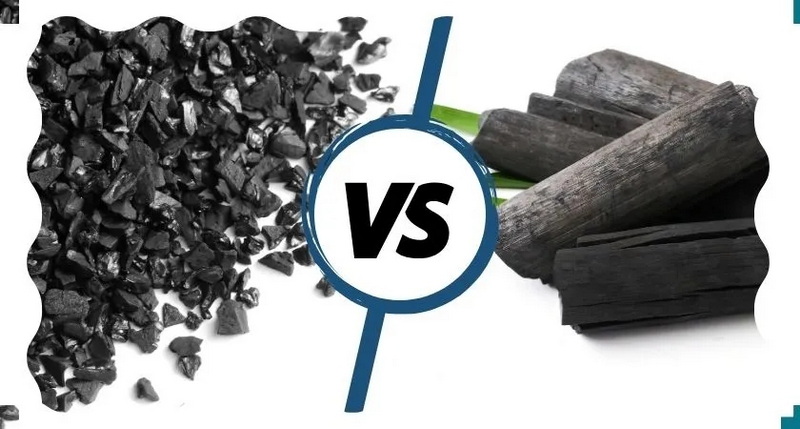
The terms "activated carbon" and "activated charcoal" frequently appear in filtration, purification, and numerous industrial applications. Many people wonder if these terms describe the same substance, or if there are differences that influence performance and application. This comprehensive article explores the definitions, production processes, properties, and commercial uses of activated carbon and activated charcoal, supporting the discussion with authoritative references and engaging visuals.
What Is Activated Carbon?
Activated carbon is a highly porous, carbonaceous material engineered to have enormous surface area and exceptional adsorption abilities. The most common sources for activated carbon production include coconut shells, coal, wood, and other carbon-rich precursors. The "activation" process involves treating the base material under controlled environments (usually high temperatures and chemical treatments), resulting in robust pore networks that enable superior pollutant and contaminant adsorption from liquids and gases.[1][2][3]
What Is Activated Charcoal?
Activated charcoal is often considered synonymous with activated carbon, especially in the context of the filtration and purification industries. Charcoal itself is produced by heating organic materials, usually wood, in a low-oxygen environment—a process called pyrolysis. The result is a black, porous substance commonly used as a fuel source. When ordinary charcoal undergoes an additional activation step involving gases or chemicals at high temperatures, it becomes "activated" and suitable for advanced adsorption applications.[4][1]
Production Processes Compared
Charcoal Production
- Produced from organic matter (mainly wood) via pyrolysis.
- Contains moderate porosity and lower surface area.
- Used primarily as a fuel, industrial material, or basic water treatment medium.[4][1]
Activated Carbon/Charcoal Production
- Follows carbonization but includes an extra activation stage using steam, CO₂, or chemicals.
- Activation dramatically increases pore volume, surface area (from 10–100 m²/g up to 500–3000 m²/g), and adsorption capacity.[1][7]
- Suitable for removing a broad range of organic/inorganic pollutants from water, air, and industrial effluents.
- Produced from a wider range of sources: coconut shell, coal, wood, nutshells, and specialty materials.[2][5]
Key Properties and Performance
| Property | Activated Carbon | Activated Charcoal |
| Surface Area (m²/g) | 500–3000activatedcarbonyoutube | 10–100activatedcarbon |
| Pore Volume/Size | Very high | Moderate |
| Removal Capability | Highly effective for organics/inorganics | Only basic contaminants |
| Raw Materials | Coconut shell, coal, wood, nutshell, etc. | Mainly wood |
| Main Applications | Advanced air/water/gas purification, | Heating, BBQ, soil amendment, |
| gold/silver recovery, pharmaceuticals | basic water filtration |
| Cost | Usually higher, but reusable | Lower, typically single-use |
Common Applications of Activated Carbon
Industrial Applications
- Water Treatment: Advanced filtration in municipal and industrial plants, removal of chlorine, VOCs, pesticides, heavy metals, and organic toxins.[3][8]
- Air and Gas Purification: Used in air filters, respirators, solvent recovery, deodorization, and gas purification for both industrial and domestic settings.[8][9]
- Pharmaceuticals: Critical in purification and catalyst removal, improving drug quality and safety.[2]
- Food and Beverage: Purifies edible oils, sweeteners, alcohol, and other food ingredients by removing unwanted color, taste, or odor components.[2]
Medical and Household Uses
- Poison Treatment: In emergency medicine, activated charcoal treats overdoses and poisonings by adsorbing toxins in the gut.[10]
- Water Filters: Common in household pitcher filters, high-end water purification systems, and aquarium management.
- Air Purifiers: Featured in HVAC filters, air purifiers, and even vehicle air conditioning systems for enhanced air quality.[11]
Are "Activated Carbon" and "Activated Charcoal" Interchangeable Terms?
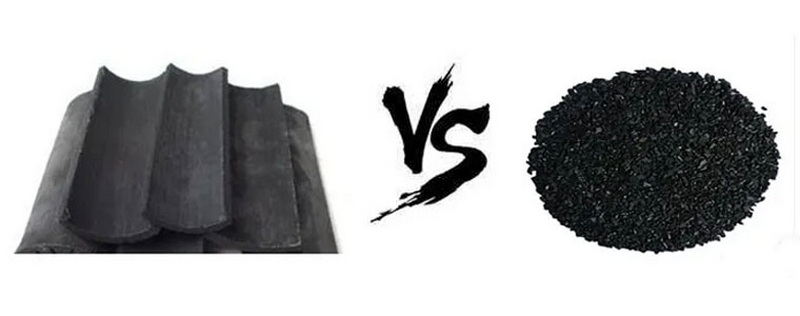
Most scientific and industrial literature considers "activated carbon" and "activated charcoal" equivalent when describing highly porous, high-surface-area materials produced by activation. Some sources prefer "activated carbon" to highlight industrial, non-wood sources, whereas "activated charcoal" may be used in healthcare and consumer product branding. Functionally, both remove contaminants through adsorption, and the performance depends primarily on production process, precursor material, and activation method rather than terminology.[12][13][14][5][4]
Types of Activated Carbon
Powdered Activated Carbon (PAC)
- Fine powder form; ideal for dosing into water, gas streams, and wastewater.[3][2]
Granular Activated Carbon (GAC)
- Irregular grains for fixed-bed adsorption; versatile in water and vapor phase applications.
Extruded/ Pelletized Activated Carbon
- Cylindrical pellets used widely for air purification, gas-phase, and solvent recovery.
Impact of Raw Materials
- Coconut Shell Activated Carbon: Excellent microporosity, used in potable water treatment and gold recovery.
- Coal-Based Activated Carbon: Broad pore distribution suited for industrial gas treatment.
- Wood-Based Activated Carbon: Customizable porosity, ideal in pharmaceuticals and the food industry.[11][2]
How Activation Enhances Performance
The unique industrial and commercial value of activated carbon lies in its activation step, which:
- Opens up millions of microscopic pores.[7][1]
- Drastically increases the internal surface area.
- Changes the chemistry of the carbon, enabling targeted contaminant removal.
Sustainability Aspects
Recent research encourages using renewable, high-yield biomass for the production of activated carbons. Manufacturers are innovating to use waste as feedstock, minimize environmental footprint, and integrate circular-economy principles. Coconut shell, wood, and agricultural byproducts are supporting greener, more cost-effective production strategies.[2]
Conclusion
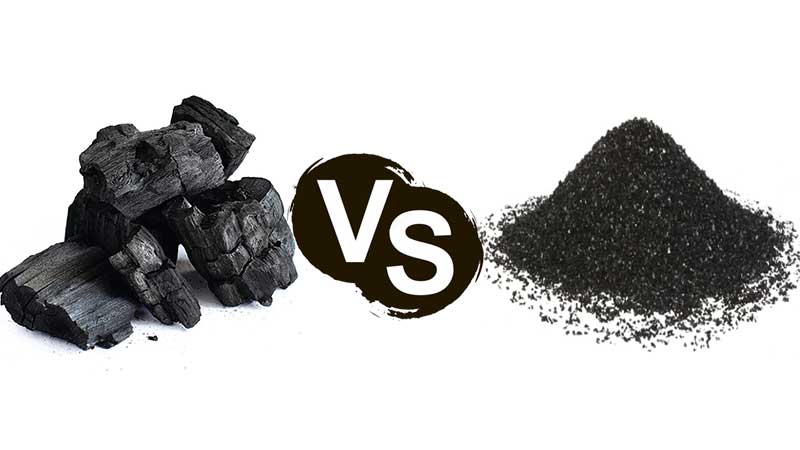
Activated carbon and activated charcoal are both valuable carbon-based adsorbents, but the term "activated carbon" is favored in science and industry for advanced, highly porous materials that excel at air, water, and gas purification. The critical distinction lies in the activation process, raw materials, and application scope. For any application where adsorption efficiency is crucial—such as water treatment, air purification, or industrial processing—activated carbon provides superior performance, reusability, and versatility. Charcoal, in its non-activated form, is best reserved for fuel, art, and basic filtration tasks.[5][1][3][2]
FAQ
1. What are the main uses of activated carbon?
Activated carbon is widely used for water and air purification, gold recovery, food processing, pharmaceuticals, and as a key agent in various industrial processes to remove contaminants and odors.[10][3][11]
2. How does the activation process work?
Activation involves treating carbon-rich material with oxidizing agents or steam at high temperatures, creating millions of micropores that drastically increase the surface area and adsorption ability of the final product.[5][1]
3. Can you reuse activated carbon?
Yes. In many industrial settings, activated carbon can be thermally or chemically regenerated and reused, reducing overall costs and environmental impact compared to single-use materials.[1]
4. Is activated charcoal safe for medical use?
Activated charcoal is used in emergency medicine for poisoning and overdose cases. It is considered safe when administered properly by medical professionals.[10]
5. Are there eco-friendly options for activated carbon?
Yes. Sustainable activated carbons are produced from renewable materials like coconut shells, wood, and agricultural byproducts, supporting environmental stewardship and cost reduction efforts.[2]
Citations:
[1](https://activatedcarbon.net/activated-carbon-vs-charcoal/)
[2](https://qizhongcarbon.com/blog/what-is-activated-carbon-types-applications-principles/)
[3](https://activatedcarbon.com/activated-carbon)
[4](https://www.bygen.com.au/post/activated-carbon-vs-charcoal-what-s-the-difference-and-why-it-matters)
[5](https://www.westerncarbon.com/activated-carbon-activated-charcoal/)
[6](https://www.gettyimages.com/videos/activated-carbon)
[7](https://www.youtube.com/watch?v=XUYz1i1rJwo)
[8](https://www.cargohandbook.com/Activated_Carbon)
[9](https://www.sciencedirect.com/topics/agricultural-and-biological-sciences/activated-carbon)
[10](https://en.wikipedia.org/wiki/Activated_carbon)
[11](https://sodimate-inc.com/activated-carbon-types-applications-advantages/)
[12](https://generalcarbon.com/facts-about-activated-carbon/activated-carbon-faq/)
[13](https://heycarbons.com/activated-carbon-vs-charcoal/)
[14](https://www.linkedin.com/pulse/activated-carbon-vs-charcoal-tamer-mohamed-ni7vf)
[15](https://www.sciencedirect.com/science/article/pii/S0001868622000896)
[16](https://www.youtube.com/live/6upOBrXCLMI)
[17](https://lee-enterprises.com/an-overview-of-the-biochar-and-activated-carbon-markets/)
[18](https://www.shutterstock.com/video/clip-1070280691-activated-charcoal-carbon-coconut-shell-substance-vegetable)
[19](https://www.shutterstock.com/video/search/activated-charcoal)
[20](https://www.chemviron.eu/what-is-activated-carbon/)


