Content Menu
● What Is Activated Carbon?
● The Science: Adsorption, Not Absorption
● Types of Activated Carbon Used in Water
>> Granular Activated Carbon (GAC)
>> Powdered Activated Carbon (PAC)
>> Extruded and Pelletized Activated Carbon
>> Specialty and Catalytic Activated Carbon
● How Activated Carbon Removes Contaminants
>> Chlorine and Chloramine Removal
>> Organic Chemicals and VOCs
>> PFAS and “Forever Chemicals”
>> Taste, Odor, and Color
● The Role of Pore Structure and Surface Area
● Where Activated Carbon Is Used in Water Treatment
>> Municipal Drinking Water and Wastewater
>> Industrial Process Water
>> Household and Point-of-Use Filters
● Advantages and Limitations of Activated Carbon
● Conclusion
● FAQ
>> 1. How exactly does activated carbon clean water?
>> 2. Which contaminants can activated carbon remove from water?
>> 3. How long does activated carbon last in a water filter?
>> 4. Is activated carbon safe for drinking water applications?
>> 5. Does activated carbon remove beneficial minerals from water?
● Citations:
Activated carbon cleans water primarily through a process called adsorption, trapping dissolved contaminants on its enormous internal surface area while letting clean water pass through. This makes activated carbon one of the most widely used and cost-effective media in drinking water treatment, industrial process water, and wastewater purification worldwide.[2][3][4][1]
What Is Activated Carbon?
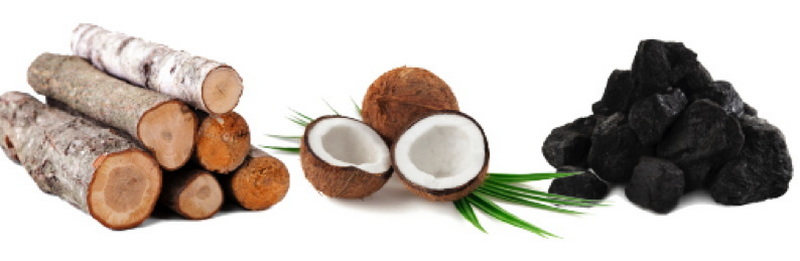
Activated carbon is a highly processed form of carbon made from raw materials such as coal, coconut shells, wood, or other carbon-rich biomass. During production, these materials are carbonized and then “activated” at high temperature with steam or chemicals to create a vast network of microscopic pores.[5][6][3][7]
Because of this porous structure, activated carbon has an extremely large internal surface area—often over 800–1,500 m² per gram—which provides countless active sites where contaminants in water can attach. In water treatment, this activated carbon is formed into powders, granules, pellets, or blocks and packed into filters, columns, or contactors through which water flows.[8][3][5][2]
The Science: Adsorption, Not Absorption
Activated carbon cleans water mainly through adsorption, not absorption. In adsorption, molecules of contaminants are attracted to and held on the surface of activated carbon particles by physical and chemical forces instead of being absorbed into the bulk of the material.[9][1][2]
Several interaction mechanisms explain how activated carbon captures pollutants:
- Van der Waals forces between the carbon surface and organic molecules.[2][9]
- Hydrophobic interactions that pull non-polar organics out of water and onto the hydrophobic activated carbon surface.[1][2]
- Ionic and polar interactions, where charged or polar functional groups on activated carbon attract ions or polar contaminants.[4][9]
As water passes through an activated carbon filter, dissolved compounds diffuse into the pore structure and stick to internal surfaces until the carbon becomes saturated. Once saturated, the activated carbon must be replaced or thermally regenerated to restore its adsorption capacity.[3][10][5][2]
Types of Activated Carbon Used in Water
Different forms of activated carbon are optimized for various water treatment applications. Choosing the right type of activated carbon affects contact time, pressure drop, and contaminant-removal performance.[6][7][11][3]
Granular Activated Carbon (GAC)
Granular activated carbon consists of relatively large, irregular granules typically used in fixed beds, pressure vessels, or gravity filters for municipal and industrial water treatment. GAC beds allow significant water flow with moderate pressure drop and are well suited for removing chlorine, taste and odor compounds, organic micro-pollutants, and many synthetic chemicals.[12][10][8]
Powdered Activated Carbon (PAC)
Powdered activated carbon is a fine powder that is usually dosed directly into process units such as clarifiers, rapid mix basins, or gravity filters. PAC is often used for seasonal or emergency treatment—such as sudden taste and odor events—because it can be rapidly added and later removed by sedimentation or filtration.[7][10][3]
Extruded and Pelletized Activated Carbon
Extruded or pelletized activated carbon is formed into cylindrical pellets using binders and is valued for low dust generation and good mechanical strength. In water treatment, pelletized activated carbon is used where controlled hydraulic behavior, minimal fines, and stable pressure drop are important, such as in specialty filters or combined gas–liquid purification systems.[11][3][7]
Specialty and Catalytic Activated Carbon
Impregnated activated carbon is treated with substances like silver or iodine to give additional antimicrobial or catalytic properties, particularly for potable water purification. Catalytic activated carbon is surface-modified to accelerate reactions such as chloramine decomposition and advanced oxidation processes, increasing removal efficiency for certain contaminants.[9][3][7][4]
How Activated Carbon Removes Contaminants
Activated carbon can target a very broad range of contaminants in water, although it does not remove everything. Its performance depends on contaminant chemistry, pore size distribution, contact time, and water quality conditions such as pH and temperature.[13][3][1][2]
Chlorine and Chloramine Removal
One of the most common uses of activated carbon in water treatment is to remove free chlorine and chloramine disinfectants. Activated carbon rapidly reduces free chlorine to chloride and carbon dioxide through a surface-mediated reaction, preventing damage to downstream membranes and improving taste and odor.[8][9]
Chloramines, which are more stable than free chlorine, are broken down more slowly on catalytic activated carbon, yielding ammonia, nitrogen, and chloride. This makes catalytic forms of activated carbon essential as a pre-treatment step before reverse osmosis or ion exchange in many drinking water systems.[12][13][9]
Organic Chemicals and VOCs
Activated carbon is highly effective at removing many dissolved organic compounds, including natural organic matter, pesticides, herbicides, industrial solvents, and volatile organic compounds (VOCs). The hydrophobic surfaces and micropores in activated carbon strongly attract non-polar and moderately polar organic molecules from water into the carbon matrix.[10][3][1][2]
By removing these organics, activated carbon helps control disinfection by-product precursors, reduces chemical taste and odor, and improves overall water safety. Many point-of-use filters and municipal GAC filters rely on activated carbon for these organic contaminant reductions.[13][1][8][12]
PFAS and “Forever Chemicals”
Granular activated carbon has become a frontline solution against PFAS (per- and polyfluoroalkyl substances) in drinking water. Specialized GAC products with tailored pore structures demonstrate strong adsorption of both long-chain PFAS such as PFOA and PFOS and several short-chain PFAS.[4][12]
Large utilities now use GAC contactors to reduce PFAS to near non-detectable levels, and some advanced systems combine activated carbon with other technologies for PFAS destruction after adsorption. Although not every PFAS behaves the same, activated carbon remains one of the most practical and widely deployed PFAS treatment options.[10][12][4]
Taste, Odor, and Color
Activated carbon effectively removes many compounds responsible for unpleasant taste, odor, and color in water, such as geosmin, MIB, phenolic substances, and certain humic materials. By adsorbing these molecules, activated carbon significantly improves the sensory quality of drinking water without stripping beneficial minerals or drastically altering pH.[5][2][8]

The Role of Pore Structure and Surface Area
The pore size distribution of activated carbon—micropores, mesopores, and macropores—controls which contaminants can be adsorbed and how quickly.[5][2]
- Micropores (less than 2 nm) provide huge surface area and are ideal for small organic molecules and many synthetic chemicals.[3][5]
- Mesopores (2–50 nm) enable diffusion pathways and help capture larger organic compounds and natural organic matter.[11][2]
- Macropores (greater than 50 nm) act as transport channels that allow water and solutes to reach the smaller pores deeper in the activated carbon particle.[2][5]
Because each gram of activated carbon can expose hundreds to thousands of square meters of internal surface, even thin beds can have high adsorption capacity when properly designed. This combination of vast internal surface area and tailored pore structure is what makes activated carbon such an efficient water purification medium.[1][3][5][2]
Where Activated Carbon Is Used in Water Treatment
Activated carbon is integrated into water treatment systems at many scales, from household filters to large municipal plants and industrial facilities. Its versatility and reusability make activated carbon especially attractive for both new installations and upgrades to existing systems.[12][3][4][10]
Municipal Drinking Water and Wastewater
In municipal drinking water plants, granular activated carbon contactors are widely used after conventional coagulation and filtration to remove dissolved organics, taste and odor compounds, and residual disinfectants. Many utilities also add powdered activated carbon during seasonal events such as algal blooms to control specific taste and odor episodes.[10][5][12]
In wastewater treatment, activated carbon polishes effluents by adsorbing residual pesticides, pharmaceuticals, solvents, and other trace organics before discharge or reuse. This helps protect downstream ecosystems and comply with increasingly stringent regulations on micro-pollutants.[4][12][10]
Industrial Process Water
Industrial users rely on activated carbon to protect processes, products, and equipment. In sectors such as food and beverages, chemicals, electronics, and pharmaceuticals, activated carbon filters remove residual organics, off-flavors, and trace impurities that would affect product quality.[3][4]
Activated carbon is also used to treat industrial wastewater streams containing oils, dyes, surfactants, and other complex chemicals, often as part of multi-stage treatment trains. In many cases, activated carbon can be thermally regenerated and reused multiple cycles, reducing overall operating costs.[3][4][10]
Household and Point-of-Use Filters
In homes, activated carbon is commonly present in jug filters, faucet-mounted filters, under-sink units, refrigerator cartridges, and shower filters. These compact systems use activated carbon to reduce chlorine, improve taste and odor, and remove many organic chemicals from tap water.[8][1]
Combination cartridges often pair activated carbon with other media such as ion exchange resins or membranes to expand contaminant coverage. For consumers, activated carbon offers a simple, passive, and low-energy way to make water more pleasant and safer to drink.[13][1][8]
Advantages and Limitations of Activated Carbon
Activated carbon offers a powerful set of advantages in water purification but also has inherent limitations that must be managed through proper system design.[10][3]
Key advantages of activated carbon in water treatment include:
- Broad-spectrum removal of many organic contaminants, chlorine, and certain emerging pollutants like PFAS.[1][12]
- Improvement of taste, odor, and aesthetic quality without removing beneficial minerals or significantly altering pH.[2][8]
- Compatibility with other water treatment technologies such as membranes, UV, and advanced oxidation processes.[9][12]
- Renewable and often regenerable media, especially when produced from sustainable feedstocks like coconut shells or agricultural by-products.[4][3]
Important limitations of activated carbon include:
- Limited effectiveness for many dissolved inorganic salts, hardness, nitrates, and some small polar molecules, which require complementary processes like ion exchange or RO.[13][1]
- Finite adsorption capacity, meaning activated carbon beds eventually exhaust and must be replaced or regenerated to maintain performance.[3][10]
- Sensitivity to fouling by suspended solids or biofilm growth if pre-treatment and backwashing are insufficient.[5][10]
When engineered correctly, systems can maximize the strengths of activated carbon while addressing these limitations via pretreatment, monitoring, and periodic carbon changeouts.[4][10]
Conclusion
Activated carbon cleans water by providing a massive network of pores and active sites where contaminants are selectively adsorbed from flowing water. Through mechanisms such as van der Waals forces, hydrophobic interactions, and catalytic reactions, activated carbon removes chlorine, chloramines, organic chemicals, PFAS, and many taste and odor compounds while preserving the natural character of water.[9][1][2]
Used in municipal treatment plants, industrial process systems, and household filters, activated carbon remains one of the most flexible and cost-effective technologies for modern water purification. As water quality challenges evolve and new contaminants emerge, advanced forms of activated carbon and hybrid treatment systems continue to expand the role of activated carbon in global water treatment.[12][3][4][10]

FAQ
1. How exactly does activated carbon clean water?
Activated carbon cleans water via adsorption, where contaminants stick to the internal surfaces of its highly porous structure rather than remaining dissolved in the water. As water passes through an activated carbon bed or filter, target molecules diffuse into the pores and are held there by physical and chemical forces until the carbon becomes saturated.[5][1][9][2]
2. Which contaminants can activated carbon remove from water?
Activated carbon is especially effective at removing chlorine, chloramines, many organic chemicals, taste and odor compounds, and several PFAS “forever chemicals.” It can also reduce pesticides, herbicides, solvents, and disinfection by-product precursors, but is generally less effective for most dissolved inorganic salts and hardness ions.[1][13][12][3]
3. How long does activated carbon last in a water filter?
The service life of activated carbon depends on contaminant loading, water quality, flow rate, and bed depth. Point-of-use filters may need activated carbon cartridge replacement every few months, while large granular activated carbon beds in municipal systems can operate for many months or years before replacement or thermal regeneration.[12][3][10]
4. Is activated carbon safe for drinking water applications?
Activated carbon produced to appropriate standards is safe and widely approved for drinking water treatment. Regulatory bodies and industry organizations recognize activated carbon as a reliable technology for improving the safety and aesthetics of potable water when systems are properly designed and maintained.[8][1][10][12]
5. Does activated carbon remove beneficial minerals from water?
Unlike reverse osmosis or distillation, activated carbon primarily targets organic contaminants and certain disinfectants rather than dissolved mineral salts. As a result, activated carbon filters typically preserve beneficial minerals such as calcium and magnesium, helping maintain the natural taste and nutritional profile of water.[8][1][2]
Citations:
[1](https://carbonblocktech.com/the-science-behind-activated-carbon-water-filters/)
[2](https://www.rbhltd.com/market-news/activated-carbon-for-water-filtration-how-does-it-work/)
[3](https://sodimate-inc.com/activated-carbon-types-applications-advantages/)
[4](https://bisresearch.com/insights/how-activated-carbon-is-a-key-solution-in-global-water-treatment)
[5](https://extensionpubs.unl.edu/publication/g1489/na/html/view)
[6](https://rajahfiltertechnics.com/water-filtration/choosing-activated-carbon-filter/)
[7](https://swiftgreenfilters.com/blogs/water-filters/what-are-the-types-of-activated-carbon)
[8](https://www.freshwatersystems.com/blogs/blog/activated-carbon-filters-101)
[9](https://us.elgalabwater.com/activated-carbon)
[10](https://feeco.com/activated-carbon-a-critical-component-in-water-treatment-facilities/)
[11](https://www.keiken-engineering.com/news/activated-carbon-for-water-purification-understanding-the-types)
[12](https://www.calgoncarbon.com/municipal-water-treatment/)
[13](https://puragen.com/uk/insights/how-does-activated-carbon-filter-water/)
[14](https://www.youtube.com/watch?v=5b97MMRBz2Q)
[15](https://www.reddit.com/r/askscience/comments/cer5s3/how_does_charcoal_in_water_water_filter_it/)


