Content Menu
● Basic definitions
● Production processes
● Feedstocks and forms
● Structure, porosity, and surface area
● Performance as adsorbents
● Typical applications
● Environmental roles and carbon storage
● Market and cost considerations
● When to choose biochar vs activated carbon
● Conclusion
● FAQ About Biochar And Activated Carbon
>> (1) Is biochar the same as activated carbon?
>> (2) Can biochar be used instead of activated carbon for water treatment?
>> (3) Is activated carbon always made from biochar?
>> (4) Which is better for climate mitigation: biochar or activated carbon?
>> (5) How do I choose between biochar and activated carbon for my project?
● Citations:
Biochar and activated carbon are both carbon-rich materials made by heating biomass with little or no oxygen, but they are engineered for very different purposes and performance levels. Biochar is mainly designed as a stable soil amendment and carbon sink, while activated carbon is optimized as a high‑performance adsorbent for water, air, and process purification in industrial and environmental applications.[1][2][3]
Basic definitions
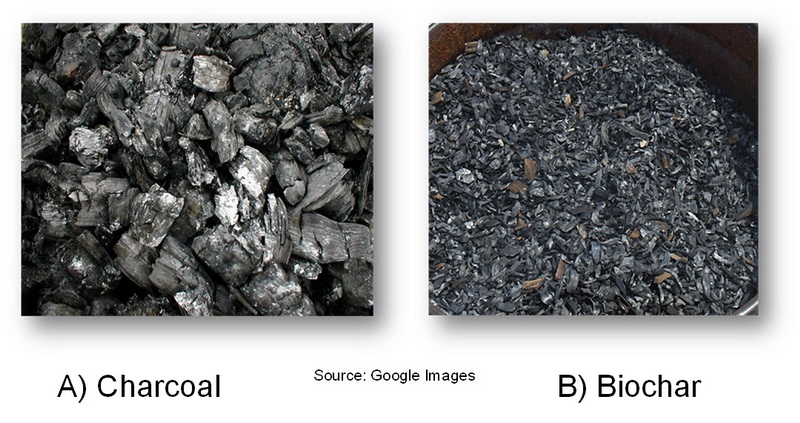
Biochar is a charcoal‑like solid produced from biomass through pyrolysis and used primarily to improve soil properties and store carbon for long periods. Activated carbon (also called activated charcoal) is a carbon material that has been further “activated” to create a very high internal surface area and pore volume, giving it excellent adsorption capacity for contaminants in water, air, gases, and liquids.[5][6][4]
Biochar is typically applied directly to soils, potting mixes, or composts, whereas activated carbon is usually installed in filters, columns, or dosing systems for purification processes. In many cases activated carbon actually starts as a char similar to biochar, which is then processed further to become a much more porous and specialized adsorbent.[2][7][8]
Production processes
Both biochar and activated carbon are produced by thermochemical conversion of biomass or other carbonaceous feedstocks at elevated temperatures with limited oxygen, a process called pyrolysis. During pyrolysis, volatile components are driven off and a carbon‑rich char remains, but the conditions such as temperature, residence time, and atmosphere are tuned differently depending on whether the goal is soil improvement or high‑grade adsorption.[9][1]
Activated carbon production usually involves an additional “activation” step, either physical (using steam or carbon dioxide at high temperature) or chemical (using agents such as potassium hydroxide or phosphoric acid) to open up a network of micro‑ and mesopores. Biochar is often produced at lower to moderate temperatures without such aggressive activation treatments, which keeps costs down and preserves structures that benefit soil but results in lower specific surface area than typical activated carbon.[7][3][2]
Feedstocks and forms
Biochar is generally made from agricultural residues, wood chips, crop wastes, manures, or other biomass streams chosen for local availability and soil compatibility. The resulting biochar pieces are often irregular in shape and size and may contain more mineral ash, which can influence soil pH and nutrient content.[6][5]
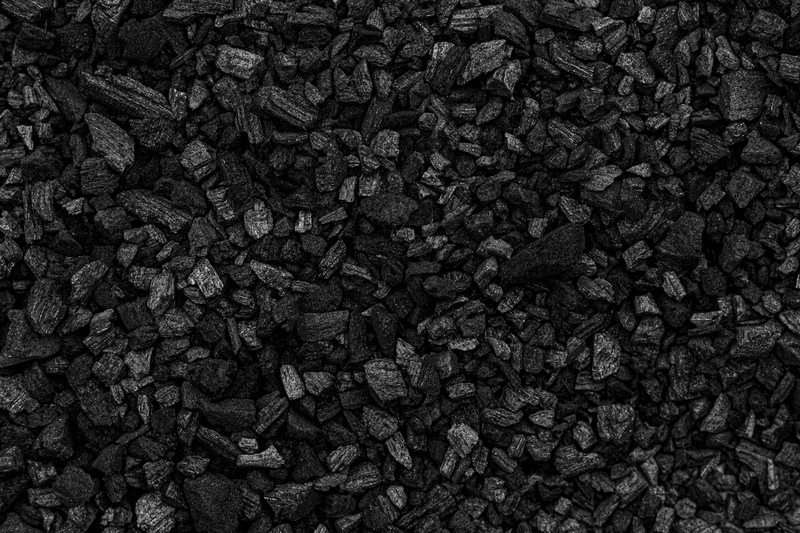
Activated carbon can also be made from biomass such as coconut shell or wood, but it is equally common to use coal, peat, or other carbon‑rich industrial feedstocks that can produce a very strong, abrasion‑resistant adsorbent. Industrial activated carbon is usually processed into standardized forms such as granular activated carbon (GAC), powdered activated carbon (PAC), or shaped pellets to fit specific filter designs and flow conditions.[8][4]
Structure, porosity, and surface area
The most important structural difference between biochar and activated carbon is the degree of porosity and internal surface area. Typical activated carbon products provide internal surface areas in the range of hundreds to over a thousand square meters per gram, which is why even a teaspoon of activated carbon can offer an enormous active area for adsorption.[3][10][7]
Biochar also has pores and can show relatively high surface area compared with raw biomass, but its porosity and micropore volume are generally lower and less optimized for adsorption than those of activated carbon. For soil use, this moderate porosity is still beneficial, because biochar can help retain water and nutrients and provide micro‑habitats for soil microbes without necessarily matching the adsorption performance of dedicated activated carbon grades.[5][3][9]
Performance as adsorbents
Activated carbon is engineered for adsorption and therefore shows much higher capacities and faster kinetics for many dissolved or gaseous contaminants than typical biochar. In water treatment and air purification, activated carbon's finely tuned micropore structure and surface chemistry allow it to remove volatile organic compounds, odors, color bodies, residual disinfectants, and many other target pollutants.[7]
Biochar can adsorb some contaminants, especially in soils where it helps retain nutrients and reduce the mobility of certain metals and organics, but performance is highly variable and usually lower than commercial activated carbon products measured under the same conditions. For demanding purification tasks such as municipal drinking‑water polishing, industrial wastewater treatment, gas purification, or solvent recovery, activated carbon is therefore the preferred solution.[11][8][3]
Typical applications
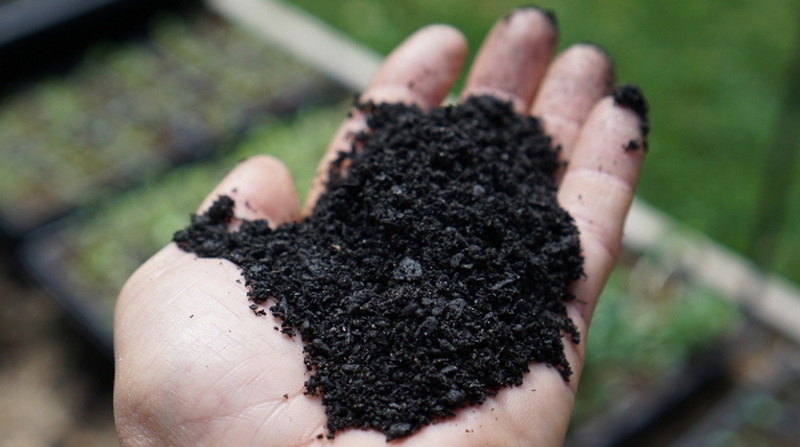
Biochar is mainly applied as a soil amendment to improve water‑holding capacity, nutrient retention, and soil structure, and to sequester carbon over decades or centuries. It is used in agriculture, horticulture, landscaping, and environmental restoration projects, often mixed with compost, fertilizers, or microbial inoculants.[9][6]
Activated carbon, by contrast, is used across water treatment, wastewater polishing, air and gas purification, food and beverage decolorization, chemical and pharmaceutical processing, and many other industrial processes. In these applications activated carbon is installed in fixed beds, filters, cartridges, or dosing systems where its adsorption capacity can be carefully controlled, monitored, and regenerated or replaced as needed.[8][11]
Environmental roles and carbon storage
Biochar's environmental role is strongly linked to long‑term carbon storage and climate mitigation, because the carbon locked into biochar can remain stable in soils for hundreds of years. Applying biochar to agricultural lands can simultaneously improve soil health and remove carbon dioxide from the atmosphere by stabilizing biomass‑derived carbon in solid form.[12][6]
Activated carbon can also be produced from renewable biomass and regenerated multiple times, which can reduce waste and overall environmental footprint compared with single‑use materials. However, its primary role lies in purification, where activated carbon helps protect water resources, air quality, and product safety by capturing pollutants before they reach the environment or consumers.[13][11][7]
Market and cost considerations
Biochar markets are closely tied to agriculture, soil restoration, and carbon credit schemes, with emphasis on low‑cost production and local feedstocks. Because biochar does not require the same level of activation and quality control as high‑grade activated carbon, it can often be produced more cheaply per ton, especially in regions with abundant agricultural residues.[14][12]
Activated carbon markets are driven by regulatory standards, industrial process needs, and strict performance specifications, which justify more complex production and activation steps. The higher manufacturing cost of activated carbon is offset by its much higher adsorption efficiency, regenerability in many systems, and critical role in complying with water, air, and product quality regulations.[14][11][7]
When to choose biochar vs activated carbon
Biochar is usually the better choice when the primary goals are long‑term soil improvement, carbon sequestration, and broader ecosystem benefits rather than precise contaminant removal in a defined stream. Farmers, horticulturists, and land managers use biochar to enhance soil structure, water retention, and nutrient cycling while locking carbon into the ground.[6][5]
Activated carbon is the logical choice when performance, capacity, and consistency of adsorption are critical, such as in drinking‑water treatment, industrial wastewater, air and flue‑gas purification, food and beverage refining, and pharmaceutical manufacturing. For these tasks, properly selected activated carbon grades, produced under controlled conditions, offer reliable and predictable removal of specific contaminants, often with options for regeneration to reduce lifecycle cost.[11][7]
Conclusion
Biochar and activated carbon share common roots as carbon‑rich solids created by heating biomass or other feedstocks with limited oxygen, but they occupy distinct roles in modern environmental and industrial practice. Biochar is optimized for soil health and carbon sequestration, while activated carbon is engineered for high‑capacity adsorption in water, air, and process purification, using carefully controlled activation steps, pore structures, and product forms.[1][3][7]
For users in water treatment, air and gas purification, food and beverage, chemical, and pharmaceutical industries, high‑quality activated carbon remains the preferred solution for reliable contaminant removal and regulatory compliance. Biochar complements these applications on the land side by improving soils and locking away carbon, making both materials important but clearly different tools for sustainability and environmental protection.[12][7][8]
FAQ About Biochar And Activated Carbon
(1) Is biochar the same as activated carbon?
Biochar and activated carbon are not the same, even though both are produced by heating biomass with limited oxygen and may look similar. Biochar is mainly a soil amendment and carbon sink, while activated carbon is a highly processed adsorbent specifically optimized for removing contaminants from water, air, and process streams.[4][16][2]
(2) Can biochar be used instead of activated carbon for water treatment?
In some small‑scale or low‑risk situations, biochar can provide limited adsorption and improve water quality, but it usually cannot match the capacity, consistency, or regulatory reliability of activated carbon. For municipal drinking water, industrial wastewater, and critical product purification, purpose‑made activated carbon with defined properties is strongly preferred.[3][15][7]
(3) Is activated carbon always made from biochar?
Many activated carbon products are made by first creating a char that resembles biochar and then subjecting it to activation, but activated carbon can also be produced from non‑biomass feedstocks such as coal or peat. The key distinction is the activation step, which develops a much higher internal surface area and micropore volume than typical agricultural biochar.[2][4][1]
(4) Which is better for climate mitigation: biochar or activated carbon?
Biochar is especially attractive for climate mitigation because it can store carbon in soils for long periods while also improving soil properties and yields. Activated carbon mainly contributes indirectly to climate protection by enabling pollution control and cleaner processes, although biomass‑based and regenerable activated carbon can also help reduce lifecycle emissions.[13][12][11]
(5) How do I choose between biochar and activated carbon for my project?
If the main objectives are to improve soil, retain water and nutrients, and lock carbon into the ground, biochar is generally the more suitable choice. If the goal is to purify water, air, or industrial streams to specific quality standards, a properly selected grade of activated carbon is usually required to deliver the needed adsorption performance.[5][7][8]
Citations:
[1](https://char-grow.com/biochar-vs-charcoal-vs-activated-carbon)
[2](https://char-grow.com/activated-carbon-vs-inoculated-biochar)
[3](https://pubmed.ncbi.nlm.nih.gov/35525090/)
[4](https://en.wikipedia.org/wiki/Activated_carbon)
[5](https://extension.okstate.edu/fact-sheets/preparation-of-biochar-for-use-as-a-soil-amendment.html)
[6](https://en.wikipedia.org/wiki/Biochar)
[7](https://ijatec.com/index.php/ijatmmm/article/view/37)
[8](https://emis.vito.be/en/bat/tools-overview/sheets/activated-carbon-adsorption)
[9](https://www.climatehubs.usda.gov/hubs/northeast/topic/digging-biochar)
[10](https://www.watertechonline.com/wastewater/article/15549902/the-basics-of-activated-carbon-adsorption)
[11](https://www.donau-carbon.com/getattachment/76f78828-2139-496f-9b80-6b6b9bdc6acc/aktivkohle.aspx)
[12](https://en.wikipedia.org/wiki/Biochar_carbon_removal)
[13](https://biochar-us.org/presentation/environmental-comparison-between-activated-carbon-and-biochar-tertiary-wastewater)
[14](https://lee-enterprises.com/an-overview-of-the-biochar-and-activated-carbon-markets/)
[15](https://www.biochar.nz/biochar-vs-activated-carbon/)
[16](https://permies.com/t/70510/Difference-biochar-activated-carbon)
[17](https://www.sciencedirect.com/science/article/pii/S0001868622000896)
[18](https://www.reddit.com/r/BioChar/comments/hulw86/can_someone_explain_what_the_difference_between/)
[19](https://www.reddit.com/r/askscience/comments/1llkex/how_does_biochar_work_and_what_are_benefits_for/)
[20](https://rosysoil.com/blogs/news/biochar-vs-charcoal)


