Content Menu
● Understanding density in granular activated carbon
● Types of density for granular activated carbon
● Typical bulk density ranges for granular activated carbon
● True density and skeletal density of granular activated carbon
● Why density matters in granular activated carbon system design
● Unit conversions: from bulk density to practical values
● Factors that influence the density of granular activated carbon
● Measurement methods: bulk and apparent density tests
● Density and adsorption performance of granular activated carbon
● Density differences between water and air treatment grades
● Handling, storage, and safety implications of density
● Practical examples: using granular activated carbon density in design
● Selecting granular activated carbon by density and application
● Conclusion
● FAQ About the Density of Granular Activated Carbon
>> 1. What is the typical bulk density of granular activated carbon?
>> 2. How is bulk density of granular activated carbon measured?
>> 3. What is the difference between bulk density and true density for granular activated carbon?
>> 4. Why is density important when selecting granular activated carbon?
>> 5. Do different raw materials change the density of granular activated carbon?
● Citations:
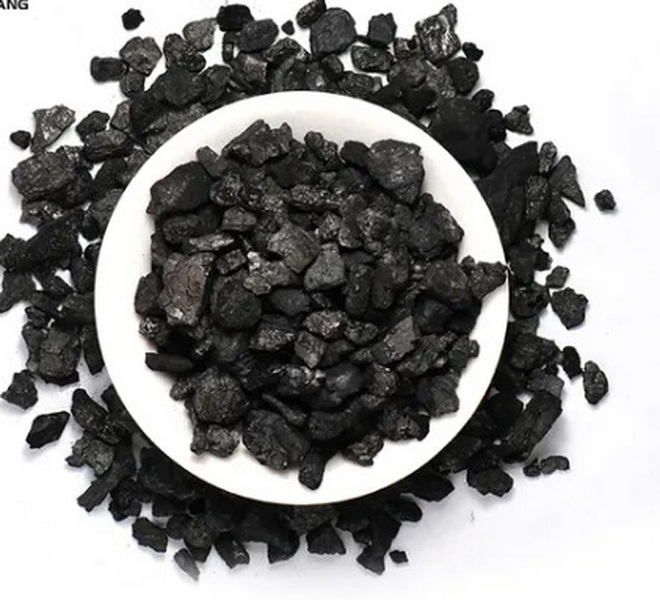
Granular activated carbon is a porous adsorbent with relatively low bulk density compared with solid minerals, typically around 0.4–0.6 g/cm³, or about 25–31 lb/ft⊃3; for most commercial grades of granular activated carbon used in water and air treatment systems. At the same time, the true density of the solid carbon skeleton inside granular activated carbon particles is much higher, usually about 2.0–2.2 g/cm³, reflecting the dense carbon framework that creates the huge internal surface area of granular activated carbon.[1][2][3][4]
To help engineers, buyers, and end users, this article explains in detail what density means for granular activated carbon, why bulk density and true density matter, how density affects system design and performance, and how to select the right granular activated carbon for industrial applications such as water treatment, air and gas purification, food and beverage processing, chemicals, and pharmaceuticals.[2][5][1]
Understanding density in granular activated carbon
Density in granular activated carbon describes how much mass of granular activated carbon is contained in a certain volume and is usually expressed in g/cm³, kg/m³, or lb/ft⊃3;. Because granular activated carbon is extremely porous and contains many internal pores plus voids between granules, several different density definitions are used in practice, including bulk density, apparent density, particle density, and true density.[6][4][7][1]
In industrial specifications and design, bulk density or apparent density is the most useful value for calculating how many kilograms or pounds of granular activated carbon are contained in a filter bed volume, while true density is more relevant for understanding the carbon structure and estimating mechanical strength and thermal behavior.[4][1][2]
Types of density for granular activated carbon
The three most important density types for granular activated carbon are bulk density, particle density, and true density, each describing the material at a different scale. Bulk density of granular activated carbon includes both the internal pores within each granule and the void spaces between granules in a packed bed, so it is always the lowest density value and is typically around 0.4–0.6 g/cm³ for standard granular activated carbon.[3][8][1][2][6]
Particle density, sometimes called apparent particle density, excludes the voids between granules but still includes the pores inside each granular activated carbon particle, which gives intermediate values around 0.50–0.90 g/cm³, while true density, also called skeletal density, treats the carbon framework as a solid and usually falls between about 1.8–2.2 g/cm³ for activated carbon materials.[1][2][6]
Typical bulk density ranges for granular activated carbon
Most commercial granular activated carbon used in drinking water, wastewater polishing, and air treatment has a bulk or apparent density in the range of roughly 0.4–0.6 g/cm³, corresponding to about 400–600 kg/m³ or approximately 25–31 lb/ft⊃3;. Technical datasheets for specific granular activated carbon products commonly list bulk densities near 0.45–0.50 g/cm³ or about 28 lb/ft⊃3;, confirming that many practical granular activated carbon media cluster around this density level.[9][10][11][8][2][3][4][1]
For example, one granular activated carbon filter media specification shows an approximate bulk density of 28 lb/ft⊃3; (about 450 kg/m³), while another 12×40 mesh coconut‑based granular activated carbon lists a bulk density of 28 lb/ft⊃3;, which aligns well with the general 25–31 lb/ft⊃3; range for water treatment‑grade granular activated carbon.[10][9][3][4]
True density and skeletal density of granular activated carbon
True density of granular activated carbon refers only to the mass of the solid carbon framework per unit volume, excluding all internal pores and external voids, and therefore produces much higher values than bulk density. For most activated carbons, the solid or skeletal density is typically around 2.0–2.2 g/cm³, which corresponds to roughly 125–137 lb/ft⊃3; and reflects the dense carbon structure that supports the enormous internal surface area of granular activated carbon.[2][3][6][4][1]
Because adsorption performance depends on pore volume and surface area rather than on solid density alone, a very high true density without sufficient pore structure would not produce an effective granular activated carbon, so manufacturers carefully control activation conditions to balance skeletal density with porosity.[12][3][6]
Why density matters in granular activated carbon system design
Density of granular activated carbon directly affects how much carbon mass can be packed into a given filter volume, which in turn influences adsorption capacity, bed life, pressure drop, and system footprint for water and air treatment plants. Higher bulk density granular activated carbon provides more carbon mass per cubic meter or cubic foot of bed, often delivering higher total adsorption capacity over the service life, but at the same time it can increase pressure drop and may require stronger vessel structures.[7][5][3][4][1]
For engineers designing granular activated carbon systems, knowing both bulk density and the working bed volume makes it possible to calculate total carbon mass, backwash expansion behavior, and vessel sizing, while understanding true density supports analysis of regeneration energy requirements and mechanical strength of granular activated carbon granules.[5][4][1][2]
Unit conversions: from bulk density to practical values
In many practical cases, designers and buyers think of granular activated carbon in terms of weight per cubic foot or cubic meter rather than in g/cm³, so unit conversions for density are important. A bulk density of 0.45 g/cm³ corresponds to about 450 kg/m³, and since one cubic foot is approximately 0.0283 m³, this translates to roughly 12.7 kg/ft⊃3;, or around 28 lb/ft⊃3; for granular activated carbon, which matches typical commercial values.[9][10][3][4][7]
Because many datasheets express bulk density as “apparent density” in lb/ft⊃3;, engineers can directly use those values to estimate how many pounds of granular activated carbon are contained in a specified filter volume, making density a convenient link between volumetric design and logistics such as shipping and handling.[10][4][5][9]
Factors that influence the density of granular activated carbon
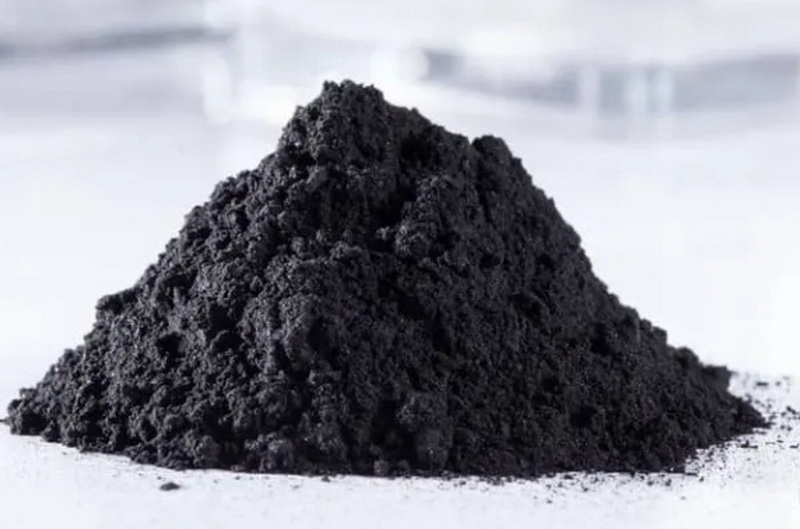
Several factors influence the bulk density and particle density of granular activated carbon, including raw material type, activation method, pore structure, particle size distribution, and manufacturing process. Coal‑based granular activated carbon often has slightly different bulk density compared with coconut‑shell‑based granular activated carbon, with some data indicating typical bulk density ranges around 0.47–0.50 g/mL for coal‑based media and 0.48–0.50 g/mL for shell‑based grades used in water treatment.[11][8][6][1]
Mesh size and particle shape also matter: finer or more irregular granular activated carbon particles can pack more tightly, increasing bulk density, while coarser or more uniform granules may create more void space, reducing bulk density but sometimes improving flow and reducing pressure drop in granular activated carbon beds.[13][6][1]
Measurement methods: bulk and apparent density tests
Standardized test methods exist to measure the apparent or bulk density of granular activated carbon, ensuring consistent values across laboratories and suppliers. One widely referenced method is ASTM D2854, which specifies procedures for determining apparent density of activated carbon by measuring the mass of a known volume of granular activated carbon under controlled conditions, including tapping or settling to achieve a reproducible packing state.[14][3][4][5][1]
Precision data for ASTM D2854 show that typical apparent densities for 8×30 mesh coal‑based granular activated carbon and 4×10 mesh coconut‑based granular activated carbon are around 0.500–0.504 g/mL, with defined repeatability and reproducibility limits, which confirms the general 0.4–0.6 g/cm³ bulk density range for granular activated carbon.[11][14][1]
Density and adsorption performance of granular activated carbon
While density of granular activated carbon does not directly measure adsorption performance, it correlates with how much active carbon mass is packed into a bed and therefore influences total adsorption capacity per unit volume. Higher bulk density granular activated carbon typically indicates more carbon per liter of bed and, when combined with high surface area and appropriate pore size distribution, can provide greater volume activity and longer service life in fixed‑bed water or air treatment systems.[3][6][4][12][1]
However, if density increases because of excessive ash content or collapsed pores, it can reduce effective porosity and lower adsorption capacity, so engineers should always evaluate granular activated carbon density together with key performance parameters such as iodine number, methylene blue adsorption, surface area, and application‑specific test results.[8][5][12]
Density differences between water and air treatment grades
Granular activated carbon used for liquid‑phase water treatment and granular activated carbon used for gas‑phase air treatment can have different density characteristics because they are optimized for different pore structures and mechanical properties. Liquid‑phase granular activated carbon often targets balanced micro‑ and mesopores with high mechanical strength and moderate bulk density so the granular activated carbon bed can withstand backwashing, hydraulic forces, and occasional regeneration.[8][5][12][1]
Gas‑phase granular activated carbon products may be optimized for higher microporosity and different surface chemistry, which can slightly affect bulk density, but they still typically fall in the broader 0.4–0.6 g/cm³ range, and supplier datasheets will show the exact density values for each granular activated carbon grade.[6][1][8]
Handling, storage, and safety implications of density
Knowing the density of granular activated carbon also helps with handling, packaging, and storage planning for industrial projects. For example, if a bulk density of 28 lb/ft⊃3; is assumed and a large filter requires 100 ft⊃3; of granular activated carbon, then the total carbon fill mass will be about 2,800 lb, which determines pallet numbers, crane capacity, and vessel loading procedures.[4][5][1][9][10]
Because granular activated carbon is relatively light compared with many mineral filter media, large bed volumes can be filled without exceeding structural limits of typical steel or fiberglass vessels, but logistics teams must still account for the significant total mass of granular activated carbon when planning shipping and installation.[15][13][7]
Practical examples: using granular activated carbon density in design
Consider a water treatment plant that uses a vertical pressure filter containing 2.0 m³ of granular activated carbon with a specified bulk density of 0.50 g/cm³ (500 kg/m³). Multiplying volume by bulk density indicates that the vessel holds about 1,000 kg of granular activated carbon, allowing engineers to estimate service life, regeneration logistics, and change‑out schedules based on contaminant loading and target throughput.[12][1][4][5]
In another example, a designer comparing two granular activated carbon products with bulk densities of 0.45 g/cm³ and 0.55 g/cm³ but similar iodine numbers would recognize that, for the same bed volume, the higher‑density granular activated carbon provides more mass and potentially more total adsorption capacity, although it may create slightly higher pressure drop and require attention to backwash expansion behavior.[1][3][7]
Selecting granular activated carbon by density and application
When selecting granular activated carbon for specific applications, buyers should consider density together with performance parameters and mechanical properties. For municipal drinking water or industrial wastewater polishing, granular activated carbon with moderate to high bulk density, high surface area, appropriate pore size distribution, and good hardness will usually provide strong volume activity and long operating life.[8][5][12][1]
For air and gas purification, granular activated carbon selection may emphasize microporosity, gas‑phase adsorption tests, and appropriate particle size to balance density, residence time, and pressure drop, while in food and beverage or pharmaceutical applications, granular activated carbon must also comply with relevant purity and regulatory standards in addition to having suitable density.[3][4][5]
Conclusion
The density of granular activated carbon is a critical parameter that connects laboratory measurements with real‑world design decisions for water, air, and industrial purification systems. Bulk or apparent density of granular activated carbon typically lies around 0.4–0.6 g/cm³, equivalent to about 25–31 lb/ft⊃3;, while true density of the carbon skeleton is much higher, about 2.0–2.2 g/cm³, reflecting the dense carbon framework inside the porous structure.[2][4][1][3]
Understanding how bulk density, particle density, and true density relate to each other helps engineers calculate carbon mass, design bed depth and contact time, estimate pressure drop, and plan logistics for shipping, loading, and regeneration of granular activated carbon in demanding industrial applications. By combining density data with performance specifications such as iodine number, surface area, and contaminant removal tests, users can select the most suitable granular activated carbon grade for water treatment, air and gas purification, food and beverage, chemical, and pharmaceutical processes.[6][5][12][1][8]

FAQ About the Density of Granular Activated Carbon
1. What is the typical bulk density of granular activated carbon?
For most commercial grades, the bulk or apparent density of granular activated carbon is typically about 0.4–0.6 g/cm³, which corresponds to roughly 400–600 kg/m³ or around 25–31 lb/ft⊃3;. Many technical datasheets for granular activated carbon products show bulk densities near 0.45–0.50 g/cm³ or about 28 lb/ft⊃3;, especially for common water treatment and air purification grades of granular activated carbon.[9][10][11][4][1][2][3][8]
2. How is bulk density of granular activated carbon measured?
Bulk density of granular activated carbon is usually measured by filling a known volume with granular activated carbon under defined conditions and then weighing the mass to calculate mass per unit volume. Standard test methods such as ASTM D2854 specify procedures for determining apparent density of granular activated carbon, including tapping or settling steps to achieve a reproducible packing state and ensure consistent results across laboratories.[4][14][1][3][6]
3. What is the difference between bulk density and true density for granular activated carbon?
Bulk density of granular activated carbon includes the internal pores within particles and the voids between granules in a bed, so it describes the density of the packed media in a filter vessel and is relatively low. True density, also called skeletal density, refers only to the solid carbon framework, excluding all pores and voids, and is much higher, typically around 2.0–2.2 g/cm³ for activated carbons used in granular activated carbon products.[1][2][3][6][4]
4. Why is density important when selecting granular activated carbon?
Density of granular activated carbon determines how much carbon mass is contained in a given bed volume, which affects total adsorption capacity, bed life, and system footprint in water and air treatment applications. At the same time, density influences pressure drop, hydraulic behavior, and backwash expansion of granular activated carbon beds, so designers must balance density with performance parameters to achieve reliable, energy‑efficient operation.[7][5][3][6][4][1]
5. Do different raw materials change the density of granular activated carbon?
Yes, the raw material and manufacturing process influence the density of granular activated carbon, because they affect pore structure, ash content, and particle morphology. Coal‑based and coconut‑shell‑based granular activated carbon products often show slightly different bulk densities, with typical ranges around 0.47–0.50 g/mL for coal‑based grades and 0.48–0.50 g/mL for shell‑based grades used in water and wastewater treatment, even though both fall within the broader 0.4–0.6 g/cm³ range.[11][5][8][1]
Citations:
[1](https://activatedcarbon.net/Resources/density-of-activated-carbon/)
[2](https://qizhongcarbon.com/resources/parameter-definitions/density-of-activated-carbon/)
[3](https://en.wikipedia.org/wiki/Activated_carbon)
[4](https://www.newterra.com/article/what-is-activated-carbon/)
[5](https://wqa.org/wp-content/uploads/2022/09/2016_GAC.pdf)
[6](https://allcarbontech.com/activated-carbon-density-3/)
[7](https://www.bpsvibes.com/bulk-density-guide)
[8](https://www.allcarbon.net/bulk-density-of-activated-carbon/)
[9](https://www.targetproducts.com/PDFs/DS-granular.pdf)
[10](https://affordablewater.us/products/1-cubic-foot-granular-activated-carbon)
[11](https://mysweetindulgence.com/common-questions/what-is-the-bulk-density-of-granular-activated-carbon/)
[12](https://pmc.ncbi.nlm.nih.gov/articles/PMC7758968/table/tbl1/)
[13](https://hapman.com/resources-knowledge/bulk-density-guide/)
[14](https://thanhoattinhtrucvang.com/standard-test-method-for-apparent-density-of-activated-carbon-astm-d-2854-96.html)
[15](https://dynamicbulk.com/wp-content/uploads/2023/10/Bulk-Material-Density-Property-Chart.pdf)
[16](https://carbons.ir/en/)
[17](https://www.aqua-calc.com/calculate/volume-to-weight/substance/activated-blank-carbon)
[18](https://www.bluefountainwater.com/activated_carbon.pdf)
[19](https://aquaenergyexpo.com/storage/images/companies/pdfs/20220704101821_ATL%20activated%20carbon%20catalogue.pdf)
[20](https://www.activatedcarbon.net/Resources/density-of-activated-carbon/)


