Content Menu
● What Is the Chemical Formula for Granular Activated Carbon?
● Understanding the “Chemical Formula” of Granular Activated Carbon
● Chemical Structure and Surface Chemistry of Granular Activated Carbon
● Elemental Composition and Ash in Granular Activated Carbon
● Physical Form: Why “Granular” Matters
● How Granular Activated Carbon Is Made (and Why Formula Stays “C”)
● Key Properties of Granular Activated Carbon Related to Its Chemistry
● Chemical Behavior of Granular Activated Carbon in Water and Air
● Why “C” Is Sufficient but Not the Whole Story
● Conclusion
● FAQ About the Chemical Formula of Granular Activated Carbon
>> 1. What is the exact chemical formula of granular activated carbon?
>> 2. Does granular activated carbon contain other elements besides carbon?
>> 3. How is the chemical structure of granular activated carbon different from graphite?
>> 4. Why is the formula C enough for regulations and safety data sheets?
>> 5. How does the chemical composition of granular activated carbon affect its applications?
● Citations:
What Is the Chemical Formula for Granular Activated Carbon?
In strict chemical terms, the chemical formula for granular activated carbon is simply carbon, written as C, because granular activated carbon is mainly composed of elemental carbon atoms arranged in a highly porous structure. However, real industrial granular activated carbon also contains small amounts of other elements (such as hydrogen, oxygen, and mineral ash), so it is better described as a high‑purity carbon material rather than a single, fixed molecular compound.[1][2][3][4][5][6]
Understanding the “Chemical Formula” of Granular Activated Carbon
Granular activated carbon is not a single molecule like sodium chloride (NaCl) or water (H₂O); instead, it is a solid network of carbon atoms with a graphite‑like structure and a huge internal surface area. For regulatory and reference purposes, standards and chemical databases list activated carbon or activated charcoal with the empirical formula C, molecular weight about 12.01 g/mol, and CAS number 7440‑44‑0.[7][2][4][5][1]
Because granular activated carbon is produced from natural raw materials (coal, coconut shell, wood, etc.), its elemental composition can vary slightly, with trace amounts of oxygen, hydrogen, and minerals such as potassium, calcium, sodium, and iron remaining in the final product. These minor components do not change the basic formula C assigned to activated carbon, but they do influence the performance of granular activated carbon in demanding industrial applications.[8][3][9][6]
Chemical Structure and Surface Chemistry of Granular Activated Carbon
On the microscopic scale, granular activated carbon consists mainly of layers of hexagonally arranged carbon atoms similar to graphite, but heavily disordered and fractured to create a dense network of pores. This graphitic platelet structure gives granular activated carbon a very high internal surface area, often more than 1,000 m² per gram, which is the fundamental reason why granular activated carbon is such a strong adsorbent.[10][11][1][7]
Although the core structure is elemental carbon (C), the surface of granular activated carbon carries different functional groups, including hydroxyl (O–H), carbonyl (C=O), and carboxyl (C–O) groups, as well as other oxygen‑containing species. These surface groups give granular activated carbon its characteristic acid–base behavior, influence how it interacts with water or organic molecules, and can be modified during activation or post‑treatment to tailor granular activated carbon for specific applications like water treatment, air purification, or catalyst support.[6][11][7][10]
Elemental Composition and Ash in Granular Activated Carbon
High‑quality granular activated carbon is typically more than 90% carbon by weight, but the exact elemental composition depends on the raw material and activation method used in production. In many practical grades, laboratory analysis shows carbon plus smaller amounts of oxygen, hydrogen, and inorganic elements such as potassium, sodium, calcium, magnesium, iron, silicon, and aluminum.[3][9][12][8][6]
The inorganic fraction of granular activated carbon is called ash and is mainly composed of oxides and salts such as K₂O, Na₂O, CaO, MgO, Fe₂O₃, Al₂O₃, P₂O₅, and others. Ash content and composition can significantly affect the adsorption performance of granular activated carbon, so producers often wash or acid‑treat granular activated carbon to reduce ash and meet demanding specifications for water treatment, food and beverage, chemical, and pharmaceutical applications.[4][9][8][3]
Physical Form: Why “Granular” Matters
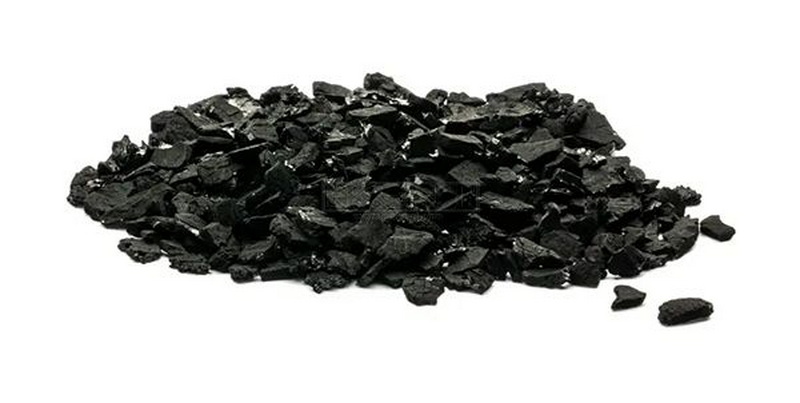
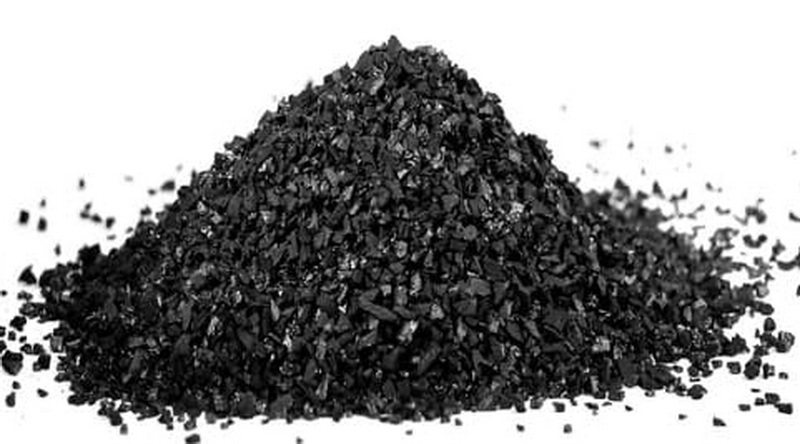
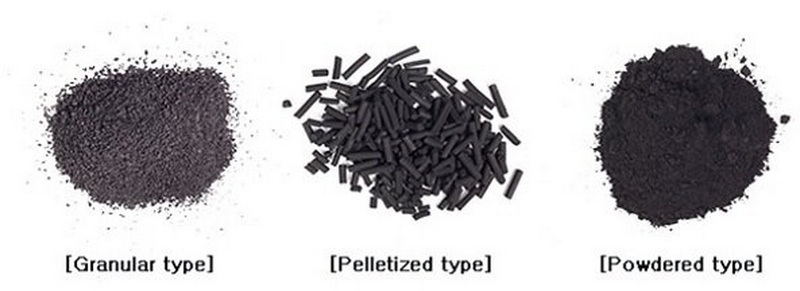
The term “granular activated carbon” refers to the physical form of the carbon, not a different chemical formula. Granular activated carbon is made up of irregular particles, usually with sizes from about 0.2 mm up to 5 mm, and is typically classified by mesh size ranges such as 4×8, 6×12, 8×16, 8×30, 12×40, and 20×50.[13][7][10]
Granular activated carbon differs from powdered activated carbon (PAC), which has much finer particles (generally below 0.2 mm), and from extruded or pelletized activated carbon, which is manufactured as cylindrical pellets of around 3–4 mm diameter. These different physical forms allow engineers to design granular activated carbon filters, packed beds, and contactors with controlled pressure drop, contact time, and backwashing behavior while keeping the same underlying carbon chemistry.[14][3][10][13]
How Granular Activated Carbon Is Made (and Why Formula Stays “C”)
Granular activated carbon can be produced from many carbon‑rich raw materials, including coal, coconut shells, wood, peat, and other biomass, all of which are first carbonized at high temperature to remove volatile components and concentrate carbon content. After carbonization, the material is “activated” either by physical activation with steam/CO₂ or by chemical activation agents such as phosphoric acid or potassium hydroxide, developing an intricate network of micro‑, meso‑, and macropores.[12][3][14][10][6]
During activation, carbon reacts to open and enlarge pores, while mineral components can partially convert into oxides, carbonates, or silicates, but the main solid product remains a highly porous form of elemental carbon with the empirical formula C. The activated carbon is then crushed, granulated, and sieved to specific particle sizes to produce granular activated carbon grades that match the flow and performance requirements of different water, air, and industrial systems.[7][3][10][6][12]
Key Properties of Granular Activated Carbon Related to Its Chemistry
Because granular activated carbon is essentially elemental carbon with a huge surface area, its performance is mainly described by physical and surface‑chemical parameters rather than by a molecular formula. Important test values include iodine number (or methylene blue number), BET surface area, pore size distribution, apparent density, hardness, and ash content, all of which help characterize how granular activated carbon will behave in real‑world applications.[1][3][14][7]
For example, iodine number is widely used as a simple indicator of micropore content and activity in liquid‑phase granular activated carbon, while apparent density indicates how much active carbon is present in a given filter volume. Surface functional groups revealed by techniques such as FTIR analysis indicate whether granular activated carbon is more acidic or basic, which can be important when adsorbing specific organic contaminants, odors, or color bodies from water, food, pharmaceuticals, and chemical streams.[15][11][6][1]
Chemical Behavior of Granular Activated Carbon in Water and Air
In water treatment, granular activated carbon primarily removes organic molecules, residual disinfectants such as chlorine, and certain micropollutants via adsorption onto its large internal surface. The hydrophobic graphitic surfaces of granular activated carbon attract non‑polar and weakly polar organic compounds, while surface oxygen groups and mineral content can influence how polar compounds and metals interact with the carbon.[11][3][14][6][12][7]
In air and gas purification, granular activated carbon adsorbs volatile organic compounds (VOCs), odors, and some inorganic contaminants, again relying on its pore structure and surface chemistry rather than a complex molecular formula. Impregnated granular activated carbon can be produced by adding special chemicals to the pores, creating materials that can chemically react with certain gases such as acid gases, ammonia, or mercury while maintaining the core carbon formula C.[10][11][7]
Why “C” Is Sufficient but Not the Whole Story
From a strict chemical‑formula perspective, listing granular activated carbon as C is correct because its fundamental framework is elemental carbon and its molar mass is the same as pure carbon. However, engineers, buyers, and quality managers need much more than just “C” when they select granular activated carbon for industrial water treatment, air purification, food and beverage processing, or pharmaceutical production, because performance depends strongly on pore structure, surface chemistry, and ash.[2][5][3][4][14][12]
In practice, a technical data sheet for granular activated carbon will include carbon and ash percentages, moisture, hardness, pH, particle size distribution, surface area, and adsorption test numbers, all of which describe how that particular granular activated carbon grade will behave in service. So the answer to “what is the chemical formula for granular activated carbon” is simple—C—but the science and engineering behind granular activated carbon are complex and highly tunable for different industries and applications.[3][14][12][1][7][10]
Conclusion
The strict chemical formula for granular activated carbon is C, reflecting the fact that granular activated carbon is primarily composed of elemental carbon atoms arranged in a highly porous, graphite‑like network. Yet real industrial granular activated carbon also contains minor amounts of oxygen, hydrogen, and inorganic ash, together with a tailored pore structure and surface functional groups that determine how granular activated carbon will work in water treatment, air and gas purification, food and beverage processing, chemical production, and pharmaceutical applications.[5][8][2][4][6][7][3]
Understanding the difference between the simple formula C and the detailed physical and chemical properties allows engineers, buyers, and plant operators to specify the right granular activated carbon grade for their systems, achieving reliable adsorption performance, long media life, and safe, economical operation. When selecting granular activated carbon, it is essential to look beyond the formula and focus on raw material, activation method, pore structure, surface chemistry, ash content, and certification so that granular activated carbon can deliver the expected results in demanding industrial and municipal environments.[14][12][13][1][7][3][10]
FAQ About the Chemical Formula of Granular Activated Carbon
1. What is the exact chemical formula of granular activated carbon?
Granular activated carbon is generally assigned the empirical formula C, the same as elemental carbon, with a molar mass of about 12.01 g/mol and CAS number 7440‑44‑0. This notation reflects the fact that granular activated carbon is a solid form of carbon rather than a discrete molecular compound with multiple elements in fixed ratios.[2][4][5]
2. Does granular activated carbon contain other elements besides carbon?
Yes, real granular activated carbon usually contains small amounts of other elements, including oxygen and hydrogen on the surface, as well as inorganic elements such as potassium, sodium, calcium, magnesium, iron, silicon, and aluminum in the ash fraction. These non‑carbon components can influence the adsorption behavior and are controlled by careful selection of raw materials and purification or washing steps during production of granular activated carbon.[9][8][6][3]
3. How is the chemical structure of granular activated carbon different from graphite?
Both granular activated carbon and graphite are based on hexagonally arranged carbon atoms, but graphite has a highly ordered layered structure, while granular activated carbon is more disordered and fractured, with many defects and cross‑linked platelets. This disorder creates the micro‑, meso‑, and macropores that give granular activated carbon its very high internal surface area and powerful adsorption capacity.[11][1][7][14][10]
4. Why is the formula C enough for regulations and safety data sheets?
Regulatory documents and safety data sheets use the formula C for activated carbon and granular activated carbon because the dominant element is carbon and the basic chemical identity is a carbon solid. Detailed information about trace elements, ash content, and surface chemistry is usually provided separately in technical data sheets and certificates of analysis rather than changing the core empirical formula of granular activated carbon.[8][4][5][6][2][3]
5. How does the chemical composition of granular activated carbon affect its applications?
The purity, ash content, and surface functional groups of granular activated carbon strongly affect its performance in specific applications such as drinking water treatment, food and beverage processing, or pharmaceutical production. For example, low‑ash, high‑purity granular activated carbon with carefully controlled surface chemistry is preferred for sensitive food, beverage, and pharma uses, while robust coal‑based granular activated carbon with high hardness may be chosen for industrial water or gas purification systems.[4][12][8][7][3][10]
Citations:
[1](https://en.wikipedia.org/wiki/Activated_carbon)
[2](https://webbook.nist.gov/cgi/cbook.cgi?ID=C7440440&Mask=20)
[3](https://www.sciencedirect.com/topics/engineering/granular-activated-carbon)
[4](https://www.fao.org/fileadmin/user_upload/jecfa_additives/docs/Monograph1/Additive-006.pdf)
[5](https://atamankimya.com/sayfalar.asp?LanguageID=2&id=3322&id2=11855)
[6](https://pmc.ncbi.nlm.nih.gov/articles/PMC4673353/)
[7](https://www.chemviron.eu/what-is-activated-carbon/)
[8](https://www.chemicalbook.com/ChemicalProductProperty_EN_CB9418149.htm)
[9](https://www.chembk.com/en/chem/activated%20carbon)
[10](https://activated-carbon.com/insights/granular-activated-carbon/)
[11](https://www.activatedcarbon.in/chemical-structure/)
[12](https://www.wwdmag.com/what-is-articles/article/10939799/what-is-granular-activated-carbon-gac)
[13](https://puragen.com/uk/insights/granular-activated-carbon/)
[14](https://wqa.org/wp-content/uploads/2022/09/2016_GAC.pdf)
[15](https://en.wikipedia.org/wiki/Activated_Carbon)
[16](https://pubchem.ncbi.nlm.nih.gov/compound/Activated-Charcoal)
[17](https://www.sciencedirect.com/topics/chemistry/activated-carbon)
[18](https://hydronixwater.com/granular-activated-carbon-fact-sheet/)
[19](https://www.sciencedirect.com/topics/neuroscience/activated-carbon)
[20](https://pubchem.ncbi.nlm.nih.gov/compound/Activated%20Charcoal)


