Content Menu
● What Is Powdered Activated Carbon?
● How Powdered Activated Carbon Works
● Powdered Activated Carbon vs Granular Activated Carbon
>> Key differences between PAC and GAC
● Main Applications of Powdered Activated Carbon
>> Drinking water and wastewater treatment
>> Air, gas, and flue‑gas purification
>> Food and beverage processing
>> Chemical and pharmaceutical industries
● Advantages and Limitations of Powdered Activated Carbon
● How to Choose Between PAC and GAC for Your Plant
● Conclusion
● FAQ
>> 1. What is the difference between powdered activated carbon and granular activated carbon?
>> 2. When should a plant use powdered activated carbon instead of granular activated carbon?
>> 3. Is powdered activated carbon safe to use in drinking water treatment?
>> 4. How is powdered activated carbon handled and dosed in industrial plants?
>> 5. Can powdered activated carbon be regenerated like granular activated carbon?
● Citations:
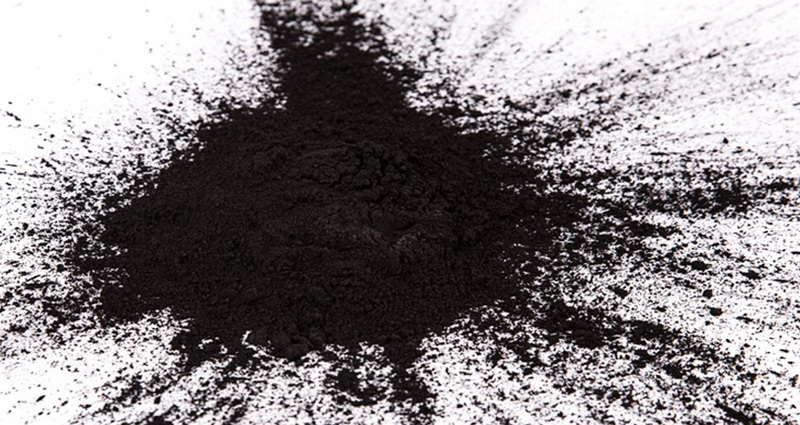
What is powdered activated carbon (PAC)? It is a very fine, highly porous form of activated carbon, typically below about 0.18–0.20 mm, designed for rapid adsorption of contaminants from water, air, and process liquids in many industrial applications. Compared with granular activated carbon (GAC), powdered activated carbon works best in short‑contact or batch treatments, while granular activated carbon is preferred for continuous filtration and regeneration systems.[1][2][3][4]
What Is Powdered Activated Carbon?
Powdered activated carbon is produced by grinding activated carbon into a fine powder, giving it particle sizes usually under 0.18–0.20 mm and a very large external surface area. This ultra‑fine size helps powdered activated carbon disperse quickly in water or process liquids, making contact with contaminants much faster than coarser media like granular activated carbon.[4][5][1]
At the microscopic level, powdered activated carbon has a network of micro‑, meso‑, and macropores that provide huge internal surface area for adsorption of organic molecules, taste‑ and odor‑causing compounds, and trace pollutants. The base raw materials can include coal, wood, coconut shell, or other carbon‑rich sources, which are carbonized and then “activated” with steam or chemicals to create this porous structure.[6][7][8]
How Powdered Activated Carbon Works
Powdered activated carbon removes pollutants through adsorption, where dissolved or gaseous molecules adhere to the internal and external surfaces of each particle rather than dissolving into it. Physical forces (van der Waals interactions) and, in some cases, chemical interactions keep contaminants on the carbon surface until the powdered activated carbon is removed from the system.[9][7][1][6]
In a typical water treatment application, powdered activated carbon is dosed into raw or partially treated water, mixed for a defined contact time, and then separated by sedimentation, flotation, or filtration. In gas or flue‑gas applications, powdered activated carbon can be injected into the duct stream, where it adsorbs mercury, dioxins, or VOCs and is then captured downstream in filters or baghouses.[10][11][5][1]
Powdered Activated Carbon vs Granular Activated Carbon
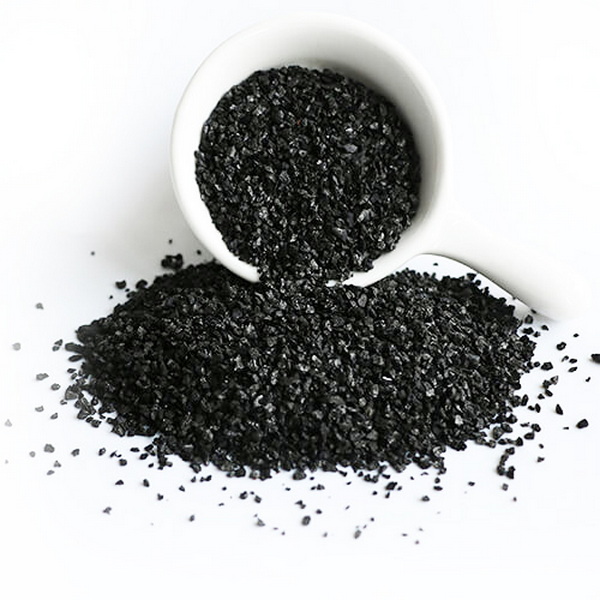
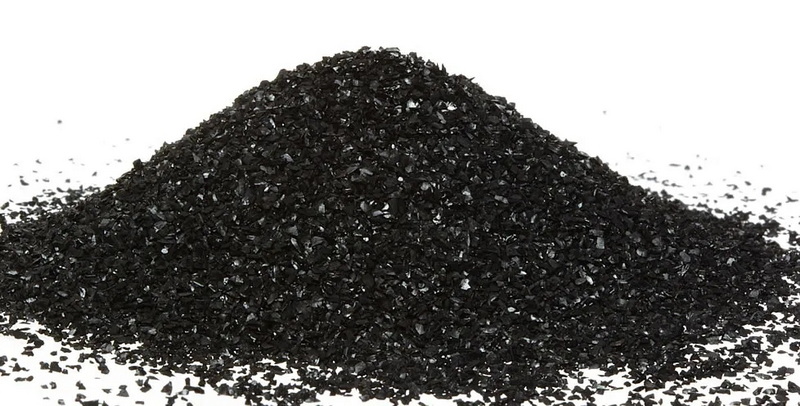
Both powdered activated carbon and granular activated carbon are forms of the same material, but they are engineered for different operating modes and system designs. Powdered activated carbon is a fine, typically single‑use adsorbent dosed into a stream, whereas granular activated carbon is a larger‑particle media used in fixed beds that can often be thermally regenerated and reused.[2][3][4]
Key differences between PAC and GAC
| Feature / Aspect | Powdered activated carbon (PAC) | Granular activated carbon (GAC) |
| Typical particle size | < 0.18–0.20 mm, fine powderheycarbons+1 | ~0.2–5 mm granulesheycarbons+1 |
| Typical use mode | Dosed into water/liquid or injected into gas streams, then separated and disposedguidelines.nhmrc+1 | Packed in fixed‑bed filters and contactors for continuous flow and backwashheycarbons+1 |
| Adsorption rate | Very fast due to high external surface and short diffusion pathsyrdcarbon+1 | Slower initial rate but suitable for long contact times and continuous dutyheycarbons+1 |
| Regeneration | Usually single‑use, not regenerated on siteyrdcarbon+1 | Often regenerated thermally and reused, reducing long‑term cost and wastebygen+1 |
| Typical applications | Emergency or seasonal taste‑and‑odor control, batch purification, flue‑gas mercury and dioxin removalpuragen+2 | Municipal drinking water granular activated carbon filters, air and VOC control, many industrial purification systemsheycarbons+2 |
| Handling | Requires dust control; supplied as bulk powder or slurryyrdcarbon+1 | Easier to handle as low‑dust granules, often used in pressure vessels or open filtersheycarbons+1 |
In many systems, granular activated carbon and powdered activated carbon are complementary—granular activated carbon provides the backbone of continuous filtration, while powdered activated carbon is added for peak loads, seasonal taste‑and‑odor events, or temporary contamination spikes. For customers that already operate granular activated carbon filters, adding a powdered activated carbon dosing stage can significantly increase resilience against sudden changes in raw water quality.[3][4]
Main Applications of Powdered Activated Carbon
Powdered activated carbon is widely used in water treatment, air and gas purification, chemical and pharmaceutical processing, and food and beverage production. Its fine particle size and strong adsorption capacity make it especially useful for removing trace organics, taste‑ and odor‑causing compounds, and regulated micropollutants.[11][13][14][1][10]
Drinking water and wastewater treatment
In municipal and industrial water treatment, powdered activated carbon is dosed to remove natural organic matter, pesticides, algal toxins, disinfection by‑products, pharmaceuticals, and other dissolved organics. For seasonal algal blooms, powdered activated carbon is an effective tool for controlling geosmin and MIB that cause earthy or musty tastes and odors in finished water.[15][12][10]
In wastewater treatment, powdered activated carbon can polish effluents before discharge or reuse, reducing COD, color, and trace organic pollutants. Granular activated carbon filters downstream of biological treatment can be combined with powdered activated carbon addition upstream to manage fluctuating industrial loads more efficiently.[1][15]
Air, gas, and flue‑gas purification
Powdered activated carbon is frequently injected into flue‑gas streams to capture mercury, dioxins, furans, and volatile organic compounds before they reach baghouse filters. Energy‑from‑waste plants and industrial incineration facilities often rely on powdered activated carbon injection as a Best Available Technique for mercury and VOC removal.[16][11][1]
For general air purification, granular activated carbon filters in HVAC systems can be supplemented with powdered activated carbon where temporary or localized pollution spikes occur, such as process vents or emergency releases. Many producers also offer pelletized forms derived from powdered activated carbon for gas‑phase uses requiring low pressure drop and mechanical strength.[14][5][8]
Food and beverage processing
In the food and beverage industry, powdered activated carbon is used to decolorize and deodorize sugar solutions, syrups, edible oils, and various liquid ingredients. It also helps remove off‑flavors, trace contaminants, and color bodies from beverages, improving clarity and sensory properties without adding flavor of its own.[17][11][14]
Granular activated carbon is common in beverage water treatment trains, while powdered activated carbon is used inside batch vessels for targeted color or odor correction on specific process streams. Choosing between granular activated carbon and powdered activated carbon depends on the line configuration—continuous filtration steps favor granular activated carbon, while batch tanks and intermittent issues favor powdered activated carbon.[11][14]
Chemical and pharmaceutical industries
Chemical and pharmaceutical manufacturers use powdered activated carbon to purify intermediates, active ingredients, solvents, and process liquids by removing color, by‑products, and residual catalysts. In pharmaceuticals, powdered activated carbon is widely used in batch decolorization and impurity reduction steps to meet strict regulatory purity requirements.[13][14][15][11]
Granular activated carbon filters may be installed on water systems and solvent recovery loops, while powdered activated carbon is often dosed directly into reactors or holding tanks and then filtered out. Working with a specialist granular activated carbon supplier allows end users to integrate both granular activated carbon and powdered activated carbon into a consistent, compliant purification strategy across the whole plant.[5][14]
Advantages and Limitations of Powdered Activated Carbon
Powdered activated carbon offers several performance and cost advantages for suitable applications, but it also comes with operational considerations compared to granular activated carbon.[12][2][4]
Key advantages include:
- Very fast adsorption due to fine particle size and high external surface area, making it ideal for short contact times.[4][5]
- Lower upfront cost per kilogram than many granular activated carbon grades, which helps in emergency or intermittent applications.[2][4]
- High versatility across water, wastewater, food, chemical, pharmaceutical, and flue‑gas systems as a dosed additive.[13][1][11]
Limitations and challenges include:
- High dust potential, requiring proper handling equipment, dust collection, and safety measures.[5][4]
- Typically single‑use operation, increasing solid‑waste volumes and long‑term operating costs if dosed continuously.[3][4]
- Need for downstream separation (settling, flotation, or filtration), which can add complexity to plant design.[10][5]
For many operators, granular activated carbon remains the core medium for long‑term filtration, while powdered activated carbon is selected for targeted events or polishing duties that granular activated carbon alone cannot reliably handle.
How to Choose Between PAC and GAC for Your Plant
Selecting between powdered activated carbon and granular activated carbon depends on treatment objectives, system size, regeneration plans, and budget. System designers evaluate not only current contaminant levels but also expected fluctuations, regulatory drivers, and options for carbon reactivation or disposal.[18][15][3][4]
Granular activated carbon is often recommended when:
- The process is continuous, with stable flows requiring long‑term adsorption beds.[2][3]
- There is infrastructure or service support to regenerate or exchange saturated granular activated carbon media.[3][4]
Powdered activated carbon is usually preferred when:
- Fast action is needed for short contact times, such as emergency contamination events or seasonal taste‑and‑odor problems.[12][10]
- The process is batch‑based, or contamination is intermittent, making single‑use powdered activated carbon more economical overall.[18][4]
Many industrial and municipal users combine granular activated carbon filters with upstream powdered activated carbon feeding systems to gain both continuous protection and flexible response capacity. Working with a granular activated carbon and powdered activated carbon manufacturer that understands specific industries—water treatment, air and gas purification, food and beverage, chemical, and pharmaceutical—helps optimize cost and performance across the whole lifecycle.
Conclusion
Powdered activated carbon is a fine, highly efficient adsorbent that delivers rapid removal of organic contaminants, taste‑ and odor‑causing compounds, and regulated micropollutants from water, air, and process streams. It works especially well in batch or short‑contact applications and is widely used alongside granular activated carbon, which provides durable, regenerable filtration for continuous flows.[1][10][11][4][2][3]
For industrial users in sectors such as water treatment, air and gas purification, food and beverage, chemical, and pharmaceuticals, the most robust strategy often combines the strengths of both granular activated carbon and powdered activated carbon in one integrated purification system. Partnering with an experienced granular activated carbon supplier and exporter that can provide both granular activated carbon and powdered activated carbon grades, as well as custom engineering support, is the most effective way to match adsorbent selection with process demands and long‑term operating cost targets.[14][15][11]
FAQ
1. What is the difference between powdered activated carbon and granular activated carbon?
Powdered activated carbon has very fine particles, usually under about 0.18–0.20 mm, which disperse quickly and deliver rapid adsorption in short‑contact or batch systems. Granular activated carbon consists of larger granules (roughly 0.2–5 mm) used in fixed‑bed filters for continuous treatment and easier regeneration and reuse.[4][2][3]
2. When should a plant use powdered activated carbon instead of granular activated carbon?
Plants typically choose powdered activated carbon when they need fast response to seasonal taste‑and‑odor problems, accidental spills, or temporary contamination spikes, or when processes are naturally batch‑based. Granular activated carbon is preferred for continuous filtration duties, but many facilities use a combination of powdered activated carbon dosing and granular activated carbon filters to increase resilience and flexibility.[10][12][18][3][4]
3. Is powdered activated carbon safe to use in drinking water treatment?
Yes, powdered activated carbon is widely used in drinking water plants to adsorb natural organic matter, algae‑related compounds, pesticides, and disinfection by‑products, helping utilities meet taste, odor, and regulatory standards. Safe use depends on proper dosing, mixing, and removal, as well as compliance with relevant drinking water chemical standards in each region.[15][13][10]
4. How is powdered activated carbon handled and dosed in industrial plants?
Industrial plants typically receive powdered activated carbon in bulk bags, small bags, or as prepared slurries, then feed it via screw feeders, pneumatic conveyors, or slurry dosing systems into the target stream. Because powdered activated carbon is dusty and lightweight, facilities usually implement dust‑collection, explosion‑prevention, and operator protection measures as part of their handling design.[5][12][4]
5. Can powdered activated carbon be regenerated like granular activated carbon?
In most cases powdered activated carbon is used once and then removed with sludge for disposal or external treatment, because its fine particle size makes economical on‑site regeneration difficult. By contrast, granular activated carbon beds can often be thermally reactivated by specialist service providers, which supports multiple reuse cycles and can lower lifecycle costs and waste volumes.[18][3][4]
Citations:
[1](https://puragen.com/uk/insights/what-is-powder-activated-carbon/)
[2](https://heycarbons.com/granular-activated-carbon-vs-powdered-activated-carbon/)
[3](https://www.bygen.com.au/post/granular-vs-powdered-activated-carbon-which-one-is-right-for-your-application)
[4](https://www.yrdcarbon.com/news/differences-granular-powdered-activated-carbon.html)
[5](https://sodimate-inc.com/activated-carbon-types-applications-advantages/)
[6](https://en.wikipedia.org/wiki/Activated_carbon)
[7](https://www.chemviron.eu/what-is-activated-carbon/)
[8](https://qizhongcarbon.com/blog/types-of-activated-carbon/)
[9](https://allcarbontech.com/powder-activated-carbon/)
[10](https://guidelines.nhmrc.gov.au/australian-drinking-water-guidelines/part-5/treatment-chemicals/carbon-powdered-activated)
[11](https://www.calgoncarbon.com/powdered-activated-carbon/)
[12](https://www.naturecarbon.com/news/water-treatment-activated-carbon-is-powder-or-30155961.html)
[13](https://www.servochem.com/products/powdered-activated-carbon/)
[14](https://puragen.com/uk/insights/what-is-activated-carbon-used-for/)
[15](https://ionexchangeglobal.com/carbon-purification-for-industries-key-techniques/)
[16](https://www.palamaticprocess.com/powder-activated-carbon)
[17](https://www.chemviron.eu/activated-carbon-for-beverages-purification/)
[18](https://ucicarbons.com/granular-activated-carbon-vs-powdered-activated-carbon/)
[19](https://www.sciencedirect.com/topics/engineering/powdered-activated-carbon)
[20](https://www.sorbotech.uk/115,powdered_activated_carbon)


