Content Menu
● What Is Granular Activated Carbon?
● What Is a Granular Activated Carbon Filter?
● How Does a Granular Activated Carbon Filter Work?
● Main Applications of Granular Activated Carbon Filters
>> Water and Wastewater Treatment
>> Air and Gas Purification
>> Food and Beverage Industry
>> Chemical and Pharmaceutical Uses
● Advantages of Granular Activated Carbon Filters
● Limitations and Considerations
● Key Design Parameters for GAC Filters
● Operation, Maintenance, and Regeneration
● How Granular Activated Carbon Filters Compare to Other Technologies
● Example Use Cases for Industrial Buyers
● Conclusion
● FAQs About Granular Activated Carbon Filters
>> (1) What contaminants can a granular activated carbon filter remove?
>> (2) How long does granular activated carbon last in a filter?
>> (3) Are granular activated carbon filters safe for drinking water?
>> (4) What is the difference between granular activated carbon and powdered activated carbon?
>> (5) How do I choose the right granular activated carbon filter for my application?
● Citations:
A granular activated carbon filter is a filtration system filled with granular activated carbon (GAC) media that removes contaminants from water or air through adsorption, improving taste, odor, color, and overall quality. Because granular activated carbon has an extremely high internal surface area and porous structure, it is widely used in municipal water plants, industrial water treatment, air and gas purification, and many other applications.[1][2][3]
What Is Granular Activated Carbon?
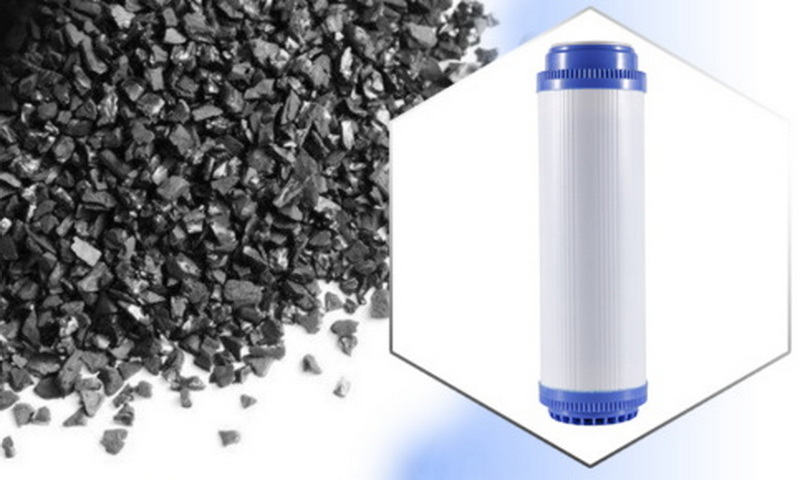
Granular activated carbon is a specially processed carbon material with irregular granules, high porosity, and a large specific surface area, typically in the range of hundreds to over one thousand square meters per gram. These properties make granular activated carbon highly effective for adsorbing organic compounds, chlorine, some heavy metals, and various taste- and odor-causing substances from water and gas streams.[4][3][1]
- Common raw materials: coal, coconut shell, wood, and other carbon-rich feedstocks that are thermally activated to create a complex pore network.[5][4]
- Pore structure: a mix of micro-, meso-, and macropores that allow granular activated carbon to capture both small dissolved molecules and larger organic species.[3][4]
What Is a Granular Activated Carbon Filter?
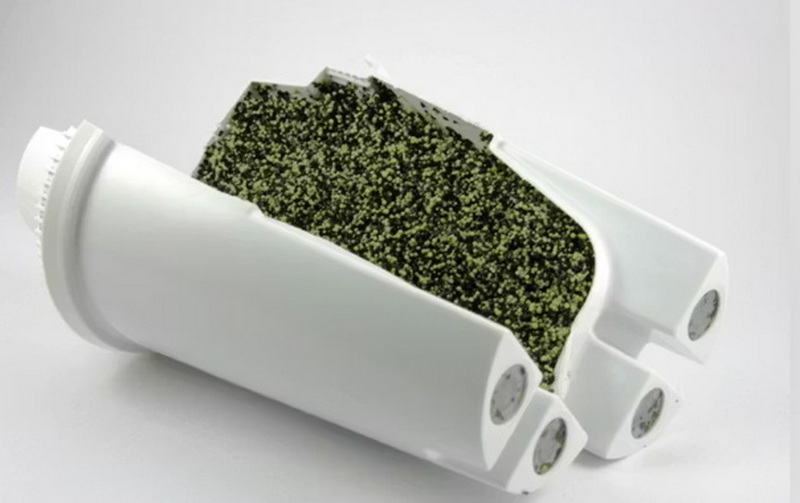
A granular activated carbon filter is a vessel or cartridge packed with granular activated carbon through which water or gas is passed so that contaminants are adsorbed onto the granular activated carbon surface. In water treatment, a granular activated carbon filter is commonly used as a polishing step to remove organic chemicals, chlorine, disinfection by-products, and off-tastes and odors.[2][6][7][1]
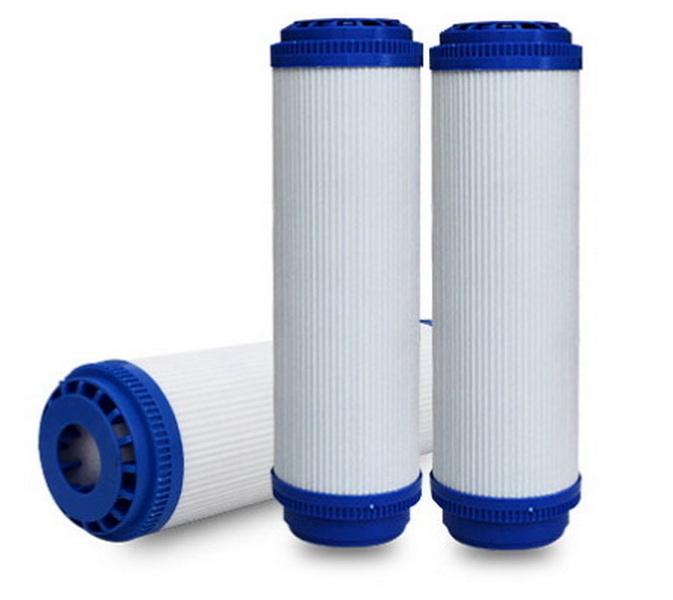
- Configuration types: point-of-use cartridges, point-of-entry systems, pressure vessels, gravity filters, and large industrial adsorption columns filled with granular activated carbon.[8][7]
- Typical media: coal-based, coconut-shell-based, or wood-based granular activated carbon selected according to the target contaminants and operating conditions.[5][4]
How Does a Granular Activated Carbon Filter Work?
The core mechanism of a granular activated carbon filter is adsorption: contaminants migrate from the water or gas phase to the surface of the granular activated carbon and are held by physical and chemical interactions. As fluid flows through the GAC bed, molecules diffuse into the pores, where they are trapped, gradually forming an adsorption front that moves through the bed over time.[1][2][3]
Key steps inside a granular activated carbon filter:
- External mass transfer: contaminants move from the bulk fluid to the outer surface of granular activated carbon particles.
- Internal diffusion: molecules enter the pore network of the granular activated carbon granules.
- Adsorption: intermolecular forces and surface functional groups on granular activated carbon bind target species until the media nears saturation.[4][3]
Main Applications of Granular Activated Carbon Filters
Because granular activated carbon is extremely versatile, granular activated carbon filters are used across many industries and municipal systems to address different contamination problems.[6][8]
Water and Wastewater Treatment
Granular activated carbon filters are widely installed in drinking water plants to remove organic compounds, pesticides, chlorine, and taste-and-odor issues, often after conventional clarification and filtration. Industrial wastewater treatment plants use granular activated carbon filters to polish effluent containing dissolved organics, dyes, and residual chemicals before discharge or reuse.[7][6][4]
- Municipal drinking water: granular activated carbon filters can reduce natural organic matter, industrial pollutants, and disinfection by-products, helping utilities meet regulatory limits.[9][6]
- Industrial reuse: granular activated carbon columns improve color, COD, and odor in treated wastewater so that water can be recycled in production processes.[6][4]
Air and Gas Purification
In air treatment, granular activated carbon filters adsorb volatile organic compounds (VOCs), odor-causing gases, and certain hazardous vapors from process exhaust or indoor air. HVAC systems, industrial gas scrubbers, and solvent recovery units commonly rely on granular activated carbon beds to protect workers and the environment.[10][3]
- Odor control: granular activated carbon filters in ventilation ducts remove nuisance odors from food processing, waste handling, and chemical plants.[10][6]
- VOC reduction: granular activated carbon adsorbers capture organic vapors before exhaust gases are released to atmosphere, supporting compliance with air quality regulations.[3][10]
Food and Beverage Industry
Granular activated carbon filters help decolorize, deodorize, and purify process water and liquid products in the food and beverage sector. For example, granular activated carbon can be used to refine sugar solutions, improve bottling water quality, and remove off-flavors from beverages.[8][4][6]
- Bottled water production: granular activated carbon filters remove chlorine, organic residues, and odor-forming compounds to achieve a clean, neutral taste.[4][6]
- Ingredient purification: granular activated carbon treatment of syrups and extracts improves color and sensory quality while meeting strict safety standards.[6][4]
Chemical and Pharmaceutical Uses
In chemical processing, granular activated carbon filters remove trace organics, color bodies, and by-products from process streams and solvents. Pharmaceutical companies use granular activated carbon filters for water-for-injection pretreatment, intermediate purification, and removal of residual organic contaminants under controlled, validated conditions.[11][4][6]
- Fine chemicals: granular activated carbon adsorption polishes high-value intermediates without adding new chemicals to the system.[11][6]
- Pharma water systems: granular activated carbon filters are often combined with softening, reverse osmosis, and sterilization in multi-stage purified water systems.[11][6]
Advantages of Granular Activated Carbon Filters
Granular activated carbon filters offer several performance and practical benefits that explain their popularity in both household and industrial systems.[8][6]
- High adsorption capacity: the huge internal surface area of granular activated carbon allows efficient removal of many organic compounds and chlorine-based disinfectants.[1][4]
- Broad contaminant range: granular activated carbon filters can target natural organic matter, many synthetic organics, taste- and odor-causing molecules, and some metals, depending on the carbon type and chemistry.[1][6]
Additional advantages:
- Chemical-free process: granular activated carbon filtration does not typically require adding new chemicals to water or air, which supports safer and greener operation.[8][6]
- Flexibility and scalability: granular activated carbon filters can be designed as small cartridges for point-of-use or as large fixed-bed systems for municipal or industrial treatment.[7][8]
Limitations and Considerations
Despite their strengths, granular activated carbon filters have limitations that engineers and users must understand.[12][13]
- Finite lifespan: once the adsorption sites on granular activated carbon become saturated, breakthrough occurs and contaminants start passing through, requiring media replacement or regeneration.[12][7]
- Selectivity: granular activated carbon is very effective for many organic contaminants and chlorine, but less effective for some inorganics, dissolved salts, and certain very small or highly polar molecules unless specially treated.[3][11]
Design and operation considerations:
- Contact time: granular activated carbon filters require adequate empty bed contact time, often several minutes in drinking water applications, to achieve target removal.[14][15]
- Pre-treatment: suspended solids and iron should be reduced upstream to prevent clogging, fouling, and channeling in the granular activated carbon bed.[16][6]
Key Design Parameters for GAC Filters
Granular activated carbon filter design focuses on achieving sufficient adsorption while minimizing pressure drop and operating costs.[15][14]
Important design parameters:
- Bed depth and diameter: adequate bed depth helps create a stable adsorption zone; too shallow a granular activated carbon layer can cause early breakthrough and channeling.[14][7]
- Empty bed contact time (EBCT): design recommendations for drinking water granular activated carbon filters often range from roughly 8–12 minutes, depending on contaminants and performance goals.[15][14]
Additional factors:
- Flow rate and hydraulic loading: superficial velocity must be controlled to balance contact time and throughput without fluidizing or compacting the granular activated carbon bed.[14][15]
- Carbon type and particle size: coconut-shell, coal, or wood-based granular activated carbon with specific particle size distributions are selected based on adsorption kinetics, pressure drop, and target contaminants.[5][4]
Operation, Maintenance, and Regeneration
Granular activated carbon filters require routine monitoring and maintenance to remain effective and safe.[16][12]
Routine operations for a granular activated carbon filter:
- Performance monitoring: regular sampling of influent and effluent, tracking contaminant concentrations, taste and odor, pressure drop, and flow rate.[12][16]
- Backwashing: for many granular activated carbon filters, periodic backwash helps remove accumulated fines and prevent bed compaction and channeling.[16][7]
End-of-life and regeneration:
- Media replacement: once breakthrough is observed or target run-time is reached, spent granular activated carbon is replaced with fresh media.[13][12]
- Thermal regeneration: in some industrial systems, spent granular activated carbon is sent for off-site thermal reactivation, restoring much of its adsorption capacity and reducing waste.[13][16]
How Granular Activated Carbon Filters Compare to Other Technologies
Granular activated carbon filters are often combined with other processes to create robust treatment systems.[6][8]
- Versus sediment filters: sediment filters remove particles by size exclusion, while granular activated carbon filters focus on dissolved organic contaminants and chlorine; they are complementary rather than competitive.[17][7]
- Versus reverse osmosis (RO): RO membranes remove a broad spectrum of dissolved salts and organics, whereas granular activated carbon is more targeted; many systems place granular activated carbon filters before or after RO to protect membranes and improve taste.[17][6]
In advanced systems:
- Combined treatment: granular activated carbon filters may follow ozonation or precede UV disinfection to control by-products and residual organics.[9][6]
- Polishing stage: granular activated carbon is often the final polishing step to ensure water meets strict sensory and regulatory requirements.[9][6]
Example Use Cases for Industrial Buyers
Industrial users across water treatment, air purification, food and beverage, chemicals, and pharmaceuticals increasingly specify granular activated carbon filters as part of their environmental and process control strategies.[4][6]
- Industrial water polishing: factories install granular activated carbon filters at the outlet of biological or physicochemical treatment to meet discharge limits or to reuse water in cooling and process applications.[4][6]
- Process gas cleaning: chemical and pharmaceutical plants use granular activated carbon beds in vent lines and off-gas treatment systems to capture solvents and odorous compounds before release.[10][3]
For global buyers sourcing from a specialized Chinese manufacturer, customized granular activated carbon filters can be tailored by adjusting carbon type, bed depth, vessel design, and connection standards according to project requirements in water treatment, air and gas purification, food and beverage lines, chemical processing, and pharmaceutical production.
Conclusion
A granular activated carbon filter is a highly efficient and flexible adsorption system that uses granular activated carbon to remove a wide variety of organic contaminants, chlorine, odors, and other problem compounds from water and air. Thanks to its enormous internal surface area and tunable pore structure, granular activated carbon delivers strong adsorption capacity, making granular activated carbon filters indispensable in municipal water treatment, industrial wastewater polishing, air and gas purification, food and beverage production, as well as chemical and pharmaceutical processes worldwide. When properly designed, monitored, and maintained, granular activated carbon filters offer a cost-effective, scalable, and environmentally friendly solution that can be customized by professional manufacturers to match the specific needs of different industrial applications.[16][1][8][6][4]
FAQs About Granular Activated Carbon Filters
(1) What contaminants can a granular activated carbon filter remove?
Granular activated carbon filters are especially effective for removing many organic chemicals, such as solvents, pesticides, and disinfection by-products, along with chlorine and compounds that cause taste and odor problems. With the right granular activated carbon selection and system design, a granular activated carbon filter can also reduce some heavy metals and other specific pollutants, but it is not a universal solution for all dissolved salts or inorganic contaminants.[17][3][1][4]
(2) How long does granular activated carbon last in a filter?
The service life of granular activated carbon in a filter depends on contaminant concentrations, flow rate, empty bed contact time, and media quality, so it can range from months to several years in different installations. Regular monitoring of effluent quality and breakthrough indicators is essential to determining the right replacement or regeneration interval for the granular activated carbon bed.[13][12][16]
(3) Are granular activated carbon filters safe for drinking water?
When manufactured, installed, and maintained correctly, granular activated carbon filters are widely accepted as safe and effective for drinking water treatment and are used by many utilities and point-of-use systems. Proper pre-treatment, periodic backwashing, and timely replacement of saturated granular activated carbon help minimize microbial growth and ensure the filter consistently meets potable water quality requirements.[7][12][16][6]
(4) What is the difference between granular activated carbon and powdered activated carbon?
Granular activated carbon consists of larger granules suitable for fixed-bed filters, allowing water or air to flow through a packed bed that can be backwashed and regenerated. Powdered activated carbon is a fine powder typically dosed directly into water and later removed by sedimentation or filtration, offering rapid adsorption but not forming a permanent granular activated carbon bed.[5][3][7]
(5) How do I choose the right granular activated carbon filter for my application?
Selecting a suitable granular activated carbon filter requires knowing the type and concentration of contaminants, target effluent quality, flow rate, and operating conditions. Working with an experienced granular activated carbon manufacturer or system integrator allows you to optimize carbon type, bed depth, contact time, and vessel configuration for water treatment, air and gas purification, food and beverage, chemical, or pharmaceutical processes.[15][12][9][6]
Citations:
[1](https://wqa.org/wp-content/uploads/2022/09/2016_GAC.pdf)
[2](https://www.cecoenviro.com/products/granular-activated-carbon-gac-filter/)
[3](https://www.sciencedirect.com/topics/engineering/granular-activated-carbon)
[4](https://heycarbons.com/coal-granular-activated-carbon-in-water-treatment/)
[5](https://www.cleantechwater.co.in/blog/need-know-activated-carbon-filter-works/)
[6](https://www.carbtrol.com/granular-activated-carbon-water-treatment/)
[7](https://fieldreport.caes.uga.edu/wp-content/uploads/2025/08/B-1542_4.pdf)
[8](https://generalcarbon.com/understanding-granular-activated-carbon-for-water-treatment/)
[9](https://www.huameicarbon.com/comprehensive-guide-to-granular-activated-carbon-gac-in-water-purification/)
[10](https://www.teqoya.com/en/activated-carbon-filter-a-few-basic-facts-to-sort-out-the-truth/)
[11](https://www.sciencedirect.com/science/article/pii/S2369969821000311)
[12](https://www.health.state.mn.us/communities/environment/hazardous/topics/gac.html)
[13](https://www.chemours.com/en/-/media/files/corporate/gac-information-sheets-2019-06-12.pdf?rev=2a1c8e2088c3443482c560a7abd46c0e&hash=DA1D11CE433BFB58FEA91880B61C3CB3)
[14](https://tecamyser.com/en/products/activated-carbon-filters/adsorbent/recommended-design-parameters/)
[15](https://www.wateronline.com/doc/implementing-granular-activated-carbon-systems-important-design-and-start-up-considerations-0001)
[16](https://www.aqualitek.com/maintenance-regeneration-activated-carbon-filters.html)
[17](https://www.freshwatersystems.com/blogs/blog/activated-carbon-filters-101)
[18](https://www.sulax.com.tr/en/blog/what-is-a-granular-activated-carbon-gac-filter/)
[19](https://rajahfiltertechnics.com/uncategorized/the-science-behind-activated-carbon-how-it-works-and-why-its-effective/)
[20](https://krakensense.com/blog/granular-activated-carbon-water-filter)


