Content Menu
● What Is Granular Activated Carbon?
● Key Properties of Granular Activated Carbon
● Typical Raw Materials for GAC
● Process Overview: How to Prepare Granular Activated Carbon
● Step 1: Raw Material Selection and Preparation
● Step 2: Carbonization (Char Formation)
● Step 3: Activation Methods for Granular Activated Carbon
>> Physical (Steam or CO₂) Activation
>> Chemical Activation
● Step 4: Forming Granules – Extrusion, Pelletizing, or Re‑agglomeration
● Step 5: Washing, Neutralization, and Drying
● Step 6: Screening, Packaging, and Quality Control
● Applications of Granular Activated Carbon
● Granular Activated Carbon Grades for Different Uses
● Safety, Environmental, and Regulatory Considerations
● Table: Overview of Common GAC Production Routes
● Conclusion
● FAQ About Granular Activated Carbon
>> 1. What is granular activated carbon used for?
>> 2. How is granular activated carbon different from powdered activated carbon?
>> 3. Can granular activated carbon be regenerated or reactivated?
>> 4. How do I choose the right granular activated carbon for water treatment?
>> 5. Is granular activated carbon safe for drinking water applications?
Granular activated carbon (GAC) is produced through controlled carbonization and activation of carbon‑rich raw materials such as coal, coconut shell, or wood, followed by granulation and screening to a defined particle size. This guide explains the industrial preparation process of granular activated carbon step by step and shows how to optimize it for different water, air, and industrial applications.[1][2][3][4]
What Is Granular Activated Carbon?
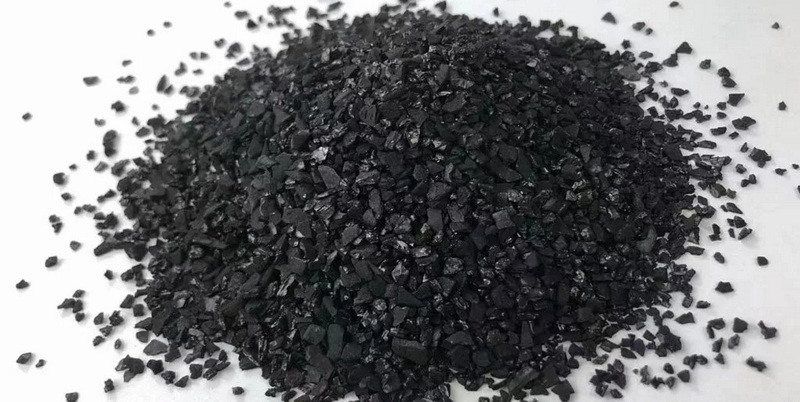
Granular activated carbon is a highly porous adsorbent with particle sizes typically from about 0.2 to 5 mm, designed for fixed‑bed or moving‑bed filtration systems. Because of its large internal surface area and developed pore structure, granular activated carbon is widely used for water treatment, air and gas purification, food and beverage processing, chemical and pharmaceutical purification, and environmental remediation.[2][4][5]
Key Properties of Granular Activated Carbon
The performance of granular activated carbon depends on several structural and physical parameters. When preparing GAC, producers typically optimize:[5][6]
- Surface area (often 800–1500 m²/g) for maximum adsorption capacity.[6][5]
- Pore size distribution (micropores for small molecules, mesopores for larger organics) tailored to the target pollutants.[7][2]
- Granule size and hardness to reduce dust, minimize pressure drop, and ensure long service life in industrial systems.[2][5]
Typical Raw Materials for GAC
Granular activated carbon can be made from a variety of carbonaceous feedstocks with sufficient fixed carbon content and mechanical strength. Common industrial raw materials include:[3][8]
- Coconut shell and other nut shells for hard, abrasion‑resistant granular activated carbon used in water and gold recovery.[9][3]
- Bituminous or sub‑bituminous coal for versatile granular activated carbon grades for water and gas purification.[1][6]
- Wood and other biomass for granular activated carbon with a more developed mesopore structure suitable for decolorization and specific organics.[10][11]
Process Overview: How to Prepare Granular Activated Carbon
Industrial preparation of granular activated carbon usually involves sequential steps: raw material preparation, carbonization, activation, granulation or shaping, washing, drying, and final screening. The exact process route may differ between physical activation (steam or CO₂) and chemical activation (phosphoric acid, KOH, or ZnCl₂), and between coal‑based and coconut‑shell‑based granular activated carbon.[11][10][3][1]
Step 1: Raw Material Selection and Preparation
Selecting the right feedstock is the foundation of high‑quality granular activated carbon production. The chosen material should have high fixed carbon, suitable ash characteristics, and enough natural or added binder to form strong granules.[10][3][9][6]
Typical preparation tasks before carbonization include:
- Crushing and screening the feedstock to a uniform particle size to ensure even heat transfer and reaction during carbonization and activation.[12][3]
- Washing or pre‑cleaning to remove dirt, stones, and metal impurities that could damage kilns or affect GAC purity.[11][6]
- Drying to reduce moisture content, which improves energy efficiency and stabilizes carbonization conditions.[3][12]
Step 2: Carbonization (Char Formation)
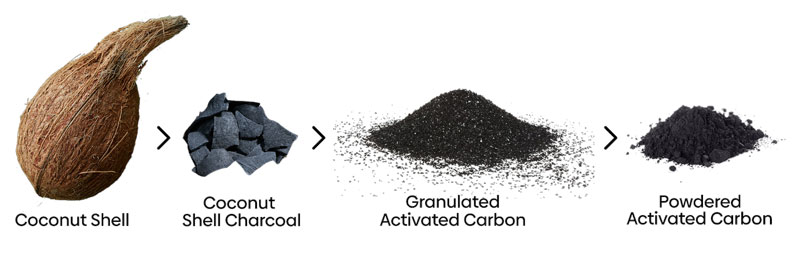
Carbonization converts the prepared raw material into a char by heating it in an oxygen‑limited environment to drive off volatile components and concentrate the carbon skeleton. Typical carbonization temperatures range from roughly 400–700 °C, depending on the feedstock and equipment.[13][6][3]
In continuous rotary kilns or other carbonization furnaces:
- Feedstock is slowly heated so that moisture, tars, and volatile organic compounds are released and removed with the off‑gas.[12][3]
- The remaining solid becomes a porous, carbon‑rich char that is the intermediate for granular activated carbon production.[6][3]
Step 3: Activation Methods for Granular Activated Carbon
Activation develops the high surface area and pore structure that make granular activated carbon such an effective adsorbent. There are two main activation approaches used in industry, sometimes combined or modified for specific product grades.[5][13][2][6]
Physical (Steam or CO₂) Activation
In physical activation, the carbonized char is heated to high temperatures, usually about 800–1000 °C, in the presence of oxidizing gases such as steam or carbon dioxide. Controlled gasification removes part of the carbon, opening and enlarging pores without fully burning the material.[2][3][12][6]
Chemical Activation
In chemical activation, the raw material or char is impregnated with chemicals such as phosphoric acid, potassium hydroxide, or zinc chloride before heating. During subsequent heat treatment at moderate temperatures (often around 400–700 °C), the chemical agent promotes dehydration and aromatization, creating a highly porous granular activated carbon structure.[13][10][11]
Step 4: Forming Granules – Extrusion, Pelletizing, or Re‑agglomeration
Depending on the raw material and activation route, granular activated carbon can be formed in different ways. The goal is to obtain mechanically strong granules with controlled size, typically in ranges like 4×8, 8×30, or 20×40 mesh for water and gas phase applications.[1][10][12][2]
Common methods include:
- Pelletizing or briquetting impregnated or partially activated material into cylindrical or irregular granules using rotary pelletizers or briquette presses.[10][1]
- Grinding and re‑agglomerating powders to controlled granule sizes when specific granular activated carbon sizes are required.[3][11]
Step 5: Washing, Neutralization, and Drying
After activation and granulation, the granular activated carbon must be washed and neutralized to remove residual activating agents, fines, and soluble impurities. This step is especially important for chemically activated GAC that has residual acids or salts.[5][11][13][10]
Typical operations include:
- Multi‑stage water washing, sometimes with neutralizing agents, until pH and conductivity reach specified limits.[11][5]
- Dewatering and thermal drying to reduce moisture and stabilize the granular activated carbon for storage and shipping.[10][5]
Step 6: Screening, Packaging, and Quality Control
The dried material is screened to obtain the required particle size distribution and to remove dust and oversize granules. Finished granular activated carbon is then packaged in bags or bulk containers, with samples taken for laboratory testing.[12][6][3][5]
Common quality control tests for granular activated carbon include:
- Iodine number or methylene blue value to estimate surface area and micropore volume.[7][5]
- Apparent density, hardness, and abrasion resistance to predict behavior in filters and columns.[6][5]
- Ash content, pH, moisture, and particle size distribution to ensure consistency for industrial customers.[14][5]
Applications of Granular Activated Carbon
Well‑prepared granular activated carbon is used in many continuous flow and batch processes across industries. Key application areas include:[8][2]
- Municipal and industrial water treatment for removal of natural organic matter, taste and odor compounds, pesticides, pharmaceuticals, PFAS, and other emerging contaminants.[15][7]
- Air and gas purification for VOC removal, odor control, solvent recovery, and gas sweetening.[4][8]
- Food, beverage, chemical, and pharmaceutical refining for decolorization, dechlorination, and trace impurity removal using granular activated carbon fixed beds.[2][6]
Granular Activated Carbon Grades for Different Uses
Producers customize granular activated carbon grades with different sizes, pore structures, and surface chemistries to match specific processes. Examples include:[15][7]
- Drinking water grade GAC with optimized micropores and high mechanical strength for long filter runs.[15][5]
- Catalytic granular activated carbon with modified surface chemistry to enhance reactions such as chloramine decomposition or ozone decomposition.[7][15]
- Acid‑washed, low‑ash granular activated carbon for sensitive food and pharmaceutical applications.[5][6]
Safety, Environmental, and Regulatory Considerations
The preparation of granular activated carbon involves high temperatures, combustion gases, and sometimes strong chemicals, so strict safety and environmental controls are required. Industrial plants typically include gas cleaning systems, heat recovery, wastewater treatment, and monitoring of emissions and workplace exposure.[16][3][6][5]
For end‑use applications, granular activated carbon used in drinking water, food, and pharmaceutical processes must comply with relevant standards and certifications, such as NSF or equivalent local approvals. Proper handling and disposal or reactivation of spent granular activated carbon are also important for environmental compliance.[16][7][2][5]
Table: Overview of Common GAC Production Routes
| Aspect | Physical steam/CO₂ GAC | Chemical activation GAC |
| Typical temperature range | High, about 800–1000 °C rotarykilnsupplier+1 | Moderate, about 400–700 °C patents.google+1 |
| Activating agent | Steam or CO₂ gas rotarykilnsupplier+1 | H₃PO₄, KOH, ZnCl₂ or similar patents.google+1 |
| Common feedstocks | Coal, coconut shell char rotarykilnsupplier+1 | Biomass with natural binders patents.google+1 |
| Typical product form | Granular or extruded GAC wikipedia+1 | Granular GAC, often pelletized naturecarbon+1 |
| Key advantages | Very durable, low residual chemicals wqa+1 | High surface area, flexible pore tuning patents.google+1 |
Conclusion
Preparing granular activated carbon on an industrial scale requires careful control of each step from raw material selection through carbonization, activation, granulation, and final quality control. By adjusting activation method, temperature, and particle size, manufacturers can supply granular activated carbon solutions tailored for water treatment, air and gas purification, food and beverage processing, chemical and pharmaceutical applications, and many other industrial uses.[3][15][6][2]
FAQ About Granular Activated Carbon
1. What is granular activated carbon used for?
Granular activated carbon is primarily used in fixed‑bed filters to remove organic contaminants, taste, odor, and trace chemicals from water, as well as VOCs and odorous gases from air and process streams. It is also widely applied in food, beverage, chemical, and pharmaceutical purification, and in environmental remediation systems.[4][8][15][2]
2. How is granular activated carbon different from powdered activated carbon?
Granular activated carbon consists of larger, mechanically strong particles suitable for packed columns and continuous filtration, which can be backwashed and sometimes thermally reactivated. Powdered activated carbon has much finer particles that are usually dosed as a slurry into water or process liquids and then removed with downstream clarification steps.[14][2][5]
3. Can granular activated carbon be regenerated or reactivated?
In many industrial and municipal installations, exhausted granular activated carbon is thermally reactivated in specialized kilns to restore much of its adsorption capacity, reducing overall lifecycle cost. The feasibility of reactivation depends on the type of contaminants adsorbed, regulatory constraints, and the economics of transport and processing.[7][6][2][5]
4. How do I choose the right granular activated carbon for water treatment?
Selection of granular activated carbon for water treatment should be based on the target contaminants, required contact time, filter configuration, and local regulatory requirements. Key parameters to evaluate include iodine number or surface area, apparent density, particle size distribution, hardness, ash content, and any special surface modifications such as catalytic properties.[15][6][5][7]
5. Is granular activated carbon safe for drinking water applications?
Granular activated carbon specifically manufactured and certified for drinking water use is considered safe when applied according to design guidelines and standards. Such granular activated carbon products are typically washed, controlled for leachable impurities, and tested to meet performance and health‑related criteria before being approved for municipal or household systems.[16][5][7]
[1](https://www.naturecarbon.com/news/method-for-producing-granular-activated-carbon-84984233.html)
[2](https://en.wikipedia.org/wiki/Activated_carbon)
[3](https://rotarykilnsupplier.com/activated-carbon-making/how-to-make-activated-charcoal-from-coconut-shell/)
[4](https://www.calgoncarbon.com/gac/)
[5](https://wqa.org/wp-content/uploads/2022/09/2016_GAC.pdf)
[6](https://feeco.com/introduction-to-activated-carbon/)
[7](https://generalcarbon.com/understanding-granular-activated-carbon-for-water-treatment/)
[8](https://sodimate-inc.com/activated-carbon-types-applications-advantages/)
[9](https://www.sciencedirect.com/science/article/pii/S2211715622000108)
[10](https://patents.google.com/patent/US5162286A/en)
[11](https://www.nmfiltermedia.com/extraction-of-carbon-from-coconut-shell)
[12](https://rotarykilnfactory.com/how-to-make-activated-carbon-from-coconut-shell/)
[13](https://generalcarbon.com/facts-about-activated-carbon/activated-carbon-faq/)
[14](https://www.lsuagcenter.com/~/media/system/9/a/4/a/9a4a46613d5c6961d85fbe40c58aee16/b881carbons.pdf)
[15](https://qizhongcarbon.com/blog/granular-activated-carbon-for-water-treatment/)
[16](https://www.emergency-wash.org/water/en/technologies/technology/granular-activated-carbon-gac)
[17](https://mp.watereurope.eu/media/factsheets/Factsheet_GAC_V6_UU0E2CA.pdf)
[18](https://www.youtube.com/watch?v=KZ4nIHJqm0o)
[19](https://www.sciencedirect.com/science/article/pii/S2369969821000311)
[20](https://www.wwdmag.com/what-is-articles/article/10939799/what-is-granular-activated-carbon-gac)


