Content Menu
● What Is an Activated Carbon Filter?
● How Activated Carbon Works in a Filter
● Typical Lifespan in Different Applications
>> Activated Carbon Filters in Water Treatment
>> Activated Carbon Filters in Air Purification
● Key Factors That Control Filter Life
>> Contaminant Load and Type
>> Flow Rate and Contact Time
>> Humidity and Temperature
>> Filter Design and Activated Carbon Quality
● How to Tell When an Activated Carbon Filter Is Spent
>> Warning Signs in Water Systems
>> Warning Signs in Air and Gas Systems
● Can Activated Carbon Filters Be Cleaned or Regenerated?
● How to Maximize the Life of an Activated Carbon Filter
>> Use Effective Pre‑Filtration
>> Control Humidity and Temperature
>> Optimize Flow Rate and System Sizing
>> Follow Manufacturer and Process Guidelines
● Activated Carbon Filters in Industrial Applications
● Practical Replacement Guidelines by Scenario
● Conclusion
● FAQ About Activated Carbon Filter Lifespan
>> (1) How long does an activated carbon filter last in a home water system?
>> (2) How long do activated carbon filters last in air purifiers?
>> (3) What are the main signs that an activated carbon filter needs replacing?
>> (4) Can activated carbon filters be washed and reused?
>> (5) How can I make my activated carbon filter last longer?
● Citations:
An activated carbon filter can last from a few weeks to several years, depending on whether it is used in water treatment, air purification, or industrial gas handling, and on how heavily it is loaded with contaminants. In real projects, understanding exactly how long an activated carbon filter lasts is essential for planning maintenance, controlling costs, and protecting product quality and human health.
Activated carbon filters are especially important for water treatment, air and gas purification, food and beverage production, chemical processes, and pharmaceutical applications. For these sectors, a well‑designed activated carbon system and a clear replacement schedule ensure that activated carbon keeps working efficiently, without allowing breakthrough of chlorine, organic compounds, odors, or harmful vapors.
What Is an Activated Carbon Filter?
An activated carbon filter is a filtration device filled with highly porous activated carbon that removes contaminants mainly by adsorption rather than by simple mechanical sieving. Activated carbon has a huge internal surface area, often hundreds or even over a thousand square meters per gram, which allows a relatively small mass of activated carbon to capture a large amount of dissolved or gaseous pollutants.
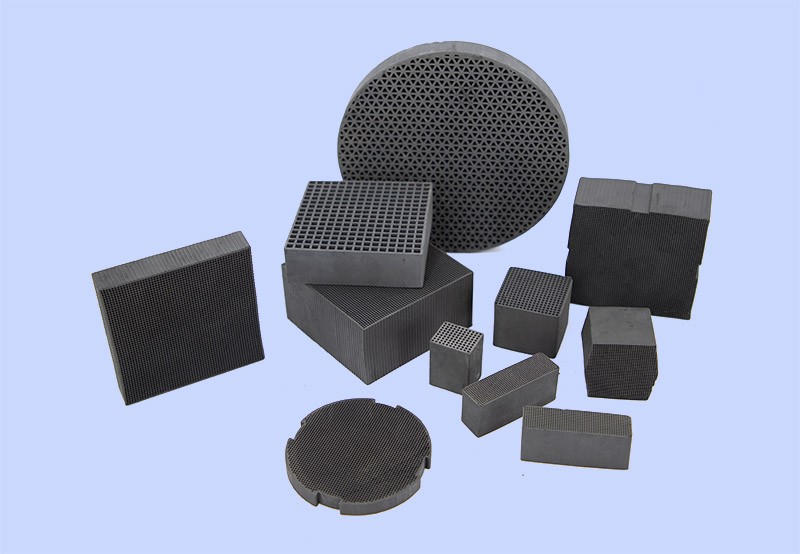
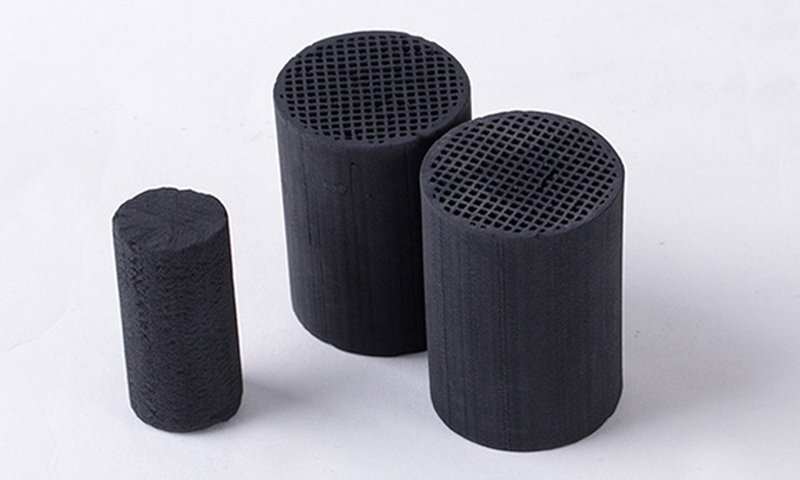
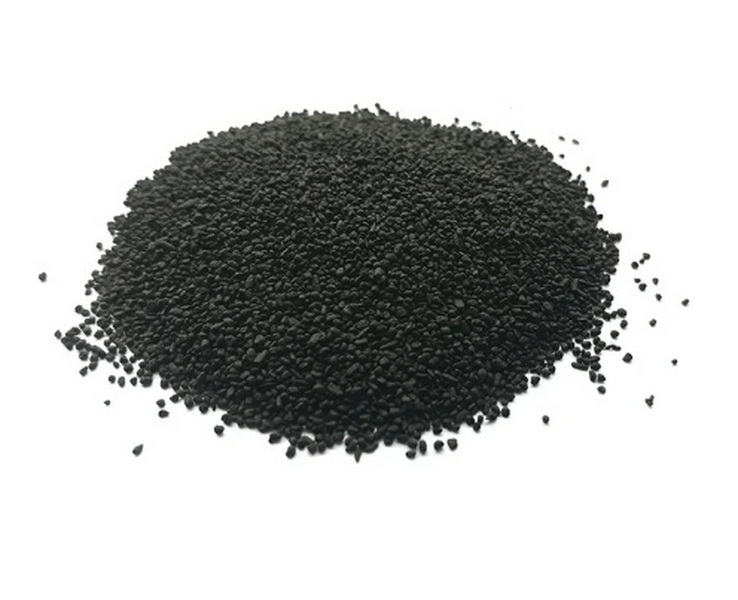
Activated carbon filters can be designed in different forms, including powdered activated carbon blocks, granular activated carbon cartridges, pelletized activated carbon beds, and large fixed beds in steel vessels. In many systems, the activated carbon filter is one of several stages, combined with pre‑filters for sediment or particulates and sometimes post‑filters for polishing or disinfection.
Activated carbon itself can be produced from coal, coconut shell, wood, or other carbon‑rich raw materials, followed by activation to create the complex pore structure. Coconut shell activated carbon is widely used for drinking water and food applications, while coal‑based and specialty impregnated activated carbon types are common in air, gas, and chemical processing filters.
How Activated Carbon Works in a Filter
Activated carbon filters work mainly by adsorption, where molecules from water or air adhere to the large internal surface of the activated carbon. The pore structure includes micro‑pores, meso‑pores, and macro‑pores, which together control the performance of the activated carbon filter for different contaminant sizes and types.
When contaminated water or air passes through an activated carbon filter, target compounds such as chlorine, organic molecules, volatile organic compounds (VOCs), sulfur compounds, and many odor‑causing substances are trapped in the pores. Over time, more and more of these adsorption sites become occupied, and the activated carbon filter gradually loses its capacity.
In many industrial activated carbon systems, the design includes a safety margin so that the activated carbon filter still has remaining capacity when it reaches its recommended change‑out point. This is important because once activated carbon is fully saturated, it can allow contaminants to break through and, in some cases, even desorb previously captured substances if conditions change.
Typical Lifespan in Different Applications
The lifespan of an activated carbon filter is strongly influenced by its application. There is no universal answer, but some typical ranges are widely accepted in engineering practice.
Activated Carbon Filters in Water Treatment
In household drinking water systems, activated carbon filters usually last around 2 to 6 months after first use, and some whole‑house or large cartridge activated carbon filters can reach up to about 12 months. For under‑sink units and countertop systems, many manufacturers recommend replacing the activated carbon cartridge every 6 to 12 months to keep taste and odor control at a high level.
In industrial water treatment, such as process water for beverage, chemical, and pharmaceutical lines, the service life of an activated carbon filter may range from a few months to more than a year, depending on bed depth, flow rate, and raw water quality. When the feedwater contains high levels of natural organic matter, pesticides, or other organics, the activated carbon filter saturates faster and must be replaced or regenerated more frequently.
Aquarium and small specialty water systems are special cases where activated carbon may last only a few weeks, because the organic load in such closed systems is relatively high. In these applications, regular replacement of a small activated carbon filter is part of routine maintenance.
Activated Carbon Filters in Air Purification
In air purifiers, HVAC systems, and odor control units, many activated carbon filters are designed for about 3 to 6 months of typical residential or office use. Under cleaner conditions and with good pre‑filtration, some air‑purifier manufacturers specify that their charcoal‑based activated carbon filters can last 12 to 18 months or even several years in optimal conditions.
In practice, activated carbon filters in HVAC systems are often changed every 3 to 12 months, depending on the pollution level, indoor smoking, presence of pets, and other odor sources. The higher the VOC and odor load, the faster the activated carbon filter saturates.
Industrial air and gas‑phase systems, such as exhaust treatment in chemical plants or odor control for process gases, can have much shorter replacement cycles. For high organic loads or corrosive gases, an activated carbon filter bed may need change‑out after only a few weeks or a few months, unless a regeneration system is used.
Key Factors That Control Filter Life
Several interacting factors determine how long an activated carbon filter lasts in real operation. These factors apply to both water and air systems.
Contaminant Load and Type
The most important factor is the concentration and type of contaminants in the feed stream. Activated carbon has a finite adsorption capacity, and heavy loads of organics, oils, VOCs, or chlorine will quickly fill the available pore volume. Some molecules are more strongly adsorbed than others, and competitive adsorption can occur when several compounds are present.
When the influent is relatively clean, the same amount of activated carbon can operate effectively for a much longer period. This is why activated carbon filters in low‑pollution environments or after robust pre‑treatment often show significantly extended life.
Flow Rate and Contact Time
Flow rate defines the contact time between the fluid and the activated carbon bed. High flow rates reduce the time available for adsorption and can cause early breakthrough of contaminants, even though the activated carbon still has unused capacity deeper in the bed. Correct design balances flow, pressure drop, and required contact time.
For both water and air applications, deeper activated carbon beds and lower superficial velocities generally support longer service life and more stable performance. In contrast, very thin activated carbon layers provide limited contact time and saturate relatively quickly.
Humidity and Temperature
Humidity plays a particularly important role in air and gas‑phase systems. High humidity can cause activated carbon to adsorb water molecules, which compete with target contaminants for pore space and can cause clumping. This reduces the active surface area available for adsorption of VOCs and odors, shortening the effective life of the activated carbon filter.
Temperature also affects adsorption; in general, higher temperatures tend to reduce adsorption capacity for many compounds. In extreme cases, high temperatures can damage certain types of activated carbon or the binder in carbon blocks, which can compromise filter performance and structural integrity.
Filter Design and Activated Carbon Quality
The physical design and the quality of the activated carbon strongly influence how long the filter will last. Thicker carbon beds, high‑density pellets, and high‑iodine‑value carbons provide more surface area and higher adsorption capacity. Low‑grade or poorly activated carbons will saturate faster, even if the nominal filter size is similar.
Filters that integrate effective pre‑filtration, such as sediment filters in water systems or particle pre‑filters in air purifiers, protect the activated carbon from particulate fouling. By preventing dust and suspended solids from blocking the pores and surface of the activated carbon, pre‑filters can significantly extend the working life of the carbon bed.
How to Tell When an Activated Carbon Filter Is Spent
An activated carbon filter usually does not look dramatically different when it is saturated, so visual inspection alone cannot reliably determine its condition. Instead, performance indicators and time‑based rules are used.
Warning Signs in Water Systems
In water treatment, one of the first signs of a spent activated carbon filter is the return of unpleasant taste or odor, especially chlorine or musty, earthy smells. When customers start to complain about taste again, it often means the activated carbon has lost much of its adsorption capacity.
Another symptom is a drop in water flow or pressure across the filter, indicating that particulates and biofilm have clogged the bed or cartridge. In severe cases, users may notice cloudiness or visible particles downstream, which suggests that both the pre‑filter and the activated carbon filter are no longer functioning properly.
For critical industrial processes, online monitoring of parameters like TOC (total organic carbon), UV absorbance, or specific contaminant concentration can provide a more precise measurement of breakthrough. When these indicators rise toward their limits, it is time to replace or regenerate the activated carbon filter.
Warning Signs in Air and Gas Systems
In air purification, the most common sign of a saturated activated carbon filter is the reappearance of odors or fumes that were previously under control. If a room starts to smell like smoke, cooking fumes, chemicals, or other VOC sources even while the purifier or exhaust system is running, the activated carbon is likely reaching the end of its life.
Users may also notice that the system seems louder while delivering less airflow, which can be a consequence of clogging in upstream particle filters that indirectly impacts the activated carbon section. Some advanced purifiers and industrial units include filter‑change indicator lights or sensors that track operating hours and usage conditions and then signal a required replacement.
In safety‑critical gas applications, such as respirators or certain chemical processes, relying only on smell or perception is dangerous. For these systems, strict time‑based replacement schedules and gas monitoring instruments are used instead of subjective odor checks.
Can Activated Carbon Filters Be Cleaned or Regenerated?
For most residential water and air products, an activated carbon filter cannot simply be washed and reused. Rinsing or backwashing may remove loose particles and dust, but it will not free the adsorbed molecules that occupy the internal pore structure.
In fact, aggressively washing a consumer activated carbon cartridge can damage the filter structure or wash out fine carbon particles, leading to reduced performance and potential downstream contamination. The usual recommendation for these filters is straightforward: once the activated carbon is exhausted, replace the cartridge with a new one.
In industrial systems, however, it is sometimes economical to regenerate activated carbon. Thermal reactivation in specialized kilns can drive off the adsorbed compounds and restore much of the original adsorption capacity. This regenerated activated carbon can then be reused in appropriate applications. Designing a regeneration program requires careful evaluation of contaminant type, safety, environmental regulations, and total life‑cycle cost.
How to Maximize the Life of an Activated Carbon Filter
Although every activated carbon filter has a finite life, proper design and operation can extend service intervals and reduce operating costs.
Use Effective Pre‑Filtration
Placing a sediment or particle filter upstream of an activated carbon filter keeps sand, rust, silt, and other particulates from entering the carbon bed. This avoids physical blockage of the pores and channels in the activated carbon and helps maintain low pressure drop across the system.
In air purifiers and HVAC units, combining a coarse pre‑filter and sometimes a HEPA filter with the activated carbon filter is a common design. The pre‑filters capture dust, pollen, and other particles, while the activated carbon focuses on gases and odors. Regularly cleaning or replacing these pre‑filters is one of the most efficient ways to extend activated carbon life.
Control Humidity and Temperature
Maintaining moderate humidity in indoor air systems prevents excessive water adsorption on the activated carbon surface. Dehumidifiers and properly sized air conditioning can keep relative humidity in the ideal range for both comfort and activated carbon performance.
Avoiding extreme temperatures in the filter housing, such as direct exposure to hot exhaust or steam, also protects the physical structure of the activated carbon and prevents premature degradation of certain impregnated carbons used for specialized gas removal.
Optimize Flow Rate and System Sizing
Properly sizing an activated carbon filter is critical. An undersized filter forces very high flow rates and short contact times, which both reduce removal efficiency and shorten working life. Oversized systems are more costly but provide longer service intervals and additional safety margin.
For water filters, designing a reasonable service flow rate and ensuring that users do not consistently exceed it will help the activated carbon perform as intended. For air systems, fan speed settings should be matched with the capacity of the activated carbon filter to balance noise, airflow, and adsorption performance.
Follow Manufacturer and Process Guidelines
Most filter manufacturers provide recommended replacement intervals for their activated carbon products based on typical conditions. For household systems, common guidance is to change water filters every 6 to 12 months and air filters every 3 to 12 months, while acknowledging that heavily polluted conditions may require more frequent changes.
In sensitive industrial applications, it is often better to use a conservative schedule and replace or regenerate the activated carbon filter before it approaches full saturation. Aligning filter‑change routines with planned plant shutdowns or scheduled maintenance helps minimize disruption while keeping process quality under control.
Activated Carbon Filters in Industrial Applications
For industrial users in water treatment, air and gas purification, food and beverage, chemical, and pharmaceutical industries, activated carbon filters are not just optional accessories; they are central elements of product safety and regulatory compliance.
In food and beverage plants, activated carbon filters are widely used to remove unwanted tastes, odors, and color bodies from process water and certain ingredients. In pharmaceutical and fine chemical production, activated carbon may be used both for utility water polishing and for decolorization and impurity control in process streams.
Industrial gas and air applications include solvent recovery, VOC removal from exhaust streams, odor control in wastewater treatment, and protection of equipment and catalysts from trace contaminants. In these cases, large fixed beds of granular activated carbon or pelletized activated carbon are housed in steel vessels, often installed in parallel trains for continuous operation.
Because the cost of unexpected breakthrough in these sectors can be very high, many facilities integrate monitoring, sampling points, and conservative change‑out strategies. Regeneration and off‑site reactivation of spent activated carbon are common approaches to reduce waste and total cost of ownership.
Practical Replacement Guidelines by Scenario
Although every system is unique, the following practical guidelines are widely used:
- Household drinking water activated carbon filter: replace roughly every 2–6 months, up to 12 months for larger or whole‑house systems under moderate use.
- Under‑sink or pitcher activated carbon cartridge: replace about every 6–12 months, with shorter intervals when water quality is poor or consumption is high.
- Standard air purifier activated carbon filter: replace every 3–6 months in typical indoor environments, sooner in homes with smoking, pets, or strong odors.
- High‑capacity or premium air purifier activated carbon filter: may last 12–18 months or longer under clean, low‑humidity conditions with good pre‑filtration.
- HVAC carbon filter: plan for 3–12 month intervals, depending on filter size, operating hours, and local air quality.
- Industrial gas‑phase activated carbon beds: evaluate service life using contaminant monitoring; high‑load systems may require change‑out in a matter of weeks or a few months, while carefully controlled streams can run longer with regeneration.
These ranges should always be adapted to actual monitoring data and manufacturer recommendations, but they provide a useful starting point for planning.
Conclusion
An activated carbon filter has no single fixed lifetime; instead, how long an activated carbon filter lasts depends on application type, contaminant load, flow rate, humidity, temperature, filter design, and the quality of the activated carbon media. In household water systems, many activated carbon filters operate effectively for a few months up to about one year, while air filters commonly run 3 to 12 months, and specialized high‑end systems can reach even longer intervals in ideal conditions.
In industrial water, air, and gas treatment for food and beverage, chemical, and pharmaceutical processes, activated carbon filters must be managed more carefully, often with online monitoring and conservative replacement or regeneration cycles to prevent breakthrough and protect product quality and safety. By combining good pre‑filtration, controlled operating conditions, correct sizing, and clear maintenance schedules, users can maximize the performance and cost‑effectiveness of activated carbon filters across all these applications.
Contact us to get more information!
FAQ About Activated Carbon Filter Lifespan
(1) How long does an activated carbon filter last in a home water system?
In a typical household water system, an activated carbon filter usually lasts between about 2 and 6 months after first use, and in larger or whole‑house cartridges it can last up to roughly 12 months under moderate usage and reasonable water quality. Many manufacturers suggest replacing the activated carbon cartridge every 6–12 months to keep taste, odor, and chlorine removal at a consistently high level.
(2) How long do activated carbon filters last in air purifiers?
Most standard air purifiers are designed so that their activated carbon filters last around 3–6 months in normal indoor environments. High‑quality air purifiers that use thicker, higher‑capacity activated carbon filters and include good pre‑filtration can extend filter life to 12–18 months or more, especially in clean environments with controlled humidity.
(3) What are the main signs that an activated carbon filter needs replacing?
The main warning signs are the return of unpleasant taste or odor, reduced water or air flow, visible dirt or discoloration in the filter housing, and persistent odors or fumes even when the system is running. In more advanced systems, indicator lights, operating‑hour counters, or online monitoring equipment can also signal when an activated carbon filter is approaching saturation and should be changed.
(4) Can activated carbon filters be washed and reused?
Most consumer‑grade activated carbon filters for water and air cannot be washed and reused because cleaning does not remove the molecules trapped deep inside the pores. While you can rinse housings and replace or clean pre‑filters, the exhausted activated carbon itself must usually be replaced. In industrial systems, spent activated carbon may sometimes be regenerated by specialized high‑temperature processes, but this is not practical for household cartridges.
(5) How can I make my activated carbon filter last longer?
To extend the life of an activated carbon filter, use effective pre‑filtration to remove sediment and dust, control humidity and temperature in air applications, and keep flow rates within the recommended range so that contact time is sufficient. Following a preventive maintenance schedule, cleaning or changing pre‑filters on time, and choosing high‑quality activated carbon filters tailored to the specific contaminants in your system will help achieve the longest reliable service life.
Citations:
1. https://ipsystemsusa.com/maximizing-the-lifespan-of-your-carbon-filter-a-comprehensive-guide/
2. https://www.rabbitair.com/blogs/air-purifier/how-long-do-carbon-filters-last
3. https://www.acewatershop.com.au/blogs/news/how-often-to-change-charcoal-water-filter
4. https://enviroliteracy.org/how-often-should-i-replace-activated-carbon/
5. https://www.zhongchuangcarbon.com/blog/how-often-should-activated-carbon-be-replaced.html
6. https://lifesupplyusa.com/blogs/news/activated-carbon-charcoal-air-filters-how-long-do-they-last
7. https://opplehouse.com/when-to-change-your-activated-carbon-filter/
8. https://www.cleantechwater.co.in/commonly-asked-questions-about-activated-carbon-filter/
9. https://lifesupplyusa.com/blogs/news/how-is-a-carbon-filter-activated-and-can-it-be-reused
10. https://rajahfiltertechnics.com/water-filtration/when-to-change-your-activated-carbon-filter-and-why-you-have-to/
11. https://www.dubaopump.com/info-detail/maintenance-and-replacement-cycle-of-activated-carbon-filter


