Content Menu
● What Makes Activated Carbon So Effective?
● Effectiveness of Activated Carbon Filters in Water Treatment
● Effectiveness of Activated Carbon Filters in Air and Gas Purification
● Granular Activated Carbon vs Carbon Block: Which Is More Effective?
● What Activated Carbon Filters Do Not Remove Well
● Key Factors That Influence Activated Carbon Filter Performance
● Typical Service Life and Maintenance of Activated Carbon Filters
● How Effective Are Activated Carbon Filters Compared with Other Technologies?
● Conclusion
● FAQ About Activated Carbon Filters
>> 1) How effective are activated carbon filters for drinking water?
>> 2) Do activated carbon filters remove all contaminants?
>> 3) How long do activated carbon filters remain effective?
>> 4) Are activated carbon air filters effective against odors and VOCs?
>> 5) How can I maximize the effectiveness of an activated carbon filter?
● Citations:
Activated carbon filters are highly effective for removing many organic chemicals, chlorine, odors, and volatile contaminants from water, air, and gas, but they do not remove every type of pollutant. Their true effectiveness depends on the type of activated carbon, system design, operating conditions, and proper maintenance.[1][2][3][4]
What Makes Activated Carbon So Effective?
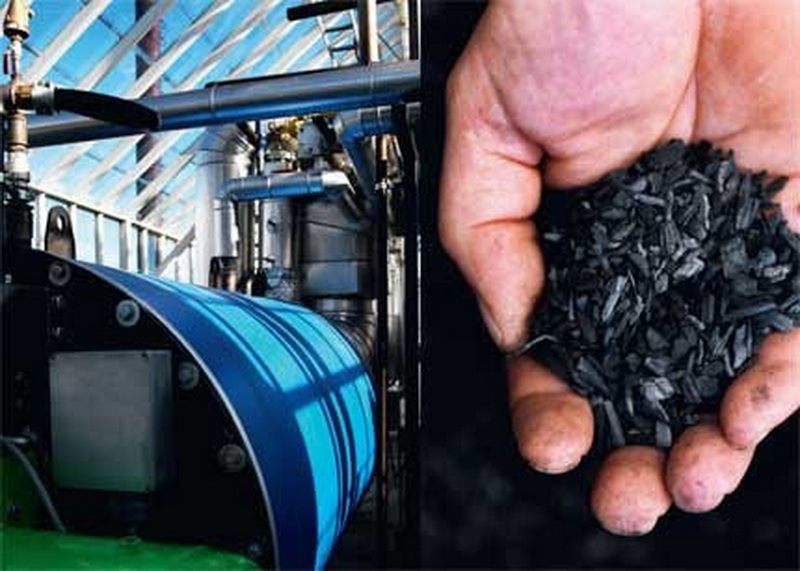
Activated carbon is a specially processed form of carbon with an enormous internal surface area, typically around 800–1,200 m² per gram, created by a network of micro‑, meso‑, and macro‑pores. This porous structure allows activated carbon filters to adsorb large quantities of contaminants onto the carbon surface instead of letting them remain in water or air streams.[2][3][5][6]
Activated carbon filtration works mainly through adsorption and, in some cases, catalytic reactions. Hydrophobic organic molecules, chlorine, many VOCs, and odor‑causing compounds are strongly attracted to the activated carbon surface, so they accumulate inside the pores until the carbon becomes saturated.[3][5][6][1]
Effectiveness of Activated Carbon Filters in Water Treatment
Activated carbon filters are widely used in drinking water, process water, and wastewater treatment to remove taste, odor, color, and a broad spectrum of organic contaminants. Municipal and industrial systems commonly use granular activated carbon (GAC) filters or activated carbon block cartridges as polishing steps after conventional treatments such as coagulation, sedimentation, and sand filtration.[5][7][2]
Key water contaminants effectively removed by activated carbon include:
- Chlorine and chloramines, often with removal efficiencies up to 90–99% in well‑designed systems, which greatly improves taste and odor.[1][3]
- Many pesticides, herbicides, and industrial organics, which are strongly adsorbed due to their hydrophobic character.[6][2]
- Disinfection by‑products such as trihalomethanes (THMs), where upgrading to GAC filtration has reduced THM levels by around 50–60% in some utilities.[7][3]
For home water treatment, activated carbon filters are mainly used to improve taste and odor and to reduce specific organic contaminants identified in local water reports. However, certification and performance can vary, so users should check third‑party testing data for each activated carbon filter system.[8][5][7]
Effectiveness of Activated Carbon Filters in Air and Gas Purification
In air and gas purification, activated carbon filters are particularly effective at removing VOCs, odors, and many gaseous pollutants that mechanical particle filters cannot capture. Independent lab tests show that well‑designed activated carbon filters can remove over 90% of common indoor air pollutants such as benzene and formaldehyde in controlled conditions.[3][1]
Activated carbon filters are widely used in:
- Indoor air purifiers and HVAC systems to reduce VOCs, tobacco smoke components, and cooking odors.[1][3]
- Industrial exhaust gas treatment to capture organic solvents, sulfur compounds, and other odorous or toxic gases before release.[6][3]
For personal protection, activated carbon respirator cartridges adsorb organic vapors and some acidic gases, significantly reducing inhalation exposure when properly selected and fitted. However, particulate filters (for dust, aerosols, and pathogens) must be combined with activated carbon filters, because activated carbon alone does not reliably capture fine particles or microorganisms.[4][8][1]
Granular Activated Carbon vs Carbon Block: Which Is More Effective?
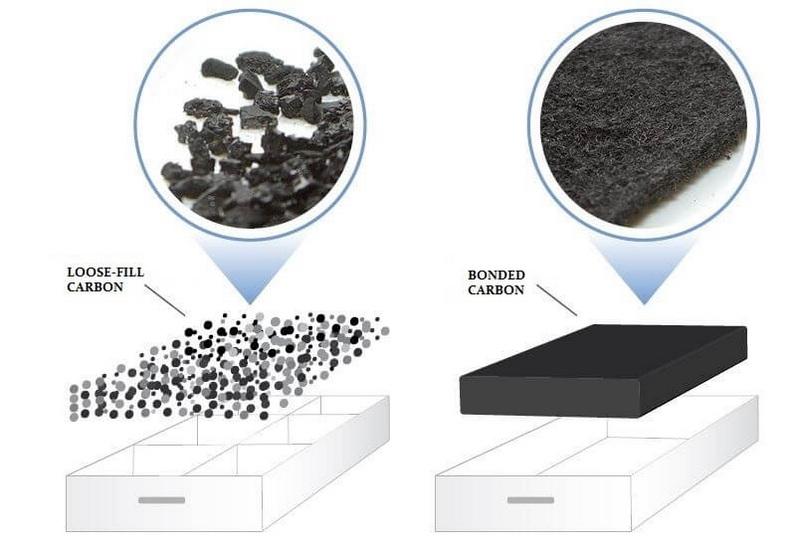
Both granular activated carbon (GAC) filters and activated carbon block filters use the same basic adsorbent material, but their structure and flow patterns cause different performance characteristics.[9][10]
| Feature / Aspect | Granular Activated Carbon (GAC) Filters | Activated Carbon Block Filters |
| Carbon structure | Loose bed of activated carbon granules. boshart+1 | Densely packed activated carbon particles bonded into a solid block. boshart+1 |
| Contact time & flow | Higher flow rate, shorter contact time between water and activated carbon. tradewindswater+1 | Lower flow rate, longer contact time for improved adsorption. boshart+1 |
| Filtration efficiency | Effective for chlorine, basic taste/odor improvement, and larger organics. tradewindswater+1 | Removes smaller particles and a wider range of contaminants, including some heavy metals. commercialfiltrationsupply+1 |
| Channeling risk | Flow channels may form, reducing activated carbon utilization and effectiveness. tradewindswater+1 | Uniform flow through the block minimizes channeling and improves activated carbon usage. boshart+1 |
| Pressure drop and clogging | Lower pressure drop and less clogging, good for high flow. tradewindswater+1 | Higher pressure drop; can clog faster if sediment pre‑filtration is not used. tradewindswater+1 |
| Typical applications | Whole‑house filters, point‑of‑entry systems, basic dechlorination. extension.purdue+1 | Point‑of‑use drinking water filters, under‑sink systems, high‑performance cartridges. boshart+1 |
In general, carbon block filters deliver higher contaminant removal efficiency than GAC filters due to their dense structure, greater surface area, and longer contact time, although they sacrifice some flow rate. GAC filters remain attractive where higher flow and lower cost are priorities and where the objective is primarily chlorine and odor removal rather than maximum contaminant reduction.[11][10][12][9]
What Activated Carbon Filters Do Not Remove Well
Despite the wide effectiveness of activated carbon filters, there are important limitations that industrial buyers and homeowners must understand. Standard activated carbon is not very effective for dissolved inorganic salts, minerals, and many heavy metals, and it does not reliably remove most microorganisms.[4][8]
Typical limitations of activated carbon filters include:
- Poor removal of dissolved inorganic compounds such as hardness minerals, nitrates, fluorides, and most simple salts, which require technologies like ion exchange or reverse osmosis.[8][4]
- Limited and often temporary binding of some heavy metals unless the activated carbon is specially impregnated or combined with additional media.[8][6]
- Inefficient removal of bacteria, viruses, and protozoa, so activated carbon filters are usually paired with disinfection, ultrafiltration, or UV systems for microbiological safety.[5][4]
Activated carbon filters also have finite adsorption capacity; once the activated carbon is saturated, contaminant breakthrough occurs and some pollutants may pass through or even be released back into the treated stream. For this reason, regular replacement or professional regeneration of activated carbon is essential to maintain filter effectiveness.[13][4][8]
Key Factors That Influence Activated Carbon Filter Performance
The real‑world effectiveness of activated carbon filters depends on a combination of design and operating parameters that control how well contaminants can contact the activated carbon and be adsorbed. Engineers and users can optimize overall performance by focusing on several critical factors.[7][3][6]
Important performance factors for activated carbon filters include:
- Contact time and flow rate: Longer empty bed contact time (EBCT) and slower flow rates increase adsorption and removal efficiency for most organic contaminants.[10][3]
- Activated carbon type and pore structure: Different raw materials and activation methods produce activated carbon with pore size distributions tailored to specific pollutants and applications.[3][6]
- Temperature and humidity (for air filtration): High temperatures and very high humidity can reduce VOC capture efficiency, so pre‑treatment or climate control may be required.[3]
Water chemistry also affects activated carbon performance. Competing organics, pH, and the presence of suspended solids can either reduce adsorption capacity or cause plugging of activated carbon beds, so pre‑filtration and proper design are important.[2][4][5]
Typical Service Life and Maintenance of Activated Carbon Filters
The service life of activated carbon filters ranges from weeks to many months, depending on contaminant loads, flow rates, and filter size. Residential drinking water cartridges may need replacement every 2–6 months, while large industrial activated carbon systems often operate for longer periods before media change‑out or off‑site regeneration.[13][4][7]
If activated carbon filters are not replaced on time, they can become saturated and lose adsorption capacity. In extreme cases, exhausted activated carbon may desorb previously captured contaminants, leading to higher outlet concentrations than inlet values in short bursts. For critical applications, performance monitoring (such as regular water testing or breakthrough sensors) is recommended to determine optimal change‑out intervals for activated carbon filters.[2][13][7][8]
How Effective Are Activated Carbon Filters Compared with Other Technologies?
Activated carbon filters offer a strong balance of performance, cost, and simplicity, but they are usually one part of a multi‑barrier treatment train rather than a stand‑alone solution. Compared with membrane technologies like reverse osmosis or nanofiltration, activated carbon filters are less effective for salts and small inorganic ions but more economical and easier to operate for large‑scale removal of organic contaminants and chlorine.[6][8]
In many systems, activated carbon filters are installed upstream of membranes to protect them from chlorine and organics, or downstream as polishing stages to remove trace organics and improve taste and odor. When combined with sediment filtration, softening, disinfection, and sometimes advanced oxidation, activated carbon filters significantly enhance overall water and air quality while keeping operating costs under control.[4][2][8][6]
Conclusion
Activated carbon filters are highly effective for removing a wide range of organic chemicals, chlorine, odors, and volatile contaminants from both water and air, making them a core technology in modern purification systems. However, activated carbon filters have clear limitations for dissolved salts, many inorganics, and microorganisms, so they are most effective when engineered as part of a complete, multi‑barrier treatment solution and when maintained with proper replacement or regeneration schedules.[13][4][1][3]
FAQ About Activated Carbon Filters
1) How effective are activated carbon filters for drinking water?
Activated carbon filters are very effective at improving the taste, odor, and color of drinking water by removing chlorine, many organics, and numerous disinfection by‑products. For specific contaminants such as certain pesticides or industrial chemicals, performance depends on contact time, activated carbon type, and whether the filter has been independently certified for those pollutants.[5][2][7][1]
2) Do activated carbon filters remove all contaminants?
No, activated carbon filters do not remove all contaminants; they are generally poor at removing dissolved salts, hardness minerals, nitrates, and most microorganisms. To handle these substances, technologies such as reverse osmosis, ion exchange, or dedicated disinfection are usually added alongside the activated carbon filter.[4][8]
3) How long do activated carbon filters remain effective?
The effective life of an activated carbon filter varies with usage, but home cartridges often last from 2 to 6 months, while large GAC beds can run much longer before media change‑out. Once the activated carbon bed is saturated, adsorption capacity drops and contaminant breakthrough occurs, so timely replacement or regeneration is essential.[13][8][4][7]
4) Are activated carbon air filters effective against odors and VOCs?
Yes, activated carbon air filters are very effective for many odors and VOCs, with controlled tests showing over 90% reduction of certain pollutants like benzene and formaldehyde under optimized conditions. For comprehensive indoor air quality control, activated carbon layers are often combined with HEPA or other particle filters to capture dust, allergens, and biological aerosols.[8][3]
5) How can I maximize the effectiveness of an activated carbon filter?
To maximize effectiveness, select an activated carbon filter designed for the target contaminants, ensure adequate contact time and proper flow rate, and use pre‑filtration to remove sediments that could clog the carbon bed. Regularly replacing or regenerating the activated carbon and monitoring water or air quality indicators will help maintain stable performance over the filter's service life.[10][4][13][3]
Citations:
[1](https://puragen.com/uk/insights/the-effectiveness-of-activated-carbon-filters/)
[2](https://www.ncbi.nlm.nih.gov/books/NBK234593/)
[3](https://www.carbonyihang.com/How-Activated-Carbon-Improves-Air-and-Water-Purification-Results)
[4](https://olympianwatertesting.com/exploring-the-advantages-and-limitations-of-activated-carbon-filtration/)
[5](https://extension.purdue.edu/extmedia/WQ/WQ-13.html)
[6](https://earthswater.com/blogs/research/how-effective-is-activated-carbon)
[7](https://publications.mgcafe.uky.edu/sites/publications.ca.uky.edu/files/ip6.htm)
[8](https://www.expresswater.com/blogs/watereducation/activated-carbon-vs-other-water-filtration-methods-pros-and-cons)
[9](https://support.boshart.com/granular-activated-carbon-gac-vs.-activated-carbon-block-cb-water-filters)
[10](https://www.commercialfiltrationsupply.com/blogs/resource-center/carbon-block-filters-vs-granulated-carbon-filters)
[11](https://tradewindswater.com/blogs/news/carbon-block-water-filters-vs-granulated-active-carbon-water-filters-which-is-better)
[12](https://www.drinkingwellco.com/blogs/news/carbon-block-filters-vs-granular-activated-carbon-gac-filters)
[13](https://www.karbonous.com/blog/advantages-and-disadvantages-of-activated-carbon-filter/)
[14](https://www.perplexity.ai/search/0e96dc7f-dc6e-4f41-a464-42999c6f3ecd)
[15](https://www.sciencedirect.com/science/article/abs/pii/S0160412005001273)
[16](https://www.epa.gov/sciencematters/predicting-how-effective-water-filters-are-removing-variety-pfas)


