
Content Menu
● What is activated carbon?
● Main raw materials for activated carbon
● Overview of the production process
● Step 1: Carbonization
● Step 2: Physical (steam) activation
● Step 3: Chemical activation
● Washing, drying, cooling, and finishing
● Forms and grades of activated carbon
● Key process parameters that affect quality
● Major applications of activated carbon
● Environmental and emerging trends in activated carbon production
● Conclusion
● FAQ
>> 1. What is activated carbon made from?
>> 2. What is the difference between physical and chemical activation?
>> 3. How is activated carbon used in water treatment?
>> 4. Can activated carbon be regenerated and reused?
>> 5. Is activated carbon production environmentally friendly?
● Citations:
How do you make activated carbon? In industrial practice, activated carbon is typically made by carbonizing a carbon‑rich raw material and then “activating” it with steam or chemicals to create an extremely porous structure with a very high internal surface area.[1][2]
What is activated carbon?
Activated carbon is a highly porous form of carbon with an enormous internal surface area that gives it excellent adsorption capacity for a wide range of contaminants. It is produced from carbonaceous raw materials such as coal, coconut shell, wood, or other biomass by controlled carbonization and activation processes. Because of its tuned pore structure, activated carbon is widely used in water treatment, air and gas purification, food and beverage processing, and pharmaceutical and chemical industries.[3][4][5][1]
Main raw materials for activated carbon
Almost any carbon‑rich material can be used to make activated carbon, but industry focuses on a few key feedstocks with stable properties and supply. Common raw materials include bituminous or lignite coal, coconut shells and other nut shells, wood chips, sawdust, and various agricultural or biomass residues.[5][8][1]
- Coal‑based activated carbon is valued for hardness and mechanical strength, making it suitable for gas‑phase and some water treatment applications.[9][5]
- Coconut‑shell activated carbon typically has a high proportion of micropores, excellent for removing low‑molecular‑weight organics in water and gas purification.[4][10]
- Wood‑based and biomass‑based activated carbon can be tailored (especially via chemical activation) to produce a broader pore size distribution useful in decolorization and purification of liquids such as sugar solutions and pharmaceuticals.[8][11]
Overview of the production process
Although there are many variations, industrial manufacturing of activated carbon generally follows four core steps: carbonization, activation, washing and drying, and final sizing and packaging. The first stage turns raw material into char by heating it without oxygen, while the second stage develops the porous structure by controlled oxidation with steam, carbon dioxide, or chemical agents.[12][2][1]
Typical main steps are:
- Pre‑treatment and sizing of the raw material (crushing, screening, sometimes pelletizing).[2][5]
- Carbonization at elevated temperature in an oxygen‑limited environment to remove volatiles and produce char.[8][2]
- Physical or chemical activation at higher temperatures to open and enlarge pores, creating high‑surface‑area activated carbon.[13][1]
- Washing, drying, crushing, milling, sieving or pelletizing, and packaging to obtain commercial activated carbon products in different sizes and forms.[14][2]
Step 1: Carbonization
Carbonization is the heat treatment step where the selected raw material is heated in the absence or near‑absence of oxygen so it decomposes into a carbon‑rich char. This process drives off volatile components such as moisture, tars, and gases, leaving behind a solid matrix that already contains the “skeleton” of the pore structure that will become activated carbon.[5][2][8]
- Industrial carbonization typically operates in the approximate range of 350–600 °C for coal‑based activated carbon, depending on raw material and desired product.[5]
- Carbonization furnaces can be rotary kilns, vertical carbonization furnaces, retorts, or fluidized beds that allow careful control of heating rate, residence time, and atmosphere.[2][5]
Step 2: Physical (steam) activation
Physical activation, sometimes called steam activation, is a widely used industrial method to transform carbonized char into activated carbon. In this process, the char is heated to high temperatures—typically in the 700–1100 °C range—while steam, carbon dioxide, or a mixture of oxidizing gases flows through the bed or kiln.[11][13][1]
The key points of physical activation are:
- At high temperature, the gas reacts with the carbon surface, gradually “burning” out parts of the structure and opening, enlarging, and creating pores, which dramatically increases the surface area of the activated carbon.[13][9]
- Steam activation in rotary kilns or multiple‑hearth furnaces is especially common, and the process can last from tens of minutes to several hours depending on activation level and equipment design.[14][12]
Physical activation has several advantages and limitations:
- Advantages: No chemical additives, relatively straightforward process, and suitability for large‑scale production of many grades of activated carbon.[9][13]
- Limitations: High energy consumption due to elevated temperatures and relatively long residence times, and in some cases a smaller specific surface area than optimized chemical activation methods.[15][13]
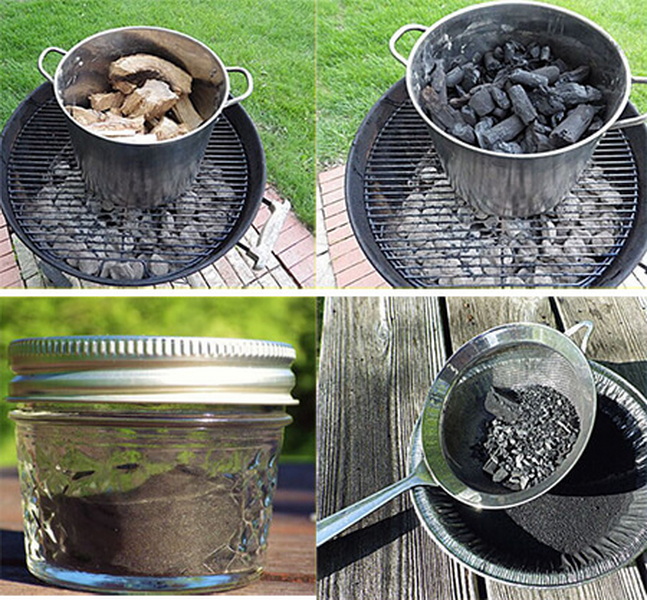
Step 3: Chemical activation
Chemical activation is an alternative route that often operates at lower temperatures and can produce very high‑surface‑area activated carbon with tailored pore size distributions. In this method, the raw material (often wood, biomass, or certain coals) is impregnated with activating chemicals such as phosphoric acid, zinc chloride, or alkali metal hydroxides and then heated in a furnace.[15][1][8][2]
Important features of chemical activation:
- The impregnating agent promotes dehydration and cross‑linking of the material during heating, helping develop a porous network at temperatures typically around 500–800 °C.[8][2]
- After activation, the activated carbon product must be thoroughly washed to remove residual chemicals and neutralize the pH before drying and finishing.[15][2]
Chemical activation offers both benefits and challenges:
- Benefits: Lower activation temperatures, potential for higher yields, and the ability to generate micropore‑rich activated carbon suitable for liquid‑phase adsorption such as in food, beverage, and pharmaceutical purification.[11][15]
- Challenges: Handling and disposal of chemical effluents, corrosion issues, and additional washing steps, which require responsible environmental management.[2][15]
Washing, drying, cooling, and finishing
After physical or chemical activation, the hot activated carbon must be conditioned into a stable, usable product. This finishing section usually includes washing, cooling, drying, and sizing operations.[14][2]
Typical finishing steps include:
- Washing: Activated carbon is washed with water (and sometimes with additional solutions) to remove soluble ash, residual chemicals, and fines, improving purity and performance.[2][15]
- Cooling and drying: The activated carbon is cooled from activation temperatures down to near ambient and then dried to achieve a controlled moisture level suitable for packaging and storage.[14][12]
- Crushing, milling, sieving, and shaping: The dried activated carbon can be ground into powdered activated carbon (PAC), sized into granular activated carbon (GAC), or shaped into extruded pellets, depending on application requirements.[14][2]
Forms and grades of activated carbon
The activation and finishing processes are adjusted to produce many different forms of activated carbon, each tailored to particular end uses. For industrial and environmental applications, the main commercial forms are powdered, granular, and pelletized or extruded activated carbon.[4][10][3]
A simple comparison is shown below:
| Activated carbon form | Typical size range | Typical applications | Key features |
| Powdered activated carbon (PAC) | Very fine powder, often < 0.18 mmwikipedia | Dosing into water treatment, decolorization in food and pharma, batch adsorption | High external surface area, fast kinetics, dosed as slurrypuragen+1 |
| Granular activated carbon (GAC) | 0.2–5 mm granules (various mesh sizes)wikipedia | Fixed‑bed filters for drinking water, wastewater, VOC removal from air | Reusable by thermal reactivation, good hydraulic propertiescarbotecnia+1 |
| Pelletized / extruded activated carbon | Cylindrical pellets of defined diameter (e.g., 3–4 mm)wikipedia | Gas‑phase adsorption, solvent recovery, industrial air purification | Low pressure drop, high mechanical strengthpuragen+1 |
Key process parameters that affect quality
Producing high‑performance activated carbon requires careful control of several process parameters from raw material selection through activation conditions. Different end uses—such as water treatment, gas purification, food and beverage, or pharmaceuticals—often require specific pore size distributions, surface chemistries, and physical strengths in the activated carbon.[18][1][4][8]
Important factors include:
- Raw material type and quality: Feedstock influences ash content, hardness, yield, and pore structure of the resulting activated carbon.[1][5]
- Carbonization conditions: Heating rate, final temperature, and residence time help determine the basic char structure, which sets the foundation for pore development.[8][2]
- Activation method and severity: Steam vs chemical activation, activation temperature, gas flow rate, and time directly control the surface area, pore development, and burn‑off level of activated carbon.[13][15]
- Post‑treatment: Washing, pH adjustment, impregnation with functional chemicals, and particle sizing further tailor activated carbon to specific applications such as mercury removal or taste and odor control.[4][14]
Major applications of activated carbon
The way activated carbon is made directly influences how it performs in downstream applications, which span many industrial sectors. By optimizing activation conditions and post‑treatments, manufacturers produce activated carbon grades that meet stringent performance and regulatory requirements.[18][3]
Widely used applications include:
- Water treatment: Activated carbon removes organic contaminants, disinfection by‑products, taste and odor compounds, color‑forming molecules, and trace pollutants from drinking water and wastewater.[10][4]
- Air and gas purification: Granular and pelletized activated carbon adsorb volatile organic compounds, odors, and toxic gases from air streams in industrial emissions control, solvent recovery, and indoor air quality systems.[4][10]
- Food and beverage: Activated carbon is used for decolorization, deodorization, and impurity removal in sugar refining, juice clarification, beverage production, and other food processes.[10][4]
- Chemicals and pharmaceuticals: Activated carbon purifies intermediates, solvents, and finished products by removing color, by‑products, and trace impurities, and it is also applied in pharmaceutical wastewater treatment.[17][4]
Environmental and emerging trends in activated carbon production
Modern activated carbon manufacturing increasingly focuses on energy efficiency, sustainability, and the use of renewable or waste‑derived raw materials. Producers are investing in process optimization, waste‑heat recovery, and hybrid activation methods to reduce energy use and environmental impact while maintaining high‑performance activated carbon products.[19][11][15]
Notable trends include:
- Increased use of biomass and agricultural residues (such as wood chips and crop wastes) to produce renewable activated carbon, reducing dependence on fossil‑based feedstocks.[19][11]
- Hybrid activation methods that combine physical steam activation with chemical agents, allowing finer tuning of the pore structure and adsorption performance while lowering overall activation temperatures.[19][15]
- Development of specialized impregnated activated carbon grades for targeted contaminants such as mercury, acidic gases, or specific organic compounds in air and water.[18][4]
Conclusion
Making activated carbon is a controlled two‑stage transformation of carbon‑rich raw materials into a highly porous adsorbent through carbonization and activation, followed by washing, drying, and sizing. By varying the feedstock, activation method (physical steam activation or chemical activation), and processing conditions, manufacturers can produce many grades of activated carbon optimized for water treatment, air and gas purification, food and beverage processing, and chemical and pharmaceutical purification. As environmental regulations tighten and sustainability becomes more important, activated carbon production continues to evolve toward more energy‑efficient, biomass‑based, and application‑specific solutions while maintaining the high adsorption performance that makes activated carbon indispensable in modern industry.[1][3][18][4][15][2]

FAQ
1. What is activated carbon made from?
Activated carbon is typically made from carbon‑rich raw materials such as coal, coconut shells, wood, peat, or other biomass that can be carbonized and activated to create a porous structure with a high internal surface area. The choice of feedstock affects properties such as hardness, pore size distribution, ash content, and overall performance of the activated carbon in different applications.[3][1][5]
2. What is the difference between physical and chemical activation?
Physical activation, often using steam or carbon dioxide at 700–1100 °C, develops porosity by gasifying parts of the carbonized char without using chemical additives. Chemical activation uses agents such as phosphoric acid or zinc chloride at lower temperatures (around 500–800 °C) to promote pore formation, followed by intensive washing to remove residual chemicals and produce high‑surface‑area activated carbon.[9][13][15][2]
3. How is activated carbon used in water treatment?
In water treatment, powdered or granular activated carbon adsorbs organic contaminants, taste and odor compounds, color bodies, and trace pollutants that are not completely removed by conventional treatment steps. Activated carbon filters can be installed in drinking‑water plants, industrial wastewater treatment systems, or point‑of‑use devices to improve water quality and help meet regulatory standards.[17][10][4]
4. Can activated carbon be regenerated and reused?
Many granular and pelletized activated carbon products used in water and gas treatment can be thermally reactivated by heating them in specialized kilns to drive off adsorbed contaminants and restore much of their adsorption capacity. Thermal reactivation reduces waste and operating costs by allowing multiple use cycles of activated carbon, though after several cycles the material may eventually be replaced because of gradual loss of capacity and mechanical strength.[18][3][10]
5. Is activated carbon production environmentally friendly?
Activated carbon production consumes energy, especially for high‑temperature steam activation, and can generate emissions, but modern plants mitigate these impacts with efficient furnaces, off‑gas treatment, and waste‑heat recovery. The use of renewable biomass feedstocks, hybrid activation methods with lower temperatures, and reactivation of spent activated carbon all help reduce the overall environmental footprint of activated carbon products.[13][11][15]
Citations:
[1](https://feeco.com/introduction-to-activated-carbon/)
[2](https://www.dec.group/_docs_/ACA-docs/activated-carbon-production-ACA_en.html)
[3](https://en.wikipedia.org/wiki/Activated_carbon)
[4](https://puragen.com/uk/insights/what-is-activated-carbon-used-for/)
[5](https://rotarykilnfactory.com/how-to-make-coal-based-activated-carbon/)
[6](https://www.youtube.com/watch?v=KZ4nIHJqm0o)
[7](https://generalcarbon.com/facts-about-activated-carbon/activated-carbon-faq/)
[8](https://www.sciencedirect.com/topics/engineering/preparing-activated-carbon)
[9](https://www.naturecarbon.com/news/different-production-processes-of-activated-ca-85017693.html)
[10](https://www.carbotecnia.info/en/learning-center/activated-carbon-applications/activated-carbon-applications/)
[11](https://www.nature.com/articles/s41598-021-93249-x)
[12](https://mngglobalcorp.com/activated-carbon-process/)
[13](https://carbons.ir/en/methods-of-activated-carbon-production/)
[14](https://activatedcarbon.com/manufacturing)
[15](https://heycarbons.com/physical-steam-vs-chemical-phosphoric-acid-wood-powder-activated-carbon/)
[16](https://www.youtube.com/watch?v=GNKeps6pIao)
[17](https://www.ncbi.nlm.nih.gov/books/NBK234593/)
[18](https://www.sciencedirect.com/science/article/pii/S2666523923001356)
[19](https://www.sciencedirect.com/science/article/abs/pii/S0961953412004758)
[20](https://www.jacobi.net/activated-carbon-an-essential-commodity/)


