Content Menu
● What is powdered activated carbon?
● Does powdered activated carbon absorb water?
● Mechanism of water adsorption on powdered activated carbon
● Does water reduce the performance of powdered activated carbon?
● Key properties of powdered activated carbon relevant to water
● Main industrial applications of powdered activated carbon in wet environments
>> Water and wastewater treatment
>> Food and beverage processing
>> Chemical and pharmaceutical purification
>> Air and gas purification in humid conditions
● Handling and storage of powdered activated carbon with respect to moisture
● Optimizing powdered activated carbon for your industrial applications
● Conclusion
● FAQ
>> FAQ 1: Does powdered activated carbon work as a desiccant?
>> FAQ 2: How does moisture affect powdered activated carbon storage?
>> FAQ 3: Can powdered activated carbon be used in fully wet water treatment systems?
>> FAQ 4: Is hydrophobic or hydrophilic powdered activated carbon better for water treatment?
>> FAQ 5: What industries most commonly use powdered activated carbon in wet environments?
● Citations:
Does powdered activated carbon absorb water? Yes, powdered activated carbon (PAC) can adsorb water vapour and liquid water to some extent because of its porous structure and surface functional groups, but its primary role is to adsorb organic and inorganic contaminants rather than act as a bulk desiccant. In industrial practice, PAC's interaction with water is managed carefully so that moisture does not unnecessarily occupy adsorption sites needed for target pollutants.[1][2][3][4]
What is powdered activated carbon?
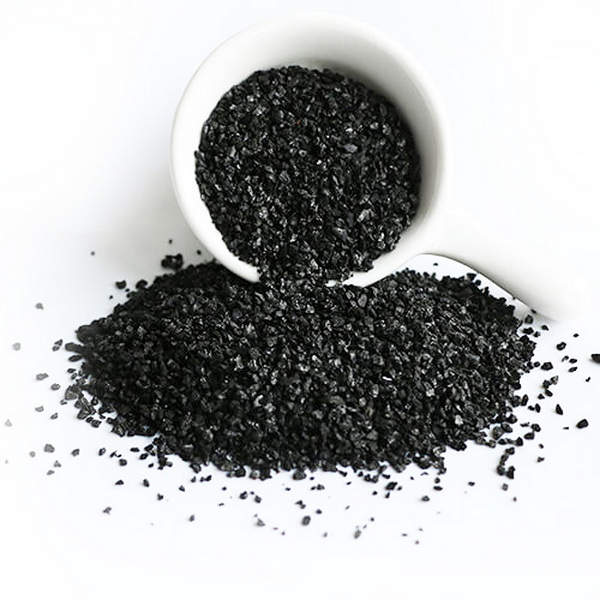
Powdered activated carbon is a finely ground form of activated carbon with particle sizes typically below 100–200 mesh, giving it a large external surface area and fast adsorption kinetics in liquids. It is usually produced from coal, wood, coconut shell, or other carbonaceous materials that are carbonized and “activated” to create a highly porous internal structure.[5][6][1]
The very high internal surface area of activated carbon can exceed 3000 m² per gram, which explains its strong ability to adsorb a wide range of molecules, including water, organic pollutants, and gases. Powdered activated carbon is normally dosed as a slurry or dry powder into water and process streams where rapid mixing allows contaminants to contact its pore surface.[4][7][1][5]
- Typical feedstocks: coal-based, wood-based, coconut-based powdered activated carbon for different performance targets.[8][6]
- Typical particle size: very fine powders that remain suspended in water for effective contact before separation by sedimentation or filtration.[9][6]
- Main feature: extremely high surface area and micro-porosity that make powdered activated carbon a powerful adsorbent.[1][4]
Does powdered activated carbon absorb water?
Powdered activated carbon can adsorb water because water molecules are small and can enter the pores, especially when hydrophilic oxygen-containing surface groups are present. However, many commercial PAC grades used for organic removal in water treatment are designed to be relatively hydrophobic so that organic contaminants are preferentially adsorbed over water.[2][10][3][4]
When relative humidity is high or PAC is stored exposed to ambient air, moisture can gradually accumulate on the surface and within pores, slightly reducing the capacity for non-polar organic contaminants. In liquid water applications, the pores already contain water, but powdered activated carbon still adsorbs dissolved contaminants by displacing water molecules at the solid–liquid interface.[3][11][12][2]
- Yes, powdered activated carbon can adsorb water vapour from air, particularly if surface oxygen groups increase hydrophilicity.[13][3]
- In water treatment, powdered activated carbon functions in a fully wet environment but still provides strong adsorption of organic pollutants because adsorption is driven by surface forces and pore structure.[7][12]
- Surface modification can make powdered activated carbon more hydrophobic to improve adsorption of certain contaminants (such as PFAS) by reducing unnecessary water uptake.[10][14]
Mechanism of water adsorption on powdered activated carbon
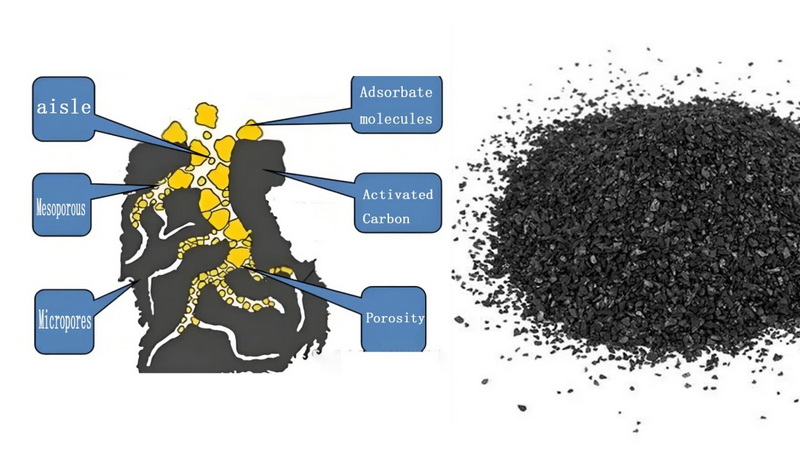
Water adsorption on powdered activated carbon is governed by surface chemistry and pore structure. Oxygen-containing functional groups on the carbon surface (such as carboxyl, hydroxyl, and carbonyl groups) can form hydrogen bonds with water, increasing hygroscopicity, while non-polar graphitic regions are less attractive to water.[13][3][4]
Micropores and mesopores act as capillaries that can fill with water via capillary condensation when relative humidity rises or when powdered activated carbon is immersed in water. At low humidities, water molecules first adsorb on the most energetic sites and around polar groups, with further layers forming as humidity increases.[3][4][13][1]
- Hygroscopicity of activated carbon is closely related to the density and type of oxygen functional groups on the surface.[13][3]
- High specific surface area and narrow pores provide many adsorption sites that can host both water and contaminants; competitive adsorption occurs depending on their affinity.[2][4]
- Surface treatments (e.g., acid washing, heat treatment, pyrolysis) can tune hydrophobicity or hydrophilicity of powdered activated carbon to match application needs.[10][3]
Does water reduce the performance of powdered activated carbon?
In dry gas-phase applications, excessive water adsorption on powdered activated carbon can occupy pore volume and reduce capacity for organic vapours or other target gases. High humidity also competes with adsorption of polar compounds, sometimes leading to lower breakthrough times in gas treatment systems.[11][2]
In liquid-phase water treatment, powdered activated carbon is intentionally used in fully wet conditions, and its adsorption capacity for dissolved organics remains high despite water in the pores. However, if PAC is pre-saturated with moisture or contains too many hydrophilic surface groups, its ability to selectively adsorb hydrophobic contaminants may be reduced.[12][7][10][3]
- In gas treatment, low relative humidity generally improves adsorption efficiency on powdered activated carbon.[11][2]
- In water treatment, powdered activated carbon is optimized to adsorb organic micropollutants in aqueous media, so water presence is accounted for in design and operation.[9][7]
- Advanced PAC products for special contaminants (for example, PFAS) may be modified to be more hydrophobic, giving better performance in water despite full saturation.[14][10]
Key properties of powdered activated carbon relevant to water
Several physical and chemical properties of powdered activated carbon determine how it interacts with water and moisture. These design parameters are customized by manufacturers to balance water interactions with adsorption efficiency for target pollutants.[6][5][4][1]
- Surface area and pore volume: Larger surface area and micropore volume provide higher capacity for both water and contaminants.[4][1]
- Pore size distribution: Micropores (<2 nm) are critical for adsorption of small molecules; mesopores (2–50 nm) support faster diffusion in liquids.[6][4]
- Surface chemistry: Oxygen-containing functional groups increase wettability and water adsorption; reduced oxygen content increases hydrophobicity.[10][3]
- Apparent density: Bulk density determines how much powdered activated carbon mass is present in a given volume and influences dosing and handling.[15][1]
Engineering studies show that powdered activated carbon with optimized microstructure and surface charge can achieve higher adsorption capacity for specific pollutants in water, even when pores are filled with water. The balance between hydrophilic and hydrophobic regions is crucial for selective adsorption of organics from aqueous solutions.[12][14][4][10]
Main industrial applications of powdered activated carbon in wet environments
Although powdered activated carbon can adsorb water, its main importance is as an adsorbent for contaminants in water and moist process streams. Many industries deliberately use PAC in fully or partially wet environments because of its high adsorption capacity and fast kinetics.[5][7][11]
Water and wastewater treatment
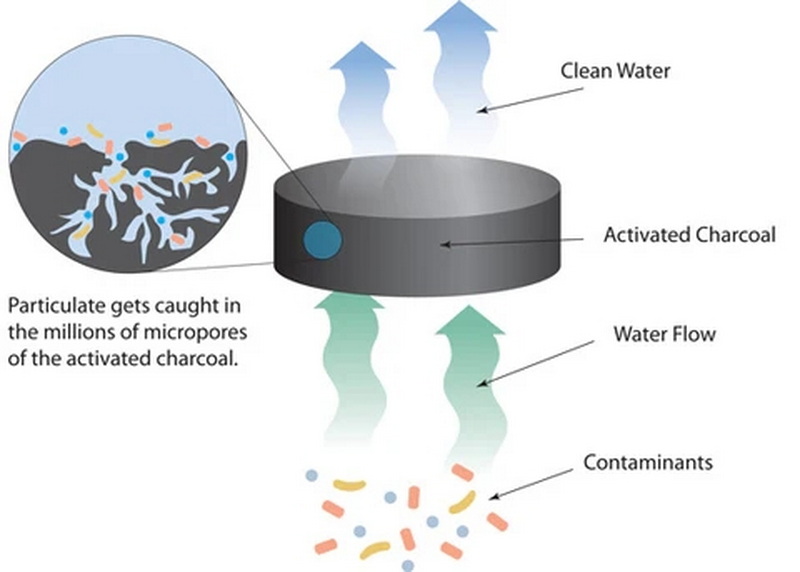
Powdered activated carbon is widely used in municipal drinking water plants and industrial wastewater treatment to remove taste, odour compounds, pesticides, industrial chemicals, and organic micropollutants. It is usually dosed directly into raw water, often in combination with coagulation and flocculation, and then removed by sedimentation or filtration.[7][5][9]
In advanced wastewater treatment, powdered activated carbon filters or contact basins provide extended contact time, allowing dissolved organic compounds and trace contaminants to adsorb efficiently onto PAC. Studies show that PAC filters can utilize adsorption capacity more effectively than simple plug-flow systems when removing small amounts of organic pollutants.[9][7]
Food and beverage processing
In food and beverage industries, powdered activated carbon is used to remove colour, odour, off-flavours, and trace impurities from liquids such as juices, syrups, organic acids, amino acids, and beverage alcohols. PAC is typically mixed into the liquid, allowed to contact for a controlled time, and then filtered out, leaving clarified, decolorized product.[16][15][5]
Because powdered activated carbon is in direct contact with food liquids, its interaction with water is inherent to the process, but the material is selected to favour adsorption of target organics over simple water uptake. High-purity, low-ash PAC grades are used where strict quality and regulatory standards apply.[15][16][5]
Chemical and pharmaceutical purification
In chemical and pharmaceutical manufacturing, powdered activated carbon is often added to reaction mixtures or intermediate solutions to remove coloured by-products, residual catalysts, and trace organic impurities. After mixing, the PAC is filtered or centrifuged out, yielding purified liquids suitable for further processing or formulation.[17][14][15]
Pharmaceutical-grade powdered activated carbon must meet strict criteria for leachable metals, ash content, and purity to avoid introducing contaminants into high-value products. In many cases, specific PAC grades are chosen based on their pore size distribution and hydrophobicity to maximise removal of target molecules in aqueous or mixed-solvent media.[17][14][15][10]
Air and gas purification in humid conditions
Although granular activated carbon is more common for gas-phase systems, powdered activated carbon is also used in certain air and gas purification applications, especially for short-term or emergency treatments. Here, humidity and water adsorption must be controlled so that PAC remains effective at capturing vapours and airborne pollutants.[2][5][15][11]
For example, PAC can be injected into flue gas or used in dust suppression systems to adsorb volatile organic compounds or mercury, with system design accounting for the effect of water vapour on adsorption capacity. Operating at moderate humidity and temperature helps maintain performance of powdered activated carbon in these gas-phase applications.[5][15][11][2]
Handling and storage of powdered activated carbon with respect to moisture
Since powdered activated carbon can adsorb water from the atmosphere, proper storage and handling are essential to preserve its quality and performance. Moisture uptake increases the bulk weight and can reduce free-flow properties, complicating dosing accuracy and pneumatic conveying.[15][3][5]
Manufacturers typically recommend storing powdered activated carbon in sealed bags or silos, protected from rain and high humidity, and avoiding long-term exposure to open air. Under good storage conditions, moisture content remains within the specified range, ensuring consistent adsorption behaviour when the PAC is finally used in water or process streams.[6][5][15]
- Use moisture-tight packaging and covered storage areas for powdered activated carbon.[5][15]
- Minimise time that PAC is exposed to ambient air during transfer, silo filling, and dosing.[3][15]
- Monitor moisture content if precise dosing and consistent adsorption performance are critical.[15][6]
Optimizing powdered activated carbon for your industrial applications
For a global activated carbon manufacturer, tailoring powdered activated carbon products to different industrial applications requires careful control of pore structure and surface chemistry. In water treatment and beverage processing, for example, the goal is often to maximise adsorption of organic micropollutants or colour bodies while maintaining suitable wettability in aqueous solutions.[16][4][6][5]
In applications involving very polar contaminants or PFAS, increasing hydrophobicity through heat treatment or other modifications can improve selectivity and kinetics, even though water is present. For air and gas purification in humid environments, the right balance between water resistance and adsorption capacity must be achieved to maintain efficiency over the service life.[14][11][2][10]
- Water treatment PAC: high surface area, appropriate microporosity, and balanced hydrophobic/hydrophilic surface for organics removal.[7][5]
- Food and beverage PAC: high purity, low ash, and pore structure tailored for decolorization and odour removal from aqueous liquids.[16][15]
- Specialty PAC: modified surface chemistry (more hydrophobic or specific functionalization) for complex contaminants in water or mixed-phase environments.[14][10]
Conclusion
Powdered activated carbon does absorb water to some extent because of its porous structure and surface functional groups, and it can also take up moisture from humid air during storage. In most industrial applications, however, powdered activated carbon is engineered so that its primary function is the adsorption of organic and inorganic contaminants in water, air, and process streams, not simply acting as a water absorber.[1][2][3][5]
Understanding how water interacts with powdered activated carbon—through hygroscopic surface groups, pore filling, and competitive adsorption—is essential for optimizing performance in water treatment, food and beverage processing, chemical and pharmaceutical purification, and humid gas-phase systems. By selecting the right PAC grade and controlling moisture during storage and operation, industries can fully leverage the adsorption power of powdered activated carbon while managing water uptake effectively.[4][10][3][7]
FAQ
FAQ 1: Does powdered activated carbon work as a desiccant?
Powdered activated carbon can adsorb some water vapour, but it is not typically used as a primary desiccant because its pore structure and surface chemistry are usually optimized for adsorbing organic contaminants rather than maximising water uptake. Dedicated desiccants such as silica gel or molecular sieves are preferred when the goal is to remove large amounts of moisture from air or gases.[11][17][2][3]
FAQ 2: How does moisture affect powdered activated carbon storage?
During storage, powdered activated carbon can slowly absorb moisture from the air, which may increase its bulk weight and slightly reduce adsorption capacity for other molecules. For this reason, PAC should be kept in sealed packaging or closed silos, protected from rain and high humidity, and used on a first-in, first-out basis.[3][5][15]
FAQ 3: Can powdered activated carbon be used in fully wet water treatment systems?
Yes, powdered activated carbon is designed to operate in fully wet conditions and is widely used in municipal drinking water and industrial wastewater treatment. Even though its pores are filled with water, PAC still effectively adsorbs dissolved organic pollutants, taste and odour compounds, and many trace contaminants.[12][9][7][5]
FAQ 4: Is hydrophobic or hydrophilic powdered activated carbon better for water treatment?
The best choice depends on the target contaminants: more hydrophobic powdered activated carbon often shows better adsorption of non-polar organic molecules and certain PFAS, while hydrophilic surfaces improve wettability and contact with water. Modern PAC products strike a balance, combining good wettability with tailored hydrophobic domains to maximise adsorption selectivity and capacity.[10][4][12][14]
FAQ 5: What industries most commonly use powdered activated carbon in wet environments?
Powdered activated carbon in wet or aqueous environments is most common in drinking water treatment, industrial wastewater treatment, food and beverage processing, and purification steps in chemical and pharmaceutical manufacturing. In these sectors, PAC is dosed into liquids, mixed for contact, and then removed by filtration or sedimentation to deliver purified products and treated effluents.[7][16][5][15]
Citations:
[1](https://en.wikipedia.org/wiki/Activated_carbon)
[2](https://www.chemviron.eu/how-does-activated-carbon-work/)
[3](https://www.scielo.br/j/aabc/a/hMxPyDtDNJNTvWLp6vqcsBv/)
[4](https://www.nature.com/articles/s41598-023-42011-6)
[5](https://www.calgoncarbon.com/powdered-activated-carbon/)
[6](https://www.sciencedirect.com/topics/engineering/powdered-activated-carbon)
[7](https://www.huber-se.com/applications-and-solutions/detail/adsorption-process-powdered-activated-carbon-pac/)
[8](https://www.bygen.com.au/post/granular-vs-powdered-activated-carbon-which-one-is-right-for-your-application)
[9](https://www.pjoes.com/pdf-67652-24021?filename=Adsorption+Efficiency+of.pdf)
[10](https://pubs.acs.org/doi/10.1021/acsestwater.4c01222)
[11](https://puragen.com/uk/insights/what-is-activated-carbon-used-for/)
[12](https://www.huameicarbon.com/the-science-and-solution-of-powdered-activated-carbon-in-water-treatment/)
[13](https://www.sciencedirect.com/science/article/abs/pii/S1383586622013788)
[14](https://pubs.acs.org/doi/full/10.1021/acsenvironau.4c00133)
[15](https://redox.com/products/activated-carbon-powdered/)
[16](https://www.chemviron.eu/activated-carbon-for-beverages-purification/)
[17](https://www.jacobi.net/activated-carbon-an-essential-commodity/)
[18](https://acp.copernicus.org/articles/20/7941/2020/)
[19](https://pmc.ncbi.nlm.nih.gov/articles/PMC8706647/)
[20](http://irjaes.com/wp-content/uploads/2020/10/IRJAES-V5N3P352Y20.pdf)


