Content Menu
● What is radon and why it matters
● How activated carbon works on gases
● Does activated carbon remove radon from air?
>> Laboratory and field evidence
>> Efficiency in air purifiers and HVAC
● Why activated carbon is not a stand‑alone radon fix for homes
● Key factors affecting radon adsorption on activated carbon
>> Temperature and humidity
>> Pore size distribution and carbon type
>> Contact time, bed depth, and flow rate
● Regeneration and safety of radon‑loaded activated carbon
>> Accumulation of radioactivity in activated carbon
>> Regeneration technologies
● How activated carbon is used for radon in water vs. air
● Practical applications: activated carbon for radon control
>> Residential and commercial buildings
>> Industrial, research, and defense facilities
● Role of customized activated carbon manufacturers
● Conclusion
● FAQ about activated carbon and radon (H3)
>> 1. Does activated carbon really adsorb radon gas?
>> 2. Can an activated carbon air purifier solve high radon in my home?
>> 3. Is activated carbon better for radon in water or in air?
>> 4. Does humidity affect radon removal by activated carbon?
>> 5. What happens to radon after it is captured by activated carbon?
● Citations:
Does activated carbon remove radon from air? The short answer is: yes, activated carbon can adsorb and remove radon from air to a significant extent, but it is only a supplementary control method and cannot replace proper radon mitigation systems in buildings. For industrial and specialized applications, carefully engineered activated carbon systems can achieve high radon capture efficiency, especially at low temperature and low humidity.[1][2][3][4][5][6]
What is radon and why it matters
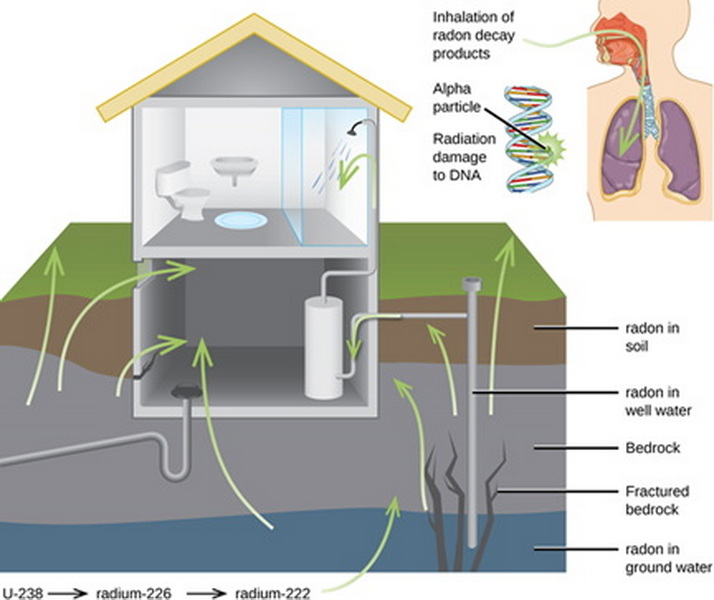
Radon is a colorless, odorless radioactive gas produced by the decay of uranium in soil, rock, and groundwater, and it can accumulate in homes, basements, mines, and industrial facilities. Long‑term exposure to elevated radon levels is a leading cause of lung cancer among non‑smokers, which is why many governments set action levels (for example 4 pCi/L in the USA) that trigger mandatory mitigation.[2][7]
Because radon enters mainly from the ground through cracks, joints, and service penetrations, simple ventilation and conventional particle filters are not enough to control it effectively. This is where activated carbon and other engineered mitigation approaches come into consideration for radon risk reduction in air and water streams.[8][7][4][2]
How activated carbon works on gases
Activated carbon is a highly porous carbonaceous material with extremely large internal surface area (often 800–1500 m²/g), created by controlled activation of carbon‑rich feedstocks such as coal, coconut shell, wood, or biomass residues. Its pore structure is dominated by micro‑ and mesopores that provide abundant adsorption sites for gas and vapor molecules through physical forces (Van der Waals interactions).[9][3][10][5][11]
When contaminated air passes through an activated carbon bed, gas molecules such as VOCs, odorous compounds, or noble gases like radon diffuse into the pores and become adsorbed on the internal surfaces; the better the pore size match with the molecule, the stronger the adsorption. Key parameters controlling adsorption performance include temperature (lower is better), relative humidity (too much moisture competes with gases), gas concentration, contact time, and the specific surface chemistry and pore size distribution of the activated carbon.[10][4][5][11][6]
Does activated carbon remove radon from air?
Laboratory and field evidence
Multiple studies over several decades confirm that radon can be effectively adsorbed on activated carbon under controlled conditions. For example, experimental work on biomass‑derived activated carbon from pine cone and other precursors shows that appropriately tailored carbons achieve high radon adsorption capacities, especially at low temperature and optimized pore size around the nanometer scale.[3][4][5][11][6][9]
Research also indicates that activated carbon used in groundwater filtration adsorbs dissolved radon, where the gas then decays within the carbon bed into solid radionuclides such as lead‑210. Similarly, passive integrated radon measurement devices routinely use 150–200 g of activated carbon to capture radon from indoor air for subsequent analysis, which proves the strong affinity between radon and activated carbon.[4][12][10]
Efficiency in air purifiers and HVAC
Consumer and professional air purifiers equipped with substantial activated carbon filters can reduce airborne radon gas and its short‑lived progeny to some extent by adsorption. However, authorities like the EPA and WHO emphasize that stand‑alone air cleaners (even with activated carbon) should not be considered a primary radon mitigation method for buildings because their effect on long‑term indoor radon concentration is uncertain and often limited.[13][14][15][16][1][2]
The removal efficiency of radon by activated carbon filters in HVAC systems will depend heavily on the carbon mass, bed depth, airflow rate, contact time, humidity, and how often the activated carbon is replaced or regenerated. For meaningful radon reduction, systems need large adsorbent beds, correctly engineered residence time, and continuous monitoring to avoid early breakthrough.[16][6][4]
Why activated carbon is not a stand‑alone radon fix for homes
Organizations such as the U.S. EPA explain that the only reliable way to correct high indoor radon is through structural mitigation methods like sub‑slab depressurization, active soil depressurization, improved ventilation strategies, and sealing of major entry points. Activated carbon filters may provide incremental reductions or help in specific rooms, but they cannot address the continuous inflow of radon from soil into the entire building envelope.[7][15][17][13][2]
Even when activated carbon removes a portion of radon from recirculated air, the remaining radon plus continuous inflow often keep average concentrations above action levels, especially in high‑radon regions or poorly ventilated basements. Additionally, once activated carbon becomes saturated with radon and its decay products, adsorption efficiency decreases and the bed may accumulate radioactivity that requires careful replacement or disposal.[2][8][10][7]
Key factors affecting radon adsorption on activated carbon
Temperature and humidity
Radon adsorption on activated carbon is favored at lower temperatures because gas molecules have lower kinetic energy, which strengthens physical adsorption forces. High humidity, however, can severely reduce the radon adsorption capacity because water vapor competes for adsorption sites and can block micropores, especially in carbons with hydrophilic surface groups.[5][6][4]
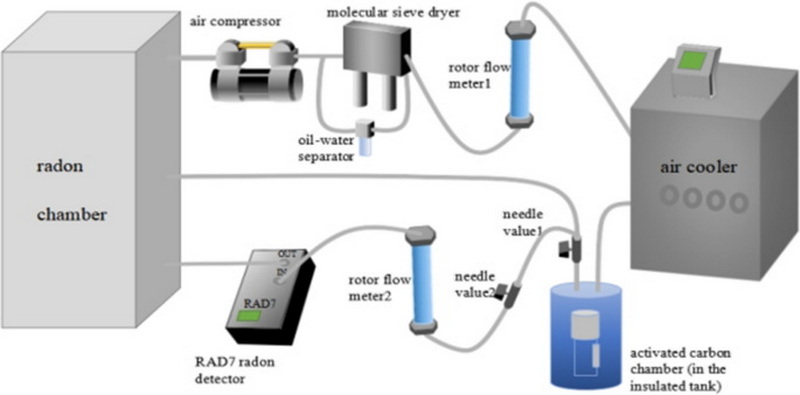
For practical systems, this means that radon removal using activated carbon works better with pre‑dehumidification or desiccant stages, and in cooler air streams such as ventilation intake lines or underground spaces. Proper design may use silica gel or molecular sieve beds upstream of the activated carbon bed to dry the air, thus preserving more adsorption capacity for radon.[4]
Pore size distribution and carbon type
Studies show that radon adsorption is strongest in very small micropores where the potential fields from pore walls overlap, producing high adsorption potentials. Activated carbons engineered with average pore sizes around 0.5–2.5 nm tend to exhibit superior radon uptake, and adjusting activation conditions to tune this distribution is a key part of product development.[6][3]
Comparative experiments indicate that certain low‑background activated carbons have radon adsorption capacities several times higher than commercial carbons such as Saratech or Carboact under identical conditions, highlighting the importance of raw material selection and activation technology. Activated carbon fibers and specialized granular activated carbon grades are also investigated for radon capture due to their high surface area and favorable pore structure.[3][6]
Contact time, bed depth, and flow rate
Radon removal efficiency in an activated carbon bed is a function of contact time: the longer the radon‑containing air remains in the bed, the more radon molecules can diffuse into the pores and be captured. Engineers typically design bed depth and airflow to ensure an adequate empty bed contact time (EBCT), trading off space and pressure drop against desired removal efficiency and filter life.[10][6][4]
If flow rate is too high or bed depth too small, radon breaks through quickly, resulting in limited overall removal; conversely, deeper beds and slower flows increase radon adsorption but raise system size, energy consumption, and cost. Industrial solutions therefore use detailed modeling and breakthrough curve measurements to optimize activated carbon bed design for target radon levels and air volumes.[5][6][4]
Regeneration and safety of radon‑loaded activated carbon
Accumulation of radioactivity in activated carbon
As activated carbon adsorbs radon, the gas decays into solid radioactive progeny (such as polonium‑218, lead‑214, bismuth‑214, lead‑210) that remain trapped in the carbon matrix, gradually increasing the radioactivity of the bed. For groundwater treatment, where radon concentrations can be high, granular activated carbon filters are known to accumulate radioactivity and may require controlled handling and disposal following regulatory guidance.[11][17][8][10]
In air treatment, the total radioactivity buildup in an activated carbon bed depends on radon concentration, throughput, adsorption efficiency, and operating time; professional risk assessments consider these factors when designing large radon adsorption systems for industrial or research facilities. Correctly designed shielding, enclosure, and replacement intervals minimize radiation exposure to operators and occupants.[18][3]
Regeneration technologies
Regeneration of radon‑loaded activated carbon aims to desorb radon and its progeny or at least restore adsorption capacity without excessive heating or damage to the carbon structure. Recent work on deep‑depressurization regeneration demonstrates that vacuum‑assisted desorption can achieve desorption rates above 80–90% under optimized temperature, humidity, and flow conditions, enabling repeated reuse of activated carbon beds.[19][18]
Such regeneration techniques are particularly attractive for underground civil defense projects and large‑scale ventilation systems where kilogram‑scale activated carbon beds are used to adsorb radon from incoming air; maintaining performance while managing radioactivity and operating costs is critical in these settings. The feasibility of on‑site regeneration versus off‑site replacement depends on local regulations, radiation safety standards, and the specific activated carbon product design.[17][8][18]
How activated carbon is used for radon in water vs. air
For groundwater with elevated radon, point‑of‑entry treatment systems often use granular activated carbon filters or aeration units to reduce radon before the water enters domestic distribution. Activated carbon filtration can achieve very high radon removal (often 90–99%) when designed with long contact times, but it also leads to significant accumulation of radioactivity in the carbon bed, which must be considered when planning maintenance and disposal.[8][17][10]
In contrast, for indoor air radon control, national guidance stresses that structural mitigation (such as sub‑slab depressurization) should be the first line of defense, while activated carbon air purifiers or HVAC filters may serve as secondary measures for additional reduction or local improvement in occupied zones. This distinction is important for homeowners, facility managers, and industrial users who are evaluating activated carbon technologies across both water and air treatment lines.[15][7][2]
Practical applications: activated carbon for radon control
Residential and commercial buildings
In homes and offices, activated carbon primarily appears in:
- Portable air purifiers with thick activated carbon filters targeting radon, VOCs, and odors.[14][1][16]
- HVAC return‑air filters or dedicated activated carbon modules designed to treat a portion of recirculated air.[16][4]
- Specialized passive or semi‑passive sorption units connected to ventilation systems in radon‑prone regions.[4]
These activated carbon solutions can help lower radon peaks, especially when combined with good ventilation practices, but they should always accompany—not replace—proper radon measurement and, when needed, structural mitigation systems recommended by national radon programs.[7][17][2]
Industrial, research, and defense facilities
Industrial facilities, underground laboratories, nuclear‑related installations, and civil defense shelters often deploy large, engineered activated carbon systems specifically designed for radon and other radioactive gases. These systems use carefully selected activated carbon grades with optimized micropore distributions, controlled background radioactivity, and robust mechanical strength, installed in deep beds with controlled airflows and monitoring instruments.[18][6][3]
Because radon levels and safety requirements in such facilities can be stringent, operators may combine activated carbon adsorption with other technologies (depressurization, controlled ventilation, filtration of aerosols, etc.) to achieve very low residual radon concentrations that meet regulatory or experimental standards. Regeneration strategies such as deep‑depressurization desorption reduce waste and ensure long‑term stability of activated carbon performance.[19][3][18]
Role of customized activated carbon manufacturers
Specialized manufacturers of activated carbon play a central role in designing radon control solutions that match specific air or water conditions, regulatory limits, and system configurations. By adjusting raw materials, activation methods, and post‑treatments, manufacturers can customize activated carbon products with target surface area, pore size distribution, particle size, and mechanical strength optimized for radon adsorption in air or water.[9][6][3]
For OEM and industrial clients, a professional activated carbon supplier can provide:
- Technical selection of suitable activated carbon grades for radon and co‑contaminants.
- Engineering support for bed sizing, EBCT calculation, pressure drop, and breakthrough prediction.
- Regeneration and replacement strategies that balance performance, cost, and radiation safety for radon‑loaded activated carbon.
Such collaboration ensures that activated carbon is integrated correctly into comprehensive radon management programs, rather than used as an isolated or undersized filter.
Conclusion
Activated carbon does remove radon from air by physically adsorbing radon gas into its microporous structure, and well‑designed activated carbon systems can achieve substantial radon reductions in both air and water streams. Nevertheless, for homes and typical buildings, authorities consistently state that activated carbon air filters are only supplementary tools; structural mitigation methods such as sub‑slab depressurization remain the primary, most reliable way to keep indoor radon below recommended levels.[15][9][2][3][7][4]
For industrial, research, and specialized underground facilities, customized activated carbon products—combined with careful system engineering and, where needed, regeneration technologies—offer powerful solutions for radon control in complex ventilation and treatment systems. When selecting activated carbon for radon, decision‑makers should consider temperature, humidity, pore size distribution, contact time, and long‑term radioactivity management to ensure safe, efficient, and sustainable operation.[3][10][18]
FAQ about activated carbon and radon (H3)
1. Does activated carbon really adsorb radon gas?
Yes, numerous experimental studies and practical applications confirm that activated carbon adsorbs radon gas from air and water through physical adsorption in its microporous structure. Activated carbon is used in radon measurement devices and in some treatment systems precisely because of this strong adsorption capability.[11][5][4]
2. Can an activated carbon air purifier solve high radon in my home?
No, an activated carbon air purifier alone is not considered a complete solution for high indoor radon levels. National radon programs recommend structural mitigation (such as sub‑slab depressurization) as the primary measure, with activated carbon air cleaning used only as a supplementary step.[13][2][15]
3. Is activated carbon better for radon in water or in air?
Activated carbon is widely used and very effective for removing radon from groundwater in point‑of‑entry systems, often achieving 90–99% reduction when designed correctly. In indoor air, its impact is more limited and strongly dependent on system design, so structural building mitigation usually provides greater risk reduction than air‑only treatment.[17][8][10]
4. Does humidity affect radon removal by activated carbon?
Yes, high humidity significantly reduces the radon adsorption capacity of activated carbon because water molecules compete for adsorption sites and can block micropores. Effective radon adsorption systems may need pre‑drying of the air (for example using desiccants) to keep relative humidity in a favorable range.[5][4]
5. What happens to radon after it is captured by activated carbon?
After radon is adsorbed on activated carbon, it decays into a series of radioactive progeny that remain in the carbon bed, gradually increasing its radioactivity over time. For this reason, large radon‑loaded activated carbon filters, especially in water treatment or industrial systems, must be replaced or regenerated in accordance with radiation safety and waste‑handling regulations.[8][10][18][11][17]
Citations:
[1](https://eoleaf.com/pages/buying-an-air-purifier-for-radon)
[2](https://molekule.com/blogs/all/why-radon-is-so-dangerous-and-what-you-can-do-about-it)
[3](https://arxiv.org/abs/2310.14524)
[4](https://www.aivc.org/sites/default/files/airbase_5644.pdf)
[5](https://www.sciencedirect.com/science/article/abs/pii/0048969788901076)
[6](https://academic.oup.com/ptep/article/2022/2/023H01/6505162)
[7](https://www.wbdg.org/FFC/EPA/EPACRIT/epa402r92003.pdf)
[8](https://www.epa.gov/sites/default/files/2016-12/documents/2016_consumers_guide_to_radon_reduction.pdf)
[9](https://www.sciencedirect.com/science/article/abs/pii/S2352554119301470)
[10](https://iwaponline.com/ws/article/23/1/288/92574/Can-activated-carbon-filtration-of-groundwater)
[11](https://pmc.ncbi.nlm.nih.gov/articles/PMC8122700/)
[12](https://pubmed.ncbi.nlm.nih.gov/6706594/)
[13](https://www.reddit.com/r/radon/comments/1i3lg7f/do_air_purifiers_with_carbon_filters_help_bring/)
[14](https://hisoair.com/how-to-get-rid-of-radon-5-most-effective-methods-you-should-try/)
[15](https://www.epa.gov/indoor-air-quality-iaq/will-air-cleaners-reduce-health-risks)
[16](https://www.epa.gov/indoor-air-quality-iaq/guide-air-cleaners-home)
[17](https://www.epa.gov/system/files/documents/2024-11/2024-buying-a-new-home-how-to-protect-your-family-from-radon_0.pdf)
[18](https://mednexus.org/doi/full/10.1016/j.radmp.2024.05.007)
[19](https://www.chinacdc.cn/jkyj/fsws/xsqk/dqzy/202502/P020250217563256175769.pdf)
[20](https://thenashvilleradonguys.com/blog/do-air-purifiers-remove-radon)


