Content Menu
● How Activated Carbon Removes PFAS
● GAC vs PAC for PFAS Removal
● How Effective Is Activated Carbon Against PFAS?
● Regulatory Recognition of Activated Carbon for PFAS
● Design Considerations for PFAS Treatment with Activated Carbon
● Activated Carbon vs Other PFAS Technologies
● Industrial Applications of PFAS Removal with Activated Carbon
● Conclusion
● FAQ About Activated Carbon and PFAS
>> (1) How well does activated carbon remove PFAS from drinking water?
>> (2) Does activated carbon work for both long‑chain and short‑chain PFAS?
>> (3) Is granular activated carbon or powdered activated carbon better for PFAS?
>> (4) What happens to PFAS captured by activated carbon?
>> (5) How can a utility or plant design an effective activated carbon system for PFAS?
● Citations:
Does activated carbon remove PFAS? Yes. Properly designed activated carbon systems, especially granular activated carbon (GAC) filters, are recognized as one of the main “best available technologies” for reducing many PFAS in drinking water and industrial effluents, particularly the longer‑chain compounds like PFOA and PFOS. However, performance depends strongly on activated carbon type, PFAS chain length, water chemistry, contact time, and system design.[1][2][3][4][5][6]
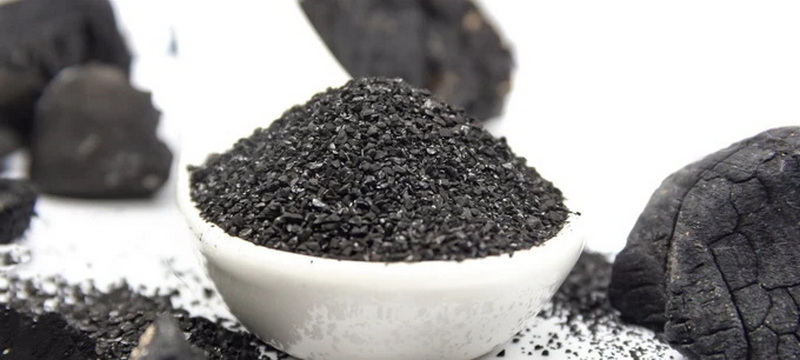
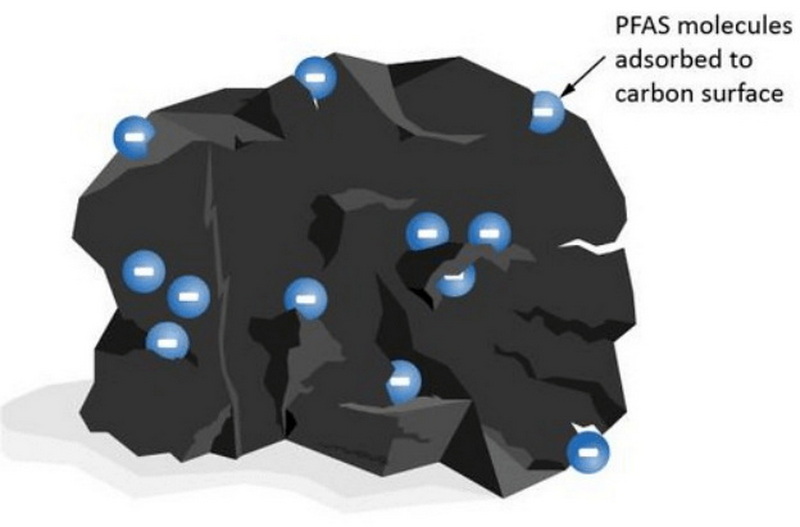
Activated carbon is a highly porous adsorbent made from coal, coconut shell, wood, or other carbon‑rich raw materials that has been activated to develop an enormous internal surface area and a network of micro‑ and mesopores. When contaminated water passes through an activated carbon bed, many organic molecules, including many PFAS, are captured on the activated carbon surface by adsorption forces. For PFAS, this adsorption is driven mainly by hydrophobic interactions between the PFAS carbon‑fluorine tail and the activated carbon surface.[3][7][8][9]
PFAS (per‑ and polyfluoroalkyl substances) are a large class of synthetic chemicals used for decades in fire‑fighting foams, non‑stick cookware, textiles, and many industrial processes, but they are now a major concern because they are highly persistent and can accumulate in water, soil, and living organisms. Because PFAS are difficult to remove with conventional treatment like simple sedimentation, chlorination, or aeration, advanced adsorbents such as activated carbon and ion exchange resins are increasingly used to protect drinking water and meet new regulatory standards.[10][5][11][1]
How Activated Carbon Removes PFAS
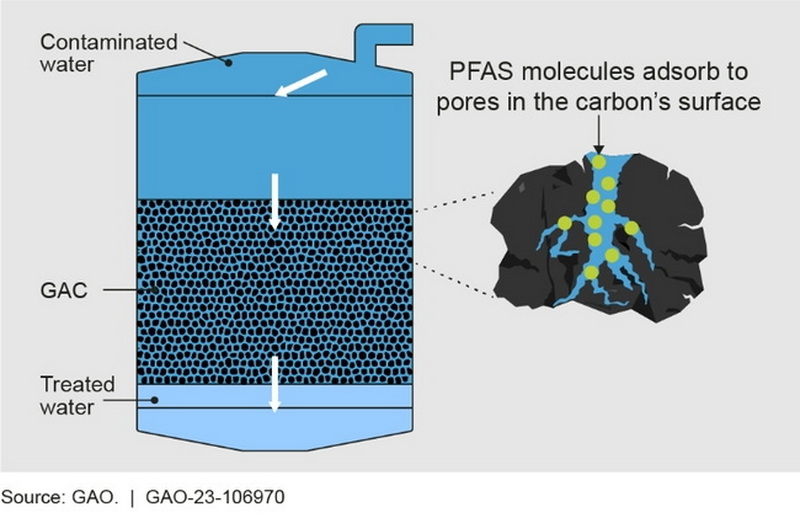
Activated carbon removes PFAS primarily by adsorption: PFAS molecules leave the water phase and adhere to the activated carbon surface, becoming trapped in the pore structure. The long, hydrophobic fluorinated tail of PFAS has a strong tendency to interact with the hydrophobic surface of activated carbon, while the polar head group is less favorable to remain in water once a suitable sorbent is available.[7][9][3]
Several key factors control PFAS adsorption on activated carbon:
- PFAS chain length: Longer‑chain PFAS (such as legacy PFOA and PFOS) are generally adsorbed more strongly and can be reduced to very low levels with well‑designed activated carbon systems, while very short‑chain PFAS are more challenging.[11][9][3]
- Activated carbon type and quality: High‑performance coconut shell or bituminous coal‑based granular activated carbon with optimized pore size distribution can achieve very high PFAS removal, sometimes down to below laboratory detection limits under favorable conditions.[12][13][3]
- Contact time and bed depth: Deeper activated carbon beds and longer empty‑bed contact times (EBCT) allow more complete PFAS adsorption and delay breakthrough.[2][6][1]
Once the activated carbon pores are saturated with PFAS and other organics, the media must be replaced or thermally reactivated to restore capacity. In many municipal systems, spent activated carbon is sent for high‑temperature reactivation, which not only regenerates the carbon but also destroys more than 99.99% of adsorbed PFAS.[13][14][1]
GAC vs PAC for PFAS Removal
Two main forms of activated carbon are used for PFAS treatment: granular activated carbon (GAC) and powdered activated carbon (PAC).[4][8][9]
- Granular activated carbon (GAC) consists of larger particles packed in fixed beds or columns, through which water flows continuously. For PFAS, GAC filters are widely used as full‑scale solutions in drinking water treatment plants and groundwater remediation projects, and GAC is one of the technologies the U.S. EPA identifies as a “best available technology” for PFAS removal from drinking water.[5][1][2][3][10]
- Powdered activated carbon (PAC) is a fine powder that is dosed directly into water (for example into a contact basin) and later removed together with sludge. PAC can be rapidly deployed to provide short‑term or emergency PFAS mitigation, especially in plants that already use PAC for taste and odor control.[8][9][4][7]
Comparative studies show that both GAC and PAC can significantly reduce PFAS, but their roles are often different. For example, one recent assessment found that a typical PAC dose could remove around 40% of total PFAS and about a quarter of long‑chain PFAS within a short contact time, while an equivalent GAC application in column mode achieved higher removal of long‑chain PFAS but required a dedicated filtration system. GAC systems are therefore often preferred as a long‑term backbone technology, while PAC is suited for fast intervention, seasonal issues, or as a polishing/pretreatment step.[9][4][7]
How Effective Is Activated Carbon Against PFAS?
Under the right conditions, activated carbon can remove PFAS very effectively, but the actual performance depends on site‑specific factors and operational choices.[15][1][3]
- Bench‑scale and pilot‑scale tests for drinking water have demonstrated that well‑designed GAC systems can achieve very high removal efficiencies for many PFAS species, sometimes effectively reaching non‑detect levels for key long‑chain PFAS such as PFOA and PFOS before breakthrough.[2][3][12]
- Industry case studies and guidance documents indicate that activated carbon filters can often obtain up to around 90% reduction in PFAS concentrations in suitable source waters when properly sized, operated, and maintained.[1][15][5]
However, performance decreases as:
- Short‑chain PFAS become a larger fraction of the contamination, because they are more mobile and inherently less strongly adsorbed.[11][9]
- Background organic matter (natural organic material, competing organics) increases, which can compete with PFAS for adsorption sites on activated carbon and shorten bed life.[6][16][1]
- Contact time is reduced or flow rates are increased beyond design values, which can lead to earlier breakthrough.[6][1]
Because of these factors, many utilities and industrial users perform site‑specific pilot testing to select the right activated carbon type, bed depth, and replacement schedule to ensure consistent PFAS control over the full operating cycle.[16][2][6]
Regulatory Recognition of Activated Carbon for PFAS
Regulators and technical agencies now frequently highlight granular activated carbon as a key option for PFAS control in drinking water and in some industrial effluents. In the U.S., for example, national guidance on PFAS treatment identifies granular activated carbon, alongside ion exchange and high‑pressure membranes, as one of the principal “best available technologies” for removing PFAS to comply with emerging drinking water standards.[17][10][5][2]
At the same time, guidance emphasizes that activated carbon is a separation technology rather than a destruction technology, meaning PFAS are transferred from water to activated carbon and must eventually be handled via safe regeneration or high‑temperature destruction. Modern reactivation processes for spent activated carbon are designed to thermally destroy the adsorbed PFAS while recovering a reusable activated carbon product, providing both environmental protection and cost efficiency.[14][10][13]
Design Considerations for PFAS Treatment with Activated Carbon
When designing or selecting an activated carbon solution for PFAS removal, several technical aspects are critical.[3][1][6]
- Activated carbon selection
- Choose activated carbon with a pore structure optimized for PFAS adsorption, often with a strong micropore/mesopore network and adequate surface chemistry.[16][3]
- Many suppliers offer specific grades of granular activated carbon engineered for PFAS, with proven performance across dozens of PFAS compounds in real waters.[13][3]
- System configuration
- For municipal drinking water or large industrial flows, fixed‑bed granular activated carbon filters in lead–lag configuration are common, where the first bed captures most PFAS and the second protects against breakthrough.[1][2][6]
- For short‑term mitigation or smaller plants, powdered activated carbon dosing to an existing clarifier or contact tank may provide a fast and flexible strategy.[4][7]
- Operating conditions
- Longer empty‑bed contact times, higher carbon bed depths, and optimized flow rates improve PFAS removal and increase the operational life of the activated carbon before change‑out.[2][6][1]
- Pre‑treatment to remove suspended solids and reduce natural organic matter helps keep activated carbon pores available for PFAS.[6][1]
In practice, a combination of jar tests, rapid small‑scale column tests, and field pilots is often used to determine the best activated carbon grade, configuration, and replacement interval for each PFAS‑contaminated water source.[16][2]
Activated Carbon vs Other PFAS Technologies
Activated carbon is one of several leading technologies used to control PFAS contamination. Others include strong‑base anion exchange resins, nanofiltration, and reverse osmosis membranes, as well as newer sorbents like colloidal activated carbon.[18][10][5][9]
- Anion exchange resins often provide superior removal of some short‑chain PFAS and can maintain lower effluent concentrations for longer before breakthrough, but they tend to be more expensive and may require more complex regeneration or disposal strategies.[10][9][11]
- Membrane technologies such as nanofiltration and reverse osmosis can reject a broad spectrum of PFAS, including short‑chain species, but they are energy‑intensive and generate a concentrated PFAS brine that still needs final treatment.[5][10]
- Colloidal activated carbon is a newer delivery form in which ultra‑fine activated carbon particles are injected into the subsurface to reduce PFAS leaching from source zones, with reported substantial improvements in PFAS retention compared with conventional sorbents.[18]
Because of its balance of cost, maturity, and effectiveness, activated carbon—especially granular activated carbon—remains one of the most widely implemented technologies for PFAS control in drinking water and many industrial contexts.[3][13][1]
Industrial Applications of PFAS Removal with Activated Carbon
Beyond municipal drinking water, PFAS removal using activated carbon is increasingly important in industrial sectors where PFAS‑containing chemicals are used, discharged, or managed.[10][13][3]
Common applications include:
- Groundwater remediation near industrial sites or fire‑training areas, where granular activated carbon pump‑and‑treat systems capture PFAS before the water is discharged or reused.[11][10]
- Industrial wastewater treatment, where activated carbon polishing units help reduce PFAS to meet discharge permits or internal corporate standards, often in combination with other treatment steps.[13][3]
- Process water and product protection, where activated carbon can be integrated to minimize PFAS contamination risks in sensitive sectors such as food and beverage, pharmaceuticals, or high‑purity chemical manufacture, especially when PFAS‑containing auxiliaries or raw materials are present upstream.[15][3]
For many of these uses, customized activated carbon grades and system designs are adopted to balance PFAS removal performance, pressure drop, operating cost, and regeneration or replacement strategy.[3][13]
Conclusion
Activated carbon does remove PFAS, and granular activated carbon filtration is widely regarded as one of the key best available technologies for reducing PFAS concentrations in drinking water and many industrial effluents, particularly for longer‑chain compounds such as PFOA and PFOS. Actual performance depends on the type and quality of activated carbon, PFAS mixture, water chemistry, system design, and operational practices, so pilot testing and proper engineering are essential to achieve regulatory targets and maintain long‑term reliability. By combining high‑performance activated carbon products with optimized filter design and appropriate regeneration or disposal strategies, utilities and industries can significantly reduce PFAS exposure and support more sustainable water and environmental management.[14][4][5][2][10][6][1][3][13]
FAQ About Activated Carbon and PFAS
(1) How well does activated carbon remove PFAS from drinking water?
Activated carbon, especially granular activated carbon filters, can remove many PFAS compounds very effectively from drinking water when properly designed, with long‑chain PFAS often reduced to very low or non‑detectable levels before breakthrough. In practice, well‑operated activated carbon systems in favorable conditions can reach PFAS removal efficiencies on the order of up to about 90% or more for many target compounds, although actual performance must always be verified for each water source.[12][15][5][2][1]
(2) Does activated carbon work for both long‑chain and short‑chain PFAS?
Activated carbon tends to adsorb long‑chain PFAS more strongly than short‑chain PFAS, so removal of compounds such as PFOA and PFOS is generally more efficient than removal of very short‑chain analogues. Short‑chain PFAS can still be reduced, but they typically break through earlier and may require higher activated carbon usage, optimized media selection, or combination with other technologies such as ion exchange resins or membranes.[9][10][11][3]
(3) Is granular activated carbon or powdered activated carbon better for PFAS?
Both granular activated carbon and powdered activated carbon can reduce PFAS, but they are usually used in different roles: granular activated carbon in fixed‑bed filters for long‑term, continuous treatment, and powdered activated carbon as a flexible, fast‑acting dosing solution for interim or supplemental PFAS control. Comparative studies indicate that granular activated carbon columns are often more suitable as the main PFAS barrier in drinking water systems, while powdered activated carbon is especially useful for rapid mitigation or for plants without space for large filter installations.[7][4][5][9]
(4) What happens to PFAS captured by activated carbon?
PFAS removed from water end up adsorbed onto the activated carbon and remain there until the carbon is replaced, regenerated, or destroyed. Many large‑scale systems send spent activated carbon to high‑temperature reactivation facilities, where PFAS are thermally destroyed with very high destruction efficiencies while the activated carbon is restored for reuse, reducing both waste and overall lifecycle cost.[14][10][13]
(5) How can a utility or plant design an effective activated carbon system for PFAS?
Designing an effective activated carbon system for PFAS usually starts with source characterization and bench or pilot testing to select the appropriate activated carbon type and establish breakthrough behavior. Using these data, engineers specify key parameters such as bed depth, empty‑bed contact time, filter configuration, and change‑out or reactivation intervals, while integrating activated carbon with pre‑treatment and downstream monitoring to ensure stable long‑term PFAS control.[17][2][6][16][1]
Citations:
[1](https://www.epa.gov/sciencematters/reducing-pfas-drinking-water-treatment-technologies)
[2](https://pmc.ncbi.nlm.nih.gov/articles/PMC8864563/)
[3](https://www.chemviron.eu/solutions/pfas-removal/)
[4](https://pubs.acs.org/doi/abs/10.1021/acsestwater.4c00901)
[5](https://www.epa.gov/system/files/documents/2024-04/pfas-npdwr_fact-sheet_treatment_4.8.24.pdf)
[6](https://www.newmoa.org/wp-content/uploads/2023/02/Design-Operational-Insights-into-Activated-Carbon-for-PFAS-Removal-in-Drinking-Water-Treatment.pdf)
[7](https://www.pumpsandsystems.com/how-powdered-activated-carbon-could-play-role-pfas-mitigation)
[8](https://www.bygen.com.au/post/granular-vs-powdered-activated-carbon-which-one-is-right-for-your-application)
[9](https://www.sciencedirect.com/science/article/abs/pii/S0043135424008200)
[10](https://pmc.ncbi.nlm.nih.gov/articles/PMC9316338/)
[11](https://pmc.ncbi.nlm.nih.gov/articles/PMC11330578/)
[12](https://generalcarbon.com/the-treatment-of-pfoa-and-pfos-pfas-with-gc-8-x-30pf-granular-activated-carbon/)
[13](https://www.calgoncarbon.com/pfas/)
[14](https://www.epa.gov/system/files/documents/2024-04/2024-interim-guidance-on-pfas-destruction-and-disposal.pdf)
[15](https://crystalquest.com/blogs/filter-media/carbon-filtration-pfas-removal)
[16](https://cswab.org/wp-content/uploads/2018/12/Activated-Carbons-Comparison-for-Removal-of-PFAS-in-Drinking-Water-McNamara-2018.pdf)
[17](https://www.epa.gov/sites/default/files/2019-10/documents/pfas_drinking_water_treatment_technology_options_fact_sheet_04182019.pdf)
[18](https://www.remediation-technology.com/articles/61-colloidal-activated-carbon-reduces-pfas-leaching-at-source-zone-by-10x-compared-to-granular-activated-carbon)
[19](https://www.reddit.com/r/WaterTreatment/comments/126yqpu/does_activated_carbon_removereduce_pfas/)
[20](https://www.sciencedirect.com/science/article/abs/pii/S0048969721038936)


