Content Menu
● Understanding Nitrates in Water
● What Activated Carbon Is Designed to Remove
● Why Typical Activated Carbon Does Not Remove Nitrates Well
● Evidence from Research on Nitrate and Activated Carbon
● When Activated Carbon Appears to “Help” with Nitrates
● Technologies That Actually Remove Nitrates
● Activated Carbon's Role in Nitrate-Related Treatment Trains
● Conclusion
● FAQs About Activated Carbon and Nitrates
>> (1) Does activated carbon remove nitrates from drinking water?
>> (2) Why can activated carbon remove many chemicals but not nitrates?
>> (3) Can specially modified activated carbon remove nitrates?
>> (4) What is the best way to remove nitrates from water?
>> (5) Should activated carbon be used together with nitrate treatment systems?
● Citations:
Does activated carbon remove nitrates? In most practical drinking water and aquarium systems, standard activated carbon does not effectively remove nitrate, and nitrate-specific technologies such as ion exchange or biological denitrification are required for reliable control. Laboratory studies show that specially prepared activated carbon materials can adsorb nitrate under controlled conditions, but this is not the main function of typical activated carbon filters.[1][2][3][4][5][6]
Activated carbon is widely used in water treatment for taste, odor, and organic contaminant removal, leading many users to assume that activated carbon will also remove nitrate from drinking water or aquariums. In reality, activated carbon is highly effective for many organic compounds, chlorine, and some emerging pollutants, but nitrate behaves very differently in water and requires more targeted treatment media.[5][7][6][8]
Understanding Nitrates in Water
Nitrate NO3− is a highly soluble, negatively charged ion that mainly comes from fertilizers, agricultural runoff, septic systems, and some industrial effluents. Because nitrate is very mobile in groundwater and surface water, levels can rise above drinking water guidelines and pose health risks, especially for infants and pregnant women.[4][6]
Regulators such as the US EPA set maximum contaminant levels for nitrate in drinking water, and utilities or private well owners must choose treatment technologies that can reliably reduce nitrate below these limits. Unlike many organic pollutants that bind strongly to activated carbon, nitrate remains dissolved as an inorganic anion and does not “stick” efficiently to standard activated carbon surfaces.[9][6][4][5]
What Activated Carbon Is Designed to Remove
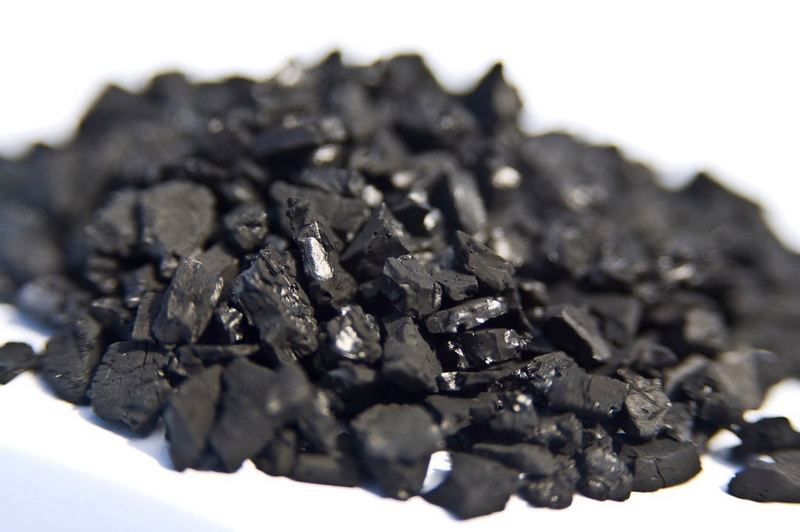
Activated carbon is a highly porous carbonaceous material with enormous internal surface area, optimized mainly for adsorption of organic molecules and some oxidizing agents such as chlorine and ozone. In drinking water and industrial water treatment, granular activated carbon (GAC) filters are proven for removing taste- and odor-causing compounds, many pesticides, volatile organic compounds (VOCs), disinfection by-products, and various industrial organics.[10][7][8]
Home and industrial guidance documents consistently state that activated carbon filters are not intended or certified for nitrate removal, and manufacturers often list nitrate among contaminants that are “not effectively removed” by activated carbon. This difference arises from the fundamental chemistry: most organic micropollutants are nonpolar or weakly polar molecules attracted to the hydrophobic activated carbon surface, while nitrate is a small, strongly hydrated inorganic ion with low affinity for typical activated carbon pore surfaces.[6][4][5][9]
Why Typical Activated Carbon Does Not Remove Nitrates Well
In conventional water filters, activated carbon operates by physical adsorption and, in some cases, catalytic reactions on its internal pore surfaces. For adsorption to be efficient, the contaminant must have strong interactions with the carbon surface, but nitrate's charge and hydration shell make it poorly adsorbed under normal drinking water conditions.[7][8][5][9]
Technical fact sheets from environmental and public health agencies explain that nitrate and several other inorganic ions (such as hardness ions and iron) are “not attracted to the carbon” and therefore pass through granular activated carbon beds. As a result, even if activated carbon provides excellent improvement in odor and many organic contaminants, nitrate concentrations typically remain unchanged across the activated carbon filter unless another nitrate-specific process is also used.[5][9][6]
Evidence from Research on Nitrate and Activated Carbon
Several scientific studies have examined nitrate removal using activated carbon under controlled laboratory conditions, often using specially prepared activated carbon materials and optimized pH, temperature, and contact time. In batch tests, activated carbon can reach nitrate removal efficiencies around 60–63% at relatively high activated carbon doses, moderate nitrate concentrations, and contact times of about 60 minutes.[2][1]
In pilot-scale studies, granular activated carbon has demonstrated some capacity to adsorb nitrate from groundwater when designed and operated specifically for this purpose, indicating that activated carbon can contribute to nitrate removal when carefully engineered. However, these conditions are quite different from standard point-of-use or point-of-entry activated carbon filters, which are optimized for organic removal rather than high-capacity nitrate adsorption.[3][5]
When Activated Carbon Appears to “Help” with Nitrates
In some applications, such as aquariums or biological water treatment systems, users may observe gradual reductions in nitrate after installing or replacing activated carbon. This effect is often indirect: activated carbon removes dissolved organic carbon and other precursors that would otherwise degrade and contribute to nitrate formation, thereby reducing the rate at which nitrate accumulates rather than directly adsorbing nitrate itself.[11][12]
In addition, granular activated carbon beds can support biofilm growth in biological activated carbon (BAC) systems, where microorganisms attached to the activated carbon surface biologically convert nitrate to harmless nitrogen gas. In such systems, nitrate reduction is primarily biological denitrification, while activated carbon provides the support matrix and removes competing organics, not the main nitrate-adsorbing medium.[13][10]
Technologies That Actually Remove Nitrates
For reliable nitrate control in drinking water and industrial water, the most commonly recommended technologies are:
- Ion exchange (nitrate-selective resins):
Ion exchange resins swap nitrate ions in the water with harmless ions (often chloride), and nitrate-selective anion exchange media can reach removal efficiencies over 99% for negatively charged contaminants when properly designed.[14][15][10]
- Reverse osmosis (RO) and other membranes:
High-pressure membranes such as RO physically reject nitrate and many other dissolved ions, providing high removal efficiency at the expense of higher energy use and a waste concentrate stream.[15][10]
- Biological denitrification:
Biological treatment systems use specialized bacteria to convert nitrate into nitrogen gas, a strategy widely used in wastewater treatment and increasingly applied in drinking water and industrial effluents.[13][10]
Regulatory and technical guidance documents emphasize that activated carbon should be combined with ion exchange, membranes, or biological methods if nitrate removal is required, rather than used as the sole nitrate treatment step.[10][4][6]
Activated Carbon's Role in Nitrate-Related Treatment Trains
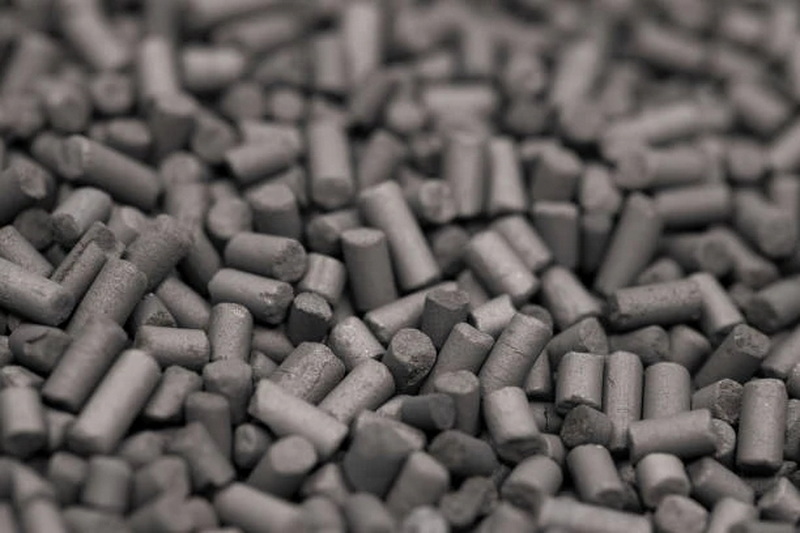
Although activated carbon is not a primary nitrate removal medium, it plays an important supporting role in integrated treatment trains where nitrate is one of several contaminants. For example, in many systems:[8][10]
- Activated carbon is placed upstream of ion exchange or RO to remove chlorine and organics that might foul or damage downstream resins and membranes.[8][10]
- Granular activated carbon is used downstream of biological treatment to polish residual organics, taste, and odor, while dedicated ion exchange columns or membrane units handle nitrate and other inorganic ions.[15][10]
By removing organic load and oxidants, activated carbon extends the life of nitrate-selective ion exchange resins and membranes, improves overall water quality, and enhances the sustainability of the entire treatment system.[14][10][8]
Conclusion
Activated carbon is a powerful and versatile adsorbent for organic contaminants, chlorine, and many taste- and odor-forming compounds in water and other industrial fluids, but it is not a reliable standalone solution for nitrate removal. Laboratory research shows that specially prepared activated carbon can adsorb nitrate under controlled conditions, yet real-world drinking water and aquarium guidance remains clear that nitrate-specific technologies such as ion exchange, membranes, or biological denitrification are needed for consistent compliance and safety. In practice, activated carbon should be viewed as a complementary medium that protects and enhances nitrate-focused treatment units rather than a direct substitute for nitrate-selective processes.[2][1][3][4][6][10][5][14][8]
FAQs About Activated Carbon and Nitrates
(1) Does activated carbon remove nitrates from drinking water?
In standard home or commercial filters, activated carbon does not effectively remove nitrate from drinking water, and nitrate is commonly listed as a contaminant that activated carbon filters cannot control. If nitrate levels exceed regulatory limits, dedicated nitrate treatments such as nitrate-selective ion exchange, reverse osmosis, or biological denitrification must be used instead of relying on activated carbon alone.[4][6][10][5]
(2) Why can activated carbon remove many chemicals but not nitrates?
Activated carbon is optimized for adsorbing organic molecules and oxidizing agents that interact strongly with its porous, hydrophobic carbon surface, while nitrate is a small, highly soluble inorganic anion with weak affinity for that surface. As a result, chemicals such as VOCs, pesticides, and taste- and odor-forming organics are effectively trapped by activated carbon, whereas nitrate passes through the activated carbon bed largely unaffected.[7][9][6][10][5][8]
(3) Can specially modified activated carbon remove nitrates?
Yes, research has shown that some engineered or modified activated carbon materials can achieve notable nitrate removal under optimized conditions, often reaching removal efficiencies of around 60% in batch experiments. However, these systems typically require higher activated carbon doses, specific pH and temperature control, and longer contact times than common household activated carbon filters, so they are not yet the standard approach for everyday nitrate treatment.[1][2][3]
(4) What is the best way to remove nitrates from water?
The most widely recommended technologies for nitrate removal are nitrate-selective ion exchange resins, high-rejection membranes such as reverse osmosis, and properly designed biological denitrification systems. These approaches are capable of consistently reducing nitrate concentrations to below drinking water standards, whereas activated carbon is typically used alongside them to remove organic contaminants and protect system components.[6][15][10][4][14][8]
(5) Should activated carbon be used together with nitrate treatment systems?
Yes, combining activated carbon with nitrate-specific treatment technologies often provides the best overall performance and lifecycle cost. Activated carbon removes chlorine and organic fouling agents, improves taste and odor, and helps protect ion exchange resins and membranes or support biofilm growth in biological systems, while ion exchange, membranes, or biological processes handle the main nitrate removal duty.[15][13][10][14][8]
Citations:
[1](https://www.biotech-asia.org/vol13no2/evaluation-of-nitrate-removal-from-water-using-activated-carbon-and-clinoptilolite-by-adsorption-method-2/)
[2](https://pmc.ncbi.nlm.nih.gov/articles/PMC9031846/)
[3](https://pubmed.ncbi.nlm.nih.gov/23485242/)
[4](https://www.epa.gov/sites/default/files/2017-12/documents/lower-yakima-valley-groundwater-faq-october-2012.pdf)
[5](https://www.pca.state.mn.us/sites/default/files/c-s1-05.pdf)
[6](https://drinking-water.extension.org/drinking-water-treatment-activated-carbon-filter/)
[7](https://extension.purdue.edu/extmedia/WQ/WQ-13.html)
[8](https://www.health.state.mn.us/communities/environment/hazardous/topics/gac.html)
[9](https://www.skillingsandsons.com/blog/using-granular-activated-carbon-to-filter-water-contaminants/)
[10](https://www.epa.gov/sdwa/overview-drinking-water-treatment-technologies)
[11](https://www.reef2reef.com/threads/gac-absorbs-nitrate.191002/)
[12](https://www.reddit.com/r/Aquariums/comments/s5ddct/does_activated_carbon_remove_liquid_fertilizers/)
[13](https://www.waterrf.org/research/projects/identifying-causes-and-controls-intermittent-nitrate-release-granular-activated)
[14](https://canftech.com/blog/iex-resin/ion-exchange-resin-vs-activated-carbon)
[15](https://mytapscore.com/blogs/tips-for-taps/the-top-4-home-water-filter-technologies-explained)
[16](https://uswatersystems.com/collections/water-problems-nitrate-nitrite)
[17](https://www.sciencedirect.com/science/article/abs/pii/S0165237022004260)
[18](https://crystalquest.com/blogs/ion-exchange/pfas-removal-guide)
[19](https://ccenv.us/pfas-treatment/)
[20](https://www.purolite.com/index/core-technologies/industry/potable---groundwater/pfas-removal-with-resin-technology/Ion-exchange-vs-gac)


