
Language
Views: 222 Author: Tina Publish Time: 2026-01-02 Origin: Site


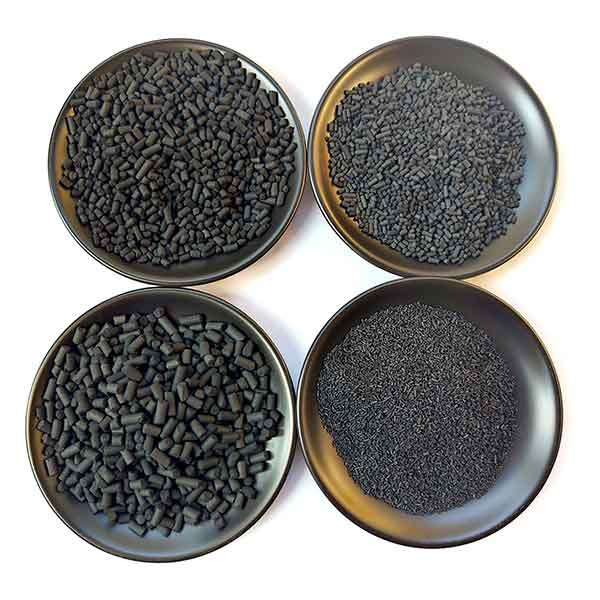
Content Menu
● Understanding Arsenic in Water
● Does Standard Activated Carbon Remove Arsenic?
● Modified Activated Carbon for Arsenic Removal
● Mechanisms of Arsenic Adsorption on Activated Carbon
● Comparing Activated Carbon with Other Arsenic Technologies
>> Main arsenic treatment options
● Key Design Factors for Activated Carbon Arsenic Systems
● Applications of Activated Carbon in Arsenic Control
● Choosing the Right Activated Carbon for Arsenic
● Maintenance and Monitoring of Activated Carbon Arsenic Filters
● FAQ – Frequently Asked Questions
>> 1. How effective is activated carbon at removing arsenic from drinking water?
>> 3. Can activated carbon be used as the only treatment for high‑arsenic well water?
>> 4. How does water chemistry affect arsenic removal by activated carbon?
>> 5. What happens to arsenic‑loaded activated carbon after it is spent?
Activated carbon can remove arsenic from water, but standard activated carbon alone is usually not efficient enough to meet strict drinking water standards, so it is often modified with metals (such as iron or zirconium) or combined with other treatment technologies. In real projects, activated carbon is used both as a primary arsenic adsorbent (when specially engineered) and as a polishing or support step alongside processes like ion exchange, reverse osmosis, and coagulation–filtration.[1][2][3][4][5][6][7][8][9][10][11]
Arsenic occurs in groundwater mainly as inorganic arsenic, typically in two oxidation states: trivalent arsenite As(III) and pentavalent arsenate As(V), which behave differently in treatment systems. As(III) is more mobile and toxic, while As(V) is easier to remove by adsorption and many conventional treatment technologies, so many systems oxidize As(III) to As(V) before removal.[2][7][8][12][13]
- The World Health Organization and many regulators set a maximum contaminant level for arsenic in drinking water of 10 µg/L (0.01 mg/L), which requires very efficient removal technologies.[7][10][2]
- Typical sources of arsenic include naturally contaminated aquifers, mining activities, industrial discharges, and legacy pesticide usage.[8][2][7]
Activated carbon is a highly porous carbonaceous material with an enormous internal surface area (often 500–3,000 m²/g) that removes contaminants mainly by adsorption, not by simple mechanical filtration. Thanks to its network of micro‑, meso‑, and macropores and diverse surface functional groups, activated carbon can capture a wide range of organic chemicals, some metals, and various taste and odor compounds from water and gas streams.[11][2][7]
- Granular activated carbon (GAC) is commonly packed in fixed beds or pressure vessels for continuous flow arsenic removal and polishing.[2][7][11]
- Powdered activated carbon (PAC) is dosed as a slurry into water and then removed with downstream clarification or filtration, which is more typical for short‑term or emergency treatment.[7][2]
Standard, unmodified activated carbon can remove arsenic to some extent, but its performance is generally limited, especially for As(III), and often insufficient to consistently achieve very low target levels like 10 µg/L in household filters. Laboratory and field studies show that activated carbon without metal impregnation usually has low arsenic adsorption capacity, and many household activated carbon filters show only minimal arsenic reduction.[14][3][9][12][10][13][7]
- Some consumer guidance documents state that typical water softeners, basic activated carbon filters, and simple sediment filters “do not effectively remove arsenic” and should not be relied on alone for arsenic‑contaminated well water.[9][10]
- When arsenic is removed by standard activated carbon, removal percentages are often partial (for example, order of 30–70% reduction) and strongly dependent on water chemistry and operating conditions.[15][5][1]
To turn activated carbon into an effective arsenic adsorbent, many researchers and manufacturers impregnate it with metal oxides or hydroxides such as iron, aluminum, or zirconium that bind arsenic strongly. Iron‑impregnated granular activated carbon (GAC‑Fe), for example, shows much higher arsenic adsorption capacity, sometimes treating two to four times more water volume than unmodified GAC before reaching the regulatory limit.[3][4][6][16][12][17][13][2]
- Studies report that iron‑impregnated activated carbon and other carbon‑based composites can reduce arsenic levels from several hundred micrograms per liter to below 10 µg/L in column tests, with capacities on the order of 1–4 mg As per gram of adsorbent or higher in optimized systems.[4][6][12][17][13][3]
- Some commercial products use catalytic or ferrous/cation‑modified coconut‑shell activated carbon with very high internal surface area to achieve both arsenic removal and removal of other anions or organics over a broad pH range.[18][6][2]
Arsenic adsorption on activated carbon and carbon‑based composites occurs through several mechanisms, influenced by arsenic speciation, pH, and the presence of co‑ions. For modified activated carbon, metal oxides on the surface often provide positively charged sites that form inner‑sphere complexes with negatively charged arsenate or arsenite species, resulting in stronger specific adsorption.[6][16][12][17][13][4][2]
- Carbon's porous structure ensures that arsenic species diffuse into micro‑ and mesopores, where they encounter functional groups and metal oxide clusters that enhance adsorption capacity and kinetics.[16][12][13][4][2]
- Adsorption behavior for arsenic on GAC and GAC‑Fe often fits Freundlich or Langmuir isotherm models, and intraparticle diffusion is an important rate‑limiting step in fixed‑bed systems.[12][13][4][16]
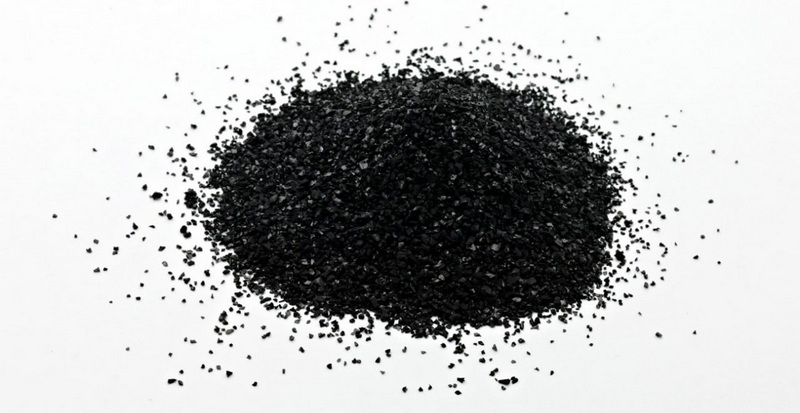
Activated carbon is just one of several major technologies used for arsenic removal in drinking water and industrial applications. Regulators and technical guidance documents frequently list adsorption (often with iron, alumina, or iron‑oxide media), ion exchange, membrane filtration (RO, nanofiltration), and coagulation/filtration as key options for arsenic control.[5][1][8][9][11][2][7]
| Technology | Typical arsenic removal performance | Key advantages | Key limitations |
|---|---|---|---|
| Standard activated carbon | Partial (often 30–70%, highly variable) aquapurefilters+3 | Widely available, also removes organics and odors tappwater+2 | Often insufficient alone to reach 10 µg/L, sensitive to water chemistry umaine+3 |
| Modified/impregnated activated carbon (e.g., GAC‑Fe) | High; can reach <10 µg/L and treat 2–4× more water than GAC watchwater+4 | Combines arsenic adsorption with organic removal; compatible with GAC columns frontiersin+3 | Higher media cost; still requires replacement and careful design sciencedirect+2 |
| Activated alumina / iron oxide media | High; widely accepted Best Available Technologies frontiersin+2 | Strong affinity for arsenate/arsenite, proven for drinking water frontiersin+2 | Sensitive to pH and competing anions; media exhaustion and disposal issues frontiersin+1 |
| Ion exchange | Up to 90–100% in many applications aquapurefilters+3 | Very high removal when correctly designed; suitable for small systems nhtap+1 | Sensitive to water matrix; requires regeneration brine and waste handling nhtap+1 |
| Reverse osmosis / membranes | Often around or above 90% removal aquapurefilters+3 | Very high efficiency; also removes many other contaminants nhtap+2 | Higher capital/energy cost; concentrate management needed nhtap+2 |
| Coagulation/filtration | High when optimized with oxidant and coagulant frontiersin+3 | Well suited for municipal plants; integrates with existing clarification frontiersin+2 | Needs trained operators; more complex process control epa+1 |
In many real projects, activated carbon—especially modified activated carbon—is integrated into multi‑barrier arsenic removal systems to combine metal removal with organic removal, taste and odor improvement, and protection of downstream membranes or resins.[4][5][8][11][2][7]
When designing an activated carbon system specifically for arsenic removal, engineering details strongly influence performance and operating cost. Whether the adsorbent is standard activated carbon or a metal‑impregnated activated carbon, parameters such as pH, empty bed contact time, influent concentration, and competing ions must be optimized.[17][13][6][16][12][2][4][7]
Important design considerations include:
- pH and speciation: Many metal‑modified activated carbon adsorbents show higher arsenic uptake at specific pH ranges where surface charge and arsenate speciation favor adsorption.[6][8][12][2][4][7]
- Contact time (EBCT): Sufficient empty bed contact time ensures that arsenic has time to diffuse into activated carbon pores and reach adsorption sites before effluent standards are exceeded.[13][16][12][4][7]
- Competing anions: Phosphate, silicate, sulfate, and others can compete with arsenate and arsenite for adsorption sites on activated carbon and metal oxides, reducing arsenic capacity.[12][13][2][4][6][7]
- Pre‑oxidation: Converting As(III) to As(V) using chlorine, permanganate, ozone, or other oxidants improves arsenic adsorption for many activated carbon‑based systems.[8][13][2][7][12]
Activated carbon and modified activated carbon are used in a wide range of water treatment contexts, from small household units to large municipal and industrial systems.[5][11][2][4][7][8]
Typical applications include:
- Household and point‑of‑use systems: Certified filters may use specialized activated carbon cartridges, sometimes combined with ion exchange or membranes, to reduce arsenic in private wells.[10][9][5]
- Municipal drinking water plants: GAC filters or GAC contactors, often with metal‑modified activated carbon, are integrated in multi‑stage treatment trains for arsenic and organic micropollutant control.[11][2][4][7][8]
- Industrial and mining wastewater: Activated carbon‑based adsorbents help treat arsenic‑laden process waters and tailings, often combined with precipitation or coagulation steps.[19][16][2][7][12]
For engineers, utilities, and industrial users, selecting the right activated carbon grade for arsenic control involves balancing performance, operating cost, and integration with existing systems.[16][17][2][4][6][7][12]
Practical selection tips:
- Specify whether the application requires standard activated carbon (for combined organic/odor control with minor arsenic reduction) or metal‑impregnated activated carbon designed specifically for arsenic adsorption.[18][3][17][4][6]
- Evaluate independent performance data, such as arsenic capacity (mg/g), breakthrough curves, and pilot‑scale tests under realistic groundwater conditions including competing ions and target pH.[13][2][4][6][16][12]
- Consider reactivation options for spent activated carbon and regulations governing the handling and disposal of arsenic‑laden adsorbents.[7][12]
Even a high‑performance activated carbon arsenic system requires careful maintenance and monitoring to ensure consistent compliance.[17][2][4][6][16][12][7]
Key maintenance practices:
- Regular sampling of influent and effluent arsenic concentrations to detect breakthrough and determine actual bed life.[4][16][12][17][7]
- Periodic replacement or thermal reactivation of spent activated carbon to restore adsorption capacity and keep arsenic below regulatory limits.[6][12][4][7]
- Inspection of backwash rates, headloss, and distribution systems to prevent channeling and ensure all water passes through the activated carbon bed.[11][4][7]
Activated carbon is a versatile adsorbent that can remove arsenic from water, but standard activated carbon alone often provides only partial arsenic reduction and may not reliably meet strict drinking‑water limits. For high‑risk groundwater or regulatory‑driven projects, specially engineered activated carbon—such as iron‑impregnated or zirconium‑modified grades—offers significantly improved arsenic capacity and is frequently used in combination with other technologies like oxidation, ion exchange, coagulation/filtration, or reverse osmosis. When arsenic is a concern, the most effective strategy is to work with experienced activated carbon manufacturers and system integrators to design, pilot, and monitor a multi‑barrier treatment solution tailored to the specific water chemistry and compliance targets.[14][3][15][9][10][18][2][5][16][8][12][17][4][6][7][11]
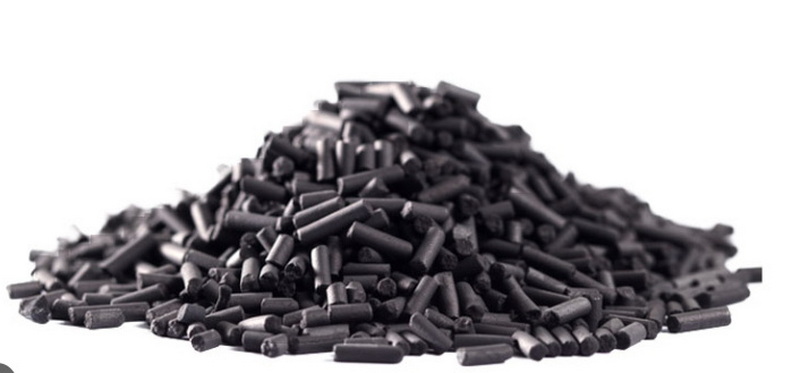
Standard activated carbon filters may reduce arsenic by perhaps 30–70% under favorable conditions, but they are often not effective enough alone to ensure that arsenic stays consistently below 10 µg/L in real‑world systems. For reliable compliance, many guidance documents recommend technologies such as metal‑modified activated carbon, activated alumina or iron oxide media, ion exchange, or reverse osmosis, often used in combination.[1][3][15][9][10][14][2][5][8][13][7][11]
Standard activated carbon relies mainly on its carbon surface and pore structure, which have limited affinity for arsenic, whereas iron‑impregnated activated carbon has iron oxides or hydroxides deposited on the surface that bind arsenate and arsenite much more strongly. Column tests show that GAC‑Fe and similar modified activated carbon media can treat two to four times more water before arsenic breakthrough compared with unmodified GAC, making them better suited for meeting strict arsenic standards.[3][18][12][17][13][4][6]
For high‑arsenic private wells, agencies often warn that simple household water softeners and basic activated carbon filters should not be used as the sole treatment because they do not reduce arsenic levels reliably. In such cases, certified systems that may combine metal‑based adsorbents, membranes, ion exchange, and sometimes modified activated carbon are recommended to achieve and maintain safe arsenic concentrations.[9][10][2][5][8][7][11]
Water chemistry strongly influences arsenic removal by activated carbon: pH, redox conditions, and the presence of competing anions such as phosphate and silicate all affect arsenic adsorption capacity. Pre‑oxidizing As(III) to As(V), adjusting pH into the optimal range, and controlling competing ions can significantly improve the performance of both standard and modified activated carbon arsenic filters.[2][8][12][17][13][4][6][7]
Once activated carbon is saturated with arsenic, it must be replaced or thermally reactivated under controlled conditions that capture or immobilize the arsenic to prevent environmental release. Disposal of arsenic‑laden activated carbon is typically regulated, and users must follow local rules for hazardous waste handling or work with service providers who offer safe reactivation and waste management solutions.[3][12][4][6][7]
[1](https://www.aquapurefilters.com/pages/water-contaminants/arsenic)
[2](https://www.frontiersin.org/journals/water/articles/10.3389/frwa.2024.1301648/full)
[3](https://pubs.acs.org/doi/10.1021/bk-2005-0915.ch020)
[4](https://www.sciencedirect.com/science/article/abs/pii/S0301479719303561)
[5](https://www.nhtap.com/5-effective-ways-to-remove-arsenic-from-your-drinking-water/)
[6](https://pubs.acs.org/doi/abs/10.1021/acsestwater.5c00400)
[7](https://www.epa.gov/sites/default/files/2015-04/documents/arsenic_report.pdf)
[8](https://www.maine.gov/dhhs/mecdc/healthy-living/health-and-safety/drinking-water-safety/public-water-systems/information-for-consumers/drinking-water-contaminants/arsenic-in-drinking-water)
[9](https://co.clinton.oh.us/media/Health%20District/Private%20Water%20Systems/Arsenic%20Treatment%20and%20Removal%20-%20ODH.pdf)
[10](https://www.michigan.gov/-/media/Project/Websites/egle/Documents/Programs/DWEHD/Water-Well-Construction/Arsenic-in-Well-Water.pdf)
[11](https://www.epa.gov/sdwa/overview-drinking-water-treatment-technologies)
[12](https://pmc.ncbi.nlm.nih.gov/articles/PMC2918896/)
[13](https://pubmed.ncbi.nlm.nih.gov/18222519/)
[14](https://umaine.edu/arsenic/treatment-options-and-technologies/)
[15](https://tappwater.co/blogs/blog/what-activated-carbon-filters-remove)
[16](https://www.frontiersin.org/journals/materials/articles/10.3389/fmats.2014.00028/full)
[17](https://www.sciencedirect.com/science/article/abs/pii/S0304389410010824)
[18](https://www.watchwater.de/wp-content/uploads/2019/01/Arsenic_Removal.pdf)
[19](https://www.sciencedirect.com/science/article/pii/S2352186425005176)
[20](https://www.multipure.com/why-multipure/what-we-remove/arsenic/)


