Content Menu
● How Ammonia Behaves in Aquariums
● How Activated Carbon Works in Aquarium Filtration
● Does Activated Carbon Remove Ammonia in Aquarium?
● Indirect Ways Activated Carbon Helps with Ammonia
● What Actually Removes Ammonia in an Aquarium?
● When Should You Use Activated Carbon in an Aquarium?
● Best Practices for Using Activated Carbon in Aquariums
● Conclusion
● FAQ About Activated Carbon and Ammonia in Aquariums
>> 1. Does activated carbon remove ammonia in a new tank?
>> 2. Why do some filter cartridges say they remove ammonia?
>> 3. Can activated carbon help after a big ammonia spike?
>> 4. Should I always run activated carbon in my aquarium filter?
>> 5. What is the best way to control ammonia if activated carbon does not remove it?
● Citations:
Activated carbon does not directly remove ammonia in an aquarium; ammonia control is handled mainly by the biological filter (nitrifying bacteria), water changes, and specific ammonia-removing media such as zeolite or resins. In modern aquarium practice, activated carbon is used as a powerful chemical filter to polish the water, but not as a primary tool for ammonia removal.[1][2][3][4][5][6]
How Ammonia Behaves in Aquariums
Ammonia is one of the most dangerous waste products in an aquarium and is continuously produced from fish respiration, uneaten food, and decomposing organic matter. In a healthy aquarium, ammonia is converted to nitrite and then nitrate by beneficial bacteria living in the biological filter media and other surfaces.[3][5][1]
- At low pH, most ammonia is present as the ammonium ion \(NH_4^+\), which is less toxic; at higher pH, more converts to free ammonia \(NH_3\), which is highly toxic for fish.[7][1]
- Even relatively low concentrations of free ammonia can burn fish gills, cause stress, and lead to disease or death if not controlled.[5][1]
- The aim of aquarium filtration is to keep ammonia at undetectable levels by combining biological filtration, mechanical filtration, and water changes.[1][5]
How Activated Carbon Works in Aquarium Filtration
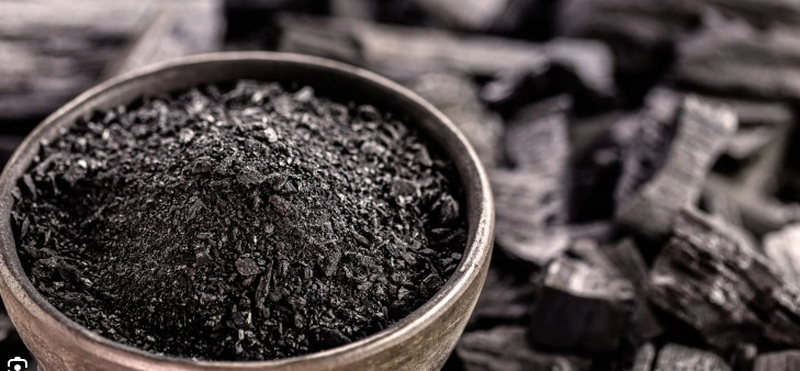
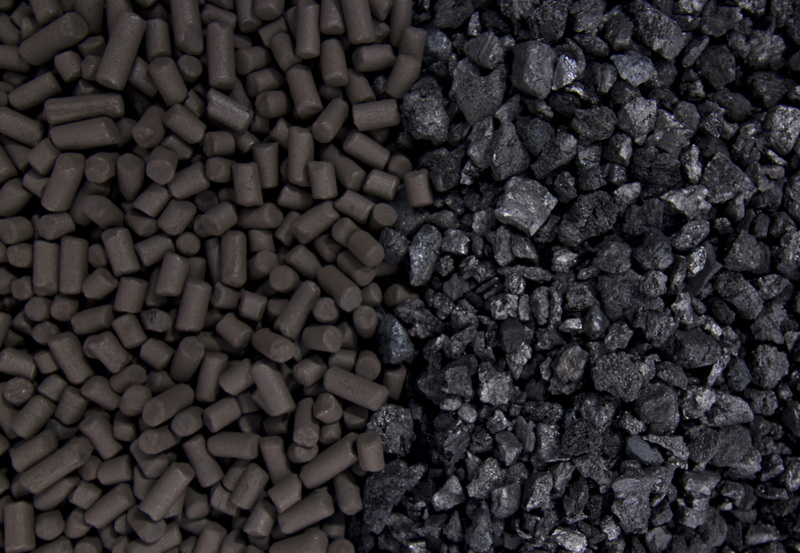
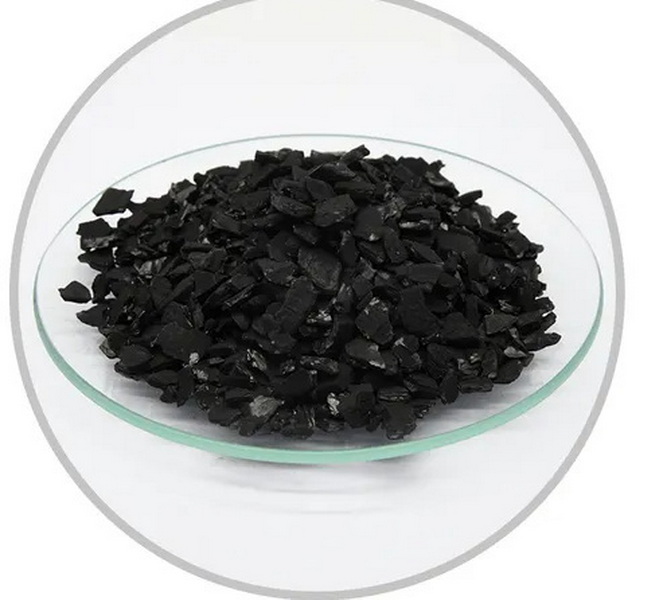
Activated carbon is a highly porous adsorbent with enormous internal surface area that traps dissolved organic molecules and many chemical contaminants on its surface. In aquarium filters, activated carbon is classified as a chemical filter media and is usually used together with mechanical and biological media.[2][4][6][1]
Typical functions of activated carbon in aquariums include:[4][6][2]
- Removing discoloration (tannins) and making water crystal clear.
- Adsorbing many organic pollutants, odors, and some residual medications.
- Helping remove chlorine and chloramine from tap water when used correctly (often in combination with conditioners).[7][2]
Because activated carbon targets larger organic molecules and many dissolved chemicals, it is extremely effective as a polishing medium but does not behave like a biological filter that “eats” ammonia.[6][2][1]
Does Activated Carbon Remove Ammonia in Aquarium?
In normal aquarium use, standard activated carbon does not directly remove measurable ammonia from the water column. Most reliable aquarium and water-treatment references clearly state that activated carbon is ineffective against ammonia, nitrite, and nitrate, which must instead be controlled by biological filtration and other methods.[8][2][4][6]
Key points about activated carbon and ammonia:
- Activated carbon adsorbs organic chemicals and some inorganics, but uncharged ammonia and ammonium ions are not well captured in typical aquarium conditions.[2][4][6]
- When chloramine is removed by activated carbon, chlorine is neutralized but ammonia is left behind in the water, which then must be handled by biological filters or ion-exchange media.[7][1]
- Some specialty products combine activated carbon with ammonia-removing resins or zeolite; in these cases, the ammonia removal comes from the added media, not from the activated carbon itself.[9][10][4]
In practice, aquarists should never rely on activated carbon as the main tool to fix an ammonia spike or to cycle a new tank.[4][6][1][2]
Indirect Ways Activated Carbon Helps with Ammonia
Although standard activated carbon does not directly remove ammonia, it can indirectly help reduce ammonia production by keeping the water cleaner.[11][6][4]
Indirect benefits include:
- Removing dissolved organic waste before it decomposes, which may slightly reduce the ultimate ammonia load produced in the aquarium.[11][4]
- Improving water clarity so light penetrates better, supporting healthy plant growth, which can in turn help consume nitrogen compounds.[12][4]
- Reducing stress-related organics and odors, contributing to a more stable environment where the biological filter can function efficiently.[5][12][1]
However, these effects are secondary and cannot replace the primary role of the biological filter in converting ammonia to nitrite and nitrate.[3][6][1][5]
What Actually Removes Ammonia in an Aquarium?
Ammonia control in aquariums relies mainly on biological nitrification, water changes, and specialized ammonia media, rather than on activated carbon.[1][3][4][5]
Main ammonia-control methods:
- Biological filtration (nitrifying bacteria)
- Bacteria such as Nitrosomonas and Nitrospira colonize filter media and convert ammonia to nitrite and then nitrate.[3][5]
- A mature biofilter is the core of long-term ammonia control in any aquarium system.[5][1][3]
- Water changes
- Partial water changes physically dilute ammonia and other nitrogen compounds during cycling or in emergencies.[1][5]
- Ammonia-specific media
- Zeolite and specialized ion-exchange resins selectively bind ammonium ions and are sold as “ammonia remover” products, often separate from activated carbon.[10][13][4]
- Live plants and refugia
- Fast-growing aquatic plants and biofilters consume ammonia and nitrate as nutrients in many freshwater systems.[12][5]
Activated carbon is used alongside these tools as a complementary chemical filter media, not as the primary ammonia solution.[2][4][1]
When Should You Use Activated Carbon in an Aquarium?
Even though activated carbon does not remove ammonia, it remains very useful in many aquarium situations as part of a complete filtration strategy.[6][2][1]
Common reasons to use activated carbon in an aquarium:
- Polishing water after wood, leaves, or soil release tannins and color.[4][12][2]
- Removing residual medications or water treatments after a disease treatment course.[2][4]
- Eliminating unpleasant odors and many dissolved organics in heavily stocked tanks.[6][4][2]
- Supporting high-clarity displays in public aquariums and show tanks while the biological filter handles nitrogen waste.[5][6][1]
For industrial or large-scale systems such as aquaculture facilities or recirculating aquaculture systems (RAS), activated carbon is often integrated with mechanical and biological filtration to achieve high water quality standards. In these systems, ammonia removal still depends primarily on biofiltration and process design.[14][3][5]
Best Practices for Using Activated Carbon in Aquariums
To get the most value from activated carbon while managing ammonia properly, aquarists and industrial users can follow several practical guidelines.[4][6][1][2]
Recommended practices:
- Choose high-quality, aquarium-grade activated carbon with low ash to avoid pH disturbances.
- Rinse activated carbon thoroughly before use to remove dust and fines that cloud the water.[6][2][4]
- Place activated carbon after mechanical media so large particles do not quickly clog the pores.[1][2]
- Replace activated carbon regularly (often every 2–4 weeks in home tanks) since its adsorption capacity is finite and declines as pores fill.[2][4]
- Do not rely on activated carbon as an emergency fix for an ammonia spike; use water changes, ammonia detoxifiers, and ammonia-specific media instead.[4][6][1][2]
For commercial and industrial clients, custom granular activated carbon (GAC) grades and system design can optimize performance for chlorine, chloramine, organic contaminants, and color removal, while dedicated biological or ion-exchange units target ammonia and related nitrogen species.[15][14][7]
Conclusion
Activated carbon is a valuable chemical filtration media in aquariums and industrial water systems, but it does not directly remove ammonia from aquarium water. Effective ammonia control depends on a mature biological filter, appropriate stocking and feeding, water changes, and specialized ammonia-removing media, while activated carbon serves as a complementary tool to polish water, remove organics, chlorine, and many dissolved chemicals.[8][7][3][5][6][1][2][4]
FAQ About Activated Carbon and Ammonia in Aquariums
1. Does activated carbon remove ammonia in a new tank?
In a new, cycling aquarium, activated carbon does not prevent ammonia from appearing or remove it in any reliable way. During cycling, beneficial bacteria have not yet fully colonized the biological media, so ammonia must be controlled by limited stocking, careful feeding, water changes, and sometimes ammonia-binding products or zeolite.[3][5][6][1][2][4]
2. Why do some filter cartridges say they remove ammonia?
Many pre-packed cartridges labeled as “carbon + ammonia remover” actually contain a mixture of activated carbon and ammonia-removing media such as zeolite or special resins. In these products, activated carbon handles organic chemicals and chlorine, while the ammonia removal is provided by the added ion-exchange material rather than by the activated carbon itself.[13][9][10][7][4]
3. Can activated carbon help after a big ammonia spike?
Activated carbon can improve water clarity and remove some dissolved organics after a crisis, but it cannot fix an ammonia spike on its own. For emergency ammonia control, large water changes, ammonia detoxifiers, and ammonia-specific media are needed, while activated carbon is mainly used as a supporting media once ammonia levels are under control.[11][5][6][1][2][3][4]
4. Should I always run activated carbon in my aquarium filter?
Running activated carbon all the time is optional and depends on your goals, stocking level, and maintenance habits. Many aquarists use activated carbon continuously to keep water clear and odor-free, while others only use it temporarily—for example, after medication—relying mostly on strong biological filtration, plants, and regular water changes for long-term stability.[12][5][1][2][4]
5. What is the best way to control ammonia if activated carbon does not remove it?
The most reliable way to control ammonia is to establish and maintain a robust biological filter, supported by reasonable stocking levels, feeding discipline, and routine water changes. When extra protection is needed, especially in new tanks or heavily stocked systems, ammonia-specific media and, in large installations, well-designed biofilters and recirculating systems are used in combination with activated carbon and mechanical filtration.[14][10][5][1][3][4]
Citations:
[1](https://www.aqueon.com/articles/aquarium-filtration-basics)
[2](https://activatedcarbondepot.com/blogs/news/activated-carbon-for-aquariums-a-complete-guide)
[3](https://cales.arizona.edu/azaqua/ista/ISTA7/RecircWorkshop/Workshop%20PP%20%20&%20Misc%20Papers%20Adobe%202006/7%20Biofiltration/Nitrification-Biofiltration/Biofiltration-Nitrification%20Design%20Overview.pdf)
[4](https://heycarbons.com/activated-carbon-for-aquarium/)
[5](https://www.imountaintree.com/biological-filtration-system-best-bio-filters-for-your-aquarium/)
[6](https://aquariumscience.org/index.php/7-4-2-activated-carbon/)
[7](https://www.purewaterproducts.com/articles/chloramine-and-ammonia)
[8](https://www.practicalfishkeeping.co.uk/features/be-clear-about-carbon/)
[9](https://practicalgardenponds.com/products/acurel-premium-filter-carbon-ammonia-away)
[10](https://petswarehouse.com/products/aqua-clear-50-zeo-carb-a614)
[11](https://www.aquariacentral.com/forums/threads/carbon-remove-ammonia.83961/)
[12](https://www.2hraquarist.com/blogs/filters-overview/what-about-water-polishers)
[13](https://www.reddit.com/r/Aquariums/comments/196kvks/difference_in_types_of_filters_ammonia_vs_carbon/)
[14](https://www.sciencedirect.com/science/article/abs/pii/S0045653525002462)
[15](https://www.scirp.org/journal/paperinformation?paperid=79992)
[16](https://www.reddit.com/r/aquarium/comments/169as3k/does_activated_carbon_in_aqua_clear_filter_get/)
[17](https://quantumusa.us/products/bio-active-carbon%E2%84%A2)
[18](https://www.seachem.com/download.php?f=articles%2FBasics-of-Filtration.pdf)
[19](https://www.youtube.com/watch?v=sRPeXZYwNJc)
[20](https://www.facebook.com/groups/ukaqua/posts/1090501182024198/)


