
Content Menu
● How Algae Grow And Why They Are A Problem
● How Activated Carbon Works In Algae‑Related Applications
● Does Activated Carbon Remove Whole Algae Cells?
● Removing Algal Toxins With Activated Carbon
● Controlling Taste, Odor, And Color From Algae
● Activated Carbon In Aquariums And Ponds
● Activated Carbon In Emergency Algal Bloom Events
● Selecting The Right Activated Carbon For Algae‑Related Problems
● System Design: Combining Activated Carbon With Other Technologies
● Limitations Of Activated Carbon For Algae Removal
● Industrial Opportunities For Customized Activated Carbon Solutions
● Conclusion
● FAQ About Activated Carbon And Algae
>> (1) Does activated carbon actually remove algae from my water?
>> (2) Can activated carbon remove algal toxins like microcystins?
>> (3) Will activated carbon stop green water in my aquarium or pond?
>> (4) Is powdered activated carbon or granular activated carbon better for algae problems?
>> (5) How often should activated carbon be replaced when treating algal blooms?
● Citations:
Activated carbon does not directly “kill” or mechanically remove whole algae cells from water, but it is extremely effective at adsorbing many algae‑related organic compounds, cyanotoxins, odors, and color that come from algal blooms. In practical water treatment and aquarium use, activated carbon is best viewed as a powerful support technology for algae control rather than a standalone algaecide.[1][2][3][4]
How Algae Grow And Why They Are A Problem
Algae thrive when light, nutrients, and suitable temperature come together in water systems such as lakes, rivers, ponds, aquariums, and industrial circuits. Excess nutrients (especially nitrogen and phosphorus), warm weather, and still water often trigger rapid growth and harmful algal blooms.[2][5][6]
For utilities, industries, and aquarium owners, algae cause several issues:
- Unpleasant taste and odor in drinking water and beverages.[7][2]
- Release of algal toxins (cyanotoxins) that pose health risks if not removed.[6][1]
- Biofouling, filter clogging, color problems, and customer complaints about water quality.[3][8]
How Activated Carbon Works In Algae‑Related Applications
Activated carbon is a highly porous adsorbent with an enormous internal surface area that attracts and binds dissolved organic molecules from water. Instead of chemically destroying compounds, activated carbon removes them by adsorption within its network of pores.[8][9][2][3]
In algae‑related situations, activated carbon is especially effective at removing:
- Algal toxins such as microcystins and other cyanotoxins produced during harmful algal blooms.[1][2][6]
- Taste‑ and odor‑forming compounds (e.g., geosmin, 2‑MIB and other biogenic odorants) associated with algae growth and decay.[10][8][7]
Does Activated Carbon Remove Whole Algae Cells?
Whole algae cells are typically removed by clarification, filtration, or membrane processes (such as coagulation‑sedimentation, sand filtration, or ultrafiltration), not by adsorption onto granular activated carbon alone. Typical algae cells are too large to diffuse deeply into activated carbon pores, so they are removed more effectively by physical separation steps ahead of the carbon contactor.[4][2][3][6]
However, activated carbon becomes very important once algae cells are broken or stressed and have released dissolved organic matter, pigments, odor compounds, and toxins into the water. At that stage, activated carbon can significantly polish the water by removing these dissolved organics that pass through conventional particle filters.[2][8][10][1]
Removing Algal Toxins With Activated Carbon
Granular activated carbon (GAC) is considered one of the most effective and cost‑efficient technologies for removing many cyanotoxins from drinking water. Utilities worldwide use GAC filters or powdered activated carbon (PAC) dosing to cope with harmful algal blooms in lakes and reservoirs during warm seasons.[5][6][1][2]
Key points on algal toxin removal with activated carbon:
- GAC and PAC both adsorb microcystins and other cyanotoxins well when the carbon is fresh and properly selected.[6][1][2]
- The condition and age of the activated carbon strongly affect capacity; spent carbon must be replaced or thermally reactivated to maintain high toxin removal.[8][6]
Controlling Taste, Odor, And Color From Algae
Even when algal blooms are not acutely toxic, they often cause earthy, musty, or grassy tastes and odors in water supplied to households and food or beverage plants. Compounds such as geosmin and 2‑methylisoborneol (2‑MIB) are notorious for causing complaints at extremely low concentrations.[10][7][8]
Activated carbon has long been used to:
- Adsorb biogenic odorants and restore neutral taste in municipal and industrial drinking water.[9][7]
- Remove color and dissolved organic matter released by algae, improving clarity and reducing disinfection by‑product precursors.[3][8]

Activated Carbon In Aquariums And Ponds
In aquariums, koi ponds, and ornamental lakes, activated carbon is widely used as part of the filtration system to keep the water clear and free from smells. It is particularly helpful for removing dissolved organics, pigments, and medications—but it is not a magic bullet against algae growth.[12][4][3]
Practical roles of activated carbon in hobby and small‑scale systems:
- Adsorbing dissolved organics from fish waste, uneaten food, and decaying algae, which helps reduce yellowish tint and surface film.[12][3]
- Removing many odor compounds, certain water conditioners, and some anti‑algae or medication chemicals after treatment is complete.[13][12]
Algae control in aquariums and ponds still depends mainly on:
- Limiting light exposure and controlling nutrient input (feeding, fertilization).[14][12]
- Maintaining strong biological filtration and regular water changes, with activated carbon as a polishing step.[3][12]
Activated Carbon In Emergency Algal Bloom Events
During sudden harmful algal bloom crises in lakes or reservoirs used for drinking water, utilities often deploy mobile or emergency activated carbon systems. Powdered activated carbon can be dosed into the treatment process to quickly adsorb dissolved algal toxins and odor compounds before they pass into distribution.[15][5][6]
For emergency response, activated carbon offers:
- Rapid deployment using mobile GAC filter units or PAC dosing skids at existing treatment plants.[15][6]
- Flexible integration with existing coagulation, sedimentation, filtration, and disinfection chains to upgrade cyanotoxin protection without completely rebuilding facilities.[5][15]
Selecting The Right Activated Carbon For Algae‑Related Problems
Not all activated carbon grades perform the same. For algae‑related issues, selecting the correct activated carbon type and system design is critical to achieve high removal efficiencies for toxins and odorants.[1][8]
Important selection criteria include:
- Carbon type and porosity: Wood‑based or specialized powdered activated carbon often shows very fast adsorption kinetics for algal toxins and odorants, while certain coal‑based GAC grades provide strong capacity and robustness for large filters.[5][1]
- Particle size and contact time: Finer PAC offers very rapid adsorption but must be separated after use, while GAC beds require sufficient depth and empty bed contact time to maximize performance.[9][5]
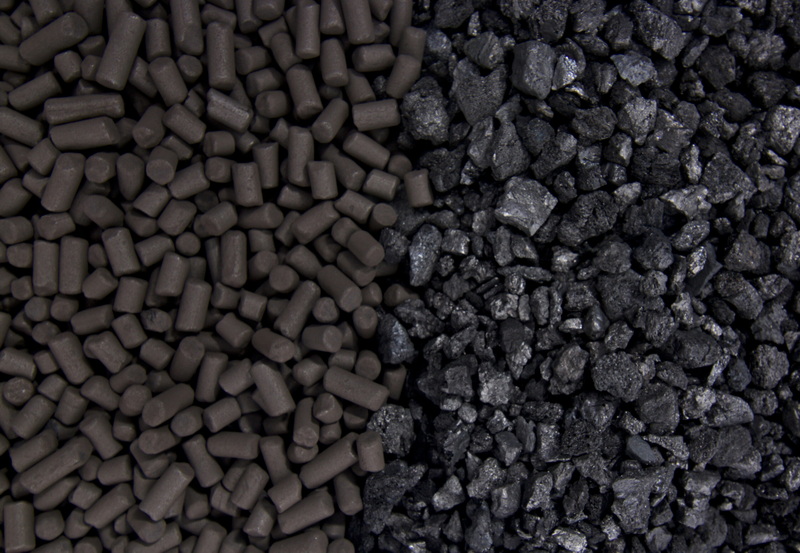
A professional activated carbon manufacturer can help match activated carbon grades—granular, powdered, extruded pellets, or specialty carbons—to specific water quality targets, flow rates, and regulatory requirements.[15][1]
System Design: Combining Activated Carbon With Other Technologies
For robust algae management, activated carbon is typically integrated into a multi‑barrier treatment strategy rather than used alone. Each barrier targets a different aspect of algal contamination, and activated carbon plays the key role of removing dissolved organics that escape physical removal processes.[2][8][6][10]
Common multi‑barrier combinations include:
- Coagulation, flocculation, and sedimentation to remove suspended algae cells, followed by sand or membrane filtration and a GAC filter to adsorb toxins and odorants.[6][2]
- PAC dosing in front of or within clarification steps to protect downstream filters and improve overall taste and odor control during blooms.[7][5]
Limitations Of Activated Carbon For Algae Removal
While activated carbon is very powerful, it does have limitations that engineers and operators must respect. Misunderstanding these limits can lead to unrealistic expectations about algae control.[8][10]
Key limitations include:
- Activated carbon does not reliably remove all whole algae cells and should not replace proper clarification and filtration.[4][2]
- High background levels of dissolved organic matter and algal organic matter can compete with target toxins and odorants, reducing adsorption capacity and shortening carbon life.[10][8]
Routine monitoring and timely replacement or reactivation of activated carbon are essential to keep algae‑related contaminants under control throughout the treatment season.[15][6]
Industrial Opportunities For Customized Activated Carbon Solutions
Industrial users in sectors such as food and beverage, pharmaceuticals, chemicals, and municipal water treatment often require tailored activated carbon solutions to manage algae‑related risks in surface water sources. Customized activated carbon products and systems can improve performance while controlling operating costs.[9][3]
Typical industrial needs include:
- Designing GAC filter beds optimized for algal toxin and odor removal, with defined empty bed contact time and backwash regimes.[1][6]
- Selecting specialty activated carbon grades for pre‑treatment of process water used in beverages, ingredients, and high‑purity pharmaceutical utilities, where taste and safety requirements are extremely strict.[7][9]
Conclusion
Activated carbon does not directly remove all algae cells from water, but it plays a critical role in any serious algae management strategy by adsorbing algal toxins, taste and odor compounds, and dissolved organic matter released during blooms. In municipal, industrial, pond, and aquarium systems, activated carbon is most effective when correctly selected, sized, and combined with physical separation processes that remove algae cells and suspended solids.[2][3][6][1]
For projects that rely on surface waters prone to algal blooms, partnering with an experienced activated carbon manufacturer and system designer is essential to build a reliable, cost‑effective multi‑barrier treatment line. Well‑engineered activated carbon solutions can transform algae‑impacted water into stable, safe, clear, and great‑tasting water for drinking, industrial, and aquatic applications.[8][7][1][15]
FAQ About Activated Carbon And Algae
(1) Does activated carbon actually remove algae from my water?
Activated carbon mainly removes dissolved organic compounds and toxins associated with algae rather than filtering out all algae cells themselves. Whole algae are better removed by coagulation, sedimentation, filtration, or membranes, with activated carbon placed afterward to polish the water.[3][6][2][8]
(2) Can activated carbon remove algal toxins like microcystins?
Yes, properly selected powdered or granular activated carbon can remove many cyanotoxins such as microcystins from drinking water, and this is a standard practice at many utilities. Performance depends on toxin type, carbon grade, contact time, and the condition of the activated carbon, which must be replaced or reactivated when exhausted.[6][1][2][8]
(3) Will activated carbon stop green water in my aquarium or pond?
Activated carbon helps by adsorbing dissolved organics and some color compounds, which can improve clarity, but it is not sufficient alone to stop green water caused by suspended algae. Effective control still requires managing light, nutrients, and biological filtration, with activated carbon functioning as a polishing medium.[14][12][4][3]
(4) Is powdered activated carbon or granular activated carbon better for algae problems?
Powdered activated carbon offers very fast adsorption and is often used in plants facing sudden harmful algal blooms, but it must be dosed and separated later. Granular activated carbon is installed in fixed beds that provide continuous treatment and are better suited for long‑term algae‑related taste, odor, and toxin control.[5][9][1][6]
(5) How often should activated carbon be replaced when treating algal blooms?
Replacement frequency depends on bloom severity, water quality, and system design, because algae‑derived organics and toxins gradually consume adsorption capacity. Drinking water guidance emphasizes monitoring breakthrough of cyanotoxins and odorants and regenerating or replacing GAC once performance drops below target levels.[10][15][8][6]
Citations:
[1](https://www.calgoncarbon.com/algal-toxins/)
[2](https://news.osu.edu/water-filtration-technique-removes-dangerous-freshwater-algae-toxins/)
[3](https://www.calgoncarbon.com/pond-aquarium-swim/)
[4](https://aquariumscience.org/index.php/7-4-2-activated-carbon/)
[5](https://www.labroots.com/trending/chemistry-and-physics/18917/improving-activated-powdered-carbon-prevent-algal-blooms-drinking-water-treatment)
[6](https://www.epa.gov/ground-water-and-drinking-water/summary-cyanotoxins-treatment-drinking-water)
[7](https://www.sciencedirect.com/science/article/pii/S0013935123018765)
[8](https://pubs.acs.org/doi/abs/10.1021/acs.est.6b04911)
[9](https://www.springwellwater.com/activated-carbon-filters-remove/)
[10](https://pubmed.ncbi.nlm.nih.gov/37690627/)
[11](https://www.youtube.com/watch?v=Ate4d7i2uEs)
[12](https://www.aquaticexperts.com/pages/activated-carbon-in-your-aquarium)
[13](https://www.fishforums.net/threads/does-activated-carbon-ruin-my-anti-algae-treatments.470129/)
[14](https://www.ukaps.org/forum/threads/activated-carbon-vs-algae.40139/)
[15](https://www.chemviron.eu/emergency-drinking-water-treatment-activated-carbon/)
[16](https://www.sciencedirect.com/science/article/pii/S266601642300035X)
[17](https://www.nature.com/articles/s41598-025-92717-y)
[18](https://pubs.rsc.org/en/content/articlehtml/2024/ra/d3ra08678j)
[19](https://www.facebook.com/groups/417234375283499/posts/1297602203913374/)
[20](https://www.pondsolutions.com/super-activated-filter-carbon/)


