Content Menu
● What Happens When Activated Carbon Meets Water?
● Is Activated Carbon Soluble in Water?
● Why Activated Carbon Does Not Dissolve in Water
● How Activated Carbon Works in Water (Adsorption, Not Dissolution)
● Effects of Activated Carbon on Water Quality
● Industrial Uses of Activated Carbon in Water
● Environmental and Safety Aspects in Water
● Practical Tips for Using Activated Carbon in Water Systems
● Conclusion
● FAQ About Activated Carbon and Water
>> 1. Does activated carbon dissolve in water? (H3)
>> 2. If activated carbon does not dissolve, how does it clean water? (H3)
>> 3. Can activated carbon change the pH of water even if it is insoluble? (H3)
>> 4. Is activated carbon safe for drinking water applications? (H3)
>> 5. What happens to activated carbon after it is used in water treatment? (H3)
● Citations:
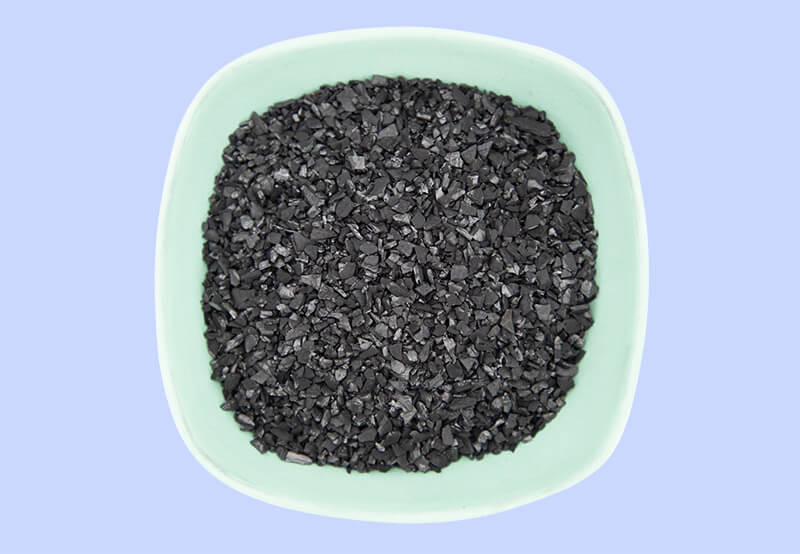
Activated carbon does not dissolve in water; it is practically insoluble and remains as a solid, highly porous adsorbent even when fully immersed. Instead of dissolving, activated carbon works in water by adsorbing dissolved contaminants onto its enormous internal surface area.[1][2][3][4]
What Happens When Activated Carbon Meets Water?
When activated carbon is added to water, it stays as a solid material while interacting with dissolved chemicals at its surface. This behavior is the foundation of its performance in water treatment, drinking water purification, and industrial process water polishing.[2][3][4][1]
- Activated carbon particles become wetted by water but do not melt or dissolve into it.[3][1]
- Dissolved organics, chlorine, odors, and many micropollutants migrate from the water onto the activated carbon surface through adsorption.[5][4]
- After adsorption, the activated carbon can be replaced or thermally reactivated, while the treated water leaves with significantly reduced contaminant levels.[4][6]
Illustrative image suggestions (add in your CMS):
- “Close-up diagram of water flowing through a bed of granular activated carbon, showing contaminants attaching to pores.”
- “Microscopic pore-structure illustration of activated carbon immersed in water, with arrows indicating adsorption.”
Is Activated Carbon Soluble in Water?
Regulatory and technical data classify activated carbon as not soluble in water or common organic solvents. This insolubility is critical for safety, environmental behavior, and consistent performance in long-term filtration systems.[7][1][3]
- Water solubility tests show concentrations below analytical detection limits, confirming that activated carbon is essentially not soluble in water.[1]
- Technical property sheets describe activated carbon as “practically insoluble in all usual solvents,” including water.[3]
- Because activated carbon does not become a dissolved substance, it cannot migrate as a molecular species into cells, which also limits biodegradation pathways.[1]
Why Activated Carbon Does Not Dissolve in Water
The non‑solubility of activated carbon in water is mainly a consequence of its elemental carbon structure and extended graphitic network. This structure makes activated carbon chemically stable and physically robust under normal water treatment conditions.[8][2][3]
- Activated carbon consists largely of elemental carbon arranged in aromatic or graphitic layers, which do not form hydrophilic ions or polar molecules that water can dissolve.[2][3]
- The material is chemically inert and does not readily undergo reactions that would convert it into water‑soluble species.[3][1]
- Only under extreme oxidative conditions (such as hot concentrated acid mixtures) can activated carbon be slowly broken down into carbon dioxide, not into soluble carbon-based molecules.[1]
How Activated Carbon Works in Water (Adsorption, Not Dissolution)
Instead of dissolving, activated carbon removes impurities from water via adsorption, where molecules adhere to the solid surface. The ultra‑high internal surface area and complex pore structure make activated carbon extremely efficient at capturing a wide range of contaminants.[9][10][4][2]
- One gram of activated carbon can exhibit internal surface areas greater than 1,000–3,000 m² per gram, providing massive contact area for dissolved contaminants.[10][2]
- As water passes through a granular activated carbon bed, targeted compounds such as chlorine, organic micropollutants, taste and odor molecules, and many industrial chemicals are adsorbed into the pores.[5][4]
- Adsorption on activated carbon is driven by van der Waals forces and related intermolecular interactions between the carbon surface and the adsorbate molecules.[11][6]
Effects of Activated Carbon on Water Quality
Although activated carbon does not dissolve in water, it can influence water quality parameters such as organic content, color, odor, and sometimes pH.[4][5]
- Granular activated carbon filters are widely used to remove dissolved organic chemicals, industrial by‑products, pharmaceutical residues, and many taste and odor compounds from drinking water.[6][5]
- In wastewater applications, activated carbon removes organic matter and trace contaminants that are not fully eliminated in conventional biological or chemical treatment processes.[6][2]
- Surface functional groups on activated carbon can slightly shift the pH of an aqueous suspension, depending on whether acidic or basic groups dominate the carbon surface.[12][3]
Industrial Uses of Activated Carbon in Water
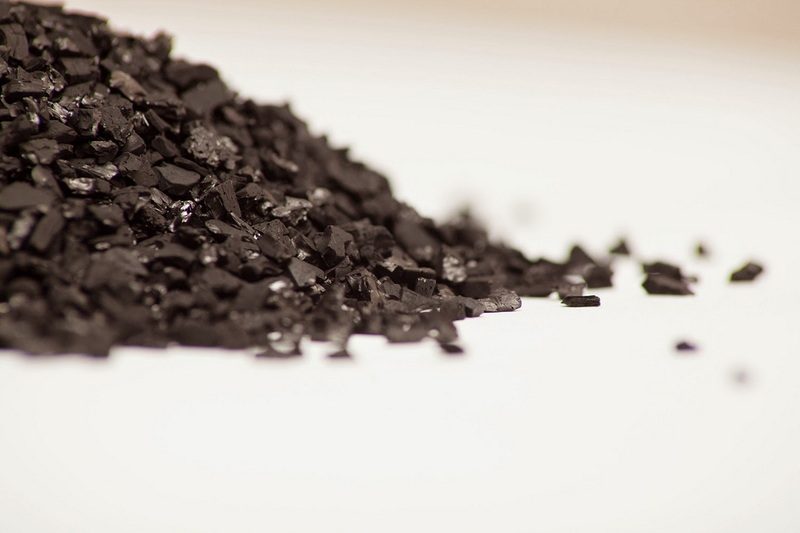
In industrial and municipal sectors, activated carbon is a key technology for water purification because it remains intact while adsorbing contaminants rather than dissolving.[10][2]
- Municipal drinking water plants use powdered or granular activated carbon to remove trace organic compounds, pesticides, disinfection by‑product precursors, and odor‑forming substances.[2][10]
- Industrial water users, including chemical, food and beverage, and pharmaceutical manufacturers, rely on activated carbon for decolorization, removal of off‑flavors, protection of downstream catalysts, and polishing of process water.[6][3]
- In wastewater treatment, activated carbon helps achieve stringent discharge standards for dissolved organics and micropollutants, serving as a final polishing step after biological treatment.[13][2]
Environmental and Safety Aspects in Water
Because activated carbon is insoluble in water and largely inert, it has specific environmental and safety characteristics that are important for both operators and regulators.[7][1]
- Environmental assessments note that activated carbon cannot be rendered into a soluble form capable of being absorbed into organisms, which limits conventional biodegradation routes.[1]
- Activated carbon is not considered a typical dissolved pollutant; instead, it is managed as a solid sorbent material that can be separated, regenerated, or disposed of in controlled ways.[6][1]
- Technical and regulatory databases describe activated carbon as having low affinity for water and being practically insoluble, which supports its use in water and wastewater applications.[7][3]
Practical Tips for Using Activated Carbon in Water Systems
For engineers, operators, and end users, understanding that activated carbon does not dissolve in water helps in proper system design and maintenance.[4][6]
- Design systems so that water flows evenly through the activated carbon bed to maximize contact time and adsorption efficiency, rather than focusing on dissolution.[4][6]
- Monitor breakthrough curves and replace or reactivate the activated carbon once its adsorption capacity is exhausted, even though the physical carbon particles are still present.[14][6]
- Select appropriate activated carbon types (granular, powdered, pelletized) and pore structures tailored to the target contaminants and water matrices.[9][3]
Conclusion
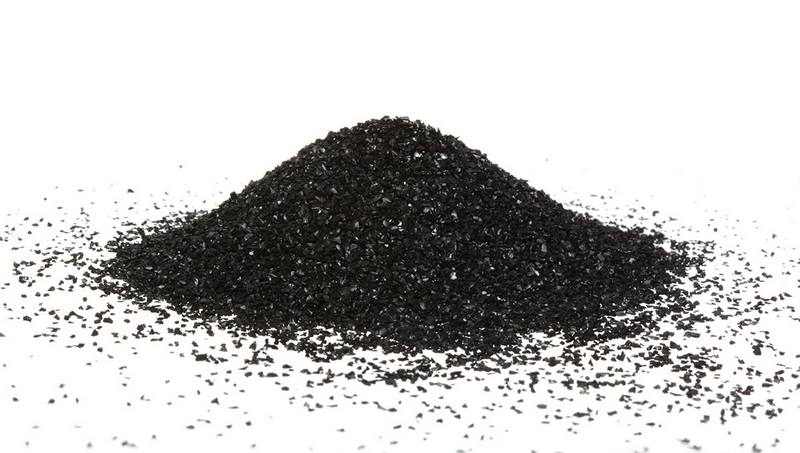
Activated carbon does not dissolve in water; it remains an insoluble solid with a highly porous structure and enormous internal surface area. Instead of forming a dissolved species, activated carbon purifies water through adsorption, trapping dissolved contaminants on its surface in applications ranging from municipal drinking water plants to industrial wastewater treatment systems. This combination of insolubility, chemical stability, and powerful adsorption efficiency makes activated carbon one of the most important and versatile materials for modern water treatment technology.[5][10][2][3][4][1]
FAQ About Activated Carbon and Water
1. Does activated carbon dissolve in water? (H3)
No, activated carbon does not dissolve in water; it is classified as practically insoluble in water and common solvents. When added to water, activated carbon remains as a solid material, providing a large surface area for adsorption rather than dissolving into the liquid phase.[3][7][1]
2. If activated carbon does not dissolve, how does it clean water? (H3)
Activated carbon cleans water via adsorption, in which dissolved contaminants adhere to the solid carbon surface and are held inside its pores. As water passes through a bed or cartridge of activated carbon, organic chemicals, chlorine, taste and odor compounds, and many micropollutants are captured within the porous structure.[9][10][5][4]
3. Can activated carbon change the pH of water even if it is insoluble? (H3)
Yes, activated carbon can slightly modify water pH because of acidic or basic surface functional groups, even though it does not dissolve. The net effect depends on the specific activated carbon production and activation conditions, which determine whether the surface tends to release acidic or basic species into the surrounding water.[12][3]
4. Is activated carbon safe for drinking water applications? (H3)
Activated carbon is widely used in drinking water treatment and is considered safe when produced and handled according to relevant standards. Its insolubility means it does not become a dissolved contaminant itself, while its adsorption capacity effectively removes many undesirable chemicals from potable water supplies.[2][5][6][1]
5. What happens to activated carbon after it is used in water treatment? (H3)
Once the adsorption capacity of activated carbon is exhausted, the spent carbon can be thermally reactivated or replaced with fresh material. During reactivation, adsorbed contaminants are destroyed at high temperatures, and the regenerated activated carbon can be reused in new water purification cycles, minimizing waste and lowering life‑cycle cost.[14][4][6]
Citations:
[1](https://www.activatedcarbon.org/health-safety-environment/environment/)
[2](https://en.wikipedia.org/wiki/Activated_carbon)
[3](https://www.chemicalbook.com/ChemicalProductProperty_EN_CB9418149.htm)
[4](https://activatedcarbondepot.com/blogs/news/activated-carbon-filters)
[5](https://www.health.state.mn.us/communities/environment/hazardous/topics/gac.html)
[6](https://www.watertechonline.com/wastewater/article/15549902/the-basics-of-activated-carbon-adsorption)
[7](https://pubchem.ncbi.nlm.nih.gov/compound/Activated-Charcoal)
[8](https://www.sciencedirect.com/topics/neuroscience/activated-carbon)
[9](https://www.chemviron.eu/how-does-activated-carbon-work/)
[10](https://puragen.com/uk/insights/how-does-activated-carbon-filter-water/)
[11](https://rajahfiltertechnics.com/uncategorized/the-science-behind-activated-carbon-how-it-works-and-why-its-effective/)
[12](https://pubs.acs.org/doi/10.1021/la0348463)
[13](https://www.keiken-engineering.com/news/how-activated-carbon-for-the-removal-of-organic-matter-works)
[14](https://www.calgoncarbon.com/app/uploads/Basics-of-Activated-Carbon-Calgon-Carbon-Chemical-Engineering-Magazine.pdf)
[15](https://mayuwater.com/a/resources/water-filters/does-activated-charcoal-dissolve-in-water)
[16](https://www.reddit.com/r/askscience/comments/bkunp9/how_does_charcoal_aid_in_filteringcleaning_dirty/)
[17](https://generalcarbon.com/facts-about-activated-carbon/carbon-adsorption-2/)
[18](https://www.sentryair.com/activated-carbon-adsorption.htm)
[19](https://cdn.thomasnet.com/kc/1466/doc/0000100572_70_33751.pdf)
[20](https://www.freshwatersystems.com/blogs/blog/activated-carbon-filters-101)


