Content Menu
● What Is Activated Carbon?
● How Activated Carbon Removes Chlorine
>> 1. Adsorption of Chlorine Species
>> 2. Catalytic Reduction to Chloride
● How Efficient Is Chlorine Removal?
>> 1. Typical Removal Performance
>> 2. Factors Affecting Chlorine Removal
● Activated Carbon Types for Chlorine Removal
>> 1. Granular Activated Carbon (GAC)
>> 2. Powdered Activated Carbon (PAC)
>> 3. Catalytic Activated Carbon
● Why Remove Chlorine with Activated Carbon?
>> 1. Protection of Downstream Processes and Membranes
>> 2. Taste, Odor, and Product Quality
>> 3. Environmental and Regulatory Considerations
● Designing Activated Carbon Systems for Chlorine Removal
>> 1. Key Design Parameters
>> 2. Breakthrough and Replacement
● Limitations of Activated Carbon for Chlorine and Related Species
● Conclusion
● FAQs About Activated Carbon and Chlorine Removal
>> 1. How fast can activated carbon remove chlorine?
>> 2. Does activated carbon also remove chloramine?
>> 3. What type of activated carbon is best for chlorine removal?
>> 4. How do I know when to replace activated carbon in a chlorine filter?
>> 5. Is activated carbon for chlorine removal safe for drinking water?
● Citations:
Activated carbon can effectively remove free chlorine from water and is widely used in drinking water, industrial process water, and point‑of‑use filters for this purpose. In many systems, properly selected activated carbon can achieve more than 90% chlorine removal when contact time and media quality are appropriate.[1][2][3][4]
What Is Activated Carbon?
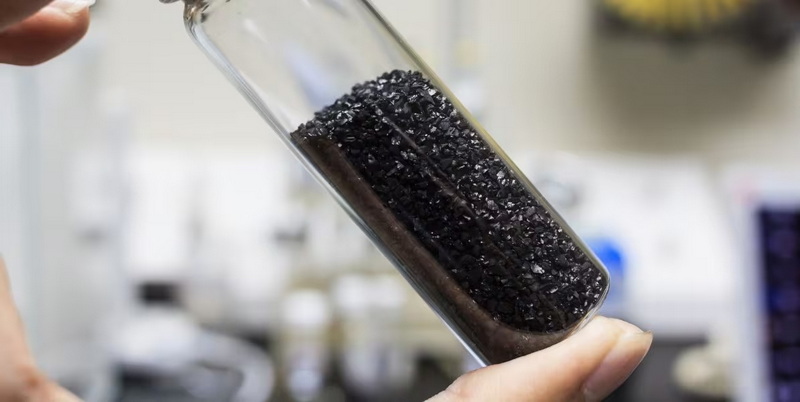
Activated carbon is a specially processed carbon material with an extremely porous internal structure and very high surface area, often exceeding hundreds of square meters per gram. This activated structure allows activated carbon to adsorb and react with chlorine, organic compounds, and many other contaminants in water and air.[5][6][7]
Activated carbon can be made from coal, coconut shells, wood, or other carbon‑rich raw materials, and then activated using steam or chemicals to open up micro‑pores and meso‑pores. Different manufacturing routes create different pore size distributions and surface chemistries, which strongly influence how activated carbon removes chlorine and other substances.[2][7][1]
- Typical forms:
- Granular activated carbon (GAC)
- Powdered activated carbon (PAC)
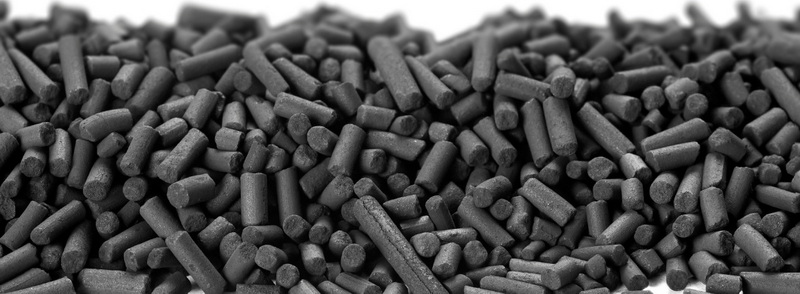
- Extruded / pelletized activated carbon
- Typical uses:
- Drinking water and beverage processing
- Industrial water polishing and wastewater treatment
- Air, gas, and vapor purification
How Activated Carbon Removes Chlorine
Activated carbon removes chlorine mainly through a combination of physical adsorption and catalytic chemical reactions.[8][4][2]
1. Adsorption of Chlorine Species
When chlorinated water flows through an activated carbon bed, dissolved chlorine species (such as Cl₂, hypochlorous acid HOCl, and hypochlorite OCl⁻) move into the pores and are adsorbed onto the carbon surface.[9][8]
- The very high internal surface area of activated carbon provides countless adsorption sites where chlorine can accumulate.
- Van der Waals forces and other surface interactions hold these chlorine species on the activated carbon surface.
- This initial physical adsorption step is usually fast, especially with fine powdered activated carbon or well‑designed granular activated carbon beds.[7][2]
2. Catalytic Reduction to Chloride
After adsorption, activated carbon promotes chemical reactions that convert chlorine into harmless chloride ions.[3][4][2]
- Hypochlorous acid reacts with the carbon surface and is reduced to chloride:
- Overall reactions are often represented in simplified form, where HOCl is reduced to Cl⁻ and the activated carbon surface is partially oxidized to carbon oxides.[2]
- In these reactions:
- Chlorine is removed from water as reactive disinfectant.
- Activated carbon acts as a catalyst and reactant, gradually consuming some of its surface sites.
Because of this catalytic behavior, activated carbon continues to remove chlorine even after adsorption equilibrium for simple physical adsorption is reached.[8][2]
How Efficient Is Chlorine Removal?
1. Typical Removal Performance
Pilot‑scale and laboratory studies show that granular activated carbon can achieve chlorine removal efficiencies above 90% under suitable conditions. For example, one study reported overall chlorine removal of about 93.3% and around 73.6% for free chlorine in a water reclamation system using an activated carbon adsorber.[1][3]
In practical drinking water systems, many activated carbon filters certified to NSF/ANSI 42 are tested specifically for chlorine reduction (taste and odor).[10][11]
- For residential and light commercial cartridges, manufacturers commonly claim:
- Chlorine taste/odor reduction to below 0.5 mg/L or equivalent removal percentages, based on NSF/ANSI 42 protocols.[11]
- For industrial granular activated carbon filters, performance is designed around:
- Bed depth
- Empty bed contact time (EBCT)
- Influent chlorine concentration
- Target effluent chlorine limit
2. Factors Affecting Chlorine Removal
The actual efficiency of chlorine removal by activated carbon depends on several key factors.[12][9][2][8]
- Activated carbon type and quality
- Higher iodine number generally indicates higher adsorption capacity and often better chlorine removal.[12][2]
- Coconut‑shell granular activated carbon with iodine number ≥ 900 mg/g is widely used for chlorine removal from potable water.[13][2]
- Particle size
- Smaller activated carbon particles (e.g., powdered activated carbon or fine GAC) allow faster mass transfer and quicker dechlorination, but increase pressure drop and can reduce mechanical strength.[7][2]
- Contact time (EBCT)
- Longer water contact time with the activated carbon bed usually improves chlorine removal.
- For traditional granular activated carbon, minimum EBCTs of around 10 minutes are often recommended for chloramine, while surface‑enhanced activated carbon can achieve high removal with EBCTs around 3 minutes.[14]
- Influent chlorine concentration
- Higher inlet chlorine levels will consume activated carbon capacity more quickly and shorten bed life.[9][8]
- Temperature and pH
- Higher temperature reduces water viscosity and speeds diffusion of chlorine toward the activated carbon surface, improving dechlorination rate.[8][9]
- HOCl generally reacts faster than OCl⁻, so pH affects reaction rate.[3]
Activated Carbon Types for Chlorine Removal
1. Granular Activated Carbon (GAC)
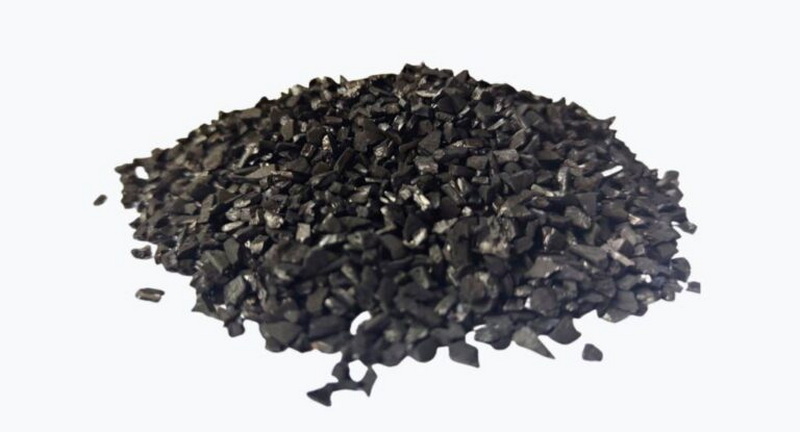
Granular activated carbon is the most common form used in fixed‑bed filters and large treatment systems for chlorine removal.[4][7]
- Typical particle size ranges from 8×30 mesh to 12×40 mesh for water treatment.[2][12]
- Coconut‑shell GAC is favored for:
- High hardness and low dust
- High iodine number and micropore volume
- Strong resistance to attrition in pressure vessels[15][14]
- Bituminous coal‑based GAC can also be used where different pore structures or cost profiles are required.[1][7]
GAC beds can be installed as:
- Pressure vessels for industrial and municipal dechlorination
- Gravity filters in water treatment plants
- Point‑of‑entry (whole‑house) systems for residential use
2. Powdered Activated Carbon (PAC)
Powdered activated carbon is a very fine activated carbon, typically dosed directly into water and later removed by sedimentation or filtration.[6][7]
- PAC is used where:
- Temporary, seasonal, or emergency treatment is needed.
- Rapid adsorption of tastes, odors, and organic compounds is required.
- PAC can contribute to chlorine reduction, but in most engineered dechlorination systems, continuous GAC beds are preferred because they provide controlled contact time and continuous operation.[6][7]
3. Catalytic Activated Carbon
Catalytic activated carbon is specially processed to enhance surface reaction sites and is particularly effective for chloramine removal and challenging oxidation reactions.[14][15][2]
- Advantages:
- Faster chloramine reduction at shorter EBCT.
- Better performance for combined chlorine (chloramine) vs conventional GAC.[15][14]
- Typical applications:
- Municipal systems where chloramine is used as a disinfectant.
- Industrial processes needing both chlorine and chloramine control.
Why Remove Chlorine with Activated Carbon?
1. Protection of Downstream Processes and Membranes
Chlorine is an effective disinfectant but is also a strong oxidant that can damage sensitive equipment and media.
- Reverse osmosis (RO) and many polymeric membranes can be degraded by free chlorine, leading to loss of performance.[7]
- Ion exchange resins and certain catalysts may also suffer from oxidative damage in the presence of chlorine.[16]
By installing an activated carbon filter upstream, operators can remove chlorine and extend the life of membranes, resins, and downstream components.[4][16]
2. Taste, Odor, and Product Quality
Residual chlorine can cause undesirable taste and odor in drinking water and beverages.[11]
- Activated carbon filters are widely used to:
- Improve taste and odor in tap water and bottled water.
- Protect beverages, food ingredients, and pharmaceutical products from off‑flavors caused by chlorine and organic by‑products.[5][7]
NSF/ANSI 42 establishes performance criteria for drinking water treatment units that improve aesthetic qualities like chlorine taste and odor, and many activated carbon cartridges are certified under this standard.[10][11]
3. Environmental and Regulatory Considerations
Activated carbon dechlorination can help:
- Prevent excessive chlorine discharge to sensitive processes or biological treatment systems.
- Limit formation of disinfection by‑products downstream by removing free chlorine before it reacts with natural organic matter.[4][7]
Designing Activated Carbon Systems for Chlorine Removal
1. Key Design Parameters
When designing an activated carbon system to remove chlorine, engineers typically consider:[14][2][4][7]
- Influent chlorine concentration and speciation
- Free chlorine vs combined chlorine (chloramine).
- Target effluent chlorine level
- Often near‑zero for membrane protection; or specific taste/odor targets for potable water.
- Flow rate and EBCT
- EBCT is calculated as the volume of activated carbon divided by flow rate.
- Longer EBCT generally means higher chlorine removal and better safety margin.[9][14]
- Bed depth and vessel configuration
- Deeper activated carbon beds improve breakthrough time and overall removal efficiency.
- Activated carbon grade and mesh size
- Balancing adsorption rate, pressure drop, and mechanical strength.[12][2]
2. Breakthrough and Replacement
Even high‑quality activated carbon has a finite life for chlorine removal.
- Over time, pores fill and surface sites are oxidized, reducing capacity.[8][7]
- Breakthrough is typically monitored by:
- Measuring free chlorine at the filter outlet.
- Checking taste/odor changes where relevant.
When chlorine begins to appear consistently in the effluent, the activated carbon bed must be replaced or thermally reactivated (for large industrial systems).[16][4]
Limitations of Activated Carbon for Chlorine and Related Species
While activated carbon is highly effective for free chlorine, there are important limitations.
- Chloramine removal is slower and more demanding than free chlorine removal.[14][2][9]
- Traditional GAC may require long EBCT for chloramine.
- Catalytic activated carbon is often recommended for chloramine‑treated municipal water.[15][14]
- Organic loading reduces dechlorination life.
- Activated carbon simultaneously adsorbs organic matter and removes chlorine, so heavy organic loading can shorten its effective chlorine removal life.[7][8]
- Not a stand‑alone solution for all contaminants.
- Activated carbon does not effectively remove many dissolved inorganic ions (such as hardness, nitrates, some metals), so additional treatment steps are often necessary.[17][7]
Proper system design includes pre‑treatment, correct activated carbon selection, and integration with other technologies such as membranes, ion exchange, or biological processes.[16][4][7]
Conclusion
Activated carbon can indeed remove chlorine efficiently from water by a combination of adsorption and catalytic reduction to chloride ions, making it one of the most widely used dechlorination technologies in drinking water, industrial water, and point‑of‑use filtration. By carefully selecting granular activated carbon or catalytic activated carbon, designing appropriate bed depth and contact time, and monitoring breakthrough, users can rely on activated carbon to protect membranes and equipment, improve taste and odor, and stabilize downstream treatment processes.[11][1][2][4][14][8][7]
FAQs About Activated Carbon and Chlorine Removal
1. How fast can activated carbon remove chlorine?
Activated carbon can remove free chlorine very quickly, often within seconds to a few minutes of contact time in well‑designed filters. For practical systems, design guidelines often target several minutes of EBCT to ensure reliable removal over the full life of the activated carbon bed.[9][4][14][8][7]
2. Does activated carbon also remove chloramine?
Standard granular activated carbon can remove chloramine, but the reaction is slower and requires longer EBCT compared with free chlorine removal. Surface‑enhanced or catalytic activated carbon is specifically engineered to remove chloramine more efficiently and can achieve high removal with shorter contact times.[2][15][14][9]
3. What type of activated carbon is best for chlorine removal?
Coconut‑shell granular activated carbon with a high iodine number (often ≥ 900 mg/g) is widely recommended for chlorine removal because of its high hardness, large surface area, and strong micropore structure. For systems treating chloraminated water or requiring very fast dechlorination, catalytic activated carbon is often selected to improve reaction rates and overall performance.[13][15][12][14][2]
4. How do I know when to replace activated carbon in a chlorine filter?
A common method is to regularly measure free chlorine at the outlet of the activated carbon filter; when chlorine begins to appear consistently or rises above the design limit, the activated carbon is considered exhausted for dechlorination duty. Some operators also monitor taste and odor or track operating hours and treated water volume to schedule proactive activated carbon replacement before breakthrough occurs.[4][16][8][9][7]
5. Is activated carbon for chlorine removal safe for drinking water?
Activated carbon products designed for potable water and certified to standards such as NSF/ANSI 42 and NSF/ANSI 61 are widely considered safe when used as directed. These certifications help ensure that the activated carbon and filter components do not leach harmful substances and that chlorine reduction claims are validated under standardized test conditions.[10][15][11][7]
Citations:
[1](https://www.sciencedirect.com/science/article/abs/pii/S1226086X09000331)
[2](https://heycarbons.com/activated-carbon-for-chlorine-removal/)
[3](https://www.sciencedirect.com/science/article/abs/pii/0043135483902361)
[4](https://info.norit.com/dechlorination-with-activated-carbon)
[5](https://puragen.com/uk/insights/the-effectiveness-of-activated-carbon-filters/)
[6](https://wqa.org/wp-content/uploads/2022/09/Article-4-Activated-Carbon-VOL-IX.pdf)
[7](https://www.ncbi.nlm.nih.gov/books/NBK234593/)
[8](https://www.netsolwater.com/dechlorination-with-activated-carbon.php?blog=4340)
[9](https://www.carbotecnia.info/learning-center/activated-carbon-applications/activated-carbon-dechlorination/?lang=en)
[10](https://blog.ansi.org/ansi/nsf-ansi-42-2023-drinking-water-treatment-aesthetic/)
[11](https://www.nsf.org/consumer-resources/articles/standards-water-treatment-systems)
[12](https://www.zhulincarbon.com/application/activated-carbon/activated-carbon-for-dechlorination.html)
[13](https://activatedcarbon.net/activated-carbon-for-chlorine-removal/)
[14](https://wcponline.com/2009/06/13/chlorine-chloramine-removal-activated-carbon/)
[15](https://www.freshwatersystems.com/products/silcarbon-catalytic-activated-carbon-12-x-40-mesh-nsf-61-42)
[16](https://aqua-chem.com/wp-content/uploads/2021/02/Advantages-of-Carbon.pdf)
[17](https://www.perplexity.ai/search/dba70caf-013c-4fea-8c0a-265bd6c65e98)
[18](https://www.reddit.com/r/Homebrewing/comments/1xebxc/dispelling_the_carbon_filter_vs_chlorine_myth/)
[19](https://lepaystchad.com/items/Micron-NSF-ANSI-42-Certified-For-Chlorine-Removal/799002)
[20](https://www.sciencedirect.com/science/article/abs/pii/S0160412005001273)
[21](https://www.ravecommercial.com/AirTree-Carbon-Water-Filter-Cartridge-5-Micron-NSF-ANSI/471909)


