Content Menu
● What Is Granular Activated Carbon?
● How a Granular Activated Carbon Filter Works
● Main Uses in Drinking Water Treatment
● Granular Activated Carbon Filters in Wastewater Polishing
● Dechlorination and Protection of RO Systems
● Air and Gas Purification with Granular Activated Carbon Filters
● Food and Beverage Applications of GAC Filters
● Chemical and Pharmaceutical Process Uses
● Environmental and Remediation Applications
● Household and Point‑of‑Use GAC Filters
● Key Advantages of Granular Activated Carbon Filters
● Limitations and Design Considerations
● Typical Industrial Configurations and Media Choices
● Practical Examples of GAC Filter Uses
● Conclusion
● FAQ About Granular Activated Carbon Filters
>> (1) How long does a granular activated carbon filter last?
>> (2) What contaminants can a granular activated carbon filter remove?
>> (3) What is the difference between granular activated carbon filters and powdered activated carbon dosing?
>> (4) How do you know when to change the granular activated carbon in a filter?
>> (5) Are granular activated carbon filters safe for drinking water?
● Citations:
A granular activated carbon filter is mainly used to remove organic contaminants, odors, colors, and chlorine (and some special pollutants like PFAS and radon) from water and air streams using granular activated carbon as the filtration media. Because granular activated carbon has a huge internal surface area and a highly porous structure, granular activated carbon filters are widely used in drinking water plants, industrial water treatment, wastewater polishing, air and gas purification, and the food and beverage, chemical, and pharmaceutical industries.[1][2][3][4][5]
What Is Granular Activated Carbon?
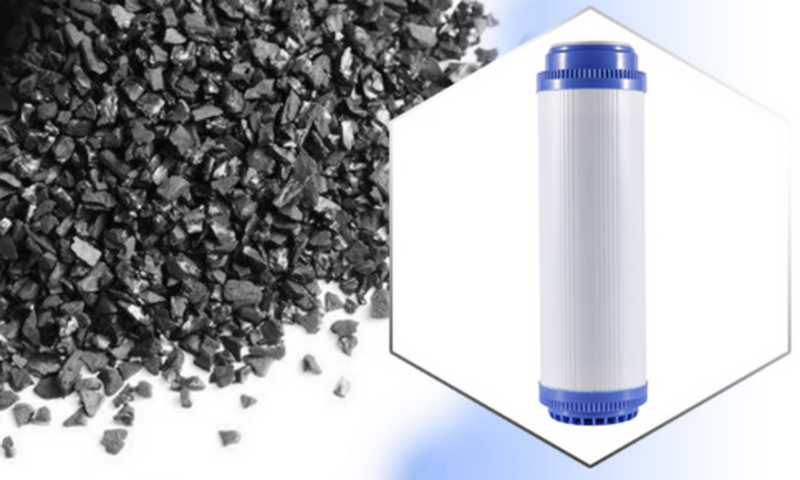
Granular activated carbon is a form of activated carbon produced from carbon‑rich raw materials such as coal, coconut shell, wood, or peat, which are carbonized and then activated to create a network of micro‑, meso‑, and macropores. After activation, the material is crushed and sized into granules (for example 8×30 or 20×40 mesh for liquid treatment, and larger sizes for vapor phase), which become granular activated carbon suitable for use in fixed‑bed filters and adsorbers.[2][6][1]
Because granular activated carbon provides extremely high surface area per unit volume, it can adsorb many organic compounds, taste and odor substances, disinfection by‑products, and some trace contaminants from water, air, gases, and process liquids. Granular activated carbon can usually be thermally reactivated in specialized facilities, allowing spent granular activated carbon to be reused multiple times and reducing the overall lifecycle cost and environmental footprint.[7][8][1]
How a Granular Activated Carbon Filter Works
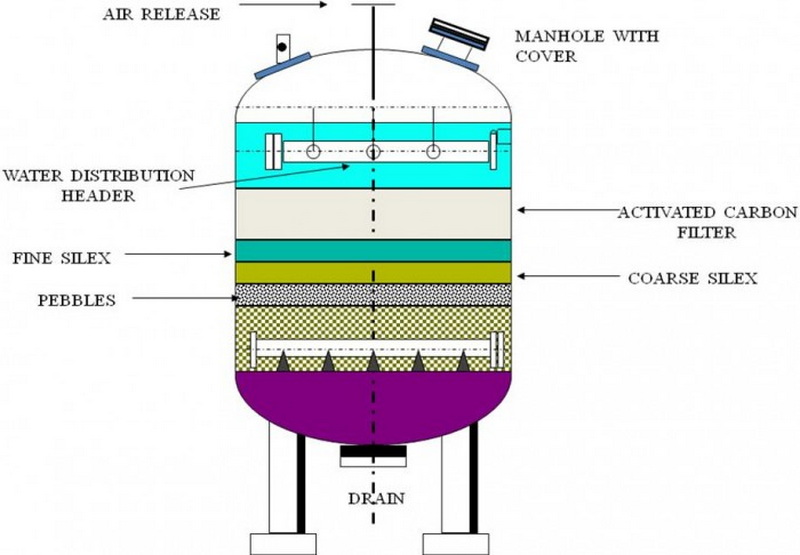
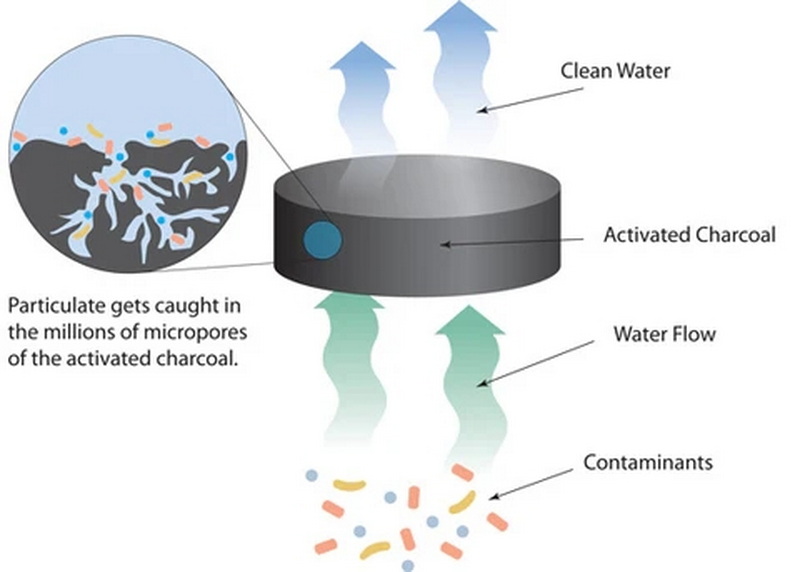
A granular activated carbon filter typically consists of a vessel or cartridge filled with granular activated carbon, through which water or gas flows in down‑flow or up‑flow mode, so that contaminants are adsorbed onto the surface and within the pores of the granular activated carbon. As the fluid passes through the granular activated carbon filter, molecules such as organic chemicals, chlorine, volatile organic compounds (VOCs), and some taste‑ and odor‑causing substances are attracted to the carbon surface and retained until the granular activated carbon is saturated.[3][5][1][2][7]
In water treatment, the performance of a granular activated carbon filter depends heavily on empty bed contact time (EBCT), hydraulic loading rate, bed depth, and the physical properties of the granular activated carbon, such as particle size distribution, density, hardness, and adsorption capacity. In air and gas purification, granular activated carbon filters are designed to provide enough residence time and appropriate vapor‑phase granular activated carbon grades so that oil vapors, odorous compounds, and hazardous gases can be effectively captured.[5][1][3][7]
Main Uses in Drinking Water Treatment
Granular activated carbon filters are widely used in municipal drinking water plants to remove organic contaminants, taste and odor compounds, disinfection by‑products, and emerging pollutants like PFAS and pharmaceutical residues. Many regulators and technical agencies consider granular activated carbon adsorption one of the best available technologies for reducing various organic micro‑pollutants, including pesticides, industrial chemicals, and algal toxins, to meet safe drinking water standards.[9][10][1][2][7]
Granular activated carbon filter beds are installed as granular activated carbon contactors after conventional coagulation, sedimentation, and sand filtration to polish the water before disinfection or distribution. At the household level, point‑of‑use and point‑of‑entry granular activated carbon filters are used to improve taste and odor, remove chlorine and some VOCs, and provide an additional barrier for private well water or municipal tap water.[11][7][5]
Granular Activated Carbon Filters in Wastewater Polishing
In wastewater treatment, granular activated carbon filters are applied as an advanced treatment step to remove residual organic micro‑pollutants such as pharmaceuticals and personal care products that are not fully removed by traditional biological processes. By passing treated effluent through granular activated carbon filters, operators can significantly reduce concentrations of trace organics, color, and odor, improving environmental performance and regulatory compliance.[1][7]
Industrial wastewater streams containing complex organics, dyes, or toxic compounds are also treated with granular activated carbon filters to protect receiving waters and downstream reuse systems. Because granular activated carbon can be tailored in pore structure and surface chemistry, granular activated carbon filters can be optimized for specific industrial contaminants and loadings, balancing adsorption efficiency with filter life.[12][6][7]
Dechlorination and Protection of RO Systems
One of the most common uses of granular activated carbon filters is dechlorination, where granular activated carbon removes free chlorine and chloramine before water enters reverse osmosis (RO) membranes or ion exchange units. Chlorine and chloramine can damage RO membranes, so installing granular activated carbon filters upstream helps extend membrane life and ensures stable permeate quality in industrial and municipal systems.[13][3]
Granular activated carbon filters also act as polishing filters after multimedia filtration, capturing remaining organic matter and fine particles, which further protects RO, ultrafiltration, or other downstream equipment from fouling. For condensate water treatment and boiler feed applications, granular activated carbon filters are used to remove organic contaminants and dissolved organics that might otherwise cause corrosion or deposit formation.[14][3][7]
Air and Gas Purification with Granular Activated Carbon Filters
Granular activated carbon filters are heavily used in air filtration and gas purification to remove oil vapors, VOCs, hydrogen sulfide, and other odorous or hazardous gases from air streams. Compressed air systems, industrial exhaust streams, and odor control units often rely on granular activated carbon filters as a key stage to meet emission limits and improve workplace air quality.[3][7][1]
In some specialized applications, granular activated carbon filters are used to retain radioactive gases or specific hazardous compounds, allowing them to decay or be captured in a safe form while clean air passes through. Building ventilation, chemical storage rooms, and gas cabinets may use granular activated carbon filters to prevent the release of harmful vapors into the working environment or atmosphere.[10][7][1]
Food and Beverage Applications of GAC Filters
In the food and beverage industry, granular activated carbon filters are used to decolorize, deodorize, and purify process water and liquid products, improving taste, appearance, and stability. Granular activated carbon filtration in continuous fixed‑bed columns removes unwanted flavors, residual chlorine, trace organic impurities, and color bodies from soft drinks, juices, alcoholic beverages, and brewing water.[4][15][16][12]
Granular activated carbon filters also support the purification of sweeteners and other food ingredients by adsorbing off‑flavors, off‑odors, and certain contaminants, helping manufacturers meet strict quality and safety standards. High‑purity food‑grade granular activated carbon products are selected for these filters to ensure compliance with food regulations and to avoid any unwanted interaction with the final product.[15][16][12]
Chemical and Pharmaceutical Process Uses
Chemical and pharmaceutical manufacturers use granular activated carbon filters to remove color bodies, by‑products, and trace organic impurities from intermediates, APIs, solvents, and process water. Granular activated carbon filters are often placed in continuous processing lines or batch recirculation loops to polish products and achieve the high purity levels required by pharmacopoeia and customer specifications.[16][17][12][13][1]
In addition, granular activated carbon filters help control odors and VOC emissions from process vents and solvent recovery systems in chemical and pharmaceutical plants. By choosing specialized granular activated carbon grades, producers can target specific contaminants, balancing adsorption capacity with regeneration or replacement intervals.[6][7][1][3]
Environmental and Remediation Applications
Granular activated carbon filters are widely used in environmental remediation projects to treat contaminated groundwater, leachate, and industrial site runoff. For contaminants such as VOCs, PFAS, pesticides, and industrial organics, groundwater is pumped through granular activated carbon filters, where pollutants are adsorbed and clean water can be discharged or reused.[2][7][10][14]
In vapor extraction and soil vapor treatment systems, granular activated carbon filters capture volatile contaminants stripped from soil, preventing their release into the atmosphere. When granular activated carbon becomes saturated, spent granular activated carbon can often be thermally reactivated or managed as hazardous waste depending on the captured contaminants and regulations.[8][7][1]
Household and Point‑of‑Use GAC Filters
At the consumer level, granular activated carbon filters are used in under‑sink units, countertop filters, refrigerator filters, and shower filters to improve the taste and odor of tap water. These granular activated carbon filters primarily remove chlorine, some organic chemicals, and certain VOCs, providing better‑tasting water and an additional barrier against chemical exposure.[11][5]
Point‑of‑entry granular activated carbon filters installed at the home's main water line treat all water entering the house, which is useful for reducing VOCs, pesticides, herbicides, and radon in private well or affected municipal supplies. However, granular activated carbon filters are generally not effective for removing most dissolved inorganic contaminants like nitrates, many metals, and microbiological pathogens, so they are usually combined with other technologies when necessary.[8][5]
Key Advantages of Granular Activated Carbon Filters
Granular activated carbon filters offer very high adsorption capacity for a broad range of organic contaminants, taste and odor compounds, and disinfection by‑products, making them highly versatile across water, air, and process applications. Granular activated carbon filters can be designed as large fixed beds with long contact times for municipal water plants or as compact cartridges and modular units for industrial skid systems and household devices.[7][5][1][3]
Another major advantage is that granular activated carbon can often be reactivated, enabling the same granular activated carbon to be reused multiple times, which reduces waste and total lifecycle cost. Because granular activated carbon filters are based on a physical adsorption process, they usually do not require chemical regeneration on site, and operations can be managed by periodic backwashing and media replacement.[5][7][8]
Limitations and Design Considerations
Granular activated carbon filters do not remove all types of contaminants; for example, many dissolved inorganic species, metals, nitrates, and pathogens are not effectively removed by granular activated carbon alone. Therefore, granular activated carbon filters must often be combined with pre‑treatment (such as coagulation, sedimentation, and filtration) and post‑treatment (such as disinfection or membrane filtration) for complete water treatment.[7][8][5]
In addition, granular activated carbon filters will eventually reach saturation or “breakthrough,” at which point contaminants start appearing in the effluent and the granular activated carbon must be replaced or reactivated. Channeling, insufficient contact time, and fouling by particulates or biological growth can also reduce the effectiveness of granular activated carbon filters, so proper design of bed depth, hydraulic loading, and backwash strategy is essential.[8][5][7]
Typical Industrial Configurations and Media Choices
Industrial granular activated carbon filters may be built as vertical pressure vessels, open gravity filters, or modular adsorber units, depending on flow rate, pressure, and installation constraints. For drinking water and wastewater, granular activated carbon filters often resemble sand filters but are filled with granular activated carbon, sometimes in dual‑ or multi‑media arrangements where granular activated carbon sits above or below other filter media.[3][5][7]
The choice of granular activated carbon media—such as coconut‑based, coal‑based, or wood‑based granular activated carbon—depends on the target contaminants, adsorption kinetics, and required mechanical strength. Coconut‑based granular activated carbon is often preferred for rapid dechlorination and low‑molecular‑weight organics, while coal‑based granular activated carbon can provide robust performance and hardness in large municipal and industrial filters.[17][13][6][1]
Practical Examples of GAC Filter Uses
Municipal water utilities use large granular activated carbon filter beds after conventional treatment to control seasonal taste and odor episodes caused by algae and to remove disinfection by‑products and PFAS. Industrial plants install granular activated carbon filters to polish process water, protect RO membranes, and ensure that boiler and cooling systems receive high‑quality water with low organic content.[9][14][2][3]
Food and beverage companies run process water and syrups through granular activated carbon filters to achieve consistent flavor, clarity, and safety of finished drinks and ingredients. Environmental remediation projects deploy granular activated carbon filters in pump‑and‑treat systems for contaminated groundwater and vapor treatment units for soil vapor extraction, helping to reduce risk to communities and comply with cleanup standards.[4][12][10][14][16][7]
Conclusion
Granular activated carbon filters are used throughout the water, wastewater, air, and process industries to remove organic contaminants, chlorine, VOCs, odors, colors, and many emerging pollutants using granular activated carbon as a highly porous adsorbent. By carefully selecting granular activated carbon media, designing appropriate contact time and bed depth, and managing replacement or reactivation, granular activated carbon filters deliver reliable performance for drinking water treatment, industrial water purification, food and beverage processing, chemical and pharmaceutical production, environmental remediation, and household applications.[1][2][9][12][14][3][7]
FAQ About Granular Activated Carbon Filters
(1) How long does a granular activated carbon filter last?
The lifetime of a granular activated carbon filter depends on contaminant type, concentration, flow rate, and contact time, but municipal and industrial granular activated carbon beds commonly run from several months up to a few years before breakthrough. Monitoring effluent quality (for example, chlorine, TOC, specific organics, or PFAS) is essential to determine when granular activated carbon in the filter must be replaced or sent for thermal reactivation.[10][8][7]
(2) What contaminants can a granular activated carbon filter remove?
Granular activated carbon filters are effective for many organic chemicals, chlorine and chloramine, taste and odor compounds, numerous VOCs, some disinfection by‑products, PFAS, pesticides, and certain radon applications. However, granular activated carbon filters are not suitable as the sole treatment for most metals, nitrates, hardness, and microbiological pathogens, so they are usually combined with other processes.[2][5][14][1][8]
(3) What is the difference between granular activated carbon filters and powdered activated carbon dosing?
Granular activated carbon filters use fixed beds of granular activated carbon, allowing continuous flow treatment and the possibility of reactivating the granular activated carbon, while powdered activated carbon is typically dosed into water or processes and then removed with sludge. Granular activated carbon filters are preferred when long‑term, continuous adsorption is required, whereas powdered activated carbon is often used for short‑term events or batch treatments such as taste and odor episodes.[6][14][1][7]
(4) How do you know when to change the granular activated carbon in a filter?
Operators decide to change granular activated carbon in a filter when target contaminants begin to appear in the effluent (breakthrough), when taste or odor returns, or when design bed life, pressure drop limits, or regulatory requirements are reached. Regular sampling, installing monitoring ports along the granular activated carbon bed, and tracking operating hours and treated volume help predict when granular activated carbon replacement or reactivation will be needed.[20][10][5][8][7]
(5) Are granular activated carbon filters safe for drinking water?
When designed, manufactured, and maintained properly, granular activated carbon filters using certified granular activated carbon media are considered safe for drinking water applications and are widely used by municipal utilities and private well owners. Proper pre‑treatment, disinfection, and timely replacement or reactivation of saturated granular activated carbon are important to prevent microbial growth and maintain water quality and safety.[13][9][5][7]
Citations:
[1](https://en.wikipedia.org/wiki/Activated_carbon)
[2](https://www.wwdmag.com/what-is-articles/article/10939799/what-is-granular-activated-carbon-gac)
[3](https://www.cecoenviro.com/products/granular-activated-carbon-gac-filter/)
[4](https://www.suneetacarbons.com/blog/activated-carbon-in-food-beverage-processing-enhancing-quality-and-safety/)
[5](https://portal.ct.gov/dph/environmental-health/private-well-water-program/granular-activated-carbon-treatment-of-private-well-water)
[6](https://www.sciencedirect.com/topics/engineering/granular-activated-carbon)
[7](https://www.watertechonline.com/wastewater/article/15549934/granular-activated-carbon-as-an-adsorption-and-filtration-medium)
[8](https://wqa.org/wp-content/uploads/2022/09/2016_GAC.pdf)
[9](https://generalcarbon.com/understanding-granular-activated-carbon-for-water-treatment/)
[10](https://semspub.epa.gov/work/HQ/401595.pdf)
[11](https://www.health.state.mn.us/communities/environment/hazardous/topics/gac.html)
[12](https://www.carbonactivo.com/en/activated-carbon-in-the-food-industry/)
[13](https://norit.com/applications/food-beverages/beverage-water)
[14](https://www.peltonenv.com/blog/activated-carbon-solutions-for-municipal-water-treatment)
[15](https://www.chemviron.eu/activated-carbon-for-beverages-purification/)
[16](https://services.jacobi.net/food-and-beverage/)
[17](https://puragen.com/uk/insights/granular-activated-carbon/)
[18](https://www.total-water.com/blog/understanding-activated-carbon-filtration-systems/)
[19](https://www.cecoenviro.com/wp-content/uploads/2024/03/GEN-Granular-Activated-Carbon-Filter-Final0420.pdf)
[20](https://www.chemours.com/en/-/media/files/corporate/gac-information-sheets-2019-06-12.pdf?rev=2a1c8e2088c3443482c560a7abd46c0e&hash=DA1D11CE433BFB58FEA91880B61C3CB3)


