Content Menu
● What is activated carbon?
● How an activated carbon water filter works
● Key filtration mechanisms
● Types of activated carbon used in water filters
>> Comparison of main activated carbon filter media
● Contaminants removed by activated carbon water filters
● What activated carbon water filters do not remove well
● Household applications of activated carbon water filters
● Industrial and commercial applications
● Design factors for an activated carbon water filter
● Maintenance and replacement of activated carbon filters
● Benefits of activated carbon water filters
● How activated carbon works with other technologies
● Choosing the right activated carbon water filter for your needs
● Conclusion
● FAQ
>> 1. How does an activated carbon water filter remove contaminants?
>> 2. What types of contaminants can activated carbon remove from water?
>> 3. Do activated carbon water filters remove microorganisms and minerals?
>> 4. How often should an activated carbon filter be replaced?
>> 5. What is the difference between granular activated carbon and carbon block filters?
● Citations:
What is an activated carbon water filter? It is a filtration system that uses highly porous activated carbon to adsorb chlorine, organic chemicals, and many other contaminants, improving water's taste, odor, and safety for domestic and industrial use.[1][2]
What is activated carbon?
Activated carbon is a specially processed form of carbon with an extremely high internal surface area and a network of micro‑pores that capture contaminants from water and air. It is usually produced from coal, coconut shell, wood, or other carbon‑rich materials that are heated and “activated” with steam or chemicals to create this porous structure. Because of this structure, a small amount of activated carbon can adsorb a large mass of pollutants, making it ideal for water filters in households and industry.[2][3][4][5][6]
How an activated carbon water filter works
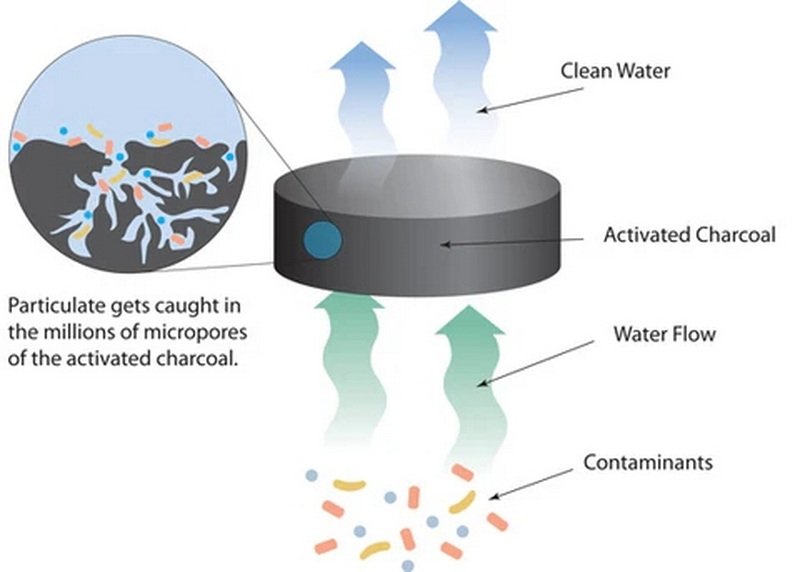
An activated carbon water filter forces water to pass through a bed or block of activated carbon so that contaminants adhere to the carbon surface through adsorption and catalytic reactions. As the water flows through the activated carbon, dissolved organics, chlorine, disinfection by‑products, and many taste‑ and odor‑causing molecules are trapped in the pores while the treated water exits clearer and better‑tasting. The efficiency of an activated carbon water filter depends on factors such as contact time, flow rate, carbon type, and pore size distribution.[7][8][9][10][1][2]
Key filtration mechanisms
Activated carbon water filters mainly rely on adsorption, where molecules from water concentrate on the solid carbon surface rather than staying dissolved in the liquid. Hydrophobic organic compounds, chlorine, many volatile organic compounds (VOCs), pesticides, and industrial solvents are particularly attracted to the activated carbon surface and become trapped in its micro‑ and meso‑pores. In addition, catalytic reduction on the activated carbon surface helps convert chlorine and some chloramine species into chloride ions, which are less harmful and do not cause strong taste or odor.[8][11][10][7][1][2]
Types of activated carbon used in water filters
Several forms of activated carbon are used in water treatment equipment, and each offers different performance advantages. The most common categories are granular activated carbon (GAC), powdered activated carbon (PAC), and activated carbon block, all of which can be made from various raw materials such as coconut shell, bituminous coal, or wood.[3][12][13][14]
Comparison of main activated carbon filter media
| Filter media type | Description | Typical advantages in water filters | Typical limitations |
| Granular activated carbon (GAC) | Loose granules (about 0.2–5 mm) packed in a cartridge or vessel.yrdcarbon+1 | Good flow rate, suitable for continuous filtration and large industrial systems, relatively easy to regenerate and replace.generalcarbon+1 | Short‑circuiting channels can form if design is poor; less fine particle removal than dense carbon blocks.rajahfiltertechnics |
| Powdered activated carbon (PAC) | Very fine activated carbon powder, usually added as a slurry.yrdcarbon+1 | Extremely fast adsorption, very high surface area, ideal for emergency or batch treatment and taste/odor control.yrdcarbon+1 | Difficult to handle, tends to leave with the water, typically single‑use, not commonly used in domestic cartridges.naturecarbon+1 |
| Activated carbon block | Fine activated carbon powder compressed into a solid block with a binder.rajahfiltertechnics+1 | Very high contaminant removal efficiency, long contact time, also acts as a physical filter for fine particles.rajahfiltertechnics+1 | Higher pressure drop and lower flow rate, more sensitive to clogging, regeneration is more complex.rajahfiltertechnics+1 |
Contaminants removed by activated carbon water filters
Activated carbon water filters excel at removing a wide range of organic and aesthetic contaminants from drinking water. These systems are effective at reducing chlorine, many VOCs, some pesticides and herbicides, and numerous industrial organic chemicals that cause unpleasant taste, odor, and color. In some configurations, certain heavy metals and disinfection by‑products can also be reduced, although this often depends on the specific activated carbon formulation and contact time.[17][10][6][1][2]
What activated carbon water filters do not remove well
Despite their versatility, activated carbon water filters are not a universal solution for every contaminant in water. Many dissolved inorganic substances such as hardness minerals, nitrates, and most heavy metals, as well as microorganisms, are either poorly removed or not removed at all by standard activated carbon alone. For these contaminants, activated carbon is usually combined with other technologies such as reverse osmosis membranes, ion exchange, or UV disinfection in a multi‑stage system.[18][5][10][1][17]
Household applications of activated carbon water filters
In homes, activated carbon water filters are widely used in countertop systems, under‑sink cartridges, refrigerator filters, pitcher filters, and whole‑house point‑of‑entry units. These household activated carbon systems improve drinking water by removing chlorine taste and odor, many organic pollutants, and various trace chemicals, providing better‑tasting and more appealing water for daily consumption. Many manufacturers also integrate activated carbon with sediment pre‑filters and post‑disinfection steps to build compact yet effective home filtration solutions.[11][16][1][17]
Industrial and commercial applications
In industry, activated carbon water filters are critical for process water and product quality in sectors such as food and beverage, chemical processing, and pharmaceuticals. Granular activated carbon filters are commonly used in industrial water treatment plants to remove organics that could foul membranes, damage equipment, or influence product taste, color, and stability. Municipal drinking water facilities also rely on activated carbon adsorption to control organic contaminants, disinfection by‑products, and emerging pollutants such as some per‑ and polyfluoroalkyl substances (PFAS).[5][19][3][18]
Design factors for an activated carbon water filter
Effective design of an activated carbon water filter involves careful control of bed depth, contact time, and flow rate. Longer empty bed contact time allows more complete adsorption, while adequate bed depth helps prevent early breakthrough and ensures that the full activated carbon volume participates in contaminant removal. Engineers also select the appropriate type and grade of activated carbon (for example coconut‑shell‑based GAC vs coal‑based GAC) depending on the target contaminants and required performance.[9][6][3][5]
Maintenance and replacement of activated carbon filters
Over time, the pores of the activated carbon become saturated with adsorbed contaminants, reducing the filter's efficiency. If an activated carbon water filter is not replaced or regenerated at the proper interval, contaminants can break through and water quality may deteriorate, even though the flow rate still looks normal. For domestic cartridges, users typically replace the activated carbon medium based on manufacturer‑specified volumes or months of use, while industrial GAC beds may be thermally reactivated to restore adsorption capacity.[10][6][14][5][17]
Benefits of activated carbon water filters
Activated carbon water filters offer several practical benefits for both domestic and industrial users. They provide chemical‑free treatment, produce very little waste under normal operation, and can be tailored to different scales from small cartridges to large industrial beds using the same fundamental activated carbon technology. In addition, activated carbon is relatively cost‑effective compared with many advanced processes and can be integrated easily as a pre‑ or post‑treatment step in complex water systems.[6][1][2][3][18]
How activated carbon works with other technologies
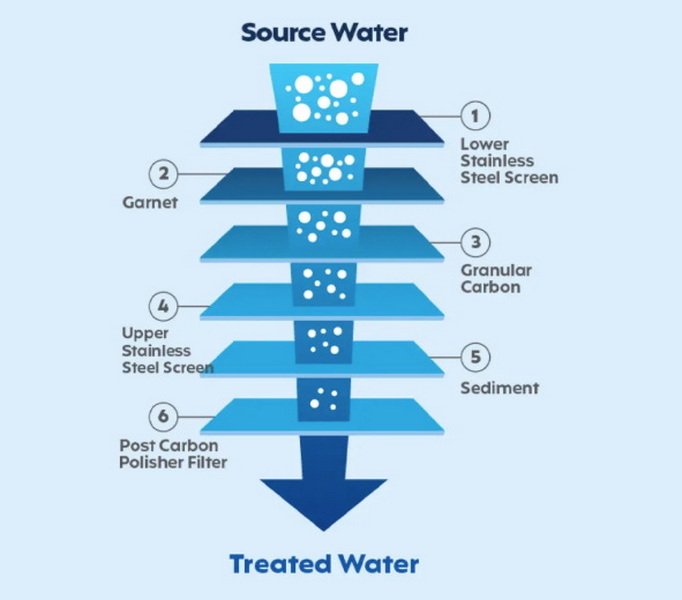
In modern treatment trains, activated carbon water filters often work in combination with coagulation, sedimentation, membrane filtration, and disinfection. Pre‑treatment steps remove suspended solids so that the activated carbon can focus on dissolved organics, while post‑disinfection ensures microbial safety after the water leaves the carbon filter. In high‑purity applications such as pharmaceuticals, activated carbon is integrated with purified water generation, pure steam systems, and sterilization steps to meet strict regulatory requirements for water quality.[1][3][18][5]
Choosing the right activated carbon water filter for your needs
Selecting an appropriate activated carbon water filter requires understanding both the raw water quality and the performance targets for the treated water. For domestic use, point‑of‑use activated carbon systems with certified performance data for chlorine, VOCs, and specific contaminants are usually sufficient, while industrial users often need customized GAC vessels designed around flow rate, contaminant load, and regeneration strategy. Working with a professional activated carbon manufacturer or water treatment specialist helps ensure correct carbon type, filter configuration, and maintenance schedule for long‑term performance.[3][17][10][6]
Conclusion
An activated carbon water filter is a versatile and powerful technology that uses the enormous surface area and micro‑porous structure of activated carbon to adsorb a wide variety of organic contaminants and chlorine from water, significantly improving taste, odor, and overall quality. From small household cartridges to large industrial granular activated carbon beds, these filters provide a cost‑effective, chemical‑free solution that can stand alone for aesthetic improvements or work alongside advanced treatment steps to meet stringent water‑quality requirements.[2][5][1][3]

FAQ
1. How does an activated carbon water filter remove contaminants?
An activated carbon water filter removes contaminants through adsorption, where molecules in the water adhere to the internal surface of the activated carbon rather than staying in the water. As water passes through the activated carbon bed or block, organics, chlorine, and many VOCs are trapped inside the pores, leaving the treated water cleaner and better‑tasting.[7][8][10][1]
2. What types of contaminants can activated carbon remove from water?
Activated carbon is particularly effective at removing chlorine, many volatile organic compounds, numerous industrial solvents, and various pesticides and herbicides that contribute to taste, odor, and color problems. Some specially formulated activated carbon grades can also reduce certain heavy metals and disinfection by‑products when there is adequate contact time.[10][6][2]
3. Do activated carbon water filters remove microorganisms and minerals?
Standard activated carbon water filters do not reliably remove most bacteria, viruses, or dissolved minerals such as calcium and magnesium that cause hardness. For microbial safety and mineral control, activated carbon is usually combined with technologies such as microfiltration, reverse osmosis, ion exchange, or UV disinfection.[18][17][1][10]
4. How often should an activated carbon filter be replaced?
The replacement interval for an activated carbon water filter depends on water quality, usage volume, and filter size, but domestic cartridges commonly require replacement every few months or after a specified number of liters. Industrial granular activated carbon beds are monitored using water‑quality indicators and can often be thermally reactivated when saturated, extending the useful life of the activated carbon.[14][17][6][10]
5. What is the difference between granular activated carbon and carbon block filters?
Granular activated carbon filters contain loose granules that offer higher flow rates and are well suited for large systems and whole‑house filtration. Activated carbon block filters compress fine activated carbon into a dense block, providing higher contaminant removal efficiency and finer particle filtration, but with lower flow and greater sensitivity to clogging.[12][13][16][3]
Citations:
[1](https://www.freshwatersystems.com/blogs/blog/activated-carbon-filters-101)
[2](https://www.cleantechwater.co.in/blog/need-know-activated-carbon-filter-works/)
[3](https://generalcarbon.com/understanding-granular-activated-carbon-for-water-treatment/)
[4](https://en.wikipedia.org/wiki/Activated_carbon)
[5](https://www.ncbi.nlm.nih.gov/books/NBK234593/)
[6](https://wqa.org/wp-content/uploads/2022/09/2016_GAC.pdf)
[7](https://www.health.state.mn.us/communities/environment/hazardous/topics/gac.html)
[8](https://fieldreport.caes.uga.edu/wp-content/uploads/2025/08/B-1542_4.pdf)
[9](https://www.suezwaterhandbook.com/water-and-generalities/fundamental-physical-chemical-engineering-processes-applicable-to-water-treatment/adsorption/applied-activated-carbon-principles)
[10](https://extensionpubs.unl.edu/publication/g1489/na/pdf/view)
[11](https://rajahfiltertechnics.com/uncategorized/the-science-behind-activated-carbon-how-it-works-and-why-its-effective/)
[12](https://www.yrdcarbon.com/news/differences-granular-powdered-activated-carbon.html)
[13](https://rajahfiltertechnics.com/water-filtration/granular-activated-carbon-vs-activated-carbon-block-water-filters/)
[14](https://ucicarbons.com/granular-activated-carbon-vs-powdered-activated-carbon/)
[15](https://www.naturecarbon.com/news/water-treatment-activated-carbon-is-powder-or-30155961.html)
[16](https://support.boshart.com/granular-activated-carbon-gac-vs.-activated-carbon-block-cb-water-filters)
[17](https://portal.ct.gov/dph/environmental-health/private-well-water-program/granular-activated-carbon-treatment-of-private-well-water)
[18](https://www.calgoncarbon.com/municipal-water-treatment/)
[19](https://www.sciencedirect.com/science/article/pii/S2369969821000311)
[20](https://carbonblocktech.com/the-science-behind-activated-carbon-water-filters/)


