Content Menu
● What is activated carbon?
● How does an activated carbon filter work?
● Main types of activated carbon filters
● What does an activated carbon filter remove?
● What activated carbon cannot remove
● Industrial and commercial applications
● Types of activated carbon media
>> Common media types
● Typical activated carbon filter configurations
>> Common configurations
● Advantages of activated carbon filters
● Limitations, maintenance, and service life
● Activated carbon filter vs other filtration methods
>> Suggested comparison table (image idea)
● Why industries choose activated carbon filters
● Conclusion
● FAQ – Activated carbon filters
>> 1. What is an activated carbon filter?
>> 2. How long does an activated carbon filter last?
>> 3. What does an activated carbon filter remove from water?
>> 4. Can an activated carbon filter make water completely safe to drink?
>> 5. How do I choose the right activated carbon filter for my application?
● Citations:
An activated carbon filter is a filtration device that uses highly porous activated carbon media to remove contaminants, odors, and colors from water, air, and industrial process streams through a surface-based process called adsorption. Activated carbon filters are widely used in drinking water treatment, air purifiers, food and beverage processing, chemical manufacturing, and pharmaceutical production because they offer high efficiency, versatility, and relatively low operating cost.[1][2][3][4]
What is activated carbon?
Activated carbon is a specially processed carbon material with an extremely high internal surface area and a network of micro‑, meso‑, and macropores that capture molecules from liquids and gases. It is typically produced from carbon‑rich raw materials such as coconut shell, coal, wood, or peat that are carbonized and then “activated” at high temperatures, often with steam or chemicals, to open up millions of tiny pores.[5][2][6][7]
Because of its huge surface area and pore structure, activated carbon is considered one of the most powerful industrial adsorbents and can selectively remove a wide range of organic compounds, chlorine, and various trace contaminants. Different grades of activated carbon are optimized for specific tasks, such as decolorization in food processing, odor removal in air treatment, or trace organic reduction in high‑purity water systems.[3][4][8][9]
How does an activated carbon filter work?
An activated carbon filter works primarily through adsorption, where molecules in the water or air stream are attracted to and held on the surface of the activated carbon rather than absorbed into its bulk volume. As fluid passes through the filter bed or block, contaminants diffuse into the pores and are trapped, while the cleaned water or gas exits with reduced levels of targeted impurities.[10][2][6][1]
The efficiency of an activated carbon filter depends on several factors, including contact time, flow rate, temperature, pH, and the compatibility between the contaminant and the carbon's pore size distribution and surface chemistry. Longer contact time and correctly selected pore structure typically improve removal of organics, taste and odor compounds, and residual disinfectants, while very high flow rates or incorrect carbon type can significantly reduce performance.[11][8][12][3]
Main types of activated carbon filters
There are several common physical forms of activated carbon used in filters: granular activated carbon (GAC), powdered activated carbon (PAC), extruded or carbon block media, and specialized impregnated carbons. Each type of activated carbon filter offers distinct advantages in terms of pressure drop, contact time, reactivation potential, and suitability for either batch or continuous treatment.[13][14][7][3]
- Granular activated carbon (GAC) filters use relatively large granules packed in columns or cartridges and are popular for continuous flow water purification, air treatment systems, and industrial wastewater polishing. GAC beds can often be thermally regenerated, which lowers long‑term operating cost in large‑scale industrial applications.[12][7][3]
- Powdered activated carbon (PAC) is made of very fine particles that are normally dosed into water as a slurry and then removed by sedimentation or filtration, making PAC ideal for short‑term or seasonal taste and odor control in municipal plants.[7][3]
- Carbon block or extruded activated carbon filters compress powdered activated carbon with binders into a dense block, forcing water to travel through a tortuous path and providing high contaminant removal efficiency in compact cartridges.[1][13]
- Impregnated activated carbon filters are loaded with substances such as silver, iodine, sulfur, or caustic chemicals to target specific contaminants like microbes, mercury, acid gases, or radioactive iodine.[15][14]
What does an activated carbon filter remove?
In water treatment, an activated carbon filter primarily removes chlorine, chloramines, many dissolved organic compounds, taste and odor substances, pesticides, and various industrial chemicals. It is also widely used to reduce disinfection by‑products, such as trihalomethanes and other organohalogen compounds, thereby improving both the safety and the sensory quality of drinking and process water.[6][8][3][1]
In air and gas purification, activated carbon filters capture volatile organic compounds (VOCs), solvent vapors, odorous gases like hydrogen sulfide, and many industrial exhaust pollutants. These filters are common in air purifiers, HVAC systems, solvent recovery units, and emission control systems in power plants, landfills, and chemical processing facilities.[4][16][17][18]
What activated carbon cannot remove
Although an activated carbon filter is highly effective for many organic contaminants and chlorine‑based compounds, it has important limitations. Standard activated carbon usually does not reliably remove dissolved inorganic salts, hardness minerals, many heavy metals, or microbial pathogens, so it is often combined with other technologies such as reverse osmosis, ion exchange, or UV disinfection.[9][11][6]
For critical applications such as pharmaceutical water, semiconductor ultrapure water, or medical gases, process designers typically integrate activated carbon filters as one step in a multi‑barrier treatment train rather than relying on activated carbon alone. Choosing the wrong expectation for an activated carbon filter can lead to safety risks, so understanding its capabilities and limits is essential for system design.[8][19][17][9]
Industrial and commercial applications
Activated carbon filters are widely used in centralized drinking water treatment, groundwater remediation, and industrial wastewater polishing because they efficiently remove dissolved organics and residual disinfectants. Municipal plants often use granular activated carbon contactors or PAC dosing as key tools to control taste, odor, and trace organic contaminants in public water supplies.[3][6][4]
In air treatment, activated carbon filters are used in odor control systems at wastewater plants, landfills, and industrial sites as well as in indoor air purifiers and ventilation systems. They also play critical roles in solvent recovery, gas purification, and emission control in chemical, petrochemical, and power generation industries.[16][17][18][4]
Types of activated carbon media
Because “activated carbon filter” is a broad term, it is helpful to understand the different activated carbon media used inside various filters. Selecting the right type of activated carbon media ensures that the filter delivers the required performance for water, air, food, chemical, or pharmaceutical processes.[14][8][7][9]
Common media types
- Granular activated carbon (GAC): medium‑sized particles that balance pressure drop and adsorption capacity, widely used in fixed beds for water and gas treatment.[7][3]
- Powdered activated carbon (PAC): very fine particles ideal for rapid adsorption in batch or contact basins where they can later be separated by clarification or filtration.[3][7]
- Extruded or pelletized activated carbon (EAC): cylindrical pellets with high mechanical strength, popular in gas‑phase filters and packed towers where low pressure drop is important.[17][7]
- Bead activated carbon (BAC): nearly spherical particles that offer high flow uniformity and are used in specialized liquid and gas purification systems.[19][18]
- Impregnated activated carbon: activated carbon infused with metals or chemicals for targeted removal of mercury, acid gases, radioactive iodine, or microbial contamination.[15][14]
Typical activated carbon filter configurations
Activated carbon filters come in many configurations, from small household cartridges to large industrial adsorber vessels and mobile treatment units. The best configuration depends on flow rate, contaminant concentration, regeneration strategy, and whether the process is continuous or batch.[1][7][3]
Common configurations
- Point‑of‑use cartridges: compact filters for faucets, refrigerators, and small machines, often using carbon block or small GAC cartridges to improve taste and odor.[13][1]
- Point‑of‑entry systems: larger activated carbon filter tanks installed at building inlets to treat all incoming water, typically using backwashable GAC beds.[6][3]
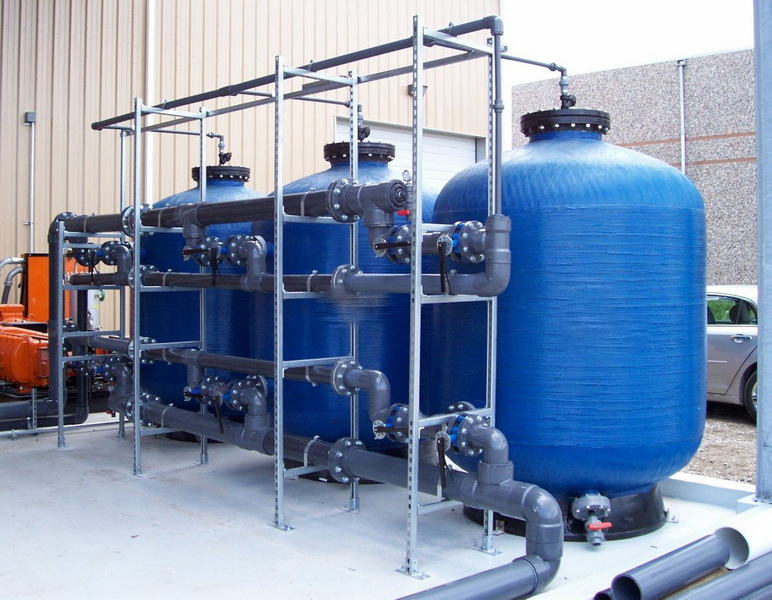
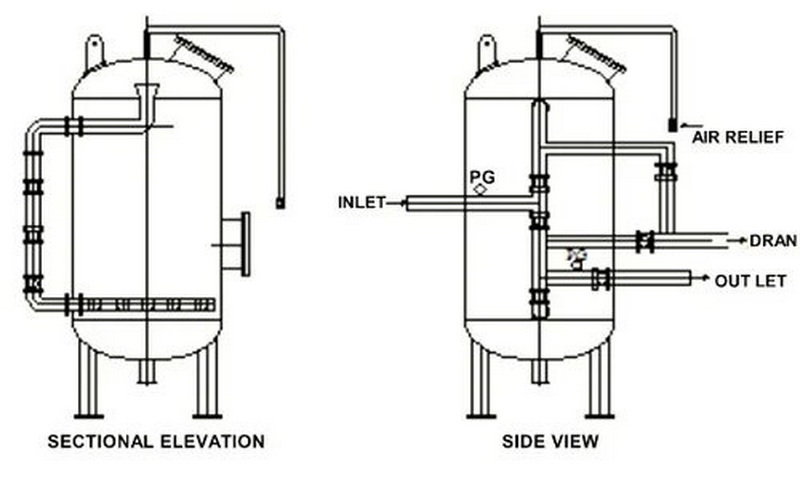
- Industrial columns and vessels: high‑capacity steel or FRP columns filled with granular activated carbon, designed for continuous process water, wastewater, or gas treatment.[4][3]
- Mobile activated carbon units: skid‑mounted or containerized systems that can be moved to different sites for temporary remediation or emergency treatment needs.[17][3]
Advantages of activated carbon filters
Activated carbon filters offer several important advantages that explain their popularity across industries. For many organic contaminants and chlorine‑based compounds, activated carbon is one of the most cost‑effective and reliable treatment options.[8][12][1][3]
Key advantages include:
- High adsorption capacity for many organic compounds, taste and odor substances, and residual disinfectants.
- Broad applicability across water, air, food, beverage, chemical, and pharmaceutical processes.
- Relative simplicity of operation and maintenance, especially for GAC filters with established regeneration and replacement practices.
- Ability to protect downstream equipment such as reverse osmosis membranes and ion exchange resins by removing oxidants and organics upstream.[9][3]
Limitations, maintenance, and service life
Despite their benefits, activated carbon filters must be properly sized, monitored, and maintained to remain effective. Once the available adsorption sites in the activated carbon are filled, the filter becomes exhausted and can start to allow contaminants to pass through, a condition known as breakthrough.[2][6][7][3]
Maintenance activities include monitoring pressure drop, measuring contaminant levels at the outlet, scheduling media replacement or regeneration, and controlling flow rate to maintain adequate contact time. In many industrial systems, spent activated carbon is thermally reactivated, restoring a large portion of its adsorption capacity and reducing waste and lifecycle cost.[7][9][3]
Activated carbon filter vs other filtration methods
For system designers, it is important to compare activated carbon filters with other filtration methods such as mechanical filters, membranes, and ion exchange. Activated carbon filters are not mechanical sieves; instead, they control dissolved contaminants that pass through ordinary particle filters.[2][6][9][3]
A typical multi‑stage treatment system might use a cartridge or sand filter for suspended solids, an activated carbon filter for organics and chlorine, and a reverse osmosis unit for dissolved salts and hardness. This combination leverages the strengths of each technology while overcoming the limitations of using any single method alone.[8][9][17][3]
Suggested comparison table (image idea)
| Technology | Main target contaminants | Key strength | Key limitation |
| Activated carbon filter | Organics, chlorine, taste, odor, VOCs | High adsorption capacity for organics | Limited removal of salts and many inorganics |
| Mechanical filter | Suspended solids, turbidity | Simple, low cost particle removal | Does not remove dissolved contaminants |
| Reverse osmosis | Dissolved salts, hardness, many organics | Broad removal of dissolved species | Higher pressure and energy requirements |
| Ion exchange | Specific ions (e.g., hardness, nitrates) | Highly selective ion removal | Requires regenerants and careful waste handling |
Why industries choose activated carbon filters
Many industries choose activated carbon filters because they strike a strong balance between performance, flexibility, and cost in controlling organic contaminants and odors. Activated carbon is also available from renewable raw materials such as coconut shell, which can support sustainability goals when properly sourced and regenerated.[12][6][3][8]
In sectors such as food and beverage, activated carbon filters help decolorize liquids, refine flavors, and meet safety standards by reducing unwanted compounds. In pharmaceuticals and chemicals, activated carbon filters support compliance with stringent purity requirements for process water, solvents, and intermediates.[9][17][3][8]
Conclusion
An activated carbon filter is a powerful and versatile solution for removing a broad range of organic contaminants, chlorine, taste and odor compounds, and volatile pollutants from water and air using the principle of adsorption. By selecting the right type of activated carbon media, filter configuration, and maintenance strategy, industries can achieve reliable purification performance while protecting downstream equipment and meeting regulatory requirements. When integrated into a well‑designed multi‑stage treatment system, activated carbon filters remain one of the most effective and economical tools for modern environmental control and process optimization.[2][1][3][8][7]

FAQ – Activated carbon filters
1. What is an activated carbon filter?
An activated carbon filter is a treatment device that uses highly porous activated carbon media to adsorb contaminants from water, air, or process fluids as they pass through the filter. It is widely used in applications ranging from household drinking water improvement to large‑scale industrial purification and environmental remediation.[4][1][2][3]
2. How long does an activated carbon filter last?
The service life of an activated carbon filter depends on contaminant load, flow rate, carbon type, and system design, but it typically ranges from a few weeks in small cartridges to many months in large industrial beds before breakthrough occurs. Regular monitoring of outlet water quality and pressure drop is essential to determine when the activated carbon media should be replaced or regenerated.[6][3][7]
3. What does an activated carbon filter remove from water?
An activated carbon filter removes chlorine, chloramines, many dissolved organic chemicals, taste and odor compounds, some pesticides, and various industrial organics from water. It can also help reduce disinfection by‑products and protect downstream technologies such as reverse osmosis membranes and ion exchange resins from oxidative damage and organic fouling.[1][3][6][9]
4. Can an activated carbon filter make water completely safe to drink?
An activated carbon filter greatly improves sensory quality and reduces many organic contaminants, but it does not reliably remove all pathogens, dissolved salts, or every type of chemical pollutant on its own. For complete safety, especially in critical or high‑risk situations, activated carbon filtration should be combined with other processes like disinfection, membrane filtration, or ion exchange according to local water quality and regulations.[11][6][8][9]
5. How do I choose the right activated carbon filter for my application?
Choosing the right activated carbon filter requires understanding the specific contaminants to be removed, required flow rate, target effluent quality, and whether regeneration is desirable. For example, granular activated carbon filters are well suited to continuous water treatment, carbon block cartridges are ideal for compact point‑of‑use systems, and impregnated activated carbon is better for highly specialized tasks such as mercury or acid gas removal.[14][15][13][7]
Citations:
[1](https://www.freshwatersystems.com/blogs/blog/activated-carbon-filters-101)
[2](https://www.me.psu.edu/cimbala/me433web_Spring_2015/Lectures/Activated_Carbon_or_Charcoal_Filters.pdf)
[3](https://enva.com/case-studies/activated-carbon-in-water-treatment)
[4](https://activatedcarbon.com/applications)
[5](https://en.wikipedia.org/wiki/Activated_carbon)
[6](https://www.health.state.mn.us/communities/environment/hazardous/topics/gac.html)
[7](https://www.everfilt.com/post/activated-carbon-filtration-media-definition-facts-figures)
[8](https://sodimate-inc.com/activated-carbon-types-applications-advantages/)
[9](https://us.elgalabwater.com/activated-carbon)
[10](https://www.teqoya.com/en/activated-carbon-filter-a-few-basic-facts-to-sort-out-the-truth/)
[11](https://rajahfiltertechnics.com/uncategorized/the-science-behind-activated-carbon-how-it-works-and-why-its-effective/)
[12](https://aquabliss.com/blogs/healthy-water/activated-carbon-and-water-filters)
[13](https://www.hongtekfiltration.com/news/choose-suitable-activated-carbon-cartridges.html)
[14](https://qizhongcarbon.com/blog/types-of-activated-carbon/)
[15](https://glacierfreshfilter.com/blogs/news/exploring-the-types-of-activated-carbon-filters-for-effective-filtration)
[16](https://www.stadlerform.com/en/health/neutralise-odours/combat-odours-with-an-activated-carbon-filter)
[17](https://www.sciencedirect.com/science/article/pii/S2666523923001356)
[18](https://vytal.ca/carbon-filters/)
[19](https://swiftgreenfilters.com/blogs/water-filters/what-are-the-types-of-activated-carbon)
[20](https://www.filtrete.com/3M/en_US/filtrete/home-tips/full-story/~/how-it-works-carbon-filter/?storyid=96a8db3c-5c93-4c8a-b12c-26e632af88ff)


