Content Menu
● Introduction
● What Is Wood‑Based Activated Carbon?
● Why Make Activated Carbon from Wood?
● Overview of the Production Process
● Raw Materials and Pre‑Treatment
>> Choosing the Right Wood
>> Size Reduction and Drying
● Step 1: Carbonization of Wood
>> What Happens During Carbonization
>> Carbonization Equipment
● Step 2: Physical Activation (Steam or Gas)
>> Principle of Physical Activation
>> Typical Activation Conditions
● Step 3: Chemical Activation (Alternative Route)
>> Basic Concept
>> Process Steps in Chemical Activation
● Step 4: Washing, Drying, Grinding, and Screening
>> Washing and Neutralization
>> Drying
>> Grinding and Screening
● Step 5: Packaging and Quality Control
>> Quality Parameters
>> Packaging
● Key Equipment Used to Make Activated Carbon from Wood
● Properties and Performance of Wood‑Based Activated Carbon
● Regeneration and Reuse of Activated Carbon
>> Thermal Regeneration
>> When to Regenerate vs. Replace
● Applications of Wood‑Based Activated Carbon
>> Water and Wastewater Treatment
>> Air and Gas Purification
>> Food and Beverage Processing
>> Pharmaceuticals and Fine Chemicals
>> Other Industrial and Environmental Uses
● Safety and Environmental Considerations
● Conclusion
● FAQ
>> 1. What is the difference between wood‑based activated carbon and coal‑based activated carbon?
>> 2. Which activation method is better for wood‑based activated carbon: physical or chemical?
>> 3. What are the main applications of wood‑based activated carbon in water treatment?
>> 4. Can wood‑based activated carbon be regenerated and reused?
>> 5. Why is wood‑based activated carbon suitable for the food and pharmaceutical industries?
● Citations:
Introduction
Activated carbon made from wood is a versatile, high‑performance adsorbent that plays a critical role in modern environmental protection and product purification. It is widely used in water treatment, air and gas purification, food and beverage processing, chemical production, and pharmaceutical manufacturing.
When you make activated carbon from wood, you transform a renewable, lignocellulosic material into a highly porous carbon with enormous internal surface area. This structure gives wood‑based activated carbon its excellent adsorption capacity for organic molecules, odors, colors, and a variety of contaminants in both liquid and gas phases.
What Is Wood‑Based Activated Carbon?
Wood‑based activated carbon is a specialized form of carbon produced from wood chips, sawdust, or other woody biomass through controlled carbonization and activation. During carbonization, organic components decompose and volatile compounds are driven off, leaving a carbon‑rich char. In the activation stage, this char is further treated to open and develop a network of pores, turning it into activated carbon.
Compared with other sources, wood‑based activated carbon typically features:
- High internal surface area and well‑developed micro‑ and mesopores.
- Relatively low ash and heavy‑metal content.
- Good compatibility with food, beverage, and pharmaceutical applications.
Because the raw material is renewable and often derived from by‑products of forestry and wood processing, wood‑based activated carbon also fits well with circular‑economy and sustainability goals.
Why Make Activated Carbon from Wood?
Wood as a raw material for activated carbon offers several practical and commercial advantages:
- Renewability: Wood and sawdust are renewable biomass resources, often available as residues from other industries.
- Purity: Many wood species contain fewer mineral impurities than fossil fuels, resulting in low‑ash activated carbon suitable for sensitive applications.
- Pore structure: Wood‑based activated carbon naturally favors a well‑developed macro‑ and mesoporous structure, ideal for decolorization and removal of larger organic molecules.
- Market demand: Industries such as drinking water treatment, sugar refining, edible oil purification, pharmaceuticals, and specialty chemicals increasingly prefer high‑purity wood‑based activated carbon.
From an industrial perspective, making activated carbon from wood can also be integrated into bioenergy, gasification, or pyrolysis plants, improving overall resource utilization.
Overview of the Production Process
To understand how to make activated carbon from wood, it is helpful to see the process as a sequence of carefully controlled steps:
1. Raw material preparation and pre‑treatment.
2. Carbonization (pyrolysis of wood to form char).
3. Activation (physical or chemical) to generate porosity.
4. Washing, drying, grinding, and screening.
5. Packaging and quality control.
At laboratory scale, you can perform a simplified version of this sequence using small furnaces or retorts, basic activation media (such as steam or selected chemicals), and simple drying and milling equipment. At industrial scale, continuous or semi‑continuous lines with rotary kilns, advanced controls, and dedicated washing and screening units are used to produce high‑quality wood‑based activated carbon.
Raw Materials and Pre‑Treatment
Choosing the Right Wood
The first step in making activated carbon from wood is selecting suitable raw material. Typical feedstocks include:
- Wood chips from hardwood or softwood species.
- Sawdust from sawmills or woodworking operations.
- Wood shavings and other clean lignocellulosic residues.
Feedstock should be free of paint, preservatives, plastics, and heavy contamination. Clean, homogeneous wood will produce more consistent activated carbon and simplify downstream purification.
Size Reduction and Drying
Before carbonization, wood is usually:
- Screened to remove foreign bodies such as stones or metals.
- Crushed or chipped to a controlled particle size range (for example, several millimeters).
- Dried to a suitable moisture level, often below about 15%, to ensure efficient carbonization and avoid excessive energy loss in evaporating water.
For pelletized or column‑type wood‑based activated carbon, sawdust may be ground so that almost all particles pass a fine screen, then mixed with a binder and extruded into uniform pellets before entering the carbonization stage.
Step 1: Carbonization of Wood
What Happens During Carbonization
Carbonization is a thermal treatment of wood in an oxygen‑limited environment. As temperature rises, the wood undergoes:
- Drying and removal of free water.
- Decomposition of hemicellulose, cellulose, and lignin.
- Release of volatile organic compounds and gases.
- Formation of a carbon‑rich solid called char.
Typical carbonization temperatures for wood range from about 400 °C to 700 °C. The goal is to obtain a stable char with a preliminary pore structure and sufficient mechanical strength for the activation step.
Carbonization Equipment
In industrial plants, carbonization is often carried out in:
- Externally heated rotary kilns.
- Carbonization furnaces or retorts.
- Biomass carbonization plants integrated with gasification systems.
The key control parameters include:
- Final carbonization temperature.
- Heating rate.
- Residence time.
- Atmosphere (usually inert gas or limited air).
At small scale, a metal retort or closed furnace can be used, as long as oxygen entry is minimized and gases can exit safely. The output of this step is wood char, which becomes the precursor for activated carbon.
Step 2: Physical Activation (Steam or Gas)
Physical activation is one of the most common ways to make wood‑based activated carbon, particularly granular or pellet forms used in large‑scale water and gas treatment.
Principle of Physical Activation
In physical activation, the wood char is heated again to high temperature, this time in the presence of an oxidizing gas such as:
- Steam (most common in industrial lines).
- Carbon dioxide.
- Carefully controlled air in some configurations.
At high temperatures, the gas reacts with the carbon, selectively removing carbon atoms from the solid matrix. This opens existing pores, enlarges them, and creates new pores, leading to a highly porous activated carbon.
Typical Activation Conditions
For wood‑based activated carbon, activation temperatures are often in the range of about 700–900 °C in industrial systems. Steam is introduced into the furnace or rotary kiln, and:
- Gas flow rate controls the aggressiveness of activation.
- Residence time determines how far activation proceeds.
- Furnace temperature and atmosphere influence pore size distribution and surface area.
By fine‑tuning these variables, producers can target specific surface areas and adsorption capacities for different applications, such as drinking water purification or solvent recovery.
Step 3: Chemical Activation (Alternative Route)
Chemical activation provides another efficient route to make activated carbon from wood, especially when the target product is powdered activated carbon with very high surface area.
Basic Concept
In chemical activation, the wood or sawdust is impregnated with a chemical activating agent before being heated. Common activating agents include:
- Phosphoric acid (H₃PO₄).
- Zinc chloride (ZnCl₂).
- Other dehydrating agents used in specialized processes.
The impregnated material is then subjected to heat treatment at moderate to high temperatures. The chemical promotes dehydration and cross‑linking reactions, generating an extensive porous structure in the resulting activated carbon.
Process Steps in Chemical Activation
Typical steps to make chemically activated carbon from wood are:
1. Mixing wood or sawdust with activating agent solution at a controlled ratio.
2. Soaking or impregnating to allow the solution to penetrate the biomass.
3. Heating the mixture under controlled conditions to carbonize and activate it simultaneously.
4. Washing the resulting activated carbon thoroughly to remove residual chemicals.
5. Drying and milling to the required particle size.
Chemical activation often achieves high surface areas at relatively lower temperatures compared with purely physical activation. However, it requires careful handling of chemicals, effective recovery or treatment systems, and thorough washing routines to ensure a clean final activated carbon.
Step 4: Washing, Drying, Grinding, and Screening
After activation—whether physical or chemical—the fresh activated carbon needs to be conditioned before use.
Washing and Neutralization
Washing serves several important purposes:
- Removal of soluble inorganic residues and by‑products.
- Adjustment and stabilization of pH.
- Reduction of ash content and improvement of purity.
In chemical activation, acid and water washing steps are critical to remove residual activating agents. In physical activation routes, washing may be simpler but is still beneficial for certain high‑purity applications, especially in food and pharmaceutical industries.
Drying
Once washed, the activated carbon is dried to a specified residual moisture level. This is typically done in:
- Rotary or belt dryers.
- Hot‑air drying units.
Drying conditions must be controlled to avoid dust explosions, product oxidation, or degradation of specific functional groups.
Grinding and Screening
To meet different application requirements, wood‑based activated carbon is then:
- Ground in mills (for example, Raymond mills) to achieve fine powders.
- Screened through vibrating screens or other classifiers to separate size fractions.
Common product forms include:
- Powdered activated carbon (PAC) for dosing into liquid streams.
- Granular activated carbon (GAC) for fixed and moving‑bed filters.
- Pelletized activated carbon for gas‑phase adsorption, solvent recovery, or specialized reactors.
Step 5: Packaging and Quality Control
Before shipping, wood‑based activated carbon undergoes quality control tests and is then packaged appropriately.
Quality Parameters
Important performance indicators for activated carbon include:
- Iodine number or BET surface area (indicating surface area and microporosity).
- Methylene blue value (relating to mesopore adsorption).
- Apparent density.
- Hardness or abrasion resistance.
- Ash content and moisture content.
- pH and conductivity of water extracts.
Meeting these specifications ensures the activated carbon performs reliably in water filters, air treatment systems, food purification processes, and other applications.
Packaging
Activated carbon is usually packed in:
- Multi‑layer paper bags with inner plastic liners.
- Big bags for bulk users.
- Special packaging for high‑purity or sterile applications.
Proper packaging prevents moisture uptake, contamination, and dust release during transportation and handling.
Key Equipment Used to Make Activated Carbon from Wood
In a complete industrial line designed to make activated carbon from wood, you will typically find:
- Carbonization kilns or carbonization plants.
- Activated carbon rotary kilns or activation furnaces.
- Feed hoppers, silos, and conveyors.
- Burners and combustion systems.
- Exhaust gas purification and dust removal units.
- Dryers, grinding mills, and screening machines.
- Packing machines and palletizing systems.
Rotary kilns are particularly important because they provide continuous or semi‑continuous processing with stable temperature control, flexible residence time, and uniform product quality. Auxiliary systems such as PLC control, gas treatment, and heat recovery further improve efficiency, safety, and environmental performance.
Properties and Performance of Wood‑Based Activated Carbon
Wood‑based activated carbon offers a combination of properties that make it attractive in many sectors:
- High specific surface area, often reaching well over 1000 m²/g in suitable grades.
- Developed micropore and mesopore structure, ideal for adsorbing both small and larger organic molecules.
- Relatively low ash content and low levels of heavy metals or toxic contaminants.
- Good wettability and rapid adsorption kinetics in aqueous systems.
These properties allow wood‑based activated carbon to remove:
- Color bodies and turbidity from liquids such as sugar solutions and beverages.
- Odors and taste‑causing compounds in drinking water.
- Organic pollutants, residual disinfectants, and trace contaminants.
- Unwanted by‑products and trace impurities from pharmaceutical intermediates and fine chemicals.
By carefully choosing the activation method and process conditions, manufacturers can tailor the pore structure and surface chemistry of activated carbon to match the needs of a particular application.
Regeneration and Reuse of Activated Carbon
In many industrial installations, activated carbon is not used only once. Instead, spent activated carbon can be regenerated to restore much of its adsorption capacity.
Thermal Regeneration
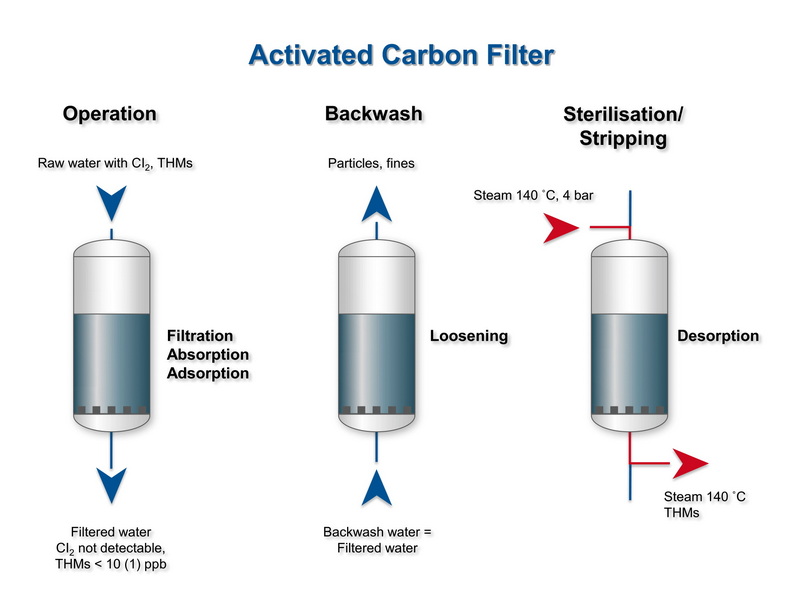
A common method is thermal regeneration in a dedicated carbon regeneration kiln or reactivation kiln. In this process:
- Spent activated carbon is heated to high temperature under controlled atmosphere.
- Adsorbed organic compounds are decomposed and driven off as gases.
- The pore structure of the activated carbon is re‑opened, restoring its ability to adsorb.
Modern regeneration kilns can handle granular and powdered activated carbon and are equipped with automated control systems, off‑gas treatment, and integrated material handling. This approach reduces waste, lowers operating costs over the lifetime of the filter system, and supports resource efficiency.
When to Regenerate vs. Replace
The choice between regenerating and replacing activated carbon depends on factors such as:
- Contaminant type and concentration.
- Required purity and regulatory constraints.
- Economic balance between regeneration cost and new product cost.
- Environmental management policies and permits.
In many large‑scale water, gas, and solvent treatment systems, regeneration is a standard part of the operating cycle for wood‑based activated carbon.
Applications of Wood‑Based Activated Carbon
Wood‑based activated carbon is used in a wide range of industries due to its adsorption efficiency and high purity. Key application areas include:
Water and Wastewater Treatment
- Drinking water purification systems.
- Surface water and groundwater treatment.
- Industrial wastewater polishing.
- Municipal sewage tertiary treatment.
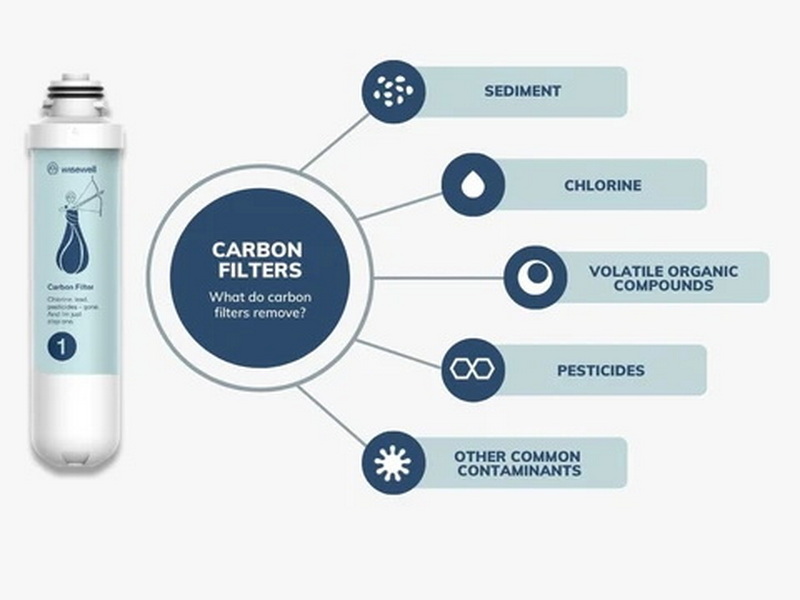
In these systems, wood‑based activated carbon removes organic contaminants, color, taste and odor compounds, and various trace pollutants.
Air and Gas Purification
- Air filters for HVAC systems in buildings, hospitals, and cleanrooms.
- Gas masks and personal protective equipment.
- Industrial gas treatment and odor control.
- Protection of sensitive equipment and instruments from corrosive gases.
Wood‑based activated carbon efficiently adsorbs volatile organic compounds (VOCs), odorous gases, and other harmful substances from air streams.
Food and Beverage Processing
In the food and beverage sector, wood‑based activated carbon is widely used for:
- Decolorization of sugar solutions and sweeteners.
- Purification of alcoholic beverages and juices.
- Refining of edible oils and fats.
The low impurity content and high decolorization capacity of wood‑based activated carbon make it especially suitable for these sensitive processes.
Pharmaceuticals and Fine Chemicals
In pharmaceutical and fine chemical production, wood‑based activated carbon is used to:
- Remove color bodies from intermediates.
- Reduce levels of organic impurities.
- Purify active ingredients and excipients.
Here, the combination of high adsorption performance and strict purity standards makes wood‑based activated carbon an essential purification tool.
Other Industrial and Environmental Uses
Additional applications of wood‑based activated carbon include:
- Metallurgical solutions treatment.
- Gold recovery processes.
- Environmental remediation and soil treatment.
- Specialized uses in electronics, energy, and chemical manufacturing.
The versatility of activated carbon from wood continues to expand as new environmental regulations and purity requirements drive demand for more advanced adsorption technologies.
Safety and Environmental Considerations
Producing activated carbon from wood involves both high‑temperature processes and potentially hazardous gases. Safe and responsible operation requires:
- Proper design and maintenance of carbonization and activation furnaces.
- Adequate ventilation and exhaust gas treatment systems.
- Explosion‑prevention measures in dust handling and milling operations.
- Personal protective equipment and training for operators.
From an environmental perspective, wood‑based activated carbon offers significant advantages over some fossil‑based alternatives, particularly when raw materials are sourced from sustainably managed forests or industrial by‑products. When combined with regeneration and proper end‑of‑life management, it forms part of an efficient, lower‑impact environmental protection strategy.
Conclusion
Making activated carbon from wood is a technically mature yet continually evolving process that transforms renewable biomass into a powerful adsorbent. By carefully managing the stages of raw material selection, carbonization, activation, washing, drying, and finishing, manufacturers can produce wood‑based activated carbon with high surface area, tailored pore structure, and low impurity content.
Wood‑based activated carbon has become indispensable in water treatment, air and gas purification, food and beverage processing, and pharmaceutical production. Its renewability, performance, and compatibility with regeneration technologies make it a key material for sustainable industrial development and environmental protection. As regulations tighten and customers demand higher purity and lower environmental impact, high‑quality activated carbon from wood will continue to grow in importance across global markets.
Contact us to get more information!
FAQ
1. What is the difference between wood‑based activated carbon and coal‑based activated carbon?
Wood‑based activated carbon is produced from renewable wooden biomass such as chips, sawdust, and shavings, while coal‑based activated carbon is made from fossil coal. Wood‑based products typically have lower ash content and fewer mineral impurities, which makes them particularly suitable for food, beverage, and pharmaceutical applications that require high purity. Coal‑based activated carbon is widely used in heavy industry and general wastewater treatment where extremely low ash is less critical.
2. Which activation method is better for wood‑based activated carbon: physical or chemical?
Physical activation with steam or carbon dioxide is generally preferred for granular or pelletized activated carbon used in large‑scale water and gas treatment systems. It avoids corrosive chemicals and can be operated in continuous rotary kilns or activation furnaces. Chemical activation, using agents such as phosphoric acid or zinc chloride, is often chosen to produce powdered activated carbon with very high surface area and specific pore structures, especially when precise control of porosity is required. The best method depends on the target product form, performance requirements, and environmental or regulatory constraints.
3. What are the main applications of wood‑based activated carbon in water treatment?
In water treatment, wood‑based activated carbon is primarily used for: removal of organic contaminants, decolorization, and reduction of taste and odor compounds in drinking water. It also plays a role in treating surface water, groundwater, and industrial wastewater, where it helps remove dyes, residual disinfectants, and trace organic pollutants. In municipal wastewater plants, wood‑based activated carbon can be part of the tertiary treatment stage to meet strict discharge or reuse standards.
4. Can wood‑based activated carbon be regenerated and reused?
Yes, many grades of wood‑based activated carbon can be thermally regenerated in regeneration kilns or reactivation furnaces. During regeneration, the spent activated carbon is heated under controlled atmosphere so that adsorbed organic compounds are decomposed and removed from the pore system. This process restores a significant portion of the original adsorption capacity, allowing the activated carbon to be reused multiple times. The feasibility of regeneration depends on the type of contaminants, the purity requirements, and the cost balance between regeneration and new product replacement.
5. Why is wood‑based activated carbon suitable for the food and pharmaceutical industries?
Wood‑based activated carbon is highly valued in food and pharmaceutical applications because it can be produced with very low ash content and minimal heavy‑metal impurities. Its pore structure is well suited to decolorization and removal of larger organic molecules, which is essential in sugar refining, beverage clarification, edible oil purification, and purification of pharmaceutical intermediates. By using wood‑based activated carbon that meets specific quality standards and certifications, producers can achieve effective purification without introducing unwanted contaminants into sensitive products.
Citations:
1. https://rotarykilnfactory.com/how-to-make-activated-carbon-from-wood/
2. https://activecarbonmfg.net/make-activated-carbon-from-wood/
3. https://cementplantequipment.com/activated-carbon-plant/how-to-make-activated-carbon-from-wood/
4. https://www.fpl.fs.usda.gov/documnts/pdf2021/fpl_2021_yan003.pdf
5. https://gasificationplant.com/biomass-energy/the-production-and-applications-of-wood-based-activated-carbon/
6. https://activatedcarbon.com/products/wood-based-activated-carbon
7. https://mellifiq.com/en/wood-based-activated-carbon/
8. https://rotarykilnsupplier.com/rotary-kiln-for-sale/carbon-regeneration-kiln/
9. https://cement-plants.com/rotary-kiln-for-sale/activated-carbon-rotary-kiln/
10. https://www.calgoncarbon.com/wood-based-activated-carbon/
11. https://gasificationplant.com/pyrolysis-equipment/carbon-activation-kiln/
12. https://www.youtube.com/watch?v=GNKeps6pIao
13. https://www.facebook.com/groups/357419677786321/posts/2662778600583739/


