
Content Menu
● What Is Activated Carbon?
● How Activated Carbon Works
● Key Factors That Decide “Per Gallon” Dosage
>> Application Type
>> Contaminant Characteristics
>> Hydraulic Conditions and Contact Time
>> Activated Carbon Properties
● Typical “Per Gallon” Guidelines in Real Applications
● How Much Activated Carbon Per Gallon for Water Treatment?
>> Household, Aquarium, and Pond Water
>> Industrial Drinking Water and Process Water
● Air, Gas, Food, and Pharmaceutical Uses Per Volume
● Practical Steps to Calculate Your Activated Carbon Per Gallon
>> Step 1: Define the Treatment Goal
>> Step 2: Analyze Water or Gas Quality
>> Step 3: Select the Right Activated Carbon Grade
>> Step 4: Use Existing Guidelines and Pilot Tests
>> Step 5: Monitor Performance and Adjust
● Best Practices and Common Mistakes
>> Best Practices
>> Common Mistakes
● Conclusion
● FAQ About How Much Activated Carbon Per Gallon
>> 1) How much activated carbon per gallon should I use in my aquarium?
>> 2) Can I use too much activated carbon per gallon?
>> 3) How often should I change activated carbon when dosing per gallon?
>> 4) How do I calculate industrial activated carbon requirements per gallon?
>> 5) Does the type of activated carbon affect the dosage per gallon?
● Citations:
For most small‑scale water applications like aquariums and ponds, a practical guideline is to use about 1–2 tablespoons of granular activated carbon per gallon of water, then fine‑tune based on water quality, application type, and product recommendations. Industrial systems, however, calculate activated carbon dosage per gallon using adsorber design, empty bed contact time, contaminant load, and carbon grade, rather than a single fixed ratio.
What Is Activated Carbon?
Activated carbon is a highly porous adsorbent material produced from raw materials such as coal, coconut shell, or wood and then “activated” to create a huge internal surface area. This internal surface area, typically in the range of hundreds to more than a thousand square meters per gram, gives activated carbon its ability to capture and hold a wide variety of dissolved and gaseous contaminants.
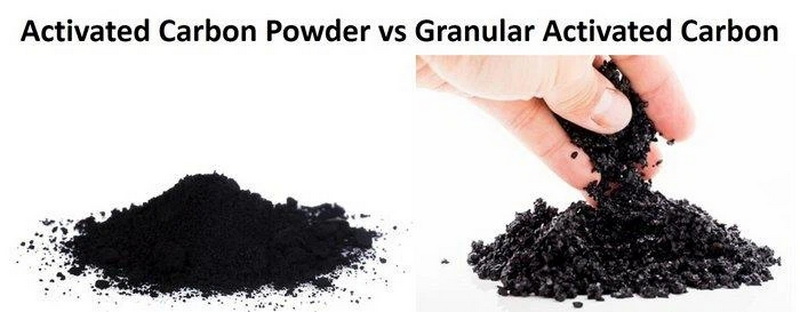
Because of its tunable pore structure and different physical forms, activated carbon can be engineered for specific industrial applications such as water treatment, air and gas purification, food and beverage decolorization, and pharmaceutical purification. For global users, this means activated carbon can be supplied as powdered, granular, or extruded products tailored to process conditions and performance targets.
Common physical forms of activated carbon include:
- Granular activated carbon (GAC) for filters, cartridges, and fixed beds
- Powdered activated carbon (PAC) for direct dosing into liquid streams
- Extruded or pelletized activated carbon for gas‑phase treatment and solvent recovery
In many industrial projects, a supplier can customize activated carbon grade, particle size, and pore distribution to match the customer's exact process needs, such as color removal, COD reduction, or VOC adsorption.
How Activated Carbon Works
Activated carbon works mainly through adsorption, not absorption. In adsorption, molecules adhere to the surface of the activated carbon, especially inside its extensive network of micro‑ and mesopores. This allows activated carbon to selectively remove a wide range of organic contaminants, odors, colors, and residual disinfectants from water and air.
Several mechanisms are involved in activated carbon adsorption:
- Physical adsorption driven by Van der Waals forces
- Pore diffusion, where molecules move into pores of different sizes
- Chemical interactions for specially impregnated activated carbon grades
The performance of activated carbon per gallon depends on how well the pore structure matches the size and polarity of target contaminants. Micropores are especially effective for small molecules, while mesopores and macropores contribute to faster diffusion and access to the internal structure.
In practice, the same mass of activated carbon can have very different adsorption capacities depending on its activation process, base material, and surface chemistry. That is why two grades of activated carbon with the same dosage per gallon may yield different treatment results.
Key Factors That Decide “Per Gallon” Dosage
There is no universal answer to “how much activated carbon per gallon” because dosage depends on multiple technical variables. Whether designing a household filter or an industrial adsorption system, activated carbon dosage per gallon always links back to contaminant type, concentration, and contact time.
Application Type
Different applications require different performance targets and therefore different activated carbon dosages per gallon:
- Aquarium and pond water polishing for clarity and odor control
- Drinking water treatment for chlorine, taste, and organic removal
- Industrial wastewater and process water purification
- Air and gas purification, VOC control, and solvent recovery
- Food and beverage decolorization and taste improvement
- Pharmaceutical purification and intermediate polishing
Each of these applications operates with its own regulations, quality standards, and risk levels, so the activated carbon per gallon must be sized accordingly.
Contaminant Characteristics
The nature of the contaminants in the water or gas stream strongly affects how much activated carbon is needed per gallon:
- Organic vs inorganic pollutants
- Molecular size and polarity
- Inlet concentration and target outlet limit
- Presence of competing organic matter or surfactants
Higher contaminant loads or more difficult‑to‑adsorb molecules will usually require more activated carbon per gallon or longer contact times to reach the desired quality.
Hydraulic Conditions and Contact Time
Hydraulic design is essential when deciding how much activated carbon per gallon is actually effective:
- Empty bed contact time (EBCT), often expressed in minutes
- Flow rate per gallon and bed depth (L/D ratio) in fixed‑bed systems
- Mixing intensity and residence time in PAC systems
- Presence of suspended solids that can foul activated carbon pores
A system with a very short contact time may fail to reach the expected performance even if a larger amount of activated carbon per gallon is used. Conversely, well‑designed systems often achieve excellent results with modest dosages of activated carbon per gallon because the contact time is optimized.
Activated Carbon Properties
Different grades of activated carbon have different adsorption capacities and kinetics. Important properties include:
- Specific surface area and iodine number
- Pore size distribution (micro, meso, macro)
- Particle size and hardness
- Base material (coconut shell, coal, wood, etc.)
- Surface chemistry or impregnation for special contaminants
A high‑quality, high‑surface‑area activated carbon often achieves the same removal with a lower dosage per gallon than a lower‑grade product. This is why it is essential to follow the manufacturer's dosage recommendations for a given activated carbon grade, rather than using a single generic number for all products.
Typical “Per Gallon” Guidelines in Real Applications
Although industrial engineers design activated carbon systems using detailed calculations, end users often rely on simplified rules per gallon for everyday operation. The actual numbers vary with brand and application, but they illustrate a realistic range of activated carbon use per gallon.
Examples from real‑world practice show that activated carbon dosage per gallon can range from well under 1 gram per gallon for gentle water polishing to tens of grams per gallon for short‑term intensive contaminant removal. Some products recommend dosing by tablespoons or cups, while others use grams per gallon or grams per liter.
This wide range demonstrates why “how much activated carbon per gallon” must always be tied to target water quality, changeout frequency, and the sensitivity of the system. For example, reef aquariums and high‑value livestock require more conservative and carefully monitored dosages, while short‑term emergency treatment can justify higher activated carbon rates per gallon.
How Much Activated Carbon Per Gallon for Water Treatment?
Household, Aquarium, and Pond Water
For home users, a practical starting point for granular activated carbon is usually given in tablespoons or cups per gallon. In these systems, activated carbon is mainly used for water clarity, odor control, and removal of organic discoloration, as well as polishing after medication or chemical treatments.
Common recommendations for activated carbon per gallon include:
- Standard aquariums
- Around 1 tablespoon of activated carbon per 3 gallons of water
- In some setups, 1 tablespoon of activated carbon per 5–10 gallons when used continuously and replaced regularly
- Premium aquarium products
- About 1/8 cup of high‑quality activated carbon per 10 gallons of aquarium water
- Some reef‑grade activated carbons recommend around 1 gram of activated carbon per gallon, or slightly more, when used for limited periods
- Ponds and larger tanks
- Dosages are often scaled up, such as several pounds of activated carbon for hundreds or thousands of gallons
- The same principle applies: start at the lower end of the recommended range and adjust based on observed water quality
These ranges show that effective use of activated carbon per gallon is often lower than beginners expect. Over‑dosing can strip beneficial compounds, alter water chemistry, and stress sensitive organisms such as corals and delicate invertebrates. Many experienced users prefer to run smaller amounts of activated carbon per gallon but change it more often.
Industrial Drinking Water and Process Water
In industrial systems, engineers do not usually specify “tablespoons of activated carbon per gallon”; instead, they design fixed beds and calculate performance in terms of gallons treated per pound or per cubic foot of activated carbon. For example, a cubic foot of granular activated carbon can sometimes treat large volumes of water for chlorine or organic removal before reaching breakthrough.
Key design parameters that link activated carbon usage to gallons of water include:
- Empty bed contact time (EBCT) for the activated carbon bed
- Bed depth, tank diameter, and flow rate in gallons per minute
- Breakthrough curves indicating when contaminants appear at the outlet
- Target operating life in total gallons treated before replacement or regeneration
In powdered activated carbon systems (PAC dosing), operators may calculate a feed rate such as milligrams of activated carbon per liter, then scale that dosage to gallons for full‑scale operation. Jar tests and pilot trials are commonly used to optimize the activated carbon dosage per gallon for a specific water source and contaminant profile.
For industrial customers, working with a supplier that can provide application engineering support is crucial. A tailored design can significantly reduce activated carbon consumption per gallon while achieving better and more stable performance.
Air, Gas, Food, and Pharmaceutical Uses Per Volume
For air and gas purification, “per gallon” is less common, but the same principles of activated carbon adsorption apply. Gas‑phase systems typically use pelletized or granular activated carbon installed in fixed beds. Design is based on:
- Volumetric flow rate of gas (for example, cubic meters per hour)
- Target contaminants and required removal efficiency
- Bed residence time and pressure drop
- Service life in hours or cycles before the activated carbon needs replacement
In food and beverage processing, activated carbon is widely used to decolorize sugar solutions, edible oils, juices, and syrups. Here, the amount of activated carbon per gallon is usually determined through lab testing to achieve desired color, odor, and taste profiles without impacting valuable components.
In pharmaceutical and fine chemical production, activated carbon is used to purify intermediates and final products by removing color bodies, by‑products, and trace impurities. Dosages are carefully controlled, and validation is required, so activated carbon usage per gallon is usually determined by a combination of bench trials and scale‑up studies.
Although the units and design approaches differ, the underlying logic remains the same: match the right activated carbon to the process, define a target quality, and optimize the dosage per gallon or per unit volume through testing and monitoring.
Practical Steps to Calculate Your Activated Carbon Per Gallon
When answering “how much activated carbon per gallon” for a real system, it helps to follow a structured approach. This ensures activated carbon is not under‑ or over‑used and that performance and costs remain under control.
Step 1: Define the Treatment Goal
Before choosing any dosage, clarify what you want your activated carbon to do per gallon:
- Water polishing for clarity and color
- Odor removal and taste improvement
- Chlorine, chloramine, or disinfection by‑product removal
- Removal of specific organic contaminants, pesticides, or VOCs
Different goals may require different grades of activated carbon, different contact times, and different dosages per gallon.
Step 2: Analyze Water or Gas Quality
Gather baseline data on your influent stream:
- Inlet contaminant type and concentration
- pH, temperature, and ionic strength
- Presence of natural organic matter or competing organics
- Solids content that could foul the activated carbon
These parameters have a direct impact on how much activated carbon is required per gallon to reach the desired effluent quality.
Step 3: Select the Right Activated Carbon Grade
Choosing the appropriate grade of activated carbon is as important as setting the correct dosage per gallon. Consider:
- Whether you need granular, powdered, or pelletized activated carbon
- The base material that best fits your process and regulatory constraints
- Specialty grades such as acid‑washed, low‑dust, or impregnated carbons
For many industrial users, it is common to test several activated carbon grades in small‑scale trials before final selection.
Step 4: Use Existing Guidelines and Pilot Tests
If you are using a commercial product, start from the manufacturer's recommended dosage per gallon. For industrial projects, follow this process:
- Run bench‑scale tests with varying dosages of activated carbon
- Evaluate color, odor, or contaminant reduction at each dosage per gallon
- Identify the minimum activated carbon dosage per gallon that meets your targets
- Build breakthrough curves to understand expected bed life in gallons treated
This method prevents over‑design and helps you justify the chosen dosage of activated carbon per gallon from both technical and economic perspectives.
Step 5: Monitor Performance and Adjust
Once your system is running, continuous or regular monitoring is essential:
- Measure outlet quality indicators (color, turbidity, TOC, specific contaminants)
- Track how many gallons each batch or bed of activated carbon treats before performance declines
- Adjust dosage per gallon, changeout frequency, or bed depth as needed
Over time, you can refine your activated carbon dosage per gallon to achieve an optimized balance of performance, safety, and operating cost.
Best Practices and Common Mistakes
Correctly applying activated carbon per gallon requires both technical understanding and proper daily operation. Several best practices and common mistakes appear repeatedly across different industries.
Best Practices
- Rinse granular activated carbon before use to remove dust and fines that may cloud water
- Place activated carbon in high‑flow zones of filters to maximize contact per gallon treated
- Replace or regenerate activated carbon on a schedule based on performance rather than waiting for issues to appear
- Protect activated carbon beds from sudden hydraulic shocks and excessive clogging by using suitable pre‑filtration
Common Mistakes
- Over‑dosing activated carbon per gallon in aquariums and sensitive systems, causing unnecessary stripping of beneficial substances
- Under‑sizing activated carbon beds in industrial systems, leading to insufficient contact time and early breakthrough
- Ignoring suspended solids and fouling that block pores and reduce the effective surface area of the activated carbon
- Reusing exhausted activated carbon without proper reactivation, resulting in poor performance and possible contaminant desorption
By avoiding these mistakes, users can extend the life of their activated carbon, reduce operating costs, and achieve more stable purification performance per gallon.
Conclusion
“How much activated carbon per gallon” is not a fixed number but a flexible range that depends on application type, contaminant load, water or gas quality, and the specific grade of activated carbon being used. For small‑scale water applications such as aquariums and ponds, operators typically dose from about 1 tablespoon of activated carbon per 3–10 gallons of water, or roughly 1–2 grams of activated carbon per gallon, and adjust based on clarity, odor, and the sensitivity of aquatic life.
In industrial water, air, food, and pharmaceutical systems, engineers design activated carbon usage per gallon by analyzing contaminant profiles, running laboratory and pilot tests, and optimizing parameters such as empty bed contact time, bed depth, and breakthrough behavior. The final dosage of activated carbon per gallon is then integrated into a complete system design that balances performance, safety, and operating cost.
By selecting the appropriate grade, monitoring key quality indicators, and adjusting usage based on real‑world performance, operators across all sectors can unlock the full potential of activated carbon per gallon. This ensures reliable purification and helps meet demanding standards for water quality, product purity, environmental compliance, and end‑user satisfaction.
Contact us to get more information!

FAQ About How Much Activated Carbon Per Gallon
1) How much activated carbon per gallon should I use in my aquarium?
Most aquarium guidelines suggest starting with about 1 tablespoon of activated carbon per 3 gallons or roughly 1/8 cup of activated carbon per 10 gallons when using premium media. In many reef systems and tanks with sensitive species, users often choose lower doses of activated carbon per gallon and change the media more frequently, to avoid sudden shifts in water chemistry while still maintaining clear, odor‑free water.
2) Can I use too much activated carbon per gallon?
Yes. It is possible to use too much activated carbon per gallon, especially in reef aquariums and planted tanks. Excessive activated carbon can strip beneficial trace elements, remove some nutrients, and cause rapid changes that stress fish, corals, and plants. A safer approach is to begin with a modest amount of activated carbon per gallon, observe the system's response, and then fine‑tune the dosage gradually instead of making large jumps.
3) How often should I change activated carbon when dosing per gallon?
In home aquariums, activated carbon is typically replaced every 2–4 weeks because its pores slowly fill with organics and impurities. If water starts to become discolored or odors return sooner, it may be a sign that the current activated carbon per gallon is insufficient or that the media needs more frequent changes. In industrial systems, replacement or regeneration is scheduled according to monitored breakthrough, total gallons treated, and strict performance criteria.
4) How do I calculate industrial activated carbon requirements per gallon?
Industrial requirements are usually calculated through a combination of water analysis, laboratory testing, and pilot‑scale trials. Engineers establish adsorption isotherms and breakthrough curves for a selected activated carbon grade, then determine the necessary bed volume, empty bed contact time, and operating life in terms of gallons treated. From these parameters, it is possible to back‑calculate an effective activated carbon usage per gallon of water processed through the system.
5) Does the type of activated carbon affect the dosage per gallon?
Yes. Different activated carbon types and grades can require different dosages per gallon to achieve the same level of purification. High‑quality activated carbon with higher surface area and optimized pore structure may provide better results at lower dosages, while lower‑grade carbon might need more grams per gallon for the same effect. Factors like base material, particle size, and surface chemistry all influence how much activated carbon is needed per gallon, so it is important to follow product‑specific recommendations.
Citations:
1. https://topshelfaquatics.com/pages/carbon-calculator
2. https://www.bulkreefsupply.com/reef-calculator/carbon-calculator-aquarium
3. https://www.reef2reef.com/threads/how-much-activated-carbon-is-too-much.445087
4. https://www.thepondguy.com/product/the-pond-guy-activated-carbon
5. https://www.ultimatereef.net/threads/activated-carbon-how-much.907026
6. https://activatedcarbondepot.com/blogs/news/activated-carbon-for-aquariums-a-complete-guide
7. https://wqa.org/wp-content/uploads/2022/09/2016_GAC.pdf
8. https://www.aquaticexperts.com/pages/dosage-charts
9. https://redseafish.com/reef-care-program/treatments/reef-spec-carbon
10. https://www.calgoncarbon.com/app/uploads/Basics-of-Activated-Carbon-Calgon-Carbon-Chemical-Engineering-Magazine.pdf
11. https://www.aquariacentral.com/forums/threads/how-much-activated-carbon.94662
12. https://calulator.tropic-marin.com/en/control/carbon.html
13. https://www.donau-carbon.com/getattachment/76f78828-2139-496f-9b80-6b6b9bdc6acc/aktivkohle.aspx
14. https://www.facebook.com/groups/homedistillers/posts/1717376118391078
15. https://www.reefbum.com/water-chemistry/pluses-minuses-using-activated-carbon


