Content Menu
● What “Working” Means for Activated Carbon
● How Activated Carbon Adsorption Works
● Key Factors That Control How Fast Activated Carbon Works
● How Long Does Activated Carbon Take to Work in Water Treatment?
>> Typical contact time ranges in water
>> Water treatment applications of activated carbon
● How Fast Does Activated Carbon Work in Air and Gas Applications?
● How Long Until Results Are Noticeable to Users?
● Contact Time vs. Service Life of Activated Carbon
>> Initial working time vs. long‑term performance
>> Why longer contact time is not always better
● How Different Industries Define “Working Time” for Activated Carbon
>> Drinking water and municipal treatment
>> Industrial and chemical processes
>> Food and beverage processing
>> Pharmaceutical and medical uses
● Practical Guidelines: How Long to Let Activated Carbon Work
● Conclusion
● FAQ: How Long Does Activated Carbon Take to Work?
>> 1. How quickly does activated carbon start working in water?
>> 2. Does activated carbon work faster in air or in water?
>> 3. How long should powdered activated carbon stay in contact with water?
>> 4. When will I notice a difference in taste and odor using activated carbon for drinking water?
>> 5. Can increasing contact time always make activated carbon work better?
● Citations:
Activated carbon can begin working within seconds to minutes, but full adsorption performance often requires several minutes to hours of contact time depending on the application, contaminant type, and system design. In real industrial and household systems, activated carbon “working time” is best understood as a combination of immediate adsorption at the surface and slower diffusion into the internal pore structure over a defined contact time window.
What “Working” Means for Activated Carbon
Activated carbon “works” by adsorbing molecules onto its vast internal surface area through physical adsorption and, in some cases, chemical reactions. For different users, “how long it takes to work” can mean slightly different things.
- For drinking water users, activated carbon is considered to be working once chlorine, taste, and odor are noticeably reduced after passing through the filter.
- For industrial plants, activated carbon is “working” when outlet contaminant levels stay below a target specification over a defined contact time and throughput.
- For aquariums or air filters, activated carbon is working once odors, discoloration, or volatile organic compounds (VOCs) start to decrease after installation.
Because activated carbon is not a chemical that dissolves, but a porous adsorbent, its performance is controlled by how long the fluid stays in contact with the activated carbon bed or particles, commonly called contact time.
How Activated Carbon Adsorption Works
Activated carbon has an enormous internal surface area formed by a network of micro‑, meso‑, and macropores. When water or air passes through activated carbon, contaminants migrate from the bulk fluid to the external surface and then diffuse into these internal pores where they are held by physical or chemical forces.
Several mechanisms determine how fast activated carbon can work:
- External film diffusion from the bulk fluid to the carbon surface
- Internal pore diffusion into the activated carbon structure
- Adsorption onto active sites on the carbon surface
- Possible biodegradation in biological activated carbon filters
At the beginning of use, most adsorption happens on easily accessible surface sites, so activated carbon can appear to work very quickly. As time goes on, diffusion into smaller pores and competition between different molecules slows the adsorption rate, which is why providing sufficient contact time is critical.
Key Factors That Control How Fast Activated Carbon Works
Several process and product variables determine how long activated carbon takes to work in practice.
- Phase (water or air): Adsorption in gases is often faster than in liquids because gas molecules are more mobile and diffuse more rapidly into the pores of activated carbon.
- Contact time and flow rate: Longer contact time allows contaminants more opportunity to reach and occupy adsorption sites in the activated carbon. High flow rates reduce contact time and can lower removal efficiency.
- Contaminant type and concentration: Simple, low‑molecular‑weight compounds such as chlorine are removed quickly, while large, complex organics or trace micropollutants may need longer contact times.
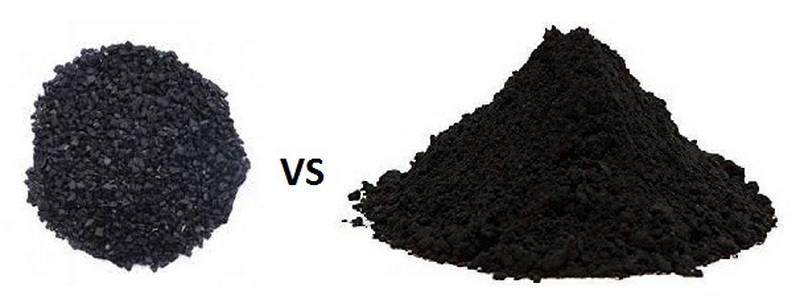
- Type and form of activated carbon: Powdered activated carbon (PAC) typically acts faster in batch mixing, while granular activated carbon (GAC) provides controlled contact time in fixed beds. Pelletized activated carbon is common in gas‑phase systems.
- Bed design and channeling: Poorly designed activated carbon filters can form channels that let water bypass the carbon and sharply reduce effective contact time, even if the theoretical contact time looks sufficient.
- Temperature and pH: Higher temperatures generally increase diffusion rates but can sometimes reduce adsorption capacity, while pH strongly affects adsorption of many organic and inorganic species.
In engineering design, these factors are combined into parameters such as empty bed contact time (EBCT) for granular activated carbon filters and batch residence time for powdered activated carbon systems.
How Long Does Activated Carbon Take to Work in Water Treatment?
Typical contact time ranges in water
In water treatment systems, activated carbon contact times usually range from a few minutes to several hours depending on objectives and system type.
- Many granular activated carbon filters for water use contact times of about 10–30 minutes to achieve effective removal of taste, odor, and many organic contaminants.
- Some farm or surface‑water systems use contact times of 10–20 minutes for conventional activated carbon filtration, while biological activated carbon filters may require 30–60 minutes or more.
- For powdered activated carbon added into tanks or reactors, batch contact times of 30 minutes to 2 hours are commonly used for typical organic pollutants, extended to 4–6 hours for stubborn contaminants or higher loadings.
This means that once water enters a well‑designed activated carbon filter, noticeable improvement in chlorine, odor, and organics can often be achieved during a single pass through the bed, typically over several minutes of contact time.
Water treatment applications of activated carbon
Activated carbon is widely used in municipal, industrial, and residential water treatment:
- Drinking water dechlorination and organics control: A granular activated carbon tank with an appropriate contact time can fully eliminate free chlorine and significantly reduce organic matter, improving taste and odor.
- Groundwater and surface‑water polishing: Activated carbon is used after coagulation, sedimentation, and filtration to remove remaining dissolved organics, pesticides, and micropollutants.
- Industrial process water: Activated carbon removes residual solvents, color bodies, and off‑flavors from process streams in food, beverage, and chemical plants.
From a user standpoint, activated carbon starts working as soon as water passes through the media, but system designers must provide enough contact time in the activated carbon bed to meet quality targets.
How Fast Does Activated Carbon Work in Air and Gas Applications?
Activated carbon used in air and gas filtration often operates with much shorter contact times than in water systems because gas molecules move and diffuse faster.
- In many air purification filters using activated carbon, effective contact time may be only a few seconds to less than a minute while still providing substantial VOC and odor removal.
- In industrial gas treatment, empty bed contact times can be engineered from fractions of a second to several seconds, depending on contaminant type and required removal efficiency.
- In odor control systems for buildings or industrial exhaust, large beds of activated carbon treat vast air volumes with short contact times but continuous flow.
Even though each individual pass of air through the activated carbon bed is very fast, the activated carbon continues working over many cycles until its adsorption capacity is exhausted. This is why air purifiers and gas filters are designed for continuous circulation rather than one‑time treatment.
How Long Until Results Are Noticeable to Users?
From an end‑user perspective, “how long activated carbon takes to work” often refers to how quickly visible or sensory changes appear.
- Water bottles or small point‑of‑use filters: When a piece of carbon or charcoal is used in a water bottle, effective filtration for taste and odor may take a couple of hours of contact time as the water rests in contact with the activated carbon.
- Household and farm water filters: Users can experience noticeable improvements in taste and odor after a single pass through a well‑designed activated carbon filter, usually within minutes of use once the system is flushed.
- Aquariums: In aquariums, activated carbon can help keep odors and discoloration low; noticeable clearing of tannins or color may occur over hours to days, depending on the extent of contamination, water changes, and the amount of activated carbon used.
- Room air purifiers: Activated carbon in air filters can start reducing odors and VOCs within hours of operation, with many systems designed for continual circulation and short per‑pass contact times.
User perception typically lags slightly behind the first contact event; however, from a technical standpoint activated carbon begins adsorbing target molecules as soon as they encounter the carbon surface.
Contact Time vs. Service Life of Activated Carbon
Initial working time vs. long‑term performance
Two different time scales are important for activated carbon:
- Instantaneous working time: How long a single volume of water or air must stay in contact with the activated carbon to achieve the desired removal efficiency (seconds to hours).
- Service life: How long the same bed or cartridge of activated carbon continues to meet performance targets before it becomes saturated and requires replacement or regeneration (weeks to years, depending on loading).
For example, a granular activated carbon bed treating chlorinated well water may require a contact time of several minutes for effective chlorine removal and can maintain good organic removal for many months, while still removing chlorine for a longer period before breakthrough.
Why longer contact time is not always better
While increasing contact time generally improves adsorption, there is a point where gains become marginal and system size becomes impractical.
- Many water treatment designs target contact times around 10–30 minutes, where most adsorption benefit is realized under typical conditions.
- Batch processes using powdered activated carbon may extend contact to several hours to maximize adsorption, but above 1–2 hours the incremental gain can be modest compared to the additional residence time and tank volume required.
Designers therefore balance activated carbon contact time, bed depth, and flow rate to ensure reliable performance without oversizing the system. Once the activated carbon is saturated, simply increasing contact time does not restore performance; the media must be replaced or regenerated.
How Different Industries Define “Working Time” for Activated Carbon
Drinking water and municipal treatment
In municipal water treatment plants, granular activated carbon filters are installed as major process units.
- Activated carbon contact times of several minutes to tens of minutes are used to control taste, odor, and organic micropollutants.
- For advanced adsorption of trace contaminants, pilot studies may explore longer contact times or higher activated carbon doses to reach strict quality limits.
Municipal engineers track breakthrough curves to decide how long activated carbon beds can operate before regeneration or replacement.
Industrial and chemical processes
Industrial facilities rely on activated carbon to purify intermediates and final products.
- Chemical and industrial plants use activated carbon for decolorization, solvent recovery, and product purification, often with carefully controlled contact times based on lab and pilot testing.
- Contact time is determined by contaminant polarity, concentration, viscosity, and interactions with other species competing for adsorption sites on the activated carbon surface.
These operations often combine activated carbon with other unit operations such as filtration, distillation, or ion exchange.
Food and beverage processing
The food and beverage industry uses activated carbon to improve product quality without altering desired flavors more than necessary.
- In sugar refining, contact times of around 1–2 hours with powdered activated carbon can be used to remove color and impurities from syrup.
- For fruit juices, beverages, and edible oils, shorter contact times of 15–30 minutes with activated carbon may be sufficient to reduce color or off‑odors while minimizing product loss and flavor changes.
Producers optimize activated carbon dose and contact time to meet quality specifications while protecting product yield.
Pharmaceutical and medical uses
In pharmaceutical production and medical applications, activated carbon must meet strict purity and performance requirements.
- In pharmaceutical purification, activated carbon is applied under tightly controlled conditions, with contact times from 30 minutes to several hours depending on process requirements and regulatory limits.
- Medicinal activated carbon for poisoning and overdose is used under medical supervision, where rapid adsorption within the gastrointestinal tract is crucial and timing is critical.
In all cases, pharmaceutical manufacturers and clinicians rely on validated data and protocols to define how long activated carbon must be in contact with fluids or tissues to be effective.
Practical Guidelines: How Long to Let Activated Carbon Work
For engineers, buyers, and end users, the following practical guidelines can help determine how long activated carbon should be allowed to work.
- For water filters:
- Choose activated carbon filters with clearly stated flow rates and capacities.
- Avoid exceeding the recommended flow rate; higher flow reduces contact time and performance.
- For many polishing applications, 10–30 minutes of effective contact time in a granular activated carbon bed is a reasonable design target.
- For batch treatment with powdered activated carbon:
- Allow at least 15–30 minutes for simple odor and color removal.
- For industrial or high‑load applications, extend contact time to 1–2 hours or more, and perform jar tests to optimize dose and time.
- For air filters and odor control:
- Assume very short per‑pass contact times of seconds, but design for continuous operation so that the entire air volume is treated repeatedly by activated carbon.
- Replace or regenerate activated carbon when odors reappear or breakthrough indicators are reached.
- For aquariums and ponds:
- Use fresh, high‑quality activated carbon and follow manufacturer recommendations on quantity and replacement frequency.
- Expect improvement in water clarity and odor over hours to days, combined with regular water changes and proper filtration.
Working with a specialized activated carbon manufacturer that can adjust pore structure, particle size, and bed design for a specific application helps ensure that the contact time and adsorption performance are properly matched to the process.
Conclusion
Activated carbon starts working as soon as water or air comes into contact with its highly porous surface, but the effective “working time” in a real system is determined by contact time, contaminant type, and system design. In water treatment, activated carbon often needs 10–30 minutes of contact for general polishing and longer for stubborn contaminants, while air and gas applications typically rely on much shorter contact times of seconds to minutes, compensated by continuous recirculation.
Across drinking water, industrial, food and beverage, pharmaceutical, and environmental applications, engineers optimize contact time, bed depth, flow rate, and activated carbon properties to achieve the desired removal performance at acceptable cost. For end users, this means that activated carbon can provide noticeable improvements in taste, odor, clarity, and air quality within minutes to hours, and continues to work effectively until its adsorption capacity is exhausted and the media must be replaced or regenerated.
Contact us to get more information!
FAQ: How Long Does Activated Carbon Take to Work?
1. How quickly does activated carbon start working in water?
Activated carbon begins adsorbing contaminants immediately when water contacts its surface. In most properly designed water filters, effective contact times of 10–30 minutes are used to achieve strong removal of taste, odor, and many organic pollutants. In batch treatment with powdered activated carbon, contact times of 30 minutes to several hours are common, depending on contaminant type and concentration.
2. Does activated carbon work faster in air or in water?
Activated carbon generally works faster in air than in water because gas molecules are more mobile and can diffuse into the pore structure more quickly. As a result, air filters with activated carbon can achieve significant VOC and odor reduction with per‑pass contact times of only seconds to less than a minute, as long as the system circulates air continuously through the activated carbon bed.
3. How long should powdered activated carbon stay in contact with water?
For many water and industrial applications, powdered activated carbon should be mixed with water for at least 15–30 minutes to achieve basic color and odor control. For more demanding applications, typical contact times range from 30 minutes to 2 hours, and can be extended to 4–6 hours for challenging pollutants. Jar testing is usually used to determine the optimal combination of activated carbon dosage and contact time.
4. When will I notice a difference in taste and odor using activated carbon for drinking water?
In point‑of‑use or whole‑house drinking water systems, many users notice better taste and reduced odor after water has passed through the activated carbon filter just once, provided the filter has sufficient bed depth and appropriate flow rate. For simple carbon sticks or blocks used in bottles or jugs, it is common to wait a couple of hours to allow enough contact time for the activated carbon to improve taste and remove chlorine and other off‑flavors.
5. Can increasing contact time always make activated carbon work better?
Increasing contact time usually improves adsorption up to a certain point, but beyond that the additional benefits become small compared to the extra volume, residence time, and cost. Many systems are designed around a practical contact time window where activated carbon removes most target contaminants without oversized equipment. Once the activated carbon becomes saturated, longer contact time does not restore performance and the media must be replaced or regenerated.
Citations:
1. https://www.carbon-filter.net/how-long-does-it-take-for-activated-carbon-filter-to-work
2. https://www.carbotecnia.info/en/learning-center/activated-carbon-equipment/activated-carbon-replacement/
3. https://agriculture.canada.ca/en/agricultural-production/water/ponds-and-dugouts/farm-surface-water-management/filtration-how-does-it-work
4. https://heycarbons.com/activated-carbon-liquid-phase-adsorption/
5. https://www.yuanlicarbonyl.com/blog/what-is-the-contact-time-required-for-powder-activated-carbon-adsorption-522562.html
6. https://generalcarbon.com/facts-about-activated-carbon/powdered-activated-carbon/
7. https://aquariumscience.org/index.php/7-4-2-activated-carbon/
8. https://www.umass.edu/agriculture-food-environment/cafe/fact-sheets/activated-carbon-treatment-for-drinking-water-supplies
9. https://charterhouse-aquatics.com/blogs/help-guides/10-reasons-to-use-aquarium-activated-carbon
10. https://semspub.epa.gov/work/HQ/401595.pdf
11. https://www.euwa.com/activated-carbon-filtration.html
12. https://www.sciencedirect.com/science/article/abs/pii/S0043135423002968


