Content Menu
● What Is Powdered Activated Carbon?
● Raw Materials for Powdered Activated Carbon
>> Common Carbon Sources
>> Why Raw Material Selection Matters
● Step 1: Pretreatment of Raw Materials
● Step 2: Carbonization – Converting Biomass or Coal to Char
● Step 3: Activation – Creating the Pore Structure
>> Physical (Steam or CO₂) Activation
>> Chemical Activation (Typical for Wood/Sawdust)
● Step 4: Washing, Cooling, and Drying
● Step 5: Grinding to Powdered Activated Carbon
● Process Flow Examples for Powdered Activated Carbon
● Key Properties of Powdered Activated Carbon
>> Particle Size and Surface Area
>> Purity and Ash Content
● How Powdered Activated Carbon Works in Applications
>> Adsorption Mechanism
>> Water Treatment Uses
>> Air and Gas Purification
>> Food and Beverage Purification
>> Chemical and Pharmaceutical Uses
● Conclusion
● FAQ About Powdered Activated Carbon
>> 1. What is the difference between powdered activated carbon and granular activated carbon?
>> 2. Why do water treatment plants use powdered activated carbon?
>> 3. How is powdered activated carbon removed after treatment?
>> 4. Is powdered activated carbon suitable for food and pharmaceutical applications?
>> 5. What factors should be considered when selecting a powdered activated carbon grade?
● Citations:
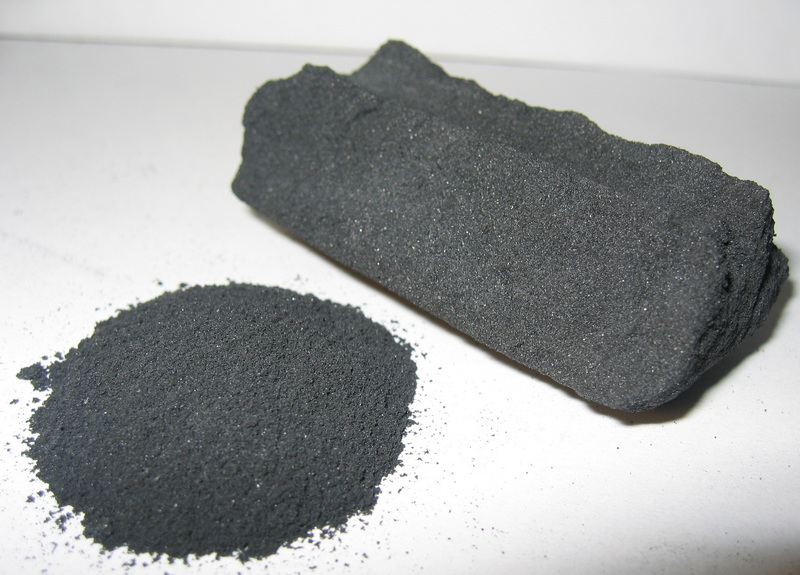
Powdered activated carbon (PAC) is formed through carefully controlled carbonization, activation, and grinding processes applied to carbon‑rich raw materials such as coal, wood, and coconut shell. By adjusting activation methods and particle size, manufacturers tailor powdered activated carbon for demanding applications in water treatment, air and gas purification, food and beverage processing, chemicals, and pharmaceuticals.[1][2][3][4]
What Is Powdered Activated Carbon?
Powdered activated carbon is a finely ground adsorbent with particle sizes typically smaller than 100 mesh, giving it a very high surface area and fast adsorption kinetics. Because of its fine particle size and porous structure, powdered activated carbon is especially effective in batch processes or systems where short contact time is required, such as shock dosing in water treatment plants.[2][3][5]
In industrial practice, powdered activated carbon is usually produced from materials like coal, coconut shell, wood, sawdust, or peat that naturally contain high levels of carbon. These materials undergo thermal and/or chemical treatment to create a dense network of micro‑, meso‑, and macropores that dramatically increase their internal surface area and adsorption capacity.[6][3][7][1]
Raw Materials for Powdered Activated Carbon
Common Carbon Sources
- Coal (lignite, bituminous, anthracite) – widely used for coal‑based powdered activated carbon because of its availability and favorable pore development after activation. Coal‑based powdered activated carbon is popular in large‑scale water, wastewater, and flue‑gas applications due to its robustness and cost‑effectiveness.[8][9][4]
- Wood and sawdust – often used where chemical activation is applied; powdered activated carbon from sawdust is common for liquid‑phase adsorption because it can develop a rich mesoporous structure. Wood‑based powdered activated carbon is frequently used for decolorization in sugar, edible oil, and beverage industries.[10][11][6][2]
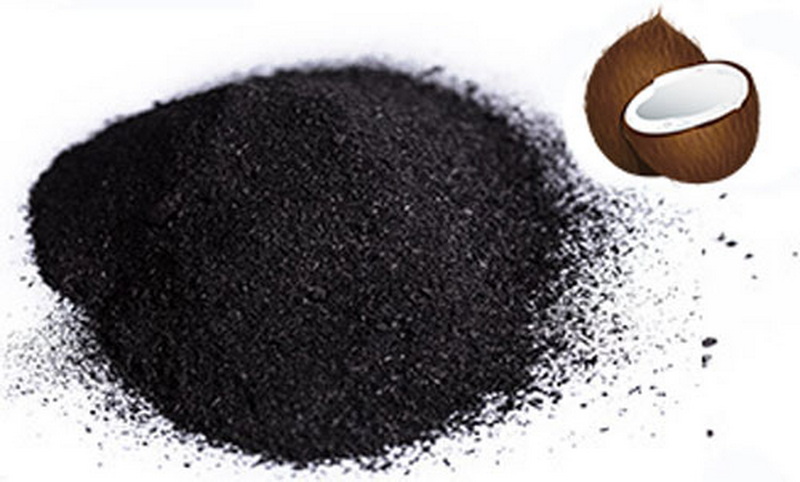
- Coconut shell and other nutshells – favored for high hardness and predominantly microporous structure, giving excellent performance in removing low‑molecular‑weight organics in water and gas streams. Coconut‑shell powdered activated carbon is particularly valued in drinking water and high‑purity applications due to its high activity and relatively low ash.[4][11][12][1]
Why Raw Material Selection Matters
The chemical composition and structure of the raw material influence the pore size distribution, ash content, hardness, and adsorption behavior of the final powdered activated carbon. By matching raw material and activation method, manufacturers can tailor powdered activated carbon grades for specific targets such as color bodies, trace organics, or volatile organic compounds (VOCs).[7][8][4]
Step 1: Pretreatment of Raw Materials
Before powdered activated carbon can be formed, the feedstock needs physical preparation to ensure consistent processing.
- Crushing and screening – bulk raw materials such as coal or wood are crushed to controlled particle sizes, often in the range of about 10–100 mm, and then screened to remove overly fine or oversized fractions. This uniformity enhances heat transfer and gas flow during carbonization and activation, improving the quality of the resulting carbon.[9][8][7]
- Drying – moisture is reduced by drying so that the feedstock reaches a suitable level for thermal treatment, often using rotary dryers or similar equipment. Adequate drying reduces energy loss in the furnace and prevents steam‑related cracking that could damage the structure.[8][1][9]
In chemical activation routes for wood or sawdust, pretreatment also includes preparing and adjusting the concentration of activating solutions such as phosphoric acid. Correct impregnation conditions are critical for creating a well‑developed pore structure in the final powdered activated carbon.[1][6][8]
Step 2: Carbonization – Converting Biomass or Coal to Char
Carbonization is the thermal decomposition of the organic raw material under limited oxygen to form a carbon‑rich char.
During carbonization, the feedstock is heated, commonly in the range of roughly 350–600 °C for coal‑based material, to drive off volatile components such as hydrogen, oxygen, and other non‑carbon elements. These volatiles leave as gases and tars, while the remaining solid forms a basic graphite‑like microstructure with initial pore development.[9][7]
Rotary kilns, vertical furnaces, or other specialized reactors are used to ensure uniform heating and controlled atmosphere conditions. The carbonized char at this stage has only moderate porosity and limited surface area; the crucial increase in pore volume and surface area occurs during the subsequent activation step.[3][7][8]
Step 3: Activation – Creating the Pore Structure
Activation transforms carbonized char into highly porous powdered activated carbon through further thermal treatment in the presence of an activating agent. Two fundamental activation approaches are used in industry: physical (gas) activation and chemical activation.[3][7][8][1]
Physical (Steam or CO₂) Activation
In physical activation, the char is exposed to oxidizing gases such as steam or carbon dioxide at high temperatures, often between about 600–1200 °C depending on material and design. At these temperatures, reactions between carbon and the gas phase gradually burn away internal carbon, widening existing pores and generating new ones throughout the particle.[13][7][3]
Steam activation is widely used for coal‑based activated carbon, including powdered grades, and typically operates near 800–1000 °C with carefully controlled residence time. By adjusting parameters such as gas flow rate, temperature, and duration, manufacturers can tune the pore size distribution and surface area of the resulting powdered activated carbon.[7][8][9]
Chemical Activation (Typical for Wood/Sawdust)
Chemical activation is commonly applied to lignocellulosic materials such as wood, sawdust, or peat. In this method, the raw material is impregnated or mixed with a chemical agent such as phosphoric acid or zinc chloride, which swells the structure and promotes pore development during subsequent heating at temperatures lower than typical physical activation.[6][8][1]
The impregnated material is then carbonized and activated, often in rotary kilns, where the chemical agent dehydrates and reacts with organic components, producing a highly porous carbon matrix. After activation, extensive washing is required to remove residual chemical agents and recover reagents where possible, yielding clean, chemically activated powdered activated carbon suitable for sensitive liquid‑phase applications.[8][1][6]
Step 4: Washing, Cooling, and Drying
Once activation is complete, the hot activated carbon must be conditioned into a stable, clean product.
- Cooling – activated carbon leaving the furnace is cooled under controlled conditions to avoid spontaneous ignition due to its high reactivity and temperature. Cooling is often done in rotary coolers or similar equipment under inert or controlled atmospheres to maintain product quality.[9][7][8]
- Washing and acid treatment – especially in chemical activation routes, the carbon is washed with water, sometimes with mild acid treatments, to remove excess activators, ash‑forming inorganics, and soluble impurities. Proper washing ensures low residual chemicals and ash, which is essential for food, beverage, and pharmaceutical‑grade powdered activated carbon.[12][2][1][8]
- Drying – after washing, the carbon is mechanically dewatered and then dried to a specified residual moisture content. Controlled drying helps maintain flowability and ensures the powdered activated carbon can be efficiently handled, stored, and dosed into process systems.[1][3][8][9]
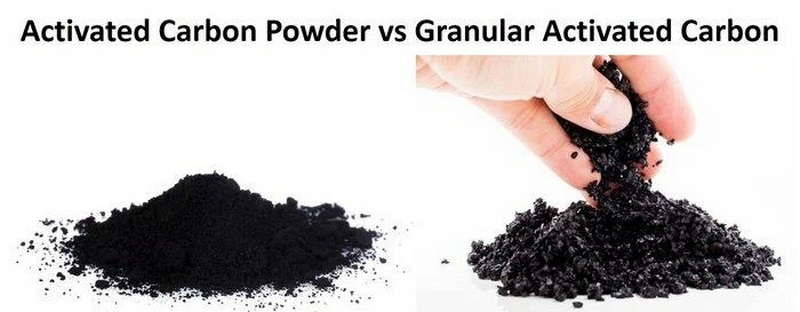
At this point, the material is still often in granule or small‑lump form; the final step to obtain powdered activated carbon is fine grinding.[3][9]
Step 5: Grinding to Powdered Activated Carbon
To form powdered activated carbon, activated carbon is milled to a fine, controlled particle size, often using equipment such as Raymond mills or similar grinding systems. This grinding step reduces the particle size to a fine powder, usually with most particles passing through 100 mesh or finer, depending on the specification.[2][9][3]
The resulting powdered activated carbon has a very large external surface area per unit mass and disperses rapidly in liquid or gas streams, ensuring quick contact between pollutants and the porous surface. Producers may classify and screen the milled product to guarantee consistent particle size distribution before packaging.[5][2][9][3]
Process Flow Examples for Powdered Activated Carbon
In wood‑based phosphoric‑acid activation, the production of powdered activated carbon typically follows a sequence such as sawdust screening and drying, preparation of phosphoric acid solution, mixing or impregnation, carbonization and activation, acid recovery, washing, centrifugal dewatering, drying, crushing, and final packaging. Each step is designed to maximize pore development while minimizing environmental impact through recovery of chemicals and treatment of exhaust gases.[8][1]
In coal‑based routes, the process commonly includes coal selection and crushing, drying, carbonization in rotary or vertical furnaces, steam activation to build porosity, cooling, and then grinding and packaging as powdered activated carbon. Steam activation is especially important in coal‑based powdered activated carbon production, as it directly influences pore formation and adsorption performance.[9][8]
Key Properties of Powdered Activated Carbon
Particle Size and Surface Area
Powdered activated carbon is defined by its fine particle size, typically with a majority finer than 100 mesh, which enables rapid dispersion and adsorption. The combination of fine particles and a highly developed internal pore network gives powdered activated carbon exceptionally high surface areas, often in the range necessary for demanding purification tasks.[2][7][3]
Surface area and pore distribution, often characterized by BET methods and pore‑size analysis, determine how effectively powdered activated carbon can remove contaminants of different molecular sizes. Manufacturers design specific powdered activated carbon grades with tailored micropores or mesopores for optimal performance in particular applications such as color removal or trace organic adsorption.[4][12][8]
Purity and Ash Content
For sensitive sectors like food and pharmaceuticals, low ash content, controlled pH, and minimal residual chemicals are critical specifications for powdered activated carbon. Many food‑ and pharma‑grade powdered activated carbon products comply with standards such as Food Chemicals Codex (FCC), USP, and other pharmacopeial or ISO frameworks to ensure safety and traceability.[14][12][2]
In water and environmental applications, powdered activated carbon must also meet regulatory requirements for leachable metals and other potential impurities to prevent secondary contamination. Appropriate washing and quality control during production help guarantee that the powdered activated carbon performs reliably and safely in these contexts.[15][4][2][8]
How Powdered Activated Carbon Works in Applications
Adsorption Mechanism
Powdered activated carbon operates primarily through physical adsorption, where molecules of contaminants are attracted to and held on the extensive internal surface area within its pores. Van der Waals forces and other weak interactions play a major role in binding organics, odor compounds, and many trace pollutants.[11][14][5][4]
Because powdered activated carbon disperses quickly, it is particularly suited for batch treatment or emergency dosing when water or process streams rapidly need additional adsorption capacity. After contact, the spent powdered activated carbon is usually removed by sedimentation, filtration, or flotation in water processes, or by filtration and dust‑collection systems in gas‑phase applications.[12][5][4][2]
Water Treatment Uses
In municipal and industrial water treatment, powdered activated carbon is extensively applied to remove natural organic matter, micropollutants such as pesticides and pharmaceuticals, and taste‑ and odor‑causing compounds. Water utilities often dose powdered activated carbon into raw water or specific treatment stages to address seasonal taste‑and‑odor events or contamination incidents.[5][4][12]
Powdered activated carbon can be used in drinking water, surface water, and wastewater treatment, helping plants meet stringent regulatory limits for trace organics. Its flexibility allows operators to adjust dosage rates quickly in response to changing contaminant levels.[15][12][5]
Air and Gas Purification
Activated carbon, including powdered forms, is widely utilized for air and gas purification to capture VOCs, odorous compounds, and various industrial emissions. Powdered activated carbon can be injected into flue gas streams, for example, to adsorb pollutants such as mercury and organic contaminants before downstream particulate control devices.[11][4][15]
In these applications, the combination of fine particle size and high surface area allows powdered activated carbon to contact gaseous pollutants effectively during the short residence times available. After treatment, the PAC‑laden dust is collected and managed in accordance with environmental regulations.[4][11][15]
Food and Beverage Purification
In the food industry, powdered activated carbon is used for decolorization and deodorization in processes such as sugar refining, edible oil purification, and beverage clarification. PAC removes color bodies, off‑flavors, and undesirable organic residues, helping producers achieve consistent appearance and taste in finished products.[11][2][4]
Because food‑grade powdered activated carbon must be very pure, it is manufactured under strict quality systems with tight control over ash, pH, and residual chemicals. Similar requirements apply to powdered activated carbon used in processing food additives and specialty ingredients where trace impurities can influence quality or stability.[14][12][2]
Chemical and Pharmaceutical Uses
In the chemical and pharmaceutical sectors, powdered activated carbon is essential for purifying intermediates, solvents, active pharmaceutical ingredients (APIs), and final formulations. PAC helps remove color bodies, catalyst residues, and trace organic contaminants that could affect safety, efficacy, or stability of products.[14][2][4]
Powdered activated carbon is also used in wastewater treatment within chemical and pharmaceutical plants to remove residual organics before discharge, aiding regulatory compliance and environmental protection. Specialized high‑purity powdered activated carbon grades are selected to meet pharmacopeial and regulatory standards while delivering consistent adsorption performance.[15][2][4][14]
Conclusion
Powdered activated carbon is formed through a multi‑step process that starts with selecting suitable carbon‑rich raw materials and continues through controlled carbonization, activation, and fine grinding. Each stage—pretreatment, carbonization, physical or chemical activation, washing, drying, grinding, and quality control—shapes the pore structure, particle size, and purity that define the performance of powdered activated carbon in real applications.[3][9][8]
Thanks to its high surface area, rapid adsorption, and flexible dosing, powdered activated carbon plays a critical role in protecting drinking water, improving air and gas quality, refining food and beverages, and purifying chemicals and pharmaceuticals worldwide. By tailoring raw materials and processing conditions, manufacturers can supply powdered activated carbon grades optimized for specific industrial needs, combining efficiency, safety, and regulatory compliance.[4][12][2][8]
FAQ About Powdered Activated Carbon
1. What is the difference between powdered activated carbon and granular activated carbon?
Powdered activated carbon has much finer particles (usually smaller than 100 mesh), which disperse rapidly and provide fast adsorption, while granular activated carbon consists of larger granules used mainly in fixed‑bed filters. PAC is typically dosed into liquid streams and then removed by filtration or sedimentation, whereas GAC remains in packed beds where water or gas flows through the media.[16][2][4]
2. Why do water treatment plants use powdered activated carbon?
Water treatment plants use powdered activated carbon because it can be quickly dosed to remove taste‑ and‑odor compounds, pesticides, pharmaceuticals, and other trace organics from drinking water or wastewater. Its fine particle size and high surface area enable rapid response to contamination events or seasonal variations, supporting compliance with water quality regulations.[12][5][4]
3. How is powdered activated carbon removed after treatment?
After powdered activated carbon is added to a water or wastewater stream and given contact time, it is typically removed by clarification and filtration processes such as sedimentation, dissolved air flotation, or media filtration. In gas‑phase applications, injected powdered activated carbon is captured alongside fly ash or dust in bag filters or electrostatic precipitators.[11][15][4][12]
4. Is powdered activated carbon suitable for food and pharmaceutical applications?
Yes, specially manufactured food‑ and pharma‑grade powdered activated carbon is widely used for decolorization, deodorization, and purification in sugar, edible oil, beverages, pharmaceuticals, and APIs. These grades are produced under strict quality standards, with low ash, controlled pH, and compliance with regulations such as FCC, USP, and relevant pharmacopeias.[14][2][12]
5. What factors should be considered when selecting a powdered activated carbon grade?
Key selection factors include raw material type (coal, wood, coconut shell), pore size distribution, iodine or methylene blue number, particle size, ash content, pH, and regulatory or certification requirements for the specific industry. It is also important to match powdered activated carbon grades to the target contaminants, operating conditions, and removal goals in each application.[2][4][12][8]
Citations:
[1](https://nanocarbons.co/manufacturing-process/)
[2](https://www.westerncarbon.com/powdered-activated-carbon-food-pharma/)
[3](https://www.sorbotech.uk/115,powdered_activated_carbon)
[4](https://puragen.com/uk/insights/what-is-activated-carbon-used-for/)
[5](https://qizhongcarbon.com/blog/types-of-activated-carbon/)
[6](https://www.sciencedirect.com/topics/engineering/powdered-activated-carbon)
[7](https://feeco.com/introduction-to-activated-carbon/)
[8](https://heycarbons.com/manufacture-of-activated-carbon/)
[9](https://rotarykilnfactory.com/how-to-make-coal-based-activated-carbon/)
[10](https://carbons.ir/en/powdered-activated-carbon-2/)
[11](https://www.carbotecnia.info/en/learning-center/activated-carbon-applications/activated-carbon-applications/)
[12](https://www.huameicarbon.com/powdered-activated-carbon-treatment-principles-applications-and-future-perspectives/)
[13](https://jamescumming.com.au/articles/the-production-process-of-powdered-activated-carbon/)
[14](https://www.sciencedirect.com/topics/pharmacology-toxicology-and-pharmaceutical-science/activated-carbon)
[15](https://www.chemviron.eu/urban-wastewater-treatment/)
[16](https://www.bygen.com.au/post/granular-vs-powdered-activated-carbon-which-one-is-right-for-your-application)
[17](https://patents.google.com/patent/RU2154605C1/en)
[18](https://www.jacobi.net/activated-carbon-an-essential-commodity/)


