Content Menu
● What granular activated carbon is
● Key roles of GAC in power plants
● GAC for boiler and process water
● GAC in cooling water and reuse systems
● Flue gas cleaning and polishing
● Mercury and multi‑pollutant control
● GAC in air and gas handling units
● Wastewater and stormwater treatment
● System designs using granular activated carbon
● Operation, regeneration, and replacement
● Advantages of granular activated carbon in power plants
● Challenges and design considerations
● Example use cases in modern plants
● How GAC supports decarbonization and ESG goals
● Conclusion
● FAQs about granular activated carbon for power plants
>> (1) What is granular activated carbon and how is it different from powdered activated carbon?
>> (2) How does granular activated carbon help power plants meet environmental regulations?
>> (3) Can granular activated carbon used in power plants be regenerated?
>> (4) Where is granular activated carbon installed in a typical power plant?
>> (5) How should a power plant choose the right type of granular activated carbon?
● Citations:
Granular activated carbon (GAC) is widely used in power plants to purify water, clean flue gas, protect equipment, and meet increasingly strict environmental regulations. By integrating granular activated carbon into water, air, and gas treatment systems, power plants can reliably remove organic pollutants, trace metals, and toxic gases while optimizing operating costs.[1][2][3]
What granular activated carbon is
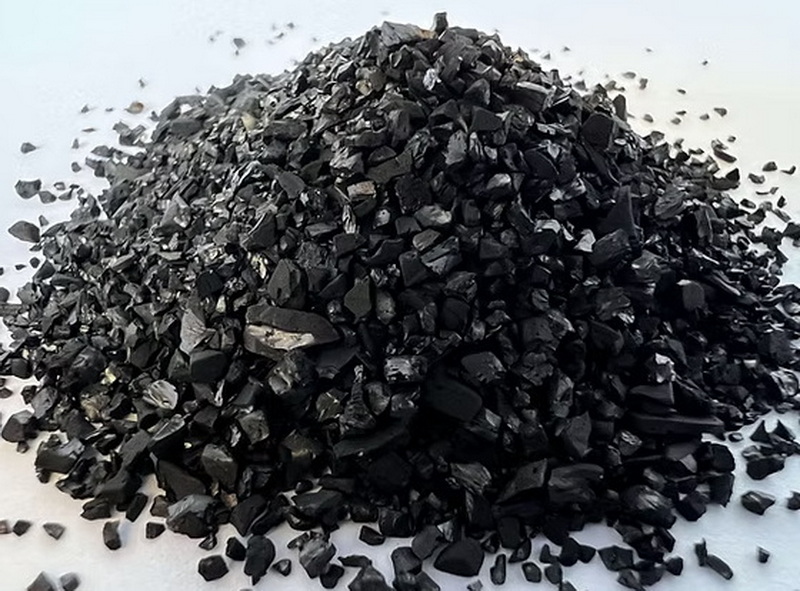
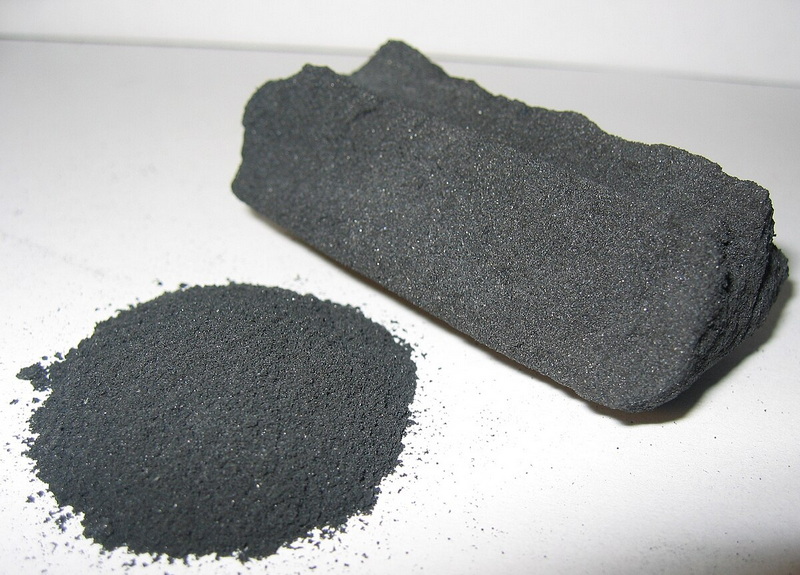
Granular activated carbon is a porous carbon filtration media produced from coal, coconut shell, wood, or other carbon-rich raw materials that are thermally activated to create a very high internal surface area. The granules typically range from about 0.3 to several millimeters in size, allowing packed-bed and column operation with relatively low pressure drop in power plant systems.[4][3]
Granular activated carbon works mainly by adsorption: organic molecules, volatile compounds, and some inorganic contaminants are attracted to and held on the internal pore surfaces. Because of the enormous specific surface area—often hundreds to over a thousand square meters per gram—granular activated carbon becomes a powerful “sponge” for dissolved and gaseous pollutants in power plant applications.[3][4]
Key roles of GAC in power plants
In modern power plants, granular activated carbon is used in multiple process steps, especially where water and gas quality directly affects environmental compliance and equipment life. Its main roles include boiler and cooling water treatment, flue gas polishing, and treatment of wastewater and stormwater before discharge or reuse.[5][2][1]
Many utilities adopt granular activated carbon filtration as a proven technology to meet regulatory limits on disinfection by-products (DBPs), organic contaminants, PFAS, and taste-and-odor compounds in process and potable water. Granular activated carbon beds also act as a “last barrier” or polishing step after primary pollution control equipment to capture trace pollutants that would otherwise escape to the environment.[6][2][1][5][3]
GAC for boiler and process water
Power plants consume large volumes of water for boilers, turbines, and auxiliary systems, and water quality directly affects scaling, corrosion, and fouling risks. Granular activated carbon pre-treatment removes dissolved organics, oxidized metals complexes, residual chlorine, and many micropollutants that can damage ion-exchange resins, membranes, and boiler components.[1][4][3]
Granular activated carbon filters are typically installed upstream of demineralization or reverse osmosis units, where they stabilize water quality and reduce chemical consumption. This improves downstream system reliability, reduces unplanned shutdowns caused by fouling, and extends the service life of expensive polishing equipment.[5][3][1]
GAC in cooling water and reuse systems
Closed-loop cooling and reuse systems in power plants increasingly depend on high-quality recycled water to lower raw water intake and comply with water scarcity and discharge rules. Granular activated carbon beds are used to remove organic matter, oils, surfactants, and trace industrial contaminants that accumulate in circulating cooling water.[4][3][5]
By stabilizing organic loading, granular activated carbon reduces biological growth in cooling towers and heat exchangers, lowering biocide demand and improving overall heat transfer efficiency. GAC-based polishing also makes it easier to upgrade blowdown or reclaimed municipal water to a quality suitable for reuse as process or boiler make-up water in the power plant.[1][5][4]
Flue gas cleaning and polishing
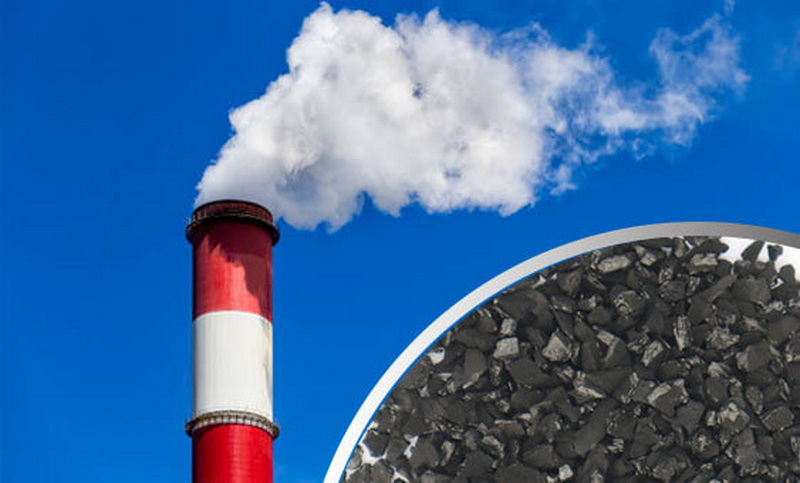
The most visible environmental application of activated carbon in power plants is flue gas treatment, especially for coal and biomass units that emit mercury and organic pollutants. In many installations, powdered activated carbon is injected into the flue gas stream to adsorb vapor-phase mercury and dioxin-like compounds before particulate collection.[7][8][9]
Granular activated carbon can also be used in fixed-bed or moving-bed reactors as a polishing stage after desulfurization, denitrification, and particulate control to capture trace organics and heavy metals. These granular activated carbon reactors are particularly valuable where stack emission limits for mercury and organic micro-pollutants are very tight, or where downstream carbon recovery and potential reactivation are desired.[10][6]
Mercury and multi‑pollutant control
Mercury from coal combustion appears in flue gas largely in elemental or oxidized forms that are difficult to remove with conventional dust and sulfur removal equipment alone. Activated carbon—often halogen-impregnated—captures mercury through a combination of physical adsorption and chemisorption, enabling removal efficiencies commonly above 90% under optimized conditions.[9][7][10]
Although injection systems typically use powdered sorbents, granular activated carbon beds are applied where a more controllable, regenerable sorbent layer is preferred, or in smaller gas streams associated with gas turbines, biogas, or flare treatment. These GAC systems can also simultaneously reduce volatile organic compounds (VOCs), odorous components, and some semi-volatile organic compounds, giving power plants a single multi‑pollutant control step.[11][12]
GAC in air and gas handling units
Beyond main boiler stacks, many power plants treat auxiliary air and gas streams from fuel handling, chemical storage, and emergency generators. Granular activated carbon filters or canisters are widely used for vapor-phase treatment of VOCs, odor-causing compounds, and hazardous air pollutants in these side streams.[12][13]
When combustion or biogas is upgraded for use in gas engines or turbines, granular activated carbon can remove hydrogen sulfide, siloxanes, and organic sulfur species that would otherwise damage catalysts and engines. In this way, granular activated carbon protects high-value equipment while enabling power producers to meet tight emission and reliability requirements.[13][11]
Wastewater and stormwater treatment
Power plants generate wastewater from flue gas desulfurization units, ash handling, equipment wash-down, and general plant drains that can contain metals, organics, and residual biocides. Granular activated carbon polishing after primary clarification and biological treatment removes persistent organics, adsorbable organic halides, and many micro-pollutants, improving compliance with discharge permits.[3][5][4]
Because granular activated carbon systems are modular and relatively compact, they are also attractive for treating intermittent flows such as stormwater from coal yards or chemical storage areas. Utilities can deploy containerized granular activated carbon units as flexible treatment assets that support both day-to-day operation and temporary projects such as plant retrofits or decommissioning.[14][5][4]
System designs using granular activated carbon
Granular activated carbon is typically installed in fixed beds, pressure vessels, gravity filters, or fluidized-bed reactors depending on the application and flow rates. In drinking and process water treatment, GAC is often used in deep fixed beds or dual‑media filters where water flows downward through the granular activated carbon layer.[14][4][1]
For higher hydraulic loading rates, fluidized or expanded beds of granular activated carbon keep the media in gentle motion, improving contact while reducing fouling and head loss. In gas-phase treatment, granular activated carbon is packed into steel vessels, with contaminated air or gas flowing through beds sized to provide sufficient contact time for adsorption.[12][13][14]
Operation, regeneration, and replacement
Granular activated carbon has a finite adsorption capacity, so power plants must monitor breakthrough of target contaminants to determine change-out or regeneration schedules. Typical monitoring methods include online TOC (total organic carbon), UV absorbance for organics, or direct measurement of specific contaminants such as PFAS, VOCs, or mercury in treated streams.[2][5][4][3]
Spent granular activated carbon can often be thermally reactivated, restoring much of its adsorption capacity and significantly lowering lifecycle costs and waste volumes compared with one-time-use sorbents. Many suppliers offer closed-loop services where granular activated carbon from power plant water or gas treatment units is removed, reactivated at specialized facilities, and then returned for reuse.[2][4]
Advantages of granular activated carbon in power plants
Power plant operators choose granular activated carbon because it offers a combination of performance, flexibility, and cost-effectiveness that is difficult to match with alternative technologies alone. GAC systems usually have a relatively small footprint, can be retrofitted into existing process lines, and integrate well with other unit operations like membranes, ion exchange, and biological treatment.[5][14][1]
Granular activated carbon is also a mature, well‑understood technology recognized by regulatory agencies for large-scale water and wastewater treatment, which reduces technical and regulatory risk for utilities. Its ability to target a broad spectrum of pollutants means granular activated carbon can serve as both a primary treatment step and a final polishing barrier for critical power plant streams.[6][3][1][5]
Challenges and design considerations
Successful application of granular activated carbon in power plants requires careful design around contaminant type, loading, and competing species such as natural organic matter or sulfur compounds that can occupy adsorption sites. In flue gas applications, components like sulfur trioxide can significantly reduce mercury capture efficiency, so upstream process optimization and sorbent selection are important.[15][9][4]
Power plants must also balance granular activated carbon performance with operating costs, including media consumption, pressure drop, and handling of spent carbon loaded with regulated substances such as mercury or PFAS. Working with experienced suppliers to select the right granular activated carbon grade—coal-based, coconut-shell-based, re-agglomerated, or impregnated—helps tailor sorbent properties to each specific application.[13][2][4]
Example use cases in modern plants
Many municipal and industrial utilities have adopted granular activated carbon filtration in large water treatment facilities that supply power plants or co-located industrial parks, demonstrating its scalability. These plants use GAC to control regulated DBPs, industrial organics, and emerging contaminants, while maintaining operational flexibility for future regulatory changes.[2][1][5]
In air and gas treatment, activated carbon has become a standard technology for reducing hazardous air pollutants from fossil-fuel power plants and waste-to-energy facilities. As more plants co-fire biomass or integrate biogas, granular activated carbon systems for H₂S and siloxane removal are increasingly common to protect engines and ensure clean energy generation.[8][11][6][13]
How GAC supports decarbonization and ESG goals
While granular activated carbon does not directly reduce greenhouse gas emissions, it plays an important supporting role in cleaner and more sustainable power generation. By enabling strict control of local pollutants in water, air, and gas streams, granular activated carbon helps power plants maintain their “license to operate” during the transition to lower‑carbon and renewable systems.[8][6][12]
Reactivation and reuse of granular activated carbon further reduce waste, making GAC-based treatment consistent with circular-economy and ESG commitments that many utilities publicly adopt. When combined with advanced monitoring and hybrid treatment trains, granular activated carbon allows power plants to adapt quickly to new contaminant concerns without rebuilding entire process lines.[4][1][5][2]
Conclusion
Granular activated carbon has become a core technology in power plants for water purification, flue gas polishing, auxiliary air and gas treatment, and wastewater and stormwater management. By using granular activated carbon in well-designed systems, power producers can reliably remove organic pollutants, mercury, VOCs, and many emerging contaminants while protecting critical assets and meeting strict environmental regulations.[10][6][1]
From pre‑treatment of boiler feedwater to the final polishing of stack gas and effluents, granular activated carbon offers flexible, modular, and often regenerable solutions that fit both existing and new-build plants. As environmental standards tighten and expectations for ESG performance increase, granular activated carbon will remain a strategic component of clean, efficient, and responsible power generation.[6][2][1][4]
FAQs about granular activated carbon for power plants
(1) What is granular activated carbon and how is it different from powdered activated carbon?
Granular activated carbon consists of relatively large, mechanically strong granules designed for use in packed beds and columns, whereas powdered activated carbon is a fine powder typically dosed directly into liquid or gas streams. In power plants, granular activated carbon is favored for fixed-bed water and gas treatment systems, while powdered activated carbon is more common for flue gas injection to control mercury and organic pollutants.[7][8][4]
(2) How does granular activated carbon help power plants meet environmental regulations?
Granular activated carbon removes a wide range of contaminants, including dissolved organics, VOCs, certain metals, PFAS, and trace toxic compounds, enabling treated water and gas to meet regulatory discharge or emission limits. Regulators recognize GAC as a proven technology for large-scale water treatment and for polishing air and gas streams, so its use gives power plants a reliable path to compliance with tightening standards.[2][3][6][1]
(3) Can granular activated carbon used in power plants be regenerated?
Yes, in many cases spent granular activated carbon from power plant water and gas treatment systems can be thermally reactivated to restore much of its adsorption capacity. Partnering with specialized reactivation facilities allows utilities to reduce waste disposal costs and environmental impact compared with single-use sorbent strategies.[2][4]
(4) Where is granular activated carbon installed in a typical power plant?
In a typical power plant, granular activated carbon is installed in pre-filters for boiler feedwater, polishing filters for cooling or reuse water, packed vessels for VOC and odor control in air streams, and sometimes in dedicated reactors for flue gas polishing. GAC may also be included as a final treatment step for wastewater and stormwater before discharge or reuse.[14][5][12][1]
(5) How should a power plant choose the right type of granular activated carbon?
Selection depends on the target contaminants, operating conditions, and whether regeneration is planned, with choices among coal-based, coconut-shell-based, or re-agglomerated granular activated carbon grades and, when necessary, impregnated products. Working with experienced suppliers to run pilot tests and analyze contaminant breakthrough helps define the optimal granular activated carbon type and bed design for each specific application.[13][1][4][2]
Citations:
[1](https://feeco.com/activated-carbon-a-critical-component-in-water-treatment-facilities/)
[2](https://www.calgoncarbon.com/municipal-water-treatment/)
[3](https://www.epa.gov/sdwa/overview-drinking-water-treatment-technologies)
[4](https://wqa.org/wp-content/uploads/2022/09/2016_GAC.pdf)
[5](https://www.peltonenv.com/blog/activated-carbon-solutions-for-municipal-water-treatment)
[6](https://activatedcarbon.net/activated-carbon-for-flue-gas/)
[7](https://www.fossilconsulting.com/blog/operations/mercury-removal-from-power-plants/)
[8](https://norit.com/application/power-steel-cement/power-plants)
[9](https://epa.illinois.gov/content/dam/soi/en/web/epa/documents/air/cair/documents/020706/tsd-hg-020906.pdf)
[10](https://www.env.go.jp/en/chemi/mercury/mcm/006_activated_carbon_en.pdf)
[11](https://norit.com/applications/biogas-rng)
[12](https://activatedcarbon.com/applications/air-and-gas)
[13](https://puragen.com/us/)
[14](https://www.veoliawatertechnologies.com/en/solutions/technologies/opacarb-fl)
[15](https://www.sciencedirect.com/science/article/abs/pii/S0378382009002446)
[16](https://www.calgoncarbon.com/flue-gas/)
[17](https://heycarbons.com/activated-carbon-for-waste-incineration/)
[18](https://www.naturecarbon.com/coal-based-activated-carbon/activated-charcoal-for-plants-desulfurization.html)
[19](https://pubs.acs.org/doi/10.1021/acsomega.9b02825)
[20](https://www.sciencedirect.com/science/article/abs/pii/S0045653505006478)


