Content Menu
● What Is Granular Activated Carbon?
● How Granular Activated Carbon Is Manufactured
● The Science: Adsorption on Granular Activated Carbon
● How Granular Activated Carbon Works in Water Treatment
● Granular Activated Carbon in Air and Gas Purification
● Food & Beverage, Chemical, and Pharmaceutical Uses
● Factors That Affect Granular Activated Carbon Performance
● Breakthrough, Regeneration, and Replacement
● Granular vs Powdered Activated Carbon
>> Comparison Table
● Using Granular Activated Carbon in Different Industries
● Conclusion
● FAQs About Granular Activated Carbon
>> 1: What is the main difference between granular activated carbon and other carbon media?
>> 2: How long does granular activated carbon last in water treatment?
>> 3: Can granular activated carbon remove all contaminants?
>> 4: Is granular activated carbon safe for drinking water and food applications?
>> 5: Can spent granular activated carbon be regenerated and reused?
● Citations:
Granular activated carbon works by adsorbing contaminants from water, air, and process fluids onto its enormous internal surface area, making it one of the most versatile purification media in modern industry. Through a combination of pore structure, surface chemistry, and physical forces, granular activated carbon captures a wide range of organic compounds, odors, colors, and trace pollutants in continuous filtration systems.[1][2][3]
What Is Granular Activated Carbon?
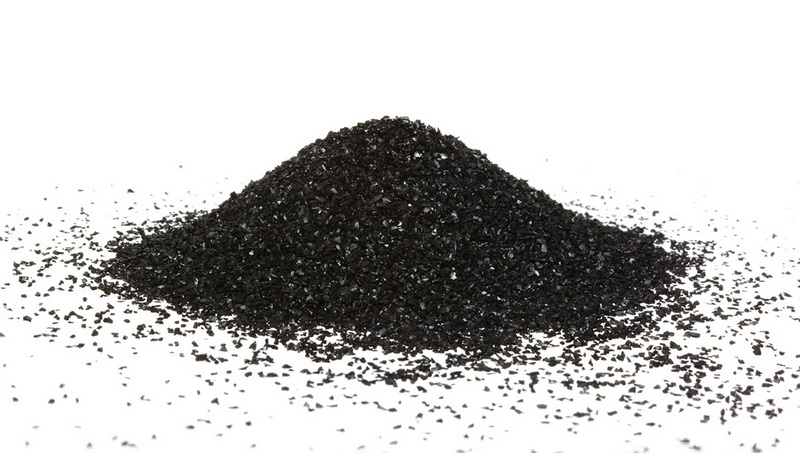
Granular activated carbon (GAC) is a porous carbon filtration media manufactured from carbon‑rich raw materials such as coconut shell, coal, peat, or wood and processed to develop a very high internal surface area and interconnected pore network. The particles are relatively larger than powdered activated carbon, typically in granule form, which makes them suitable for packed beds and columns with continuous water or air flow.[4][2][1]
In industrial and municipal systems, granular activated carbon is widely used for water purification, gas and vapor treatment, air deodorization, and product polishing in food, beverage, chemical, and pharmaceutical processes. Because granular activated carbon can be thermally reactivated, it is frequently chosen for large installations where media regeneration and long service life are important.[5][6][7][1][4]
How Granular Activated Carbon Is Manufactured
Granular activated carbon production begins with selecting a high‑carbon raw material and converting it into char through controlled carbonization. The char is then “activated” physically with steam or chemically with activating agents at elevated temperatures to open and develop micro‑, meso‑, and macropores that create the extremely high surface area typical of granular activated carbon.[8][1][4]
- Physical activation usually employs steam or carbon dioxide at high temperatures to oxidize and enlarge internal pores within the carbon matrix.[4][8]
- Chemical activation uses agents such as phosphoric acid or zinc chloride before carbonization, promoting pore formation at lower activation temperatures and tailoring the pore size distribution for specific granular activated carbon applications.[9][8]
After activation, the carbon is crushed and classified into specific granular sizes optimized for pressure drop, contact time, and mechanical strength in water treatment filters, air scrubbers, or solvent recovery units. The resulting granular activated carbon is often washed, dried, and sometimes surface‑modified to enhance affinity for certain contaminant groups such as volatile organics, sulfur compounds, or specific gases.[10][9][8][4]
The Science: Adsorption on Granular Activated Carbon
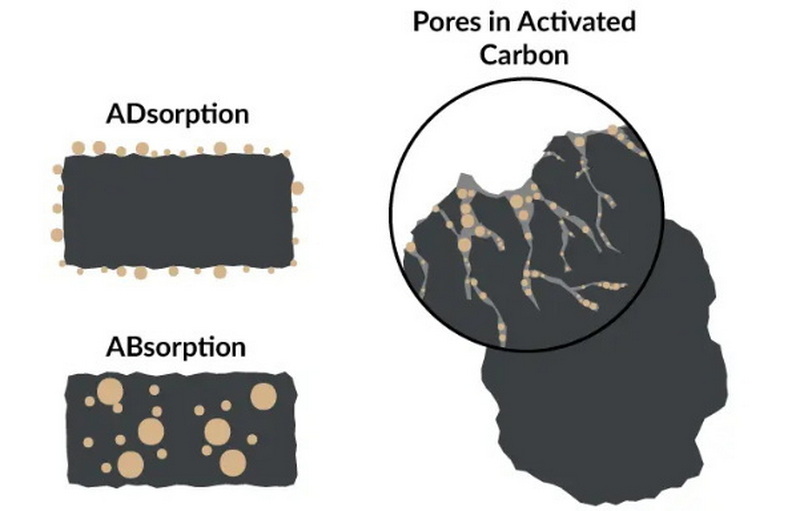
The core operating principle of granular activated carbon is adsorption, in which dissolved or gaseous contaminants accumulate on the internal surfaces of the carbon rather than remaining in the bulk fluid. Unlike absorption, which involves uptake into the volume of a material, adsorption on granular activated carbon is largely a surface phenomenon driven by van der Waals forces, electrostatic interactions, and sometimes chemisorption.[2][3][11]
The extremely large specific surface area of granular activated carbon—derived from its network of micro‑ and mesopores—provides a huge number of adsorption sites for organic molecules, trace synthetic compounds, and many odor‑causing species. Adsorption capacity and selectivity of granular activated carbon are influenced by factors such as pore size distribution, surface functional groups, solution pH, temperature, and the presence of competing contaminants.[11][8][2]
How Granular Activated Carbon Works in Water Treatment
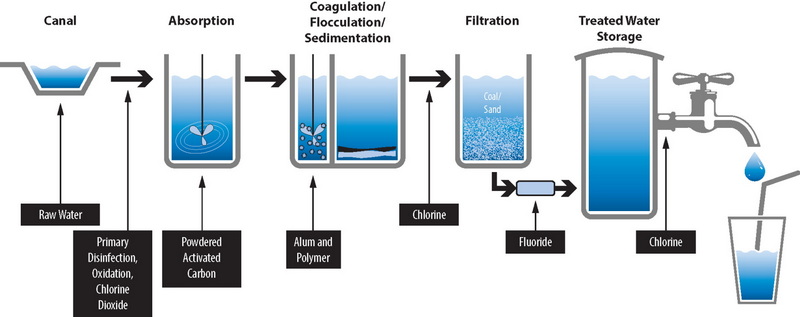
In water treatment, granular activated carbon is typically installed in fixed‑bed filters where water flows downward or upward through a packed column of carbon granules. As water passes through the granular activated carbon bed, dissolved organic contaminants, taste‑ and odor‑forming compounds, chlorine by‑products, and emerging pollutants diffuse into the pores and are retained on the carbon surface.[3][7][1]
Granular activated carbon is especially effective for removing many organic chemicals, synthetic micropollutants, and compounds responsible for taste and odor issues, including certain disinfection by‑products and industrial organics. Performance depends on contact time (empty bed contact time), flow rate, influent concentration, and the physical characteristics of the granular activated carbon used.[12][7][5][1]
Granular Activated Carbon in Air and Gas Purification
Granular activated carbon is widely used in air purification and gas treatment because it efficiently adsorbs volatile organic compounds (VOCs), odors, and many hazardous gas‑phase contaminants. In industrial exhaust systems, granular activated carbon beds are placed in scrubbers or adsorbers where contaminated air passes through the carbon layer and VOCs are trapped within the pore structure.[13][10][4]
Commercial and industrial facilities use granular activated carbon filters in HVAC systems, odor control units, and emission treatment lines to control solvent vapors, hydrogen sulfide, and other nuisance or regulated gases. In some gas‑treatment applications, specially impregnated granular activated carbon grades are used to target specific contaminants such as mercury, acid gases, or sulfur species.[6][13][10][4]
Food & Beverage, Chemical, and Pharmaceutical Uses
In the food and beverage industry, granular activated carbon is used to decolorize and deodorize products such as sugar syrups, juices, and beverages while preserving key nutritional and flavor characteristics. Granular activated carbon filters help remove color bodies, residual process chemicals, and off‑flavors, ensuring consistent quality and regulatory compliance.[14][4]
Chemical and pharmaceutical producers rely on granular activated carbon to purify intermediates, active ingredients, and process liquids by removing trace organics, by‑products, and residual solvents. For high‑purity applications, granular activated carbon is selected and pre‑treated to minimize extractables, ash, and fines while delivering reliable adsorption performance in repeated batch or continuous operations.[15][10][4]
Factors That Affect Granular Activated Carbon Performance
The performance of granular activated carbon in any system depends on both media properties and operating conditions. Key media parameters include surface area, pore volume and distribution, particle size, hardness, and surface chemistry, all of which determine how efficiently specific contaminants are adsorbed.[8][3][11][5]
From a process perspective, important variables for granular activated carbon include influent contaminant concentration, flow rate, empty bed contact time, temperature, and competing substances that may occupy adsorption sites. Lower pH, adequate contact time, and proper pre‑treatment (such as removal of suspended solids) often improve the effectiveness and service life of granular activated carbon beds.[3][15][5]
Breakthrough, Regeneration, and Replacement
Over time, the pores of granular activated carbon become saturated with adsorbed contaminants, reducing its capacity and leading to “breakthrough,” where target compounds start appearing in the effluent. Breakthrough is monitored by measuring contaminant concentration at the outlet and comparing to design or regulatory limits for the specific application.[7][15]
When granular activated carbon is exhausted, operators either replace the spent media or send it for thermal reactivation, where high‑temperature treatment removes adsorbed organics and restores much of the original adsorption capacity. Proper handling, transport, and regeneration protocols are important to manage any captured contaminants safely and to maintain consistent performance of regenerated granular activated carbon.[16][5][10]
Granular vs Powdered Activated Carbon
Granular activated carbon differs from powdered activated carbon (PAC) primarily in particle size, handling, and system design. While granular activated carbon is used in fixed beds and columns with relatively low pressure drop and good mechanical stability, powdered activated carbon is dosed as a fine powder into water or process streams and later removed by clarification or filtration.[6][4]
For continuous industrial operations such as large‑scale water treatment, air purification, and solvent recovery, granular activated carbon is usually preferred because it supports higher flow rates, easier regeneration, and more controlled breakthrough management. Powdered activated carbon, in contrast, is often chosen for short‑term, emergency, or batch treatments where simple dosing flexibility is more important than media regeneration.[4][6][7]
Comparison Table
| Feature | Granular Activated Carbon (GAC) | Powdered Activated Carbon (PAC) |
| Typical particle size | Larger granules for packed bedsactivatedcarbon | Fine powder for suspension dosingbygen |
| Typical usage mode | Fixed‑bed filters and columnssciencedirect | Batch dosing with subsequent separationbygen |
| Best suited applications | Continuous water, air, and gas treatmentactivatedcarbon | Short‑term or emergency treatmentsbygen |
| Regeneration potential | Commonly thermally reactivatedwqa | Less commonly regenerated, often disposedbygen |
| Pressure drop characteristics | Low to moderate in designed bedssciencedirect | Not used in packed beds; added directly to fluidbygen |
Using Granular Activated Carbon in Different Industries
Because of its flexibility, granular activated carbon can be custom‑engineered for specific industries and contaminant profiles. For example, water utilities may select granular activated carbon grades optimized for micropollutant removal and long bed life, while air‑treatment systems might use granular activated carbon with specific impregnants for enhanced sulfur or ammonia capture.[13][10][4]
Industrial suppliers can tailor granular activated carbon solutions by choosing raw material type, activation method, particle size distribution, and bed design to match the customer's flow rate, contaminant load, and regulatory targets. This customization allows granular activated carbon to deliver reliable purification in sectors ranging from beverage production and pharmaceuticals to petrochemicals, electronics, and waste treatment.[10][14][4]
Conclusion
Granular activated carbon works by providing an enormous, highly engineered internal surface where contaminants in water, air, and process fluids can be adsorbed and retained, delivering efficient purification for a broad spectrum of industries. By understanding how granular activated carbon is manufactured, how adsorption operates inside its pores, and which operating conditions matter most, industrial users can design reliable, cost‑effective systems for water treatment, air and gas purification, and high‑value product processing.[1][2][4][3]
FAQs About Granular Activated Carbon
1: What is the main difference between granular activated carbon and other carbon media?
Granular activated carbon consists of relatively large, mechanically strong granules specifically designed for packed beds and continuous flow filtration, whereas other forms like powdered activated carbon are fine powders dosed into liquids and removed later. This structure gives granular activated carbon lower pressure drop, easier handling in fixed equipment, and better suitability for regeneration in large‑scale systems.[6][5][4]
2: How long does granular activated carbon last in water treatment?
The service life of granular activated carbon in water treatment depends on influent quality, contaminant loading, flow rate, and contact time, and can range from a few months to several years in well‑designed systems. Operators monitor breakthrough of key contaminants and replace or reactivate granular activated carbon once outlet concentrations approach design or regulatory limits.[15][5][7]
3: Can granular activated carbon remove all contaminants?
Granular activated carbon is very effective for many organic chemicals, taste and odor compounds, and some emerging pollutants, but it does not remove every type of contaminant, such as many dissolved inorganic ions like nitrates or hardness minerals. For complete treatment, granular activated carbon is often combined with other processes such as filtration, ion exchange, membranes, or disinfection.[17][1][3][7]
4: Is granular activated carbon safe for drinking water and food applications?
When produced to appropriate standards and properly rinsed and installed, granular activated carbon is widely accepted as safe for use in drinking water, beverages, and food processing, and is used extensively in these sectors. Compliance with applicable regulations and good manufacturing practices ensures that granular activated carbon contributes to product quality without introducing undesirable residues.[1][14][10]
5: Can spent granular activated carbon be regenerated and reused?
Yes, many industrial users send spent granular activated carbon to specialized facilities for thermal reactivation, which removes adsorbed organics and restores much of the material's adsorption capacity. Regenerated granular activated carbon is then returned to service, reducing waste disposal and lowering overall lifecycle costs for large water, air, and process treatment systems.[5][7][10]
Citations:
[1](https://www.wwdmag.com/what-is-articles/article/10939799/what-is-granular-activated-carbon-gac)
[2](https://www.sciencedirect.com/topics/engineering/granular-activated-carbon)
[3](https://www.keiken-engineering.com/news/comprehensive-guide-to-granular-activated-carbon)
[4](https://activatedcarbon.net/granular-activated-carbon/)
[5](https://wqa.org/wp-content/uploads/2022/09/2016_GAC.pdf)
[6](https://www.bygen.com.au/post/granular-vs-powdered-activated-carbon-which-one-is-right-for-your-application)
[7](https://generalcarbon.com/understanding-granular-activated-carbon-for-water-treatment/)
[8](https://www.nature.com/articles/s41598-023-42011-6)
[9](https://pubs.acs.org/doi/10.1021/acsomega.2c00673)
[10](https://www.calgoncarbon.com/gac/)
[11](https://ijatec.com/index.php/ijatmmm/article/download/37/pdf)
[12](https://www.rbhltd.com/market-news/activated-carbon-for-water-filtration-how-does-it-work/)
[13](https://allcarbontech.com/activated-carbon-for-air-purification/)
[14](https://www.chemviron.eu/activated-carbon-for-beverages-purification/)
[15](https://www.sciencedirect.com/science/article/abs/pii/S0043135421012203)
[16](https://pmc.ncbi.nlm.nih.gov/articles/PMC7077425/)
[17](https://www.health.state.mn.us/communities/environment/hazardous/topics/gac.html)
[18](https://www.sciencedirect.com/science/article/pii/S1878535224001060)
[19](https://www.jeeng.net/pdf-184089-106731?filename=106731.pdf)
[20](https://sswm.info/sites/default/files/reference_attachments/ARMENANTE%20ny%20Adsorption%20with%20Granular%20Activated%20Carbon.pdf)


