Content Menu
● What Is Activated Carbon?
● From Raw Material To Char
● Physical (Steam) Activation
>> How Steam Activation Works
>> Process Parameters That Shape Pores
● Chemical Activation
>> Using Chemical Agents To Activate Carbon
>> Order Of Activation And Carbonization
● Pore Structure And Surface Chemistry
>> How Pores Develop During Activation
>> Surface Functional Groups
● Reactivation And Regeneration
● Conclusion
● FAQ About How Carbon Becomes Activated
>> 1) How is activated carbon different from regular carbon?
>> 2) Which raw materials are most commonly used to make activated carbon?
>> 3) What is the difference between steam‑activated and chemically activated carbon?
>> 4) How does activation temperature affect activated carbon quality?
>> 5) Can spent activated carbon be regenerated and reused?
● Citations:
Activated carbon is created by transforming ordinary carbon-rich materials into a highly porous adsorbent with enormous internal surface area and tailored pore structure for water, air, and gas treatment. Through controlled carbonization and activation with steam or chemicals, the base carbon is “opened up” into a labyrinth of micro‑pores that can trap contaminants from industrial and environmental processes.[1][2][3][4]
What Is Activated Carbon?
Activated carbon is a specially processed form of carbon with an extremely high internal surface area and a dense network of micro‑, meso‑, and macro‑pores. This unique porous structure allows activated carbon to adsorb a wide variety of organic molecules, odors, colors, and certain inorganic compounds from water, air, and process streams.[2][4][5]
- Typical activated carbon is produced from coal, coconut shell, wood, or other biomass precursors that are carbonized and then activated.[6][3]
- The activation process dramatically increases surface area, often to 800–1500 m² per gram or higher, which is the key to the performance of activated carbon in industrial applications.[4][2]
From Raw Material To Char
Before carbon can become activated carbon, it must first be converted into a stable carbon “char” by heating in the absence or near‑absence of oxygen, a process called carbonization or pyrolysis. This step removes volatile components such as water, tars, and gases, leaving a carbon‑rich matrix that will later be opened into a porous activated carbon structure.[7][6][2]
- Carbonization typically occurs at 400–600 °C in inert or low‑oxygen conditions, using rotary kilns, fixed‑bed furnaces, or other high‑temperature equipment.[8][2]
- The carbonization temperature strongly influences the number and distribution of reactive sites that will form pores during the later activation of activated carbon.[2]
Physical (Steam) Activation
How Steam Activation Works
In physical or steam activation, the carbonized char is exposed to an oxidizing gas such as steam or carbon dioxide at high temperatures, usually between 800 and 1100 °C. At these temperatures, steam reacts with the carbon matrix to gasify a portion of the carbon and selectively burn out pore walls, creating and enlarging pores inside the activated carbon.[3][1][8][2]
- Steam activation is often carried out in rotary kilns, multiple hearth furnaces, or shaft kilns and is the most widely used method for coal‑based and many coconut shell‑based activated carbons.[1][8]
- The gasification reactions increase total surface area and create the pore size distribution that determines how a given activated carbon will perform in real water, air, and gas purification systems.[5][2]
Process Parameters That Shape Pores
The properties of steam‑activated carbon are highly sensitive to activation temperature, activation time, and the extent of burn‑off (the fraction of carbon removed). As activation temperature and time increase, surface area and pore volume initially rise, but excessive gasification can collapse or merge pores, reducing the effective surface area of the activated carbon.[3][2]
- Studies show that activation temperatures from about 850 to 950 °C tend to increase BET surface area almost linearly, while further increases may cause pore enlargement and surface area loss.[2]
- Longer activation times allow more steam to diffuse into the char and react at new sites, further developing micropores and mesopores in the activated carbon until an optimum burn‑off is reached.[2]
Chemical Activation
Using Chemical Agents To Activate Carbon
Chemical activation uses dehydrating or oxidizing chemicals, such as phosphoric acid (H₃PO₄), zinc chloride (ZnCl₂), or strong bases like potassium hydroxide (KOH) and sodium hydroxide (NaOH), to create porosity in the precursor material and produce activated carbon at lower temperatures. The chemical agents penetrate the raw biomass, promote cross‑linking and dehydration during heating, and prevent tar formation, resulting in a highly porous activated carbon after washing.[9][10][11][12]
- Chemical activation often operates in the 400–900 °C range, generally lower than physical activation, and is particularly suitable for biomass‑based activated carbon such as rice husk or wood‑derived carbons.[11][9]
- Different chemicals create different pore structures: H₃PO₄ tends to develop mesopores, while KOH is known for creating highly microporous activated carbon with very high surface area and electrochemical performance.[10][9]
Order Of Activation And Carbonization
Chemical activation can be carried out either before or after carbonization, and the sequence significantly affects the surface area and functional properties of the resulting activated carbon. For example, research on rice husk‑based activated carbon shows that pre‑impregnation with phosphoric acid before carbonization can increase specific capacitance, while post‑treatment with KOH after carbonization may double the capacitance compared with pre‑treatment.[9][10]
- Combined H₃PO₄/KOH activation systems are being explored as effective agents for high‑performance activated carbon from agricultural residues.[10]
- The chosen route and chemicals allow manufacturers to tailor activated carbon pore size distribution for particular applications, such as supercapacitors, water treatment, or air purification.[11][9]
Pore Structure And Surface Chemistry
How Pores Develop During Activation
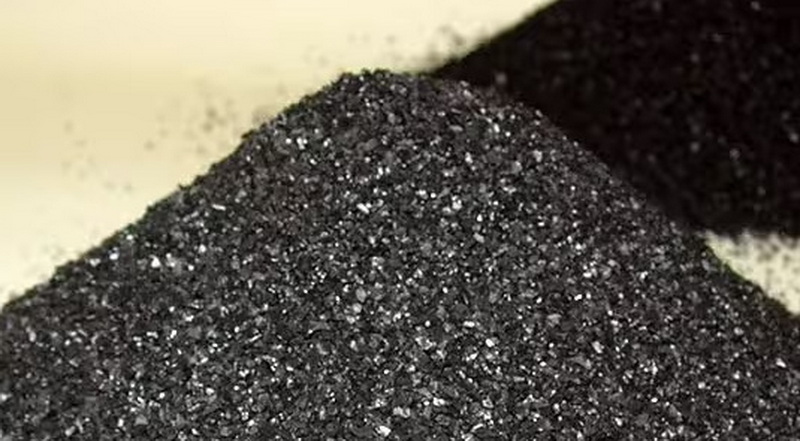
During both physical and chemical activation, the carbon matrix is gradually etched to create a hierarchy of pores in the activated carbon: micropores (<2 nm), mesopores (2–50 nm), and macropores (>50 nm). Micropores contribute most of the surface area and are essential for adsorption of small molecules, while mesopores and macropores act as transport channels that enable contaminants to reach deep micropores in the activated carbon particle.[13][4][2]
- Pore development is controlled by precursor type, carbonization conditions, activation method, and burn‑off level, with empirical models available to predict pore properties from processing parameters.[3][2]
- Excessive burn‑off can cause neighboring pores to merge into larger pores, which reduces surface area even though total pore volume may remain high, affecting the efficiency of activated carbon.[2]
Surface Functional Groups
In addition to pore structure, the surface chemistry of activated carbon is defined by oxygen‑containing functional groups such as carboxylic, phenolic, and lactonic groups, which form during carbonization and activation. These functional groups influence acidity/basicity, hydrophilicity, and the adsorption behavior of activated carbon toward different pollutants and metal ions.[7][9][2]
- Activation conditions and post‑treatments (acid or alkali washing, oxidation, or reduction) can modify these functional groups and tailor the performance of activated carbon for specific applications.[5][2]
- Analytical tools such as FTIR and XRD are used to characterize surface chemistry and structure changes in activated carbon prepared under different activation regimes.[7][9]
Reactivation And Regeneration
Activated carbon used in industrial water, air, and gas purification eventually becomes saturated with adsorbed contaminants and must be replaced or regenerated. Thermal reactivation exposes spent activated carbon to high temperatures in controlled atmospheres to burn off adsorbed organic materials and partially restore pore volume and surface area.[4][5]
- Reactivation often involves temperatures similar to initial activation and can be performed in specialized reactivation kilns, though some changes in pore structure are inevitable.[5][2]
- Each reactivation cycle modifies the pore network further, so reactivated activated carbon may show different adsorption performance compared with fresh material and must be re‑qualified for critical applications.[5]
Conclusion
Carbon becomes activated carbon through a carefully controlled two‑step process of carbonization and activation that transforms raw carbonaceous materials into a highly porous adsorbent. By selecting physical steam activation, chemical activation, or a combination of both, manufacturers can tune pore structure, surface chemistry, and performance of activated carbon for demanding applications in water treatment, air and gas purification, food and beverage processing, chemical production, and pharmaceuticals.[6][1][4][3]
FAQ About How Carbon Becomes Activated
1) How is activated carbon different from regular carbon?
Activated carbon differs from regular carbon because it has been processed to create a huge internal surface area and a complex pore structure suitable for adsorption. Ordinary carbon materials like coal or wood have far fewer accessible pores, so they cannot match the adsorption capacity of activated carbon in water or air purification systems.[13][4][2]
2) Which raw materials are most commonly used to make activated carbon?
The most common precursors for activated carbon are bituminous or lignite coal, coconut shells, wood, peat, and various agricultural residues such as rice husk or nut shells. Each raw material and activation method produces a distinct pore size distribution and surface chemistry, so the resulting activated carbon is selected based on the target application.[6][9][11][3]
3) What is the difference between steam‑activated and chemically activated carbon?
Steam‑activated carbon is produced by gasifying char with steam or CO₂ at high temperatures, mainly developing micropores through controlled burn‑off. Chemically activated carbon uses agents like phosphoric acid or KOH to promote dehydration and pore formation at lower temperatures, often yielding different mesoporous or highly microporous structures in the activated carbon.[1][9][11][3]
4) How does activation temperature affect activated carbon quality?
Activation temperature strongly influences gasification rate, burn‑off, and the balance between surface area and pore size distribution in activated carbon. Moderate to high temperatures (around 850–950 °C for steam activation) tend to maximize surface area, while much higher temperatures can over‑enlarge pores and reduce the effective area available for adsorption.[3][2]
5) Can spent activated carbon be regenerated and reused?
Yes, many types of spent activated carbon can be thermally reactivated by heating in controlled atmospheres to burn off adsorbed organics and reopen blocked pores. However, each regeneration cycle slightly changes the pore structure and surface chemistry of the activated carbon, so reactivated products must be evaluated to ensure they meet the required performance standards.[4][5]
Citations:
[1](https://www.activatedcarbon.org/activated-carbon/production/)
[2](https://pmc.ncbi.nlm.nih.gov/articles/PMC8469776/)
[3](https://www.sciencedirect.com/science/article/pii/S001623612501991X)
[4](https://en.wikipedia.org/wiki/Activated_carbon)
[5](https://www.newterra.com/article/what-is-activated-carbon/)
[6](https://www.dec.group/_docs_/ACA-docs/activated-carbon-production-ACA_en.html)
[7](https://www.nature.com/articles/s41598-021-93249-x)
[8](https://www.acarbons.com/activated-carbon-manufacture-steam-activation/)
[9](https://www.nature.com/articles/s41598-023-49675-0)
[10](https://pmc.ncbi.nlm.nih.gov/articles/PMC9822331/)
[11](https://www.sciencedirect.com/science/article/pii/S2405844022032285)
[12](https://www.scirp.org/journal/paperinformation?paperid=123234)
[13](https://unikemindustry.com/?news%2F106.html)
[14](https://heycarbons.com/manufacture-of-activated-carbon/)
[15](https://feeco.com/activated-carbon-system-requirements/)


