Content Menu
● What Is Formaldehyde and Why Is It a Problem?
● How Activated Carbon Works on Formaldehyde
● Can Standard Activated Carbon Remove Formaldehyde?
● Modified Activated Carbon for Better Formaldehyde Control
● Factors That Affect Formaldehyde Removal by Activated Carbon
● Activated Carbon vs Other Formaldehyde Removal Technologies
● Typical Applications of Activated Carbon for Formaldehyde
>> Indoor air and home environments
>> Industrial and commercial systems
● Practical Tips for Using Activated Carbon Against Formaldehyde
● Conclusion
● FAQ
>> 1. Does activated carbon completely remove formaldehyde?
>> 2. Is activated carbon or HEPA better for formaldehyde?
>> 3. How long does activated carbon last when removing formaldehyde?
>> 4. Are modified activated carbon filters safe for indoor air?
>> 5. What is the best way to combine activated carbon with other technologies for formaldehyde control?
● Citations:
Activated carbon can remove formaldehyde from air and gas streams, but its efficiency depends strongly on how the activated carbon is designed, modified, and used in the system. For long‑term formaldehyde control in homes and industrial environments, activated carbon is often combined with chemically modified carbons or catalytic technologies to reach higher removal capacity and stability.[1][2][3]
What Is Formaldehyde and Why Is It a Problem?
Formaldehyde is a colorless, pungent gas widely used in resins, particleboard, textiles, coatings, disinfectants, and many industrial processes. It is classified as a human carcinogen, and even low concentrations in indoor air can irritate eyes, nose, throat, and trigger asthma‑like symptoms.[4][5][6]
Indoor formaldehyde often comes from new furniture, flooring, paints, glues, insulation and some cleaning or disinfecting products. Because modern buildings are tightly sealed for energy efficiency, formaldehyde and other VOCs accumulate, so effective removal methods such as activated carbon filtration are increasingly important.[2][5][7]
How Activated Carbon Works on Formaldehyde
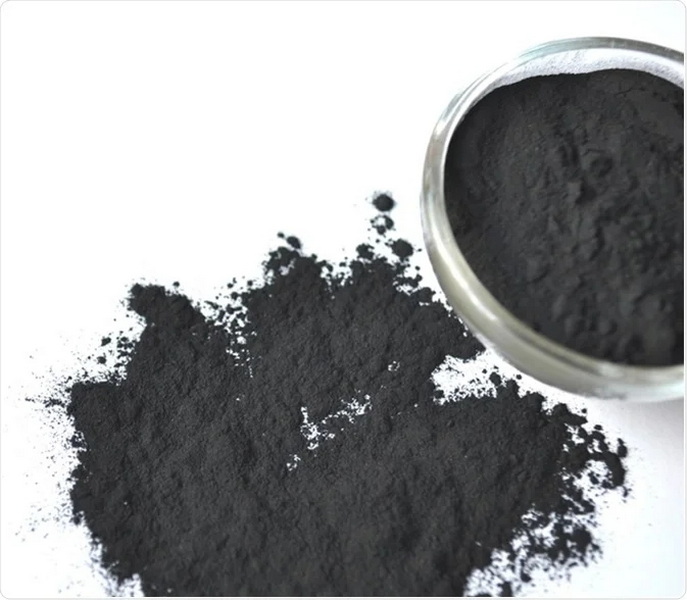
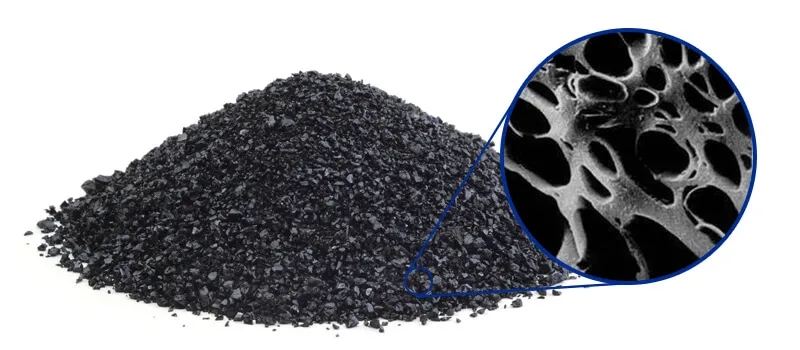
Activated carbon is a highly porous carbon material with enormous internal surface area, often exceeding 800–1,500 m²/g. When formaldehyde‑containing air passes through an activated carbon bed, formaldehyde molecules are captured mainly by physical adsorption in micropores and by interactions with surface functional groups.[7][1][2]
For many VOCs, standard activated carbon shows very high adsorption capacity, but formaldehyde is more challenging because of its small molecular size and strong interaction with water vapor in air. To improve performance, researchers have focused on tailoring activated carbon pore size and surface chemistry so that activated carbon can hold more formaldehyde and resist competition from moisture.[3][8][1]
Can Standard Activated Carbon Remove Formaldehyde?
Standard activated carbon does remove formaldehyde to some extent, but its capacity is generally lower than for larger, more hydrophobic VOCs such as toluene or benzene. Narrow micropores with diameters around 0.4–0.7 nm appear most effective for trapping individual formaldehyde molecules inside activated carbon.[9][8][1][7]
Experimental studies show that activated carbons can achieve high formaldehyde removal efficiencies in controlled conditions, especially at moderate concentrations and optimized contact times. However, in realistic indoor environments with variable humidity and low formaldehyde levels, unmodified activated carbon filters can saturate quickly and require frequent replacement to maintain good performance.[10][5][8][2]
Modified Activated Carbon for Better Formaldehyde Control
To overcome the limitations of standard activated carbon, many researchers and manufacturers use modified or impregnated activated carbon for formaldehyde removal. These modified activated carbon grades incorporate functional additives such as potassium permanganate or amine‑containing chemicals that chemically react with formaldehyde, converting it into more stable products.[11][9][2]
Laboratory studies show that activated carbon containing amino groups or nitrogen‑functionalized surfaces can significantly increase formaldehyde adsorption because of stronger interactions between formaldehyde and the activated carbon surface. In some cases, modified activated carbons outperform commercial standard activated carbon despite having lower total surface area, highlighting the importance of surface basicity and heteroatom functional groups.[12][13][3][4]
Factors That Affect Formaldehyde Removal by Activated Carbon
Several key factors determine how well activated carbon will remove formaldehyde in real systems:
- Pore structure and surface area
Microporous activated carbon with properly tuned pore size distribution enhances formaldehyde adsorption compared with carbons dominated by larger pores. High surface area alone is not enough; the pore size and connectivity inside the activated carbon must match the small formaldehyde molecule.[9][1][3][7]
- Surface chemistry of activated carbon
Oxygen‑ and nitrogen‑containing functional groups on activated carbon can increase formaldehyde uptake by providing active sites for interaction or reaction. Aminated or nitrogen‑doped activated carbon often adsorbs more formaldehyde than untreated activated carbon due to stronger chemical affinity.[13][3][4][12]
- Humidity and competing molecules
Water molecules strongly compete with formaldehyde for adsorption sites in activated carbon, reducing removal efficiency in humid air. In indoor conditions, this means activated carbon for formaldehyde must be carefully selected and often modified to maintain performance under realistic humidity levels.[8][1][2]
- Contact time and bed depth
Longer contact time and deeper activated carbon beds allow more complete formaldehyde adsorption before the air exits the filter. Portable air purifiers that use only thin, lightweight activated carbon layers for cost reasons may offer limited formaldehyde capacity compared to systems using heavier, thicker activated carbon filters.[5][14][10][2]
- Operating conditions and regeneration
Temperature, formaldehyde concentration and airflow rate all influence adsorption equilibrium and kinetics on activated carbon. Some activated carbon materials can be thermally regenerated for a few cycles, but formaldehyde removal efficiency typically declines after repeated reuse.[10][3][11]
Activated Carbon vs Other Formaldehyde Removal Technologies
Activated carbon is one of several options for formaldehyde removal, and performance often improves when activated carbon is combined with complementary technologies.
| Technology / Media | Main mechanism on formaldehyde | Typical role vs activated carbon |
| Standard activated carbon | Physical adsorption in pores | Baseline VOC removal; limited formaldehyde capacity in humid air. sciencedirect+1 |
| Modified / impregnated activated carbon | Chemisorption via oxidants or amine groups | Much higher, more stable formaldehyde removal than standard carbon. reddit+1 |
| Cold catalyst (MnOx / CuOx) | Catalytic oxidation to CO₂ and water at room temperature | Often combined with activated carbon for continuous degradation. hisoair |
| Photocatalysis (TiO₂ + UVC) | Photocatalytic oxidation of formaldehyde and VOCs | High‑end solution; can mineralize formaldehyde rather than just adsorb. hisoair |
| Electro‑Fenton / advanced oxidation systems | Generation of radicals that oxidize formaldehyde in electrochemical cells | Emerging high‑efficiency methods that can complement carbon filters. pubmed.ncbi.nlm.nih |
Many modern air purifiers designed specifically for VOC and formaldehyde control use heavy activated carbon filters together with catalysts or photocatalysts to increase overall removal efficiency and stability. Testing of commercial units has shown that models with large activated carbon masses perform significantly better for formaldehyde and other VOCs than units with thin, low‑mass activated carbon pads.[16][14][2][5]
Typical Applications of Activated Carbon for Formaldehyde
Indoor air and home environments
In homes and offices, formaldehyde is a major component of “new building” and “new furniture” smell, and using an air purifier with an activated carbon filter is one of the most practical mitigation measures. Guidelines from practical air‑quality resources often recommend using an air purifier with a substantial activated carbon filter, alongside ventilation and “bake out” strategies, to lower formaldehyde levels.[2][5][7]
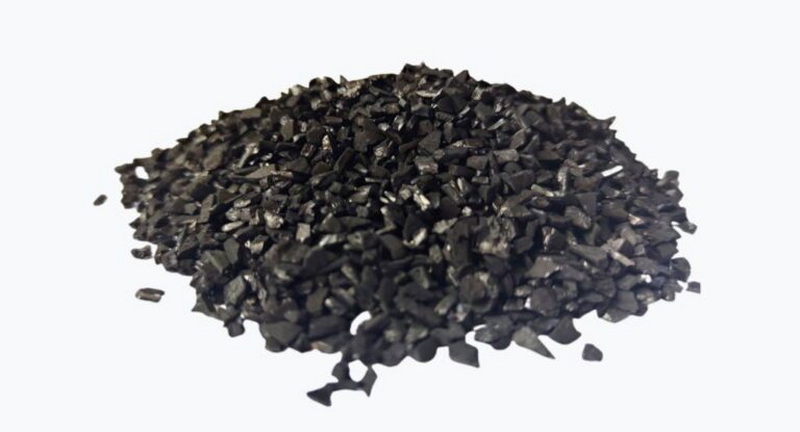
Activated carbon filters in residential air purifiers usually use granular activated carbon or pellets embedded in filter modules. For better formaldehyde control, some premium models use modified activated carbon compositions or thicker beds to increase contact time and adsorption capacity.[14][16][2]
Industrial and commercial systems
In industrial exhaust, panel manufacturing, chemical processing, and laboratory ventilation, activated carbon beds are widely used to control formaldehyde and other VOC emissions. Engineers design fixed beds or cartridge systems filled with granular activated carbon or activated carbon pellets, sized according to airflow, formaldehyde load, and required outlet concentration.[6][11][8][10]
Research has also shown that adding activated carbon into wood‑based panels or resins can significantly reduce formaldehyde emissions from final products by partially adsorbing formaldehyde in the matrix. In building materials and composites, such embedded activated carbon helps meet stricter indoor air quality regulations.[3][6]
Practical Tips for Using Activated Carbon Against Formaldehyde
For users and engineers who want to rely on activated carbon for formaldehyde control, a few practical design and operation points are critical.
- Choose the right type of activated carbon
For serious formaldehyde problems, select modified or impregnated activated carbon instead of generic, low‑cost activated carbon pads. Check whether the activated carbon media is specifically rated or tested for formaldehyde and VOC removal rather than just odor control.[16][17][12][2]
- Ensure enough activated carbon mass and bed depth
Filters with higher activated carbon mass (for example, ≥1–1.5 kg in room purifiers) generally deliver better and longer‑lasting performance against formaldehyde than thin filters with a small amount of activated carbon. In industrial beds, sufficient depth and appropriate empty bed residence time are essential for high removal efficiency.[10][5][11][2]
- Control humidity and ventilation
High humidity can reduce formaldehyde adsorption on activated carbon, so combining activated carbon filtration with good ventilation and humidity control improves overall results. Where possible, avoid placing activated carbon systems in extremely humid streams unless they are specifically engineered for those conditions.[1][5][11]
- Replace or regenerate activated carbon in time
Activated carbon has finite capacity and will become saturated with formaldehyde and other VOCs, leading to breakthrough if not replaced. Some research shows that regenerated activated carbons retain good formaldehyde removal capacity for several cycles, but performance eventually declines, so scheduled maintenance is necessary.[3][5][10][2]
- Combine activated carbon with other technologies if needed
For very high formaldehyde loads or stringent outlet limits, activated carbon should be combined with technologies such as cold catalysts, photocatalysis or advanced oxidation (including electro‑Fenton) to oxidize formaldehyde instead of just storing it. This multi‑barrier approach can reduce operating cost and extend activated carbon life while delivering high removal efficiency.[15][17][2]
Conclusion
Activated carbon does remove formaldehyde, but its performance depends heavily on how the activated carbon is engineered and used in the overall system. Standard activated carbon offers only moderate formaldehyde capacity, especially in humid air, so modern solutions rely on modified activated carbon and catalytic technologies to reach higher, more stable formaldehyde removal.[1][12][2][3]
For homes, offices and industrial facilities, selecting high‑quality activated carbon media designed for formaldehyde, using sufficient activated carbon mass, and maintaining filters regularly are the keys to effective long‑term VOC control. When these best practices are combined with ventilation and complementary oxidation processes, activated carbon becomes a powerful, flexible tool for managing formaldehyde emissions and protecting human health.[15][5][2]
FAQ
1. Does activated carbon completely remove formaldehyde?
Activated carbon can significantly reduce formaldehyde concentrations, but standard activated carbon alone rarely eliminates formaldehyde to zero, especially in humid, real‑world indoor environments. Modified activated carbon with oxidants or amine groups can approach much higher removal levels and maintain performance longer than untreated activated carbon.[5][12][1][2]
2. Is activated carbon or HEPA better for formaldehyde?
HEPA filters are designed to capture particles such as dust, pollen and microbes, while formaldehyde is a gas‑phase VOC that passes through HEPA fibers. Activated carbon, especially in granular or pellet form, is the appropriate media for formaldehyde and other VOCs, so many purifiers combine HEPA for particles and activated carbon for gases.[17][16][2]
3. How long does activated carbon last when removing formaldehyde?
The service life of activated carbon against formaldehyde depends on formaldehyde concentration, airflow, humidity and the amount of activated carbon in the filter. In residential use, some manufacturers recommend changing activated carbon filters every 6–12 months, while industrial beds are replaced or regenerated based on breakthrough monitoring and design calculations.[11][10][2][5]
4. Are modified activated carbon filters safe for indoor air?
Modified activated carbon filters use impregnated oxidants or nitrogen‑containing compounds that are fixed onto the activated carbon surface and not intended to be released into the air. When properly manufactured and used in certified equipment, these activated carbon products are considered safe and are widely used in commercial, medical and industrial environments for formaldehyde and VOC control.[12][16][2]
5. What is the best way to combine activated carbon with other technologies for formaldehyde control?
An effective approach is to use a multi‑layer system that includes pre‑filtration for particles, a substantial bed of modified activated carbon for adsorption, and a downstream catalyst or photocatalytic stage for oxidation. This configuration allows activated carbon to capture formaldehyde and other VOCs efficiently, while the catalytic step decomposes residual pollutants and reduces the risk of desorption and breakthrough.[15][17][2]
Citations:
[1](https://www.sciencedirect.com/science/article/abs/pii/S0048969723073734)
[2](https://hisoair.com/what-air-purifier-technologies-can-really-remove-formaldehyde/)
[3](https://www.frontiersin.org/journals/environmental-science/articles/10.3389/fenvs.2023.1252926/full)
[4](https://pmc.ncbi.nlm.nih.gov/articles/PMC12113733/)
[5](https://smartairfilters.com/en/blog/best-way-remove-off-gas-formaldehyde-voc-chemicals-home/)
[6](https://scijournals.onlinelibrary.wiley.com/doi/10.1002/bbb.2788)
[7](https://www.theseus.fi/bitstream/10024/802513/2/Song_Ye.pdf)
[8](https://aaqr.org/articles/aaqr-15-05-oa-0292.pdf)
[9](https://www.reddit.com/r/AirPurifiers/comments/1dtxdsj/formaldehyde_purification/)
[10](https://www.tandfonline.com/doi/full/10.1080/09603123.2025.2531525?src=)
[11](https://ijred.cbiore.id/index.php/ijred/article/view/4096)
[12](https://www.sciencedirect.com/science/article/abs/pii/S0021979799961763)
[13](https://files.core.ac.uk/download/pdf/11735284.pdf)
[14](https://www.reddit.com/r/AirPurifiers/comments/1ay01q2/best_purifier_for_vocs_and_formaldehyde/)
[15](https://pubmed.ncbi.nlm.nih.gov/38697249/)
[16](https://oransi.com/collections/air-purifiers-for-formaldehyde-vocs)
[17](https://www.airpurifierfirst.com/buying-guides/best-air-purifiers-for-vocs/)
[18](https://www.sciencedirect.com/science/article/abs/pii/S0360132324006656)
[19](https://allerair.com/pages/remove-formaldehyde)
[20](https://www.pureairfiltration.com/adsorbent-media/)


