Content Menu
● What Copper Is And Why It Matters
● How Activated Carbon Removes Copper
● When Activated Carbon Does Remove Copper Well
● When Activated Carbon Alone Is Not Enough
● Key Factors Affecting Copper Adsorption On Activated Carbon
● Types Of Activated Carbon For Copper Removal
● Industrial Applications Of Activated Carbon For Copper
● Typical Treatment Trains Including Activated Carbon
● Design Tips For Activated Carbon Systems Targeting Copper
● Conclusion
● FAQ About Activated Carbon And Copper
>> 1) Does activated carbon remove copper from drinking water?
>> 2) Is activated carbon as effective as reverse osmosis for copper?
>> 3) What pH is best for copper removal with activated carbon?
>> 4) Can modified activated carbon improve copper removal?
>> 5) How long does activated carbon remain effective for copper?
● Citations:
Activated carbon can remove copper from water by adsorption, but its real effectiveness depends on pH, water composition, contact time, and how the activated carbon system is designed. In industrial practice, activated carbon is often combined with other technologies such as ion exchange or reverse osmosis to achieve very low residual copper concentrations and stable long‑term performance.[1][2][3][4]
What Copper Is And Why It Matters
Copper is an essential trace metal for humans and aquatic life, but elevated copper levels in water are corrosive, toxic to fish, and can cause taste, staining, and health concerns. Copper in water appears as dissolved copper ions, complexes with other ligands, or fine copper‑bearing particles, and each form behaves differently in treatment systems and on activated carbon.[2][5][3][6]
- Drinking water guidelines typically limit copper to low mg/L or sub‑mg/L levels to avoid chronic health effects and aesthetic problems.[5][2]
- Industrial and stormwater discharges also face strict copper limits to protect surface waters and meet environmental permits.[7][4]
How Activated Carbon Removes Copper
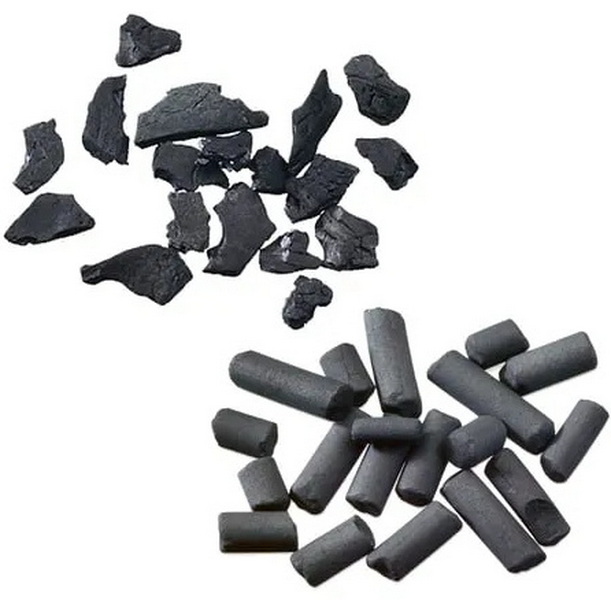
Activated carbon is a highly porous adsorbent with a huge internal surface area that attracts and holds dissolved substances on its surface. For copper, granular activated carbon (GAC) and powdered activated carbon (PAC) remove Cu(II) ions mainly by physical adsorption and surface interactions, sometimes supported by functional groups introduced during carbon activation or modification.[8][3][6][9][10]
- Studies on granular activated carbon show that copper adsorption follows well‑known isotherm models such as Langmuir and often fits intra‑particle diffusion kinetics, indicating that diffusion into pores controls the rate.[3][11]
- Research with modified or composite media (for example, TiO₂‑modified activated carbon or PAC‑based composites) reports optimized removal at specific pH, dose, and contact time, reaching high copper adsorption capacities under controlled conditions.[12][13][10]
When Activated Carbon Does Remove Copper Well
Activated carbon can significantly reduce copper in several practical water treatment situations, especially when the system is engineered for metals removal rather than only for organics.[1][2][3]
- Some drinking‑water and filter vendors note that activated carbon cartridges can remove copper by adsorption, though performance depends strongly on pH and competing ions.[2][1]
- Research in simulated and real waters shows that granular or powdered activated carbon, especially when modified (for example with TiO₂ or magnetic components), can achieve high copper removal efficiencies when pH, dosage, and contact time are optimized.[4][13][10][12]
When Activated Carbon Alone Is Not Enough
General consumer guidance often points out that standard activated carbon filters are not a guaranteed solution for copper, especially in corrosion‑driven residential plumbing problems. Copper removal by activated carbon can be limited when copper is present mainly as fine particles, when pH is too low, or when other dissolved substances occupy adsorption sites first.[6][14][15][5]
- Home water treatment resources frequently recommend reverse osmosis, ion exchange, or special KDF/metal media as primary methods for copper removal, noting that basic carbon blocks and sediment filters usually cannot handle copper reliably on their own.[5][2]
- In industrial practice, activated carbon for copper control is often integrated with upstream precipitation, coagulation, or filtration steps to handle both particulate and dissolved copper species.[14][4]

Key Factors Affecting Copper Adsorption On Activated Carbon
Several water‑chemistry and design parameters have a strong impact on how efficiently activated carbon can remove copper from water.[15][3][6][14]
- pH: Laboratory studies consistently show that copper adsorption on activated carbon increases as pH rises from acidic conditions toward near‑neutral or slightly alkaline ranges. At very low pH, competition with hydrogen ions and possible protonation of the carbon surface reduce copper uptake.[6][14][15]
- Contact time: Most kinetic studies report rapid initial copper removal followed by slower approach to equilibrium, with contact times ranging from tens of minutes in batch tests to several hours or more in some systems.[13][3][14]
- Activated carbon dose and surface chemistry: Higher activated carbon doses and higher surface area increase the number of active sites, while oxidation or functionalization of granular activated carbon can greatly enhance Cu(II) adsorption capacity.[10][12][3]
- Competing ions and organic matter: Co‑existing cations and organic compounds can compete with copper for adsorption sites, sometimes reducing removal efficiency, although some systems show complex interactions with dyes or other molecules.[16][15][6]
Types Of Activated Carbon For Copper Removal
Different forms and modifications of activated carbon can be used when designing copper‑removal solutions for industrial or environmental projects.[12][3][4][10]
- Granular activated carbon (GAC): Widely used in fixed‑bed columns for drinking water, industrial process water, and stormwater treatment, with documented copper removal under optimized conditions.[11][3][4]
- Powdered activated carbon (PAC): Can be dosed into basins or reactors and then separated, and PAC‑based composites with other materials (such as steel slag) show strong copper removal in stormwater studies.[17][7]
- Modified activated carbon: TiO₂‑modified, oxidized, magnetic, or otherwise functionalized activated carbon can achieve higher copper adsorption capacities and easier separation or regeneration in some systems.[16][4][10][12]
Industrial Applications Of Activated Carbon For Copper
For a professional manufacturer and exporter of activated carbon, copper removal is part of wider water and process‑treatment portfolios in industries such as metal finishing, mining, electronics, and stormwater management.[7][4][12]
- In stormwater control, composites combining powdered activated carbon with steel slag have delivered stable copper removal above 80% over many bed volumes while also capturing other contaminants.[7]
- In industrial wastewater and mixed‑metal streams, magnetic granular activated carbon and other advanced activated carbon media can rapidly remove copper(II) and chromium(VI), while allowing easier recovery and reuse.[4]
Typical Treatment Trains Including Activated Carbon
Because no single technology is perfect, copper‑removal systems often combine activated carbon with other processes to achieve regulatory limits and economic operation.[1][2][5][4]
- For drinking water or residential supplies, reverse osmosis or ion exchange often serve as primary copper‑removal methods, with activated carbon polishing for organics, taste, odor, and any residual metals.[2][5][1]
- In industrial wastewater, a multi‑barrier approach may include pH adjustment, chemical precipitation or coagulation, clarification and filtration, followed by activated carbon adsorption for dissolved organics and remaining metals.[14][15][4]
Design Tips For Activated Carbon Systems Targeting Copper
Engineering a reliable activated carbon system for copper control requires attention to both media selection and system design.[3][13][10][12]
- Choose an activated carbon grade with appropriate pore size distribution, surface area, and—when needed—surface modification or impregnation tailored for metal adsorption.[10][12][3]
- Design bed depth, empty bed contact time, and flow rate to match copper loading and target effluent limits, guided by lab or pilot adsorption data.[13][11][3]
- Maintain pH in the optimal range identified for the selected activated carbon and water matrix, and monitor for competing species that may require pretreatment.[15][6][14]
Conclusion
Activated carbon can remove copper from water through adsorption, especially when pH, contact time, activated carbon type, and dosage are properly controlled. However, standard activated carbon alone is not always sufficient to meet very strict copper limits or to manage complex water matrices, so it is commonly integrated with technologies like reverse osmosis, ion exchange, precipitation, or specialized metal‑removal media. For global industrial applications—from stormwater and industrial wastewater to process and drinking water—customized activated carbon solutions, pilot testing, and careful system design are essential to achieve stable, economical copper reduction.[5][12][3][6][4][1][2][7]
FAQ About Activated Carbon And Copper
1) Does activated carbon remove copper from drinking water?
Activated carbon can adsorb some dissolved copper from drinking water, but performance depends heavily on pH and water composition. Many residential treatment guides still recommend reverse osmosis or ion exchange as the primary copper‑removal methods, using activated carbon more for organic pollutants, taste, and odor control.[6][1][2][5]
2) Is activated carbon as effective as reverse osmosis for copper?
Reverse osmosis systems are often rated to remove around 97–98% of copper, while activated carbon performance varies much more with operating conditions and media selection. For strict copper limits, reverse osmosis or ion exchange usually serve as the core barrier, while activated carbon acts as a polishing or support step in the treatment train.[4][1][2]
3) What pH is best for copper removal with activated carbon?
Experimental studies show that copper adsorption on activated carbon generally increases when pH rises from acidic toward near‑neutral conditions, often with optimum removal around pH 5–7 depending on the specific activated carbon and water matrix. At too low pH, hydrogen ions compete strongly for adsorption sites, while at high pH, partial precipitation of copper species may complicate interpretation of removal mechanisms.[12][14][15][6]
4) Can modified activated carbon improve copper removal?
Yes, modified activated carbon—such as TiO₂‑coated, oxidized, magnetic, or composite activated carbon—can significantly enhance copper adsorption capacity and facilitate regeneration or separation. Research on TiO₂‑modified activated carbon and magnetic granular activated carbon has reported high copper removal efficiencies under optimized pH, contact time, and dosage conditions.[16][13][10][12][4]
5) How long does activated carbon remain effective for copper?
Activated carbon continues to remove copper until its adsorption sites become saturated or blocked by competing contaminants, which can occur faster in complex industrial waters than in simple lab solutions. Breakthrough curves from column tests and regular monitoring of effluent copper levels are required to determine replacement or regeneration intervals for specific activated carbon systems.[3][14][7][4]
Citations:
[1](https://www.aquapurefilters.com/pages/water-contaminants/copper)
[2](https://www.h2odistributors.com/info/contaminants/contaminant-copper/)
[3](http://www.scielo.org.za/scielo.php?script=sci_arttext&pid=S1816-79502013000400009)
[4](https://iwaponline.com/wpt/article/19/1/99/99354/Adsorption-removal-of-copper-II-and-chromium-VI)
[5](https://waterfilterguru.com/how-to-remove-copper-from-drinking-water/)
[6](https://www.primescholars.com/articles/kinetic-and-equilibrium-studies-on-the-adsorption-of-cuii-ions-by-a-new-activated-carbon-90583.html)
[7](https://pubmed.ncbi.nlm.nih.gov/41115368/)
[8](https://ionexchangeglobal.com/how-an-activated-carbon-filter-cleans-water/)
[9](https://tappwater.co/blogs/blog/what-activated-carbon-filters-remove)
[10](https://pubmed.ncbi.nlm.nih.gov/18495336/)
[11](https://www.sciencedirect.com/science/article/pii/0956961896001464)
[12](https://pmc.ncbi.nlm.nih.gov/articles/PMC10660060/)
[13](https://www.sciencedirect.com/science/article/pii/S1944398624177892)
[14](https://www.scholarsresearchlibrary.com/articles/adsorption-of-copper-from-aqueous-solution-using-lowcost-adsorbent.pdf)
[15](https://granthaalayahpublication.org/journals/granthaalayah/article/download/IJRG16_A02_52/2693/14765)
[16](https://www.nature.com/articles/s41598-018-24891-1)
[17](https://www.sciencedirect.com/science/article/pii/S0301479725036758)
[18](https://www.nature.com/articles/s41598-025-02213-6)
[19](https://scijournals.onlinelibrary.wiley.com/doi/abs/10.1002/1097-4660(200009)75:9%3C791::AID-JCTB279%3E3.0.CO;2-C)
[20](https://pubs.rsc.org/en/content/articlehtml/2017/ra/c7ra00287d)


