Content Menu
● What Is Activated Carbon?
● How Activated Carbon Removes CO2
● CO2 Adsorption Capacity of Activated Carbon
● Applications of Activated Carbon for CO2 Capture
● Advantages and Limitations
>> Advantages of activated carbon for CO2
>> Limitations of activated carbon for CO2
● Design Considerations for Industrial Users
● Conclusion
● FAQ About Activated Carbon and CO2
>> (1) Does activated carbon remove CO2 from room air?
>> (2) Is activated carbon better than amines for CO2 capture?
>> (3) Can activated carbon be regenerated after CO2 adsorption?
>> (4) What type of activated carbon is best for CO2 capture?
>> (5) Can activated carbon capture CO2 and other pollutants at the same time?
● Citations:
Activated carbon can remove CO2 from gas streams by adsorption, especially at higher CO2 concentrations and optimized pressure and temperature, but it is not yet a universal, stand‑alone solution for all carbon capture scenarios. In industrial CO2 capture, activated carbon is often combined with surface functionalization, pressure swing adsorption, or other sorbents to reach high capacity, good selectivity, and energy‑efficient regeneration.[1][2][3]
What Is Activated Carbon?
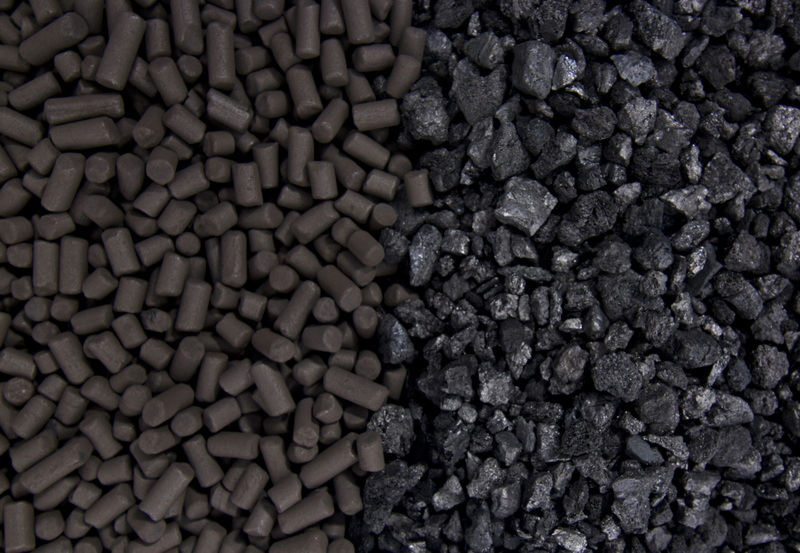
Activated carbon is a highly porous carbon material produced from coal, coconut shell, wood, or other carbon‑rich feedstocks and then “activated” to create an enormous internal surface area. This porous structure allows activated carbon to adsorb CO2 and many other molecules from gas and liquid streams in industrial and environmental applications.[4][2]
Typical features of activated carbon relevant to CO2:
- Very high internal surface area, often 500–2000 m²/g, which provides many adsorption sites for CO2 molecules.[2][5]
- Dominantly microporous structure (pores <2 nm), especially important for CO2 adsorption at low pressures.[6][1]
- Tunable surface chemistry, where basic or nitrogen‑containing groups increase the affinity between activated carbon and acidic CO2.[7][1]
How Activated Carbon Removes CO2
Activated carbon removes CO2 mainly through physical adsorption, where CO2 molecules are attracted to and held on the carbon surface by weak van der Waals forces. At suitable pressure and temperature, layers of CO2 can form inside the micropores of activated carbon, sometimes reaching three or four molecular layers under optimized conditions.[8][1][2]
Key points about the CO2 adsorption mechanism:
- CO2 uptake increases as pressure increases and temperature decreases, typical of exothermic physical adsorption on activated carbon.[9][10][6]
- The most effective activated carbon for CO2 capture often has a high fraction of ultramicropores (<0.7 nm), which match the size of CO2 molecules and maximize packing density.[1][6]
- Surface functionalization (for example, nitrogen‑doping or impregnation with alkali carbonates) introduces additional basic sites that strengthen CO2–surface interactions and improve capacity and selectivity.[11][12][1]
Regeneration is critical in CO2 capture: CO2‑loaded activated carbon can be regenerated by lowering pressure, raising temperature, or using a purge gas, making repeated adsorption–desorption cycles feasible for industrial processes. Because the adsorption is largely physical, regeneration energy for activated carbon is generally lower than for strongly chemisorbing amine solutions or some solid chemisorbents.[13][14][7]
CO2 Adsorption Capacity of Activated Carbon
CO2 adsorption capacity of activated carbon depends on operating conditions (pressure, temperature, gas composition) and material design (pore structure, surface chemistry). Laboratory studies report capacities ranging from a few mg CO2 per gram of activated carbon to several mmol CO2 per gram under optimized conditions.[5][6][2]
Representative data from recent studies:
- Under typical flue‑gas or elevated‑pressure conditions, activated carbons show CO2 uptakes roughly between 3 and 105 mg CO2/g (about 0.07–2.4 mmol/g), depending on pressure and temperature.[2][5]
- Functionalized activated carbon, with chemically modified surfaces, can achieve CO2 capacities around 3.98 mmol/g, about 35% higher than the non‑functionalized counterpart under the same conditions.[11]
- Optimized KOH‑activated carbons made from biomass (such as date seeds) can reach around 4.21 mmol CO2/g at 25 °C and 1 bar when activation temperature and chemical ratio are carefully tuned.[6]
These values highlight that advanced activated carbon can provide competitive CO2 uptake compared with many other physical adsorbents, while remaining relatively low‑cost and scalable.[5][6]
Applications of Activated Carbon for CO2 Capture
Activated carbon is widely investigated and increasingly applied for CO2 removal in different gas‑treatment scenarios. While amine scrubbing remains dominant in some large‑scale carbon capture projects, activated carbon offers attractive benefits in specific applications.[3][1]
Common CO2‑related uses of activated carbon include:
- Post‑combustion CO2 capture from flue gas, where activated carbon beds can selectively adsorb CO2 from mixtures containing nitrogen, oxygen, and other gases.[3][5]
- Pressure swing adsorption (PSA) or temperature swing adsorption (TSA) units, using activated carbon to separate CO2 from hydrogen, methane, or nitrogen streams in refineries, natural gas processing, and chemical plants.[10][2]
- Direct air capture (DAC) research, where specially designed activated carbons with ultra‑microporosity and functionalized surfaces are explored for CO2 capture at atmospheric concentrations.[7][1]
Recent work also shows that charging activated carbon or related charcoal structures with ions can significantly enhance CO2 capture from air, effectively turning activated carbon into an “electrified” CO2 sponge. This emerging approach combines electrochemistry and adsorption, expanding the potential of activated carbon in future carbon capture technologies.[15][16]
Advantages and Limitations
Advantages of activated carbon for CO2
Activated carbon provides several important benefits when used as a CO2 adsorbent.[14][3]
- Cost‑effective and derived from abundant, often renewable precursors such as biomass, reducing material cost and environmental footprint.[6][5]
- Moderate adsorption strength, which allows relatively easy desorption and lower regeneration energy in PSA or TSA systems.[13][2]
- Flexible pore tuning and surface functionalization, enabling activated carbon producers to customize products for specific CO2 concentrations, temperatures, and gas mixtures.[1][7]
Limitations of activated carbon for CO2
Despite these advantages, activated carbon also has important limitations that must be considered in system design.[14][3]
- Limited selectivity at low CO2 concentrations, especially in mixtures with nitrogen or methane, which can reduce efficiency in some separation tasks.[3][5]
- Decreased CO2 uptake at higher temperatures, which is challenging for hot flue gas streams unless cooling or special formulations are used.[10][6]
- Need for careful balance between pore development and structural stability: overly aggressive activation can damage the carbon matrix and reduce CO2 capacity.[8][6]
Because of these constraints, activated carbon is often integrated with other sorbents, membranes, or process steps to achieve target CO2 capture performance while controlling cost and energy use.[14][3]
Design Considerations for Industrial Users
For industrial buyers and engineers planning to use activated carbon for CO2 capture or CO2 polishing, several design parameters are critical.[2][7]
Important factors include:
- Operating pressure and temperature: Higher pressure and lower temperature generally increase CO2 uptake on activated carbon, so PSA or cooled gas streams often perform better than hot, low‑pressure systems.[9][6]
- Gas composition and humidity: Other components such as water vapor, oxygen, and impurities can compete with CO2 for adsorption sites on activated carbon, influencing capacity and breakthrough time.[17][3]
- Pore size distribution and surface chemistry: Matching activated carbon microporosity to the molecular size of CO2 and adding basic functional groups can significantly improve performance.[11][1]
Because activated carbon is regenerable, life‑cycle cost analysis should consider not only initial media cost but also energy for regeneration, expected cycle life, and potential media reactivation or disposal. Cooperation with experienced activated carbon manufacturers and process integrators helps align product selection with real industrial conditions and regulatory requirements.[18][17][13][14]
Conclusion
Activated carbon does remove CO2 by physically adsorbing CO2 molecules into its microporous structure, and advanced activated carbon materials can reach high capacities under optimized conditions. However, limitations in selectivity, temperature sensitivity, and low‑concentration performance mean that activated carbon is usually part of a broader system, often combined with functionalization, PSA/TSA cycles, or other technologies for practical industrial CO2 capture. For water treatment, air and gas purification, food and beverage, chemical, and pharmaceutical applications that also involve CO2 management, carefully selected activated carbon solutions can provide an effective, regenerable, and scalable technology for CO2 removal and gas stream polishing.[4][18][1][6][2][3][14]
FAQ About Activated Carbon and CO2
(1) Does activated carbon remove CO2 from room air?
Activated carbon can adsorb CO2 from room air, but at typical indoor CO2 levels and temperatures, its capacity and selectivity are limited, so large quantities of activated carbon and optimized devices are needed for meaningful removal. New concepts such as charged or functionalized activated carbon are being explored to improve direct air capture performance at ambient CO2 concentrations.[16][15][1][3]
(2) Is activated carbon better than amines for CO2 capture?
Activated carbon offers lower regeneration energy, lower corrosion risk, and simpler handling than many amine solutions, making it attractive in some PSA or TSA applications. However, amine scrubbing usually provides higher CO2 selectivity and is still widely used for large‑scale post‑combustion capture, so the choice depends on process requirements and economics.[19][13][3][14]
(3) Can activated carbon be regenerated after CO2 adsorption?
Yes, CO2‑loaded activated carbon can be regenerated by reducing pressure, increasing temperature, or using a purge gas, and can undergo many adsorption–desorption cycles with proper design. The relatively moderate adsorption strength of CO2 on activated carbon makes regeneration less energy‑intensive than for some chemisorbents, improving operating cost.[13][7][2][14]
(4) What type of activated carbon is best for CO2 capture?
Activated carbon with a high proportion of ultramicropores and tailored basic surface groups generally performs best for CO2 capture. Biomass‑derived activated carbon optimized with KOH activation or similar methods often achieves high CO2 uptake while using sustainable feedstocks.[5][1][11][6]
(5) Can activated carbon capture CO2 and other pollutants at the same time?
Activated carbon can adsorb CO2 along with volatile organic compounds (VOCs), acid gases, and other impurities, which is useful when gas purification and CO2 management are combined. However, co‑adsorption means that some contaminants may compete with CO2 for adsorption sites, so system design must account for multi‑component gas mixtures and target priorities.[4][18][17][3]
Citations:
[1](https://urfjournals.org/open-access/activated-carbons-for-direct-air-capture-adsorption-mechanisms-material-design-and-performance-optimization.pdf)
[2](https://pmc.ncbi.nlm.nih.gov/articles/PMC10795115/)
[3](https://pmc.ncbi.nlm.nih.gov/articles/PMC10018639/)
[4](https://oransi.com/blogs/how-it-works/activated-carbon-activated-carbon-adsorption)
[5](https://scijournals.onlinelibrary.wiley.com/doi/10.1002/ghg.2112)
[6](https://www.nature.com/articles/s41598-025-00498-1)
[7](https://pmc.ncbi.nlm.nih.gov/articles/PMC10694831/)
[8](https://www.nature.com/articles/s41598-025-22526-w)
[9](https://pubs.acs.org/doi/10.1021/acsomega.3c02476)
[10](https://www.sciencedirect.com/science/article/pii/S2588912522000029)
[11](https://ehemj.com/article-1-985-en.pdf)
[12](https://pubs.acs.org/doi/10.1021/acs.jpclett.3c02711)
[13](https://www.sciencedirect.com/science/article/abs/pii/S001623612502246X)
[14](https://www.sciencedirect.com/science/article/pii/S2772656825000260)
[15](https://www.cam.ac.uk/research/news/electrified-charcoal-sponge-can-soak-up-co2-directly-from-the-air)
[16](https://www.nature.com/articles/s41586-024-07449-2)
[17](https://drpress.org/ojs/index.php/HSET/article/download/8546/8319/8364)
[18](https://www.desotec.com/en/knowledge-hub/article/cleaning-co%E2%82%82-for-valorisation)
[19](https://blog.verde.ag/en/the-science-of-carbon-capture/)


