Content Menu
● What Activated Carbon Actually Does
● Can Activated Carbon Remove Ethanol?
● Why the Beverage Industry Uses Activated Carbon
● Activated Carbon and Ethanol Adsorption Science
● Limitations of Using Activated Carbon to Remove Alcohol
● Typical Industrial Uses of Activated Carbon With Alcohol
● How Activated Carbon Compares to Other De‑Alcoholization Methods
● Recommended Media Types and System Design
● Conclusion
● FAQ About Activated Carbon and Alcohol
>> 1. Does activated carbon remove all the alcohol from a drink?
>> 2. Can activated carbon make beer or wine non‑alcoholic?
>> 3. Why is activated carbon used in distilleries if it does not remove all the alcohol?
>> 4. Does activated carbon remove methanol and other toxic alcohols?
>> 5. Is activated carbon safe to use in food and beverage alcohol applications?
● Citations:
Activated carbon does not “delete” the alcohol content of a beverage in any practical sense, but it can adsorb certain alcohol molecules and many flavor, odor, and impurity compounds from alcoholic solutions under the right conditions. In the beverage and distilling industries, activated carbon is used mainly to polish spirits and wines—improving taste, color, and purity—rather than to make a drink non‑alcoholic.[1][2][3][4]
What Activated Carbon Actually Does
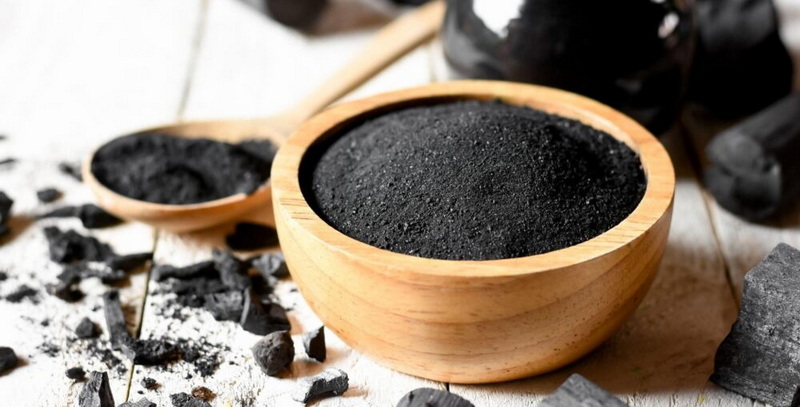
Activated carbon is a highly porous adsorbent with a huge internal surface area, typically 500–1500 m² per gram, which allows it to trap molecules from liquids and gases. In alcohol-related applications, activated carbon is used to remove off‑flavors, odors, pigments, and some congeners (impurities), not primarily to strip out ethanol itself.[2][5][3]
In spirits, winemaking, beer, and other beverages, producers dose powdered or granular activated carbon or pass the liquid through activated carbon columns to reduce unwanted organics and residual disinfectants in process water, and to refine color and taste. In distilleries, activated carbon helps “polish” vodka and neutral spirits by adsorbing harsh fusel oils and other volatile components, resulting in a cleaner, smoother profile.[6][3][7][8][9][1]
Can Activated Carbon Remove Ethanol?
From a scientific standpoint, activated carbon can adsorb ethanol from aqueous mixtures, and this has been studied for both technical and energy-storage applications. Adsorption isotherm studies show that powder and granular activated charcoal can take up ethanol from water, with adsorption influenced by temperature, pH, surface chemistry, and pore structure of the activated carbon.[10][4][11][12]
However, the objective in alcoholic beverages is not typically to eliminate ethanol but to adjust flavor and purity. Even though ethanol molecules can enter activated carbon pores, the capacity and operating conditions in beverage filtration systems are not optimized for full de‑alcoholization, so the drink remains alcoholic after standard activated carbon treatment.[7][9][4][2]
Why the Beverage Industry Uses Activated Carbon
The food and beverage industry—especially wineries, breweries, and distilleries—uses activated carbon because of its strong effectiveness in removing color bodies, off‑odor compounds, and certain organics. In wine, activated carbon is used for decolorization (particularly in white and rosé wines), removal of excess phenolic compounds, and improvement of clarity and stability, with typical dosage ranges around 0.1–0.5% of the wine volume.[5][3][2]
For beer and malt-based distillates, activated carbon treatment reduces volatile impurities such as aldehydes, higher alcohols, and esters that negatively affect aroma and smoothness. Specialized distillery-grade activated carbon products are marketed for polishing spirits like vodka, whiskey, rum, gin, and neutral bases, where the goal is to remove harsh flavors and residual congeners without destroying the overall character of the product.[13][9][6][5][7]
Activated Carbon and Ethanol Adsorption Science
Researchers have explored the adsorption of ethanol on various activated carbon types to support technologies such as adsorption heat pumps and thermal energy storage. Pressurized physically activated carbon has been shown to achieve ethanol uptake comparable to more expensive chemically activated carbons, especially when pore size distribution is tailored to ethanol molecules.[14][12][10]
Studies on activated carbon/ethanol systems highlight how pore size, surface chemistry, and bulk density determine ethanol adsorption capacity and energy exchange. In addition, investigations into linear alcohols like methanol, ethanol, 1‑propanol, and 1‑butanol show that adsorption enthalpy and internal energy correlate with alcohol chain length, reflecting changing host–guest interactions inside the activated carbon structure.[12][10][14]
Limitations of Using Activated Carbon to Remove Alcohol
Although activated carbon can adsorb ethanol to some extent, there are clear limitations when using it to “remove alcohol” from beverages that humans drink. First, ethanol is the main solvent and bulk component of spirits and many fortified drinks, so the amount of activated carbon needed to significantly reduce its concentration would be very high and economically impractical.[4][11][10]
Second, aggressive ethanol adsorption would strip many flavor compounds along with ethanol, leaving a flat, unbalanced product that is not acceptable to consumers. Third, traditional de‑alcoholization technologies for beer and wine (such as vacuum distillation, membrane filtration, and spinning cone columns) are more efficient and controllable than relying on activated carbon for ethanol removal.[3][2][5][7]
Typical Industrial Uses of Activated Carbon With Alcohol
In practical industry settings, activated carbon is used around alcohol processes rather than as a primary de‑alcoholization tool. Common applications include:[8][1][3]
- Treatment of process water for breweries, wineries, and distilleries to remove chlorine, chloramines, odors, and residual organics before brewing or fermentation, using coconut shell and catalytic granular activated carbon.[3]
- Polishing of raw agricultural distillates, where contact with activated carbon significantly reduces concentrations of many volatile congeners and improves organoleptic properties, especially at specific ethanol strengths.[7]
- Wine decolorization and purification, where activated carbon clarifies the liquid, adjusts color, removes excess phenolic compounds, and promotes more stable aging.[2][5]
- Beer purification, where treating unfermented or finished beer with granular activated carbon can reduce protein-related haze, improve foam retention, and soften excessive bitterness.[5][3]
These applications show that activated carbon is an indispensable support material for quality control in alcoholic beverages, without being responsible for completely removing alcohol.[8][2]
How Activated Carbon Compares to Other De‑Alcoholization Methods
Technologies specifically designed for lowering alcohol content work quite differently from activated carbon. Techniques such as vacuum distillation or membrane-based dealcoholization selectively remove ethanol by exploiting volatility or molecular size, preserving as much aroma as possible. By contrast, activated carbon adsorption is relatively non‑selective for many organic molecules, affecting aroma and color along with any alcohol it adsorbs.[2][5][3][7]
For producers targeting low‑ or zero‑alcohol beverages, combining specialized dealcoholization methods with controlled use of activated carbon for polishing can help achieve both the target alcohol content and the desired sensory profile. Activated carbon works best in these systems as part of the finishing and purification stage, not as the main means of reducing ethanol.[3][8][2]
Recommended Media Types and System Design
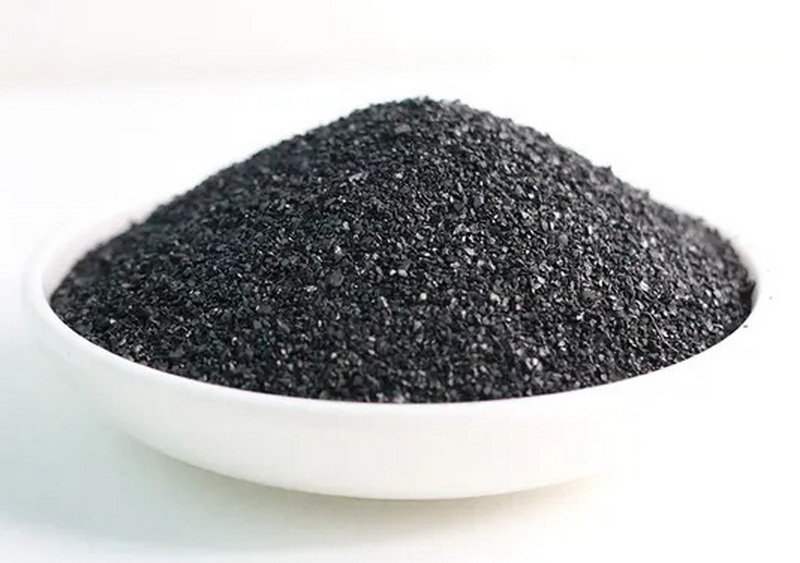
For alcohol-related applications, manufacturers offer different activated carbon types—powdered, granular, extruded, coconut-shell-based, bituminous coal-based, and catalytic grades—each suited to a particular process step. Coconut shell granular activated carbon is popular in beverage water treatment and spirits polishing because of its high hardness, low dust, and favorable microporous structure for organics removal.[9][5][8][3]
System design factors such as carbon particle size, bed depth, contact time, flow rate, and operating pH are critical to performance. In column systems treating ethanol solutions, studies show that ethanol adsorption improves under certain temperatures, and that thermally regenerating or heat‑treating the granular activated carbon can enhance its ethanol adsorptivity within a specified operating window.[11][4][3]
Conclusion
Activated carbon can adsorb ethanol molecules, and this behavior is exploited in specialized technical systems such as adsorption heat pumps and some laboratory or industrial ethanol treatment processes. In the beverage and distilling industries, however, activated carbon is used primarily to refine taste, color, and purity by removing congeners, off‑flavors, odors, pigment, and some volatile organics, while the overall alcohol content of the drink remains essentially intact.[4][12][10][7][2][5]
For producers who need to truly reduce or eliminate alcohol, technologies like vacuum distillation and membrane dealcoholization are more appropriate, with activated carbon serving as a complementary polishing step rather than the core de‑alcoholization method. High‑quality activated carbon, correctly selected and engineered into water treatment, beverage processing, and distillation systems, remains a critical tool for achieving consistent, premium alcohol products across global food, beverage, and industrial markets.[8][1][2][3]
FAQ About Activated Carbon and Alcohol
1. Does activated carbon remove all the alcohol from a drink?
No. In normal beverage applications, activated carbon does not remove all the alcohol from a drink, and the product remains alcoholic after treatment. Activated carbon is used to remove impurities and off‑flavors, not to fully strip ethanol like specialized dealcoholization technologies do.[2][5][3]
2. Can activated carbon make beer or wine non‑alcoholic?
Standard activated carbon treatment cannot reliably make beer or wine non‑alcoholic, because the ethanol concentration is too high and the process is not optimized for complete ethanol removal. Breweries and wineries that produce low‑ or zero‑alcohol products rely on dedicated processes such as vacuum distillation or membrane filtration, sometimes followed by activated carbon polishing.[3][2]
3. Why is activated carbon used in distilleries if it does not remove all the alcohol?
Distilleries use activated carbon to improve the purity, aroma, and smoothness of spirits by adsorbing congeners such as fusel oils, aldehydes, and excess esters. This results in cleaner-tasting vodka, neutral spirits, and refined whiskey or rum, while the desired alcohol strength is retained.[6][13][9][7]
4. Does activated carbon remove methanol and other toxic alcohols?
Activated carbon can reduce some volatile impurities, but methanol and certain toxic alcohols are not reliably removed to safe levels by carbon filtration alone, especially in the critical “heads” fraction of distillation. Safe control of methanol and related compounds depends mainly on correct distillation cut management and process design, not on activated carbon.[7][2]
5. Is activated carbon safe to use in food and beverage alcohol applications?
Food-grade activated carbon products are specifically manufactured and tested for beverage use, with controlled purity, low ash, and suitable pH and pore structure. When used according to industry guidelines and properly removed or filtered out after contact, activated carbon is considered safe and is widely used in the global wine, beer, and spirits industries.[5][8][2][3]
Citations:
[1](https://www.pall.com/en/food-beverage/spirits/particle-filtration/activated-carbon-removal.html)
[2](https://www.chemviron.eu/wine-and-spirit-purification/)
[3](https://recofiltration.com/activated-carbon-for-wineries-breweries)
[4](https://pubmed.ncbi.nlm.nih.gov/18576471/)
[5](https://heycarbons.com/activated-carbon-wine-decolorization/)
[6](https://activatedcarbondepot.com/products/distillery-carbon-for-spirits)
[7](https://pubmed.ncbi.nlm.nih.gov/28105888/)
[8](https://www.carbotech.de/en/applications/food-and-beverage/wine-spirits-and-vinegar/)
[9](https://generalcarbon.com/industries-served/distilleries-activated-carbon/)
[10](https://pubs.rsc.org/en/content/articlelanding/2022/ra/d1ra08395c)
[11](https://www.sciencedirect.com/science/article/pii/S0378437115008407)
[12](https://www.tandfonline.com/doi/full/10.1080/15435075.2014.937867)
[13](https://www.dannyswineandbeer.com/products/activated-carbon-500g)
[14](https://pubs.acs.org/doi/10.1021/acssuschemeng.1c06315)
[15](https://www.youtube.com/watch?v=o4AFKyz4w8k)
[16](https://www.reddit.com/r/firewater/comments/sc237x/does_anyone_run_their_liquor_through_this/)
[17](https://www.vodka-tf.com/carbon-processing/)
[18](https://www.laballey.com/blogs/blog/ethanol-and-activated-carbon-in-the-cbd-hemp-industry)
[19](https://www.reddit.com/r/firewater/comments/wpu5py/activated_charcoal_for_neutral_spirits/)
[20](https://makewinebrewbeer.com/products/activated-carbon-liquid)


