Content Menu
● How Activated Carbon Filtration Works
● Activated Carbon Filters and Viruses in Water
>> What research shows on virus removal in water
● Activated Carbon Filters and Viruses in Air
● When Activated Carbon Helps With Virus Risk
● Recommended Multi‑Barrier Strategies
● Conclusion
● FAQ
>> 1. Does activated carbon remove viruses from drinking water?
>> 2. Can activated carbon kill viruses?
>> 3. Are activated carbon air filters effective against airborne viruses?
>> 4. How can activated carbon be used safely in virus‑sensitive water applications?
>> 5. What certifications should be checked if virus removal is required?
● Citations:
Do activated carbon filters remove viruses? The short answer is: standard activated carbon filters alone generally do not reliably remove or inactivate viruses in water or air, although specially engineered activated carbon materials can reduce certain viruses under controlled conditions. For virus control, activated carbon is usually combined with other technologies such as UV, ultrafiltration, reverse osmosis, or HEPA filtration in integrated systems.[1][2][3][4][5]
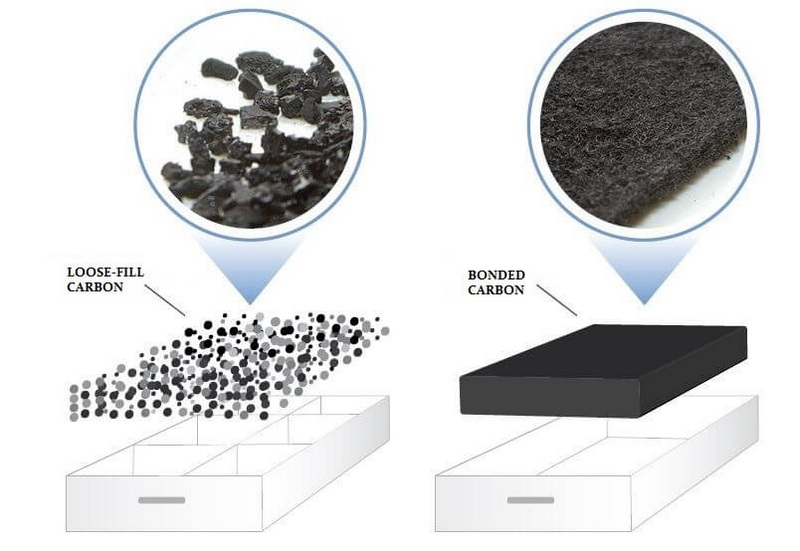
Activated carbon is an extremely porous carbon material with a huge internal surface area that adsorbs organic molecules, chlorine, odors, and many industrial contaminants from water and air. In modern water and air purification systems, activated carbon plays a crucial role in improving taste, odor, and chemical safety, but its ability to deal with viruses is limited unless the carbon or the system is specially designed for microbial removal.[6][7][3][1]
How Activated Carbon Filtration Works
Activated carbon filtration relies on adsorption rather than simple mechanical sieving. Contaminants are attracted to and held on the surface of activated carbon particles through physical forces and chemical interactions.[7][3]
- In water treatment, activated carbon captures chlorine, many pesticides, VOCs, THMs, and industrial organics that affect taste, odor, and safety.[3][7]
- In air and gas purification, activated carbon removes VOCs, sulfur compounds, solvents, and many odor-causing molecules in industrial and indoor environments.[8][9]
- Different forms of activated carbon—granular activated carbon (GAC), powdered activated carbon (PAC), and activated carbon fiber (ACF)—offer different flow properties, adsorption rates, and design options.[10][11]
Because viruses are extremely small (typically 0.02–0.5 microns) and often remain dispersed in water or air, they do not behave like the larger organic molecules that activated carbon is optimized to adsorb.[12][10]
Activated Carbon Filters and Viruses in Water
For drinking water, public guidance is quite clear: standard point‑of‑use activated carbon filters by themselves are generally not rated or recommended for virus removal.[1][6][3]
- Health and water quality resources emphasize that typical activated carbon water filters are excellent for chlorine, taste, odor, and many organic chemicals, but they are “not effective” for bacteria and viruses when used alone.[6][7][3]
- One technical bulletin on home water treatment explains that activated carbon filters “will not remove microbial contaminants (such as bacteria and viruses)” and do not substitute for disinfection.[3]
- Guidance on virus-safe drinking water notes that to reliably address viruses, activated carbon usually needs to be combined with UV disinfection, reverse osmosis, or other certified microbiological filters.[2][4][1]
What research shows on virus removal in water
While standard granular activated carbon is not considered a primary virus barrier, research shows that specially engineered activated carbon materials can achieve measurable virus reductions:
- A study using modified activated carbon fibers (ACF) reported up to about 2.8 log\(_{10}\) virus reduction for untreated ACFs and 3.6 log\(_{10}\) reduction for oxidized ACFs when removing an MS2 bacteriophage surrogate from water, demonstrating the potential of tailored surface chemistry.[10]
- Earlier work on super‑powdered activated carbon found that conventional granular activated carbon is “not suitable for substantial virus removal” within typical contact times in real drinking water treatment, underscoring the limitations of standard media.[11]
In practice, this means:
- Standard consumer GAC cartridges should not be marketed as “virus removal” devices, even though they can reduce many chemicals and some natural organics that may be associated with microbial presence.[7][3]
- Advanced activated carbon media—such as impregnated or surface‑modified ACFs—can be used in specialized industrial or point‑of‑use systems to assist virus reduction, but they are usually part of a multi‑barrier design (coagulation, membrane filtration, UV, or chemical disinfection).[13][2][10]
Activated Carbon Filters and Viruses in Air
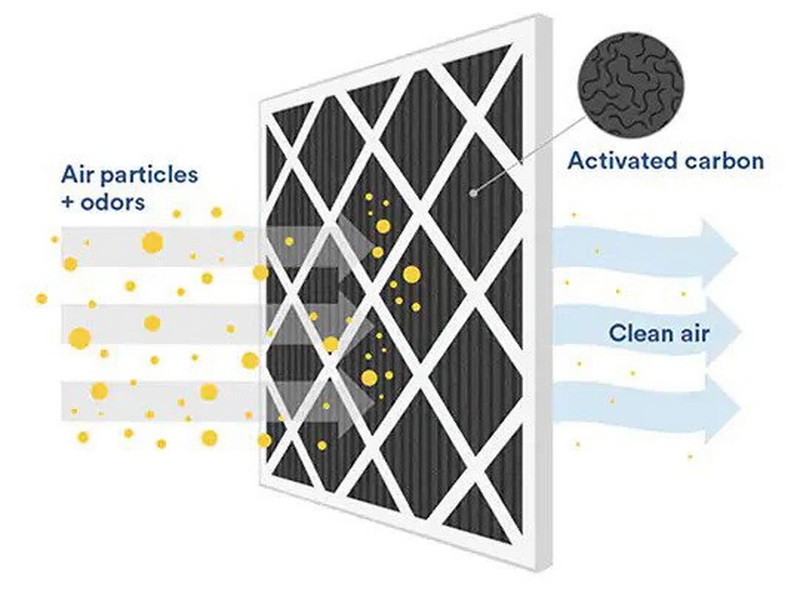
In air purification, activated carbon serves a different role than in water: it is primarily used for gas‑phase contaminants rather than solid particles.[9][8]
- Many indoor air quality resources explain that activated carbon filters adsorb gasses (like VOCs, odors, and some industrial pollutants) but “won't do anything for airborne virus particles,” because viruses are solid or liquid aerosols, not gasses.[12][9]
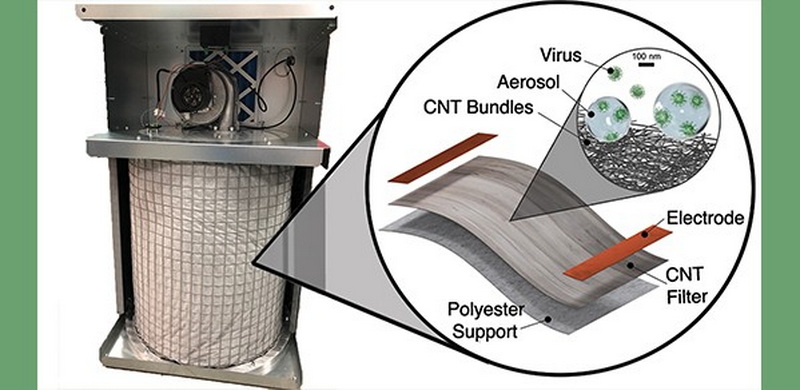
- HEPA and high‑MERV mechanical filters, not carbon, are the core technology for capturing virus-laden aerosols in HVAC systems and portable air cleaners.[14][15][12]
Public health and technical guidance highlights the importance of mechanical filtration and ventilation for airborne virus control:
- CDC ventilation FAQs state that filters with higher collection efficiencies can significantly reduce airborne viral particle concentrations when properly used in HVAC systems.[14]
- Air-cleaning guidance notes that air cleaners and HVAC filters (e.g., HEPA, high‑MERV) can help reduce airborne contaminants including viruses, but must be part of a multi‑layered strategy with ventilation and other measures.[16][15]
In integrated systems:
- Activated carbon may be combined with HEPA filters in industrial or healthcare air-handling units to simultaneously control gasses, odors, and particles.[15][8]
- In such configurations, activated carbon complements, but does not replace, the virus-capturing function of HEPA or high‑MERV filters; the viruses are captured by the mechanical filter, while activated carbon manages chemical pollutants.[8][9][12]
When Activated Carbon Helps With Virus Risk
Even though activated carbon is not a primary virus barrier, it can still contribute indirectly to safer water and air when properly integrated.
- In municipal and industrial water treatment, activated carbon reduces organic load, pesticides, and disinfection by‑product precursors; by optimizing upstream chemistry and organics, downstream disinfection and membrane systems can work more efficiently against viruses.[13][3]
- In point‑of‑use systems, a typical configuration for virus control is a sequence like sediment prefilter → activated carbon → membrane (RO/ultrafiltration) → UV, where activated carbon protects and enhances the performance of the virus-targeting components.[4][1]
- In industrial air and gas treatment, activated carbon removes harmful VOCs and odor molecules that can stress workers' respiratory systems, while dedicated particle filters and ventilation manage viral aerosols.[15][8][14]
For customers, it is important to understand that activated carbon improves overall environmental quality, but virus removal must be clearly defined and validated at the system level rather than assumed from the presence of carbon alone.[4][7][3]
Recommended Multi‑Barrier Strategies
To address viruses effectively in different applications, activated carbon should be integrated into a multi‑barrier approach.
- Drinking water
- Combine activated carbon with:
- Reverse osmosis or ultrafiltration membranes certified for virus reduction.[1][4]
- UV disinfection or chemical disinfection (e.g., chlorine) to inactivate remaining viruses.[2][1]
- Use activated carbon primarily to remove chlorine, organics, and off‑tastes while relying on certified microbiological barriers for viruses.[3][13]
- Industrial process water
- Use activated carbon to remove organic contaminants, color, and residual chemicals before membrane or disinfection stages.[11][10]
- For pharmaceutical, food, and beverage uses, design systems that validate log‑reduction values (LRVs) for viruses based on membranes and disinfection, with activated carbon as a supporting stage.[17][10]
- Air and gas purification
- Combine activated carbon cartridges with HEPA or high‑MERV filters and adequate ventilation for virus-laden aerosols.[12][14][15]
- Reserve activated carbon for VOC, odor, and gas-phase contaminant control, clearly separating this role from virus filtration in product communication.[9][8]
Conclusion
Standard activated carbon filters are highly effective for removing chlorine, many organic chemicals, odors, and industrial pollutants from water and air, but they are not designed or certified to reliably remove or inactivate viruses on their own. In virus‑sensitive applications such as drinking water, pharmaceutical processing, and healthcare environments, activated carbon should be integrated with membranes, UV, chemical disinfection, HEPA, and proper ventilation in a multi‑barrier system that is specifically validated for viral log‑reduction performance.[5][10][2][6][14][15][1][3]
FAQ
1. Does activated carbon remove viruses from drinking water?
Standard granular activated carbon filters used in household pitchers and under‑sink cartridges are generally not rated for virus removal and should not be relied on for microbiological safety. To achieve virus reduction, activated carbon must be combined with technologies such as UV, reverse osmosis, ultrafiltration, or certified microbiological filters in a multi‑barrier system.[5][2][6][4][1][3]
2. Can activated carbon kill viruses?
Activated carbon primarily works by adsorption, not by killing microbes, and standard media do not have direct virucidal action. Some specialized activated carbon fibers with modified surfaces or metal impregnation have shown higher virus reduction in laboratory studies, but these are engineered materials used in specific, validated systems.[10][7][11][3]
3. Are activated carbon air filters effective against airborne viruses?
Most activated carbon air filters target gasses and odors, not virus-laden aerosols, and therefore “won't do anything” for airborne virus particles by themselves. Airborne virus reduction typically depends on HEPA or high‑MERV mechanical filters and proper ventilation, with activated carbon added only to control VOCs and smells.[14][9][15][12]
4. How can activated carbon be used safely in virus‑sensitive water applications?
In virus‑sensitive water applications, activated carbon should be used as a pretreatment or polishing step—for example, after or before membranes and disinfection—rather than as the primary barrier to viruses. System design should confirm overall virus log‑reduction through certified membranes, UV systems, or disinfection processes, while activated carbon focuses on organics, taste, odor, and chemical optimization.[2][4][13][10][1][3]
5. What certifications should be checked if virus removal is required?
For drinking water devices, buyers should look for systems tested against specific virus reduction or NSF/ANSI microbiological standards, not just “carbon filtration.” In air applications, devices should specify HEPA or appropriate MERV ratings and, where applicable, validated performance for removing virus-size aerosols, while activated carbon is listed separately for gas‑phase contaminant removal.[15][13][12][2][14]
Citations:
[1](https://www.waterdropfilter.eu/blogs/water-contaminants/how-to-remove-viruses-from-drinking-water)
[2](https://www.cdc.gov/drinking-water/prevention/about-choosing-home-water-filters.html)
[3](https://extensionpubs.unl.edu/publication/g1489/na/html/view)
[4](https://clearwaterarizona.com/blog/reverse-osmosis-vs-carbon-filtration/)
[5](https://mayuwater.com/a/resources/water-filters/does-activated-charcoal-remove-viruses-from-water)
[6](https://vvater.com/kb/how-effective-are-water-filters-in-removing-bacteria-and-viruses/)
[7](https://briowater.com/blogs/blog/activated-carbon-water-filters-for-clean-water)
[8](https://www.power-technology.com/sponsored/myth-busting-do-activated-carbon-filters-deliver-on-their-promise-to-improve-air-hygiene-for-bacteria-and-viruses/)
[9](https://lifesupplyusa.com/blogs/news/air-filters-that-trap-viruses-a-comprehensive-guide)
[10](https://pmc.ncbi.nlm.nih.gov/articles/PMC9041606/)
[11](https://www.sciencedirect.com/science/article/abs/pii/S1383586613000324)
[12](https://housefresh.com/do-hepa-filters-remove-viruses/)
[13](https://www.cdc.gov/drinking-water/about/about-home-water-treatment-systems.html)
[14](https://www.cdc.gov/niosh/ventilation/faq/index.html)
[15](https://www.epa.gov/indoor-air-quality-iaq/air-cleaners-hvac-filters-and-coronavirus-covid-19)
[16](https://www.cidrap.umn.edu/covid-19/cdc-releases-ventilation-guidance-curbing-indoor-respiratory-virus-spread)
[17](https://www.sciencedirect.com/science/article/abs/pii/S0043135422001373)
[18](https://tappwater.co/blogs/blog/what-activated-carbon-filters-remove)
[19](https://i-hvac.net/using-air-filtration-systems-to-protect-against-covid-19/)
[20](https://www.reddit.com/r/Survival/comments/je1il8/if_water_filters_dont_remove_viruses_why_does_it/)


