Content Menu
● What Activated Carbon Filters Actually Do
● Can You Wash an Activated Carbon Filter?
● How Washing Affects Activated Carbon Performance
● Step‑by‑Step: How to Rinse an Activated Carbon Filter Safely
● When You Should Not Wash Activated Carbon Filters
● Industrial Reactivation vs. Home Washing
● Best Practices to Extend Activated Carbon Filter Life
● Conclusion
● FAQ
>> 1. Is it safe to wash an activated carbon filter?
>> 2. Does washing restore the capacity of activated carbon?
>> 3. Can I dry a washed activated carbon filter in my oven?
>> 4. How often should I replace an activated carbon filter?
>> 5. What is the difference between washing and reactivating activated carbon?
● Citations:
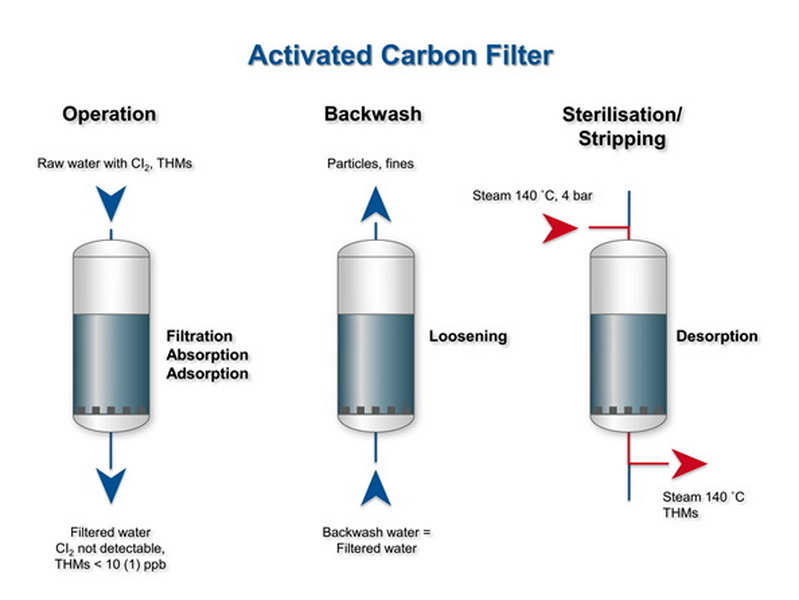
Activated carbon filters can be rinsed or gently washed to remove dust and loose particles, but washing does not restore the adsorption capacity of the activated carbon itself. In most cases, activated carbon filters are treated as consumables that should be replaced once the activated carbon is saturated, or professionally reactivated in industrial systems rather than simply washed at home.[1][2][3][4]
What Activated Carbon Filters Actually Do
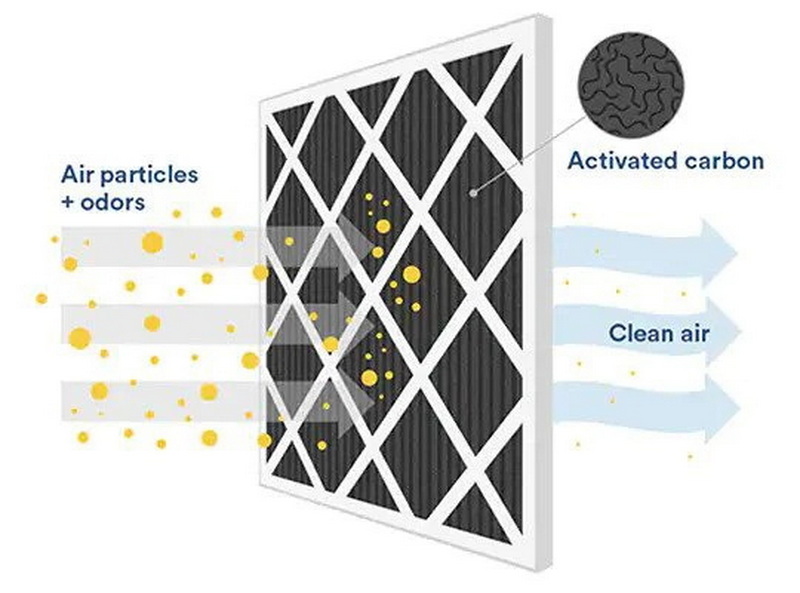
Activated carbon is a highly porous form of carbon with an enormous internal surface area that removes contaminants through a surface-based process called adsorption. When water, air, or gas passes through an activated carbon filter, dissolved or gaseous molecules are trapped on the surface of the activated carbon pores until the activated carbon becomes saturated and can no longer adsorb effectively.[5][6][7][8]
Activated carbon filters are widely used to treat drinking water, process water, industrial wastewater, air in HVAC systems, and gas streams because activated carbon can remove chlorine, many organic chemicals, odors, and volatile organic compounds (VOCs). However, activated carbon filters do not remove every type of contaminant, and they must be designed, sized, and operated correctly for the specific application to ensure that the activated carbon works safely and efficiently.[6][7][8][9][5]
Can You Wash an Activated Carbon Filter?
Whether you can wash an activated carbon filter depends on what “wash” means and what you expect after washing the activated carbon. Light rinsing or gentle washing may remove dust and coarse debris from the surface of an activated carbon filter, but it does not fully remove the chemicals and gases that are adsorbed inside the activated carbon pores.[2][10][1]
- Some consumer guidance notes that carbon filters can absorb water, so if you decide to wash an activated carbon filter, it must be completely dried before reuse to avoid mold growth and microbial contamination.[1][2]
- Technical and user communities consistently point out that once activated carbon is saturated with VOCs or other pollutants, washing it “like a dirty dish” will not restore its original adsorption capacity.[10][11][4]
Because washing mainly removes external dust rather than the adsorbed chemicals, many manufacturers simply do not recommend washing activated carbon filters and instead advise replacement of the activated carbon media at the end of its service life.[4][2][1]
How Washing Affects Activated Carbon Performance
Once activated carbon has adsorbed a significant amount of contaminants, its available surface area and pore volume for further adsorption are greatly reduced. Washing the outside of an activated carbon filter with water or mild detergent does not reach deep into the micropores of the activated carbon where most adsorption occurs.[3][2][10][5][1]
Key effects of washing activated carbon filters include:
- Dust removal only: Rinsing or washing primarily removes loose dust and sediment from the outside of the activated carbon filter, which may slightly reduce pressure drop but does not regenerate the activated carbon.[12][2][1]
- Water uptake and mold risk: Activated carbon can absorb water, and if the filter remains damp, bacteria and mold can grow inside the activated carbon bed, compromising both hygiene and performance.[13][2][1]
- No full regeneration: To truly reactivate saturated activated carbon, industrial processes heat the carbon to around 700–900 °C in controlled conditions, far beyond what washing can achieve.[11][3][4]
In practice, washing may temporarily improve flow or remove surface debris, but the adsorption capacity of the activated carbon continues to decline, and the filter still needs periodic replacement or professional reactivation.[2][5][4]
Step‑by‑Step: How to Rinse an Activated Carbon Filter Safely
If a particular activated carbon filter is labeled by the manufacturer as washable or rinseable, or if you choose to rinse an activated carbon filter to remove dust, it is important to follow safe steps that protect both the activated carbon and the system.[12][2]
Suggested illustrative visuals for this section (for your blog layout):
- Image: Cut‑away diagram of an activated carbon filter showing the activated carbon bed.
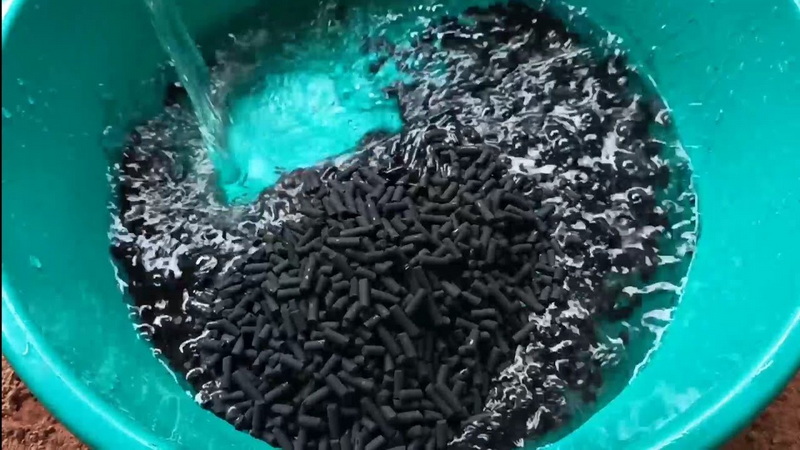
- Image: Step‑by‑step photos of rinsing an activated carbon air filter under running water.
- Short video: Demonstration of removing an air purifier's activated carbon filter, rinsing, and drying it before reinstallation.
Typical rinsing procedure for an air or water activated carbon filter (always check manufacturer instructions):[2][12]
1. Turn off the system and disconnect power or close valves before removing the activated carbon filter to avoid damage or spills.[12][2]
2. Remove the activated carbon filter from its housing, taking care not to tear the media or damage seals and gaskets around the activated carbon.[2][12]
3. Shake or gently tap the filter to remove loose dust and large particles from the surface of the activated carbon.[12][2]
4. Rinse the filter under warm running water, allowing the water to flow in the direction opposite to the normal service flow to flush out superficial debris from the activated carbon.[2][12]
5. If permitted by the manufacturer, use a very small amount of mild detergent and gently scrub the outer surfaces, avoiding aggressive chemicals that could react with the activated carbon.[12][2]
6. Rinse thoroughly to remove any detergent residues, ensuring that no foaming remains around the activated carbon media.[2][12]
7. Dry completely in a clean, well‑ventilated area; the activated carbon must be fully dry before reinstallation to minimize microbial risk and preserve structural integrity.[13][1][2]
8. Reinstall the activated carbon filter, check for leaks or gaps, and restart the system while monitoring for unusual odors, pressure drop, or reduced performance.[12][2]
This kind of rinsing can be helpful for short‑term maintenance of some washable designs, but it should not be used as a substitute for timely replacement of the activated carbon when its adsorption capacity is exhausted.[5][4][2]
When You Should Not Wash Activated Carbon Filters
There are many situations where washing an activated carbon filter is not recommended and can even create safety or quality problems.[1][5][13]
Common cases where washing activated carbon filters should be avoided include:
- Filters exposed to hazardous chemicals: When activated carbon has been used to treat industrial wastewater, chemical vapors, or toxic contaminants, the spent activated carbon may itself be hazardous and must be handled and disposed of according to regulations instead of washed at home.[3][5]
- Microbiologically unsafe water: During boil‑water advisories or microbiological contamination events, activated carbon filters are not sufficient on their own, and they may become contaminated; after such events, the activated carbon filter should be replaced, not washed and reused.[8][13]
- Non‑washable disposable cartridges: Many compact point‑of‑use cartridges and refrigerator filters containing activated carbon are explicitly designed as disposable, and washing them can damage the housing, compromise seals, and give a false sense of security about activated carbon performance.[4][5]
- Regulated drinking water systems: In professional drinking water treatment plants, activated carbon filters are typically changed on a defined schedule or professionally reactivated; informal washing is inconsistent with quality, regulatory, and liability requirements.[14][5]
In these applications, it is better to replace saturated activated carbon with fresh or professionally reactivated activated carbon, rather than trying to extend life by washing.[5][3][4]
Industrial Reactivation vs. Home Washing
Industrial reactivation of activated carbon is fundamentally different from home washing of activated carbon filters. In industrial processes, spent activated carbon is thermally reactivated in specialized kilns or furnaces at temperatures often between about 700 °C and 900 °C under controlled conditions, which drives off adsorbed organics and restores a high percentage of the original adsorption capacity.[15][11][3][4]
- Industrial reactivation involves high temperature, controlled atmosphere, and off‑gas treatment to safely handle the contaminants desorbed from the activated carbon.[11][15][3]
- Home ovens cannot reach the temperatures needed to reactivate activated carbon, and heating contaminated activated carbon without proper equipment can release toxic vapors and create serious safety risks.[10][3][11]
For large‑scale water treatment, air purification, and industrial gas cleaning, reactivated activated carbon can offer significant cost and environmental benefits compared with always using virgin activated carbon, but this requires professional processing and quality control. For household filters, replacing saturated activated carbon with new activated carbon is usually the most practical, safe, and reliable approach.[3][4][5][2]
Best Practices to Extend Activated Carbon Filter Life
Even though washing activated carbon filters has limited effect on adsorption capacity, there are several ways to extend the useful life of activated carbon and get maximum value from each activated carbon change‑out.[4][5][12]
- Pre‑filtration: Using sediment filters or mechanical pre‑filters upstream reduces particulate load so that the activated carbon focuses on dissolved chemicals instead of plugging with dirt.[5][12]
- Correct sizing and flow rate: Designing water or air systems to provide adequate contact time over the activated carbon bed improves efficiency and slows the breakthrough of contaminants.[4][5]
- Operating within design conditions: Keeping temperature, pH, and contaminant concentration within the recommended range protects the activated carbon and maintains adsorption performance.[6][5]
- Scheduled replacement: Replacing activated carbon based on throughput, monitoring data, or manufacturer guidelines prevents the activated carbon from reaching complete exhaustion and releasing captured contaminants.[14][5][4]
- Professional services: For industrial users, working with a specialized activated carbon supplier to manage activated carbon replacement, reactivation, and disposal can reduce total cost and environmental impact.[14][3][5]
These practices allow both household and industrial users to get the most from activated carbon while maintaining safety and regulatory compliance, without relying on washing as a primary maintenance strategy.[3][5][12]
Conclusion
Activated carbon filters play a critical role in water, air, and gas purification, but their performance depends on the adsorption capacity of the activated carbon, which gradually becomes saturated with contaminants. Washing an activated carbon filter may remove dust and improve appearance, yet it does not truly regenerate the internal pores of the activated carbon, and in many cases manufacturers do not recommend washing at all.[7][8][10][1][5][4][2]
For household users, the safest practice is usually to treat activated carbon filters as consumables, performing only light rinsing when allowed and replacing activated carbon according to recommended intervals. For industrial users, professional thermal reactivation of spent activated carbon can restore much of the adsorption capacity and reduce both cost and environmental impact, but this cannot be replicated by simple washing at home.[15][11][5][3][4][2]
FAQ
1. Is it safe to wash an activated carbon filter?
Washing an activated carbon filter is sometimes safe if the manufacturer allows it, but it only removes dust and not the chemicals adsorbed inside the activated carbon pores. If the activated carbon has been used to treat hazardous contaminants or microbiologically unsafe water, the filter should be replaced or professionally handled instead of washed at home.[13][1][5][3][2]
2. Does washing restore the capacity of activated carbon?
No, washing does not restore the original adsorption capacity of activated carbon because most contaminants are trapped deep inside the activated carbon pores, not on the outer surface. True regeneration of saturated activated carbon requires industrial‑scale thermal or chemical reactivation at high temperature in controlled equipment.[10][11][15][1][3][4][2]
3. Can I dry a washed activated carbon filter in my oven?
Low‑temperature drying in a household oven can help remove moisture from a washed activated carbon filter, but it does not reactivate the saturated activated carbon. Attempting to “reactivate” activated carbon at high temperature in a home oven is unsafe because reactivation requires 700–900 °C and can release toxic vapors as contaminants are driven off the activated carbon.[11][15][3][4]
4. How often should I replace an activated carbon filter?
Replacement frequency for an activated carbon filter depends on water or air quality, flow rate, and product design, but many consumer carbon air filters last only a few months before they should be changed. In regulated or industrial systems, activated carbon filters are replaced or reactivated based on throughput calculations, routine sampling, and performance monitoring to ensure that the activated carbon bed does not reach breakthrough.[14][5][4][2]
5. What is the difference between washing and reactivating activated carbon?
Washing an activated carbon filter is a simple maintenance step that removes dust and some surface debris but leaves most adsorbed contaminants inside the activated carbon pores. Reactivating activated carbon is an industrial process that heats the spent activated carbon to very high temperatures in a controlled environment to desorb contaminants and restore a large portion of its adsorption capacity.[15][1][11][3][4][2][12]
Citations:
[1](https://smartairfilters.com/learn/smart-air-knowledge-base/can-the-carbon-filter-be-washed/)
[2](https://housefresh.com/how-to-clean-an-activated-carbon-air-filter/)
[3](https://charcoalhouse.com/blog/can-i-reactivate-my-charcoal/)
[4](https://lifesupplyusa.com/blogs/news/how-is-a-carbon-filter-activated-and-can-it-be-reused)
[5](https://19january2021snapshot.epa.gov/sites/static/files/2015-04/documents/a_citizens_guide_to_activated_carbon_treatment.pdf)
[6](https://www.bluewatergroup.com/en-us/blog/the-disadvantages-of-boiling-water-for-purification)
[7](https://glacierfreshfilter.com/blogs/news/water-filtration-myths-debunking-common-misconceptions-about-clean-water)
[8](https://www.leafhome.com/blog/water-solutions/does-boiling-water-kill-bacteria)
[9](https://www.frizzlife.de/blogs/news/water-filtration-replacement)
[10](https://www.reddit.com/r/microgrowery/comments/131jq76/wash_your_activated_carbon/)
[11](https://forum.growweedeasy.com/forum/growing-community/641675-cleaning-and-reactivating-a-carbon-filter)
[12](https://www.dfctank.com/news/effective-cleaning-and-maintenance-of-activated-carbon-filters.html)
[13](https://www.freshwatersystems.com/blogs/blog/boil-water-alerts-and-how-to-flush-your-system)
[14](https://www.ifsqn.com/forum/index.php/topic/29882-how-to-sanitize-the-carbon-bed-of-the-activated-carbon-filter/)
[15](https://www.reef2reef.com/threads/reactivating-activated-carbon.306949/page-2)
[16](https://bostonreefers.org/forums/index.php?threads%2Fcleaning-used-activated-carbon.103248%2F)
[17](https://www.reddit.com/r/chemistry/comments/1kwv7q7/guidence_on_chemically_reactivating_carbon_filter/)
[18](https://www.youtube.com/watch?v=jZYmCDa2zKU)
[19](https://www.berkeycleanwater.com/blogs/news/does-boiling-water-purify-it-myths-vs-facts)
[20](https://www.reddit.com/r/RVLiving/comments/183omfr/dont_carbon_filters_make_your_water_less_safe/)


