Content Menu
● What Is an Activated Carbon Air Filter?
● How Activated Carbon Filters Improve Air Quality
● Are Activated Carbon Air Filters Safe to Breathe Through?
● Potential Health and Safety Risks to Consider
● Safety of Activated Carbon Filters in Home Air Purifiers
● Safety of Activated Carbon Filters in Industrial and Laboratory Systems
● Activated Carbon Filters in Masks and Respirators
● What Happens When Activated Carbon Filters Are Saturated?
● How to Use Activated Carbon Air Filters Safely
● Benefits of Activated Carbon Air Filters for Health
● Limitations and Misconceptions
● When Are Activated Carbon Air Filters Most Recommended?
● Conclusion
● FAQ About Activated Carbon Air Filters
>> 1. Are activated carbon air filters safe for children and elderly people?
>> 2. Can activated carbon air filters release harmful chemicals back into the air?
>> 3. Do activated carbon air filters create ozone or other by‑products?
>> 4. How often should I replace an activated carbon air filter to stay safe?
>> 5. Are activated carbon filters better than HEPA filters for air safety?
● Citations:
Activated carbon air filters are generally safe for home, office, and industrial use when properly designed, installed, and maintained, and they are widely recommended to reduce gases, odors, and volatile organic compounds (VOCs) that harm indoor air quality. Like any filtration technology, activated carbon must be used correctly, because saturated filters, excessive dust, and confined-space misuse can create avoidable health and safety risks if basic guidelines are ignored.[1][2][3]
What Is an Activated Carbon Air Filter?
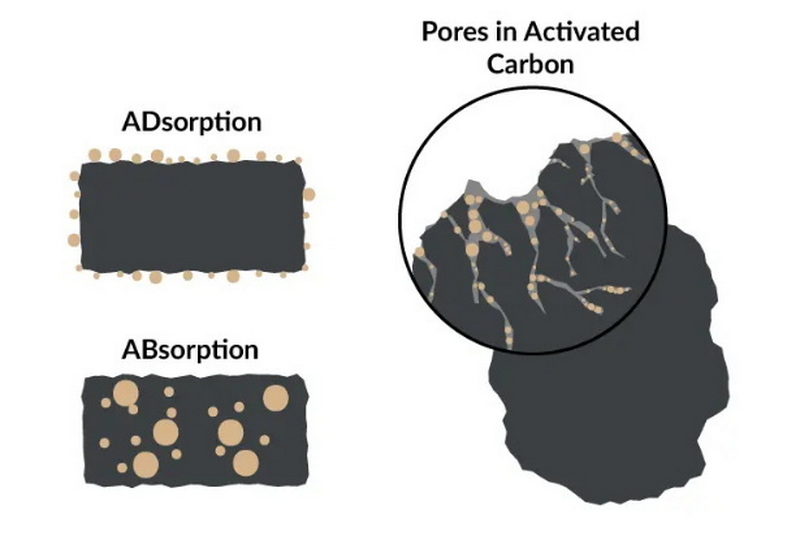
An activated carbon air filter is a cartridge, panel, or canister filled with highly porous activated carbon that adsorbs gases, odors, and many chemical pollutants from air streams. Activated carbon has an extremely large internal surface area and a network of micro‑pores that act like millions of tiny “traps” for VOCs, ozone, and other gaseous contaminants.[5][3]
In air filtration, activated carbon is often combined with mechanical media (such as a pre‑filter or HEPA filter) so that dust and particles are captured first, while the activated carbon layer focuses on gas‑phase pollutants and smells.[6]
How Activated Carbon Filters Improve Air Quality
Activated carbon uses adsorption (molecules sticking to the carbon surface) rather than absorption, so gases and vapors are held firmly inside its pore structure instead of being released back into the air under normal conditions. This makes activated carbon air filters especially effective at removing VOCs from paints, cleaning products, furniture off‑gassing, cooking odors, and tobacco or cannabis smoke that typical particle‑only filters cannot handle.[2][3][8][5]
Many studies and field applications show that high‑quality activated carbon filters can remove a large fraction of VOCs and ozone, significantly lowering exposure to pollutants that irritate eyes, nose, throat, and lungs and may contribute to long‑term health problems.[3]
Are Activated Carbon Air Filters Safe to Breathe Through?
When used as intended, air that passes through an activated carbon air filter is safe to breathe and typically cleaner than untreated indoor air, because harmful gases are reduced rather than added. The activated carbon itself is non‑toxic in solid form and is widely used in air purifiers, respirator cartridges, and even medical applications such as poisoning treatment, which reflects its broad safety profile when not inhaled as dust.[4][10][11][2]
Regulators and health organizations emphasize that the key safety concern is not the presence of activated carbon in the airstream, but whether the filter is properly maintained; once saturated, a carbon filter stops removing pollutants effectively, so regular replacement is essential to keep indoor air safe.[7][12]
Potential Health and Safety Risks to Consider
Although activated carbon air filters are safe in normal use, there are several practical risks to understand and control:
- Dust irritation: Fine activated carbon dust can irritate the upper respiratory system, eyes, and skin if released during handling, filling, or disposal of filters.[1][4]
- Confined spaces and oxygen: Bulk activated carbon can slowly adsorb oxygen from air, so entering confined vessels or large carbon beds without ventilation can pose an asphyxiation hazard for workers.[1]
- Combustible dust: Like many fine organic powders, very fine activated carbon dust can behave as a combustible dust and contribute to dust explosion risks under certain industrial conditions if clouds of dust accumulate and meet an ignition source.[13][1]
For ordinary home and office air purifiers, these risks are minimal because the activated carbon is enclosed in cartridges or panels and used in very small quantities, but good manufacturing design and careful filter changes still matter.
Safety of Activated Carbon Filters in Home Air Purifiers
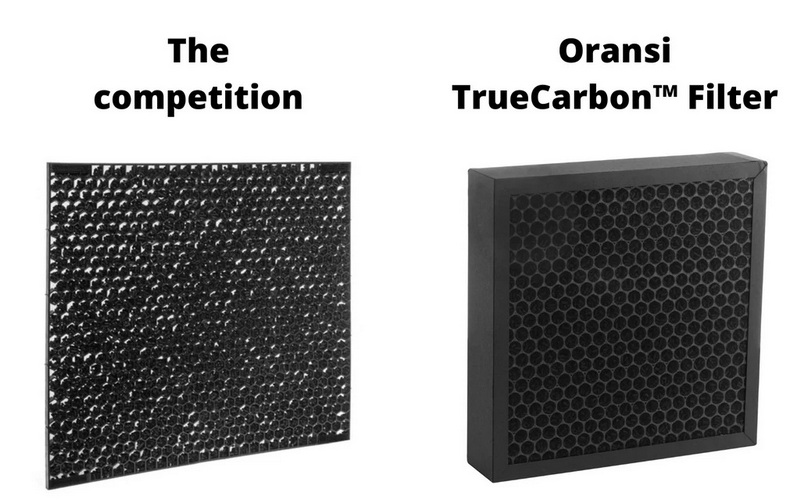
Modern home air purifiers with activated carbon filters are designed so that the media is sealed inside a rigid frame or canister, preventing contact with users during normal operation. High‑quality units use sufficient activated carbon bed depth and airflow design to provide meaningful VOC and odor removal without creating excessive pressure drop or releasing carbon particles into the room.[10][5][7]
Manufacturers typically specify replacement intervals of a few months for activated carbon filters in residential environments, depending on pollution levels, to avoid saturation; replacing filters on schedule keeps the activated carbon working effectively and maintains safe, fresh indoor air.[2]
Safety of Activated Carbon Filters in Industrial and Laboratory Systems
In industrial exhaust and laboratory fume hood systems, activated carbon air filters are widely used to control solvent vapors, chemical fumes, and odorous gases before they are released to the workplace or outside air. Because these systems may handle hazardous chemicals at higher concentrations, engineering controls, monitoring, and conservative filter change‑out schedules are used to ensure that activated carbon cartridges do not become overloaded and allow breakthrough.[14][9][7]
Safety data sheets for activated carbon products typically classify them as non‑toxic by ingestion and skin contact, noting mainly nuisance dust and combustible dust hazards, so standard industrial hygiene practices (respiratory protection, dust control, housekeeping) are recommended when replacing large filters or handling bulk media.[13]
Activated Carbon Filters in Masks and Respirators
Activated carbon is also integrated into many respirator cartridges and some consumer masks to adsorb toxic gases such as NOx, SOx, ozone, and certain organic vapors that pass through particle filters. Studies show that masks combining mechanical filter media with activated carbon can significantly reduce penetration of toxic gases compared with masks without activated carbon, especially for urban pollution and industrial gases.[15][16][17]
Experts note that there are no clear downsides from adding an activated carbon layer to a properly designed respirator or mask; the main issue is fit and seal rather than the activated carbon itself, since leakage around the mask can let pollutants bypass the filter even if the activated carbon is highly effective.[18][12]
What Happens When Activated Carbon Filters Are Saturated?
Activated carbon has a finite adsorption capacity; once its pores are filled with VOCs and other gases, removal efficiency drops sharply and pollutants start passing through unfiltered. In extreme cases and under certain temperature or humidity conditions, previously adsorbed compounds may desorb and slowly re‑enter the airstream, which is why periodic replacement of saturated activated carbon filters is critical, especially in heavily polluted environments.[19][5][3][7]
Many air purifier manufacturers recommend replacing activated carbon filters every 3–6 months for typical home use, or sooner if strong odors persist; some advanced systems include sensors or usage counters to remind users when the activated carbon filter is nearing the end of its useful life.[7]
How to Use Activated Carbon Air Filters Safely
To ensure activated carbon air filters remain safe and effective, follow these practical guidelines:
- Choose filters from reputable brands that specify activated carbon weight, media depth, and intended applications.[10][7]
- Always install filters according to the manufacturer's airflow direction arrows and sealing instructions so air cannot bypass the activated carbon layer.[7]
- Replace activated carbon filters at or before the recommended interval, or sooner if odors return, because saturated activated carbon no longer protects you from gases and VOCs.[19][2]
- When changing large or industrial filters, wear appropriate PPE (dust mask or respirator, gloves, and eye protection) to avoid inhaling carbon dust or contacting any adsorbed chemicals.[4][1]
- Avoid entering or working inside large activated carbon vessels or confined spaces without proper ventilation, gas monitoring, and confined‑space procedures, because oxygen levels can be reduced inside such equipment.[1]
Benefits of Activated Carbon Air Filters for Health
By targeting gaseous pollutants instead of just particles, activated carbon air filters fill a critical gap in indoor air quality management. VOCs from building materials, furniture, paints, cleaners, and consumer products are linked to headaches, irritation, and potential long‑term organ damage, and activated carbon filters have been shown to substantially reduce these compounds indoors in many scenarios.[9][8][5][3]
Activated carbon filters also help control ozone and odorous gases that can trigger respiratory symptoms and discomfort, benefiting sensitive groups such as children, the elderly, and people with asthma or allergies.[3]
Limitations and Misconceptions
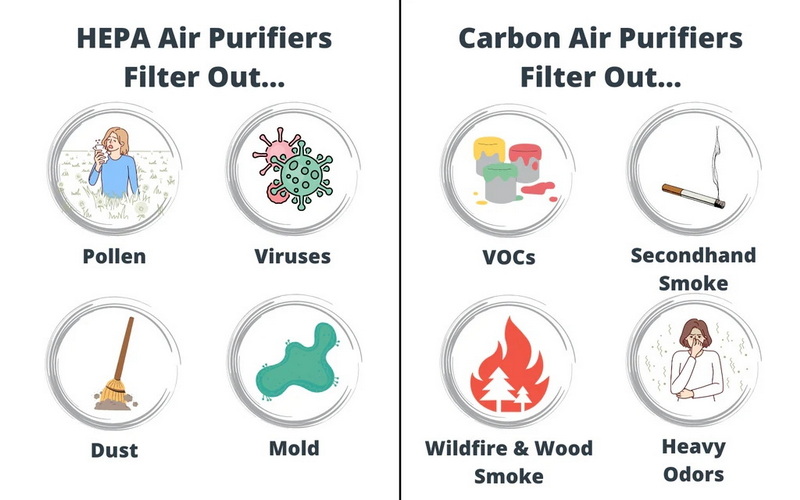
Activated carbon air filters are not a universal solution; they are highly effective for many gases and odors but do not capture solid particles such as dust, pollen, or viruses, which require mechanical filters like HEPA. Some very light or highly polar gases may also be adsorbed less efficiently, and real‑world performance depends on contact time, airflow rate, and the amount of activated carbon in the filter.[8][5][6][7]
A common misconception is that activated carbon air filters are themselves harmful; in reality, high‑quality activated carbon filters are considered safe for home use and do not emit dangerous substances, as long as they are not physically damaged or misused in extreme conditions.[2][10]
When Are Activated Carbon Air Filters Most Recommended?
Activated carbon air filters are particularly recommended when:
- Indoor spaces have noticeable odors from cooking, pets, smoking, or renovation activities.[3][2]
- There is concern about VOCs from new furniture, flooring, paint, or cleaning products, especially in poorly ventilated rooms.[5][9]
- Industrial or laboratory processes emit organic vapors or odorous gases that must be controlled to protect workers and neighbors.[14][9]
For best results, activated carbon filters are usually combined with HEPA or other particle filters, so both gas‑phase and particulate pollutants are addressed in one integrated air cleaning system.[6]
Conclusion
Activated carbon air filters are widely regarded as safe and effective tools for improving indoor air quality by removing VOCs, odors, ozone, and many other gaseous pollutants that typical particle‑only filters miss. The activated carbon itself is non‑toxic in solid form and is safely used in home purifiers, industrial exhaust systems, and personal protective equipment, provided that dust is controlled and filters are replaced before saturation.[16][4][2][3]
Real safety issues arise mainly from improper handling of bulk activated carbon, uncontrolled dust, lack of ventilation in confined spaces, or failure to replace exhausted filters, all of which can be mitigated with standard industrial hygiene measures and good product design. For homeowners and industrial users who follow basic instructions, activated carbon air filters offer a high‑value, low‑risk way to create cleaner, healthier air with strong performance against gas‑phase contaminants.[11][9][13]
FAQ About Activated Carbon Air Filters
1. Are activated carbon air filters safe for children and elderly people?
Activated carbon air filters are generally considered safe and can be especially beneficial for children, elderly people, and individuals with respiratory conditions because they reduce VOCs, odors, and some irritating gases in indoor air. As with any air cleaner, it is important to choose certified products, avoid ozone‑generating devices, and maintain filters according to manufacturer instructions to ensure consistent protection.[9][8][3]
2. Can activated carbon air filters release harmful chemicals back into the air?
Under normal use, activated carbon air filters do not release harmful chemicals; instead, they lock gases into their pore structure through adsorption. However, if filters become fully saturated or exposed to extreme temperature and humidity swings, some adsorbed compounds may gradually desorb, which is why timely replacement is necessary in heavily polluted environments.[5][19][3]
3. Do activated carbon air filters create ozone or other by‑products?
Passive activated carbon air filters do not create ozone or reactive chemical by‑products; they are media‑only filters that simply adsorb pollutants as air passes through. Concerns about ozone indoors are typically linked to certain electronic or ionizing air cleaners, not to mechanical or activated carbon filters that rely on airflow and adsorption.[8][9][10]
4. How often should I replace an activated carbon air filter to stay safe?
Most residential air purifier manufacturers recommend replacing activated carbon filters every 3–6 months, though the exact interval depends on pollution levels, operating hours, and the amount of activated carbon in the cartridge. Industrial and laboratory systems often use monitoring, odor checks, or gas sensors plus conservative schedules to change filters before breakthrough, ensuring continued protection against hazardous fumes.[12][14][2]
5. Are activated carbon filters better than HEPA filters for air safety?
Activated carbon and HEPA filters serve different functions: HEPA captures particles like dust, pollen, and microbes, while activated carbon targets gases, VOCs, and odors. For comprehensive indoor air safety, experts usually recommend combining HEPA and activated carbon in one system so that both particulate and gaseous pollutants are effectively controlled.[6][8]
Citations:
[1](https://www.activatedcarbon.org/health-safety-environment/)
[2](https://terra-bloom.com/blogs/news/activated-carbon-air-filters-untangling-the-true-from-the-false)
[3](https://www.breathenaturally.com/blogs/faq/activated-carbon-filters)
[4](https://www.cancerdiagnostics.com/site/attachments/SDSs/Activated_Carbon_Filters_SDS.pdf)
[5](https://filterbuy.com/resources/health-and-wellness/does-activated-carbon-filter-remove-vocs-from-indoor-air/)
[6](https://oransi.com/blogs/how-it-works/hepa-filters-vs-activated-carbon-filters-pros-and-cons)
[7](https://jaspr.co/blogs/news/activated-carbon-filters)
[8](https://www.epa.gov/indoor-air-quality-iaq/will-air-cleaners-reduce-health-risks)
[9](https://getpuroair.com/blogs/news/the-essential-role-of-activated-carbon-in-air-filters)
[10](https://www.gzcleanlink.com/activated-carbon-air-filters-essentials/)
[11](https://puragen.com/uk/insights/the-effectiveness-of-activated-carbon-filters/)
[12](https://www.cdc.gov/niosh/docs/2003-144/default.html)
[13](http://www.carbonxt.com/wp-content/uploads/2018/07/MACT-PAC-SDS.pdf)
[14](https://www.airscience.com/dangers-of-using-inferior-carbon-filters)
[15](https://www.reddit.com/r/askscience/comments/knr4x/are_activated_carbon_face_masks_actually_useful/)
[16](https://pmc.ncbi.nlm.nih.gov/articles/PMC6582802/)
[17](https://us.cambridgemask.com/blogs/news/activated-carbon-the-powerful-ingredient-in-high-quality-face-masks)
[18](https://breathesafeair.com/activated-carbon-filters/)
[19](https://www.teqoya.com/en/activated-carbon-filter-a-few-basic-facts-to-sort-out-the-truth/)
[20](https://www.reddit.com/r/microgrowery/comments/16rwhpo/is_air_that_has_passed_through_a_carbon_filter/)


